Office Room Dividers









Results for Office Room Dividers
Open floor plans look great on paper, but working next to a loud shared space rarely does. VEVOR’s office room dividers address that problem with fabric, wood, and glass partitions, plus folding screens, rolling walls, and acoustic panels designed to reduce noise and provide visual separation. Whether you’re working on a tranquil home office nook or making cubicles in a shared office space, this collection gives you the kind and layout of dividers to carve out functional space without a full renovation.
VEVOR Office Room Dividers for Home Offices, Workspaces, and Privacy Needs
Do you need a folding fabric screen, a rolling glass partition, or a full acoustic divider for noise control? What works best depends on the space, budget, and just how much sound isolation you really need. VEVOR’s office room divider selection is based on these setup requirements, so you can choose the right divider type and configuration for your room instead of guessing the size or material. This range covers everything from simple curtain room dividers to safety-framed office cubicles for home offices, shared workspaces, and everything in between.
Divider Type and Configuration: Choosing the Right Office Room Divider for Your Space
Both the divider's material and configuration affect its look and function. Here is a summary of VEVOR’s office room dividers by type and configuration.
Fabric Room Dividers and Folding Fabric Screens for Flexible Privacy
Fabric room dividers are among the most versatile choices for office room dividers, offering lighter-weight construction and a softer, less rigid look than wood or glass options. VEVOR’s fabric room dividers are a good choice for home offices and shared workspaces where full sound isolation isn’t the goal, but visual privacy and a defined workspace boundary are. These office room dividers are also among the more affordable options, making them a practical place to start for anyone who wants to try a room divider before committing to something more permanent.
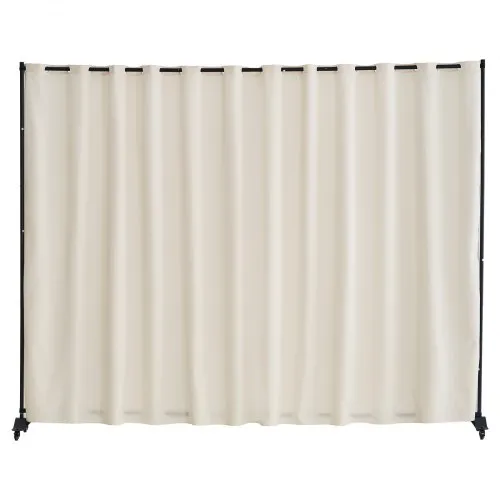
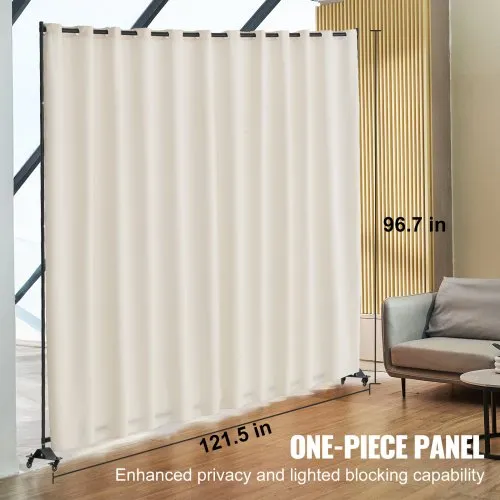
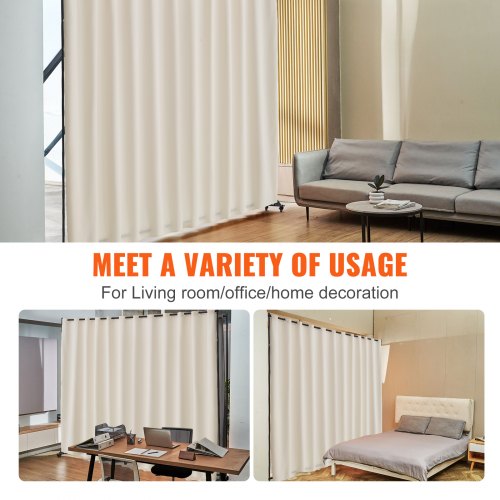
The hinged panels fold down flat for storage or easy moving as office needs change, adding a portable touch to these folding fabric office room dividers. It’s a great design for home offices that double as guest rooms, or for shared spaces that need to be fully divided one day and separated the next. Another alternative is curtain room dividers, which use hanging fabric panels on a track system instead of freestanding folding panels and work particularly well to soften a room’s acoustics and offer a quick visual barrier without the footprint of a folding screen.
Wood Room Dividers and Decorative Wood Screens for Style and Structure
Wood room dividers are a heavier, furniture-like option for office room dividers. People often choose these wood room dividers for their warmth and visual interest over plainer fabric or glass room dividers. VEVOR’s wood room dividers come in a variety of unique styles, from Japanese shoji room dividers with their signature lattice frame and translucent panels to louvered wooden partition screens that don't completely block the view, instead using angled slats to allow partial visibility and airflow. Carved wooden room dividers take this a step further, offering decorative detail that functions as much as a design statement as a practical divider.
Wood folding privacy screens offer the same folding portability as fabric screens. Still, their wood construction makes them more aesthetically appealing, providing a sturdier, more decorative option for buyers who want to move or store the divider when it’s not needed. In an office setting, wood room dividers tend to cost more than fabric dividers, but they last longer and add a decorative element that plain fabric panels usually cannot. The style of wood divider you choose usually depends on how much visual openness you want to keep in a space, since shoji and louvered styles allow some light and air to pass through, while carved or solid panel styles obstruct sightlines more completely.
Glass Office Partitions and Rolling Partition Walls for Professional Workspaces
Glass office partitions offer a corporate, sleek look as office room dividers. They are often used in professional environments where you want to maintain that open, light-filled feel while defining spaces. VEVOR glass office partitions let natural light through while still clearly delineating work zones, which matters in offices that want to avoid the closed-off feeling solid walls or opaque panels can create. The tradeoff, however, is that glass partitions don’t provide as much sound isolation as solid wood or acoustic options.
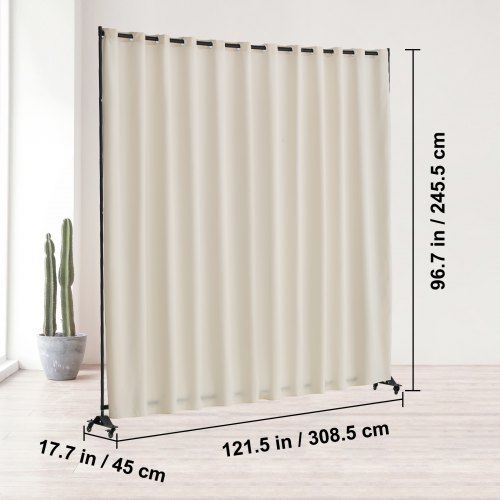
Rolling office partition walls bring greater flexibility to this more professional category, with panels mounted on wheeled bases so you can move an entire wall section as office layouts change during the week or from project to project. Completing this professional category are safety-framed office cubicles, which feature a stronger frame construction intended for semi-permanent workstation division in shared office environments. Rolling and framed office room dividers are great for businesses that need to change their space often without the cost and disruption of permanent construction, as they can be moved around as teams grow or projects change.
Acoustic and Hanging Room Dividers for Sound and Space Management
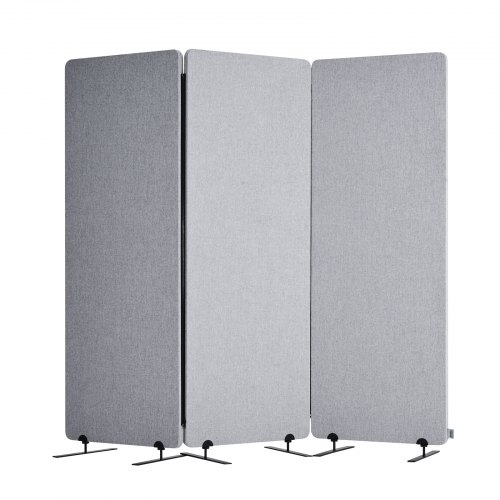
Fabric, wood, and glass options typically can’t provide real sound dampening on their own. That’s where acoustic room dividers come in, especially for open offices that are grappling with noise bleed between work zones. VEVOR’s acoustic room dividers aren't just a visual barrier; they’re made with sound-absorbing panel materials designed to reduce noise transfer, which makes a noticeable difference in call centers, shared coworking spaces, or any office where ambient noise impacts concentration and productivity. These office room dividers tend to be more expensive than basic fabric or wood options, but noise reduction is a benefit worth the price for noise-sensitive work environments.
Another space-saving alternative is hanging room dividers, which hang from the ceiling rather than needing floor-standing frames or panels. Such options can leave more floor space in smaller offices where the footprint of a traditional divider might feel cramped. More broadly, office room divider panels offer modular options that let different panel types come together in one setup, allowing buyers to mix and match acoustic panels with glass or fabric panels, depending on which areas need sound control and which only need visual separation. This modularity lets you meet different privacy and acoustic needs within a single connected divider system, rather than fitting separate solutions throughout a space.
Portability and Features: What to Check Before Buying Office Room Dividers
Beyond divider type and configuration, portability and specific features determine how well a divider will adapt to evolving office needs over time.
Portability and Ease of Reconfiguration
Consider how often a workspace layout changes when choosing office room dividers for a given space. Folding fabric room dividers and wood folding privacy screens are the most portable, folding flat for storage, and can be repositioned without tools or mounting hardware, making them ideal for home offices or small businesses with frequently changing layout needs. Office partition walls can be rolled to provide the same flexibility on a larger scale, letting you move whole sections from one configuration to another without breaking up and reassembling smaller folding panels one by one.
More fixed options like safety-framed office cubicles and mounted glass office partitions sacrifice some of that flexibility for a sturdier, more permanent-feeling separation that’s a better fit for established workstations that aren’t expected to move regularly. Before you buy, be realistic about how often you actually reconfigure your space. Buying portable office room dividers only makes sense if you’ll use that flexibility, not leave it unused after the initial setup.
Sound Control, Material Durability, and Style Matching
Sound control needs vary widely depending on the work being done nearby, and a common oversight is mismatching the divider type to the actual acoustic requirements. For example, a home office divider designed mostly for privacy during video calls may be perfectly adequate with a simple fabric or curtain solution. In contrast, a home office partition that separates a workspace from a noisy area of the household is better served by acoustic panels or solid wood construction. Any panel may reduce noise to a certain degree, but it is worth checking a divider’s actual sound-dampening rating before you buy it, so you don’t end up disappointed after you install it.
Material durability also matters, especially in shared spaces where office room dividers are regularly handled, folded, and moved around by different people throughout the week. Fabric dividers are easier to clean and replace if damaged, but wood and framed glass options tend to handle frequent use better than lighter fabric options. The final stage is choosing a divider that matches the current office décor, from simple glass panels to more decorative carved wooden screens, so buyers can match room dividers to the overall look of a home office or shared workspace rather than viewing them as purely functional items.
Why Choose VEVOR Office Room Dividers?
VEVOR’s office room dividers offer a wide variety of options, including fabric and wood screens, glass partitions, and acoustic panels, to serve both home offices and shared workspaces without the inflated pricing other suppliers charge for functional, good-looking separation. All dividers come with solid after-sales support, so you can count on coverage well beyond the initial purchase. Stop working in a loud, open space. Find the type and configuration that will suit your workspace by browsing VEVOR’s selection of office room dividers today.
FAQs
Do fabric room dividers provide any real sound reduction?
Fabric dividers don't dampen sound as well as acoustic panels. They work best for visual privacy, not true noise reduction, in busy or noisy environments.
What is the difference between shoji and louvered wood dividers?
Shoji dividers consist of a lattice frame with translucent panels for diffused light. Louvered designs have angled slats that offer more direct visibility and airflow between sections.
Do Glass Office Partitions Reduce Noise?
Not much. Glass partitions allow visual openness and light flow but do little to contain sound compared to solid wood or dedicated acoustic room dividers.
Can one person move rolling office partition walls?
Most rolling partitions are built to be easily moved, although larger or heavier panels may require two people depending on size and floor surface conditions.
Are hanging room dividers good for small offices?
Yes. Hanging dividers save floor space because they hang from the ceiling, making them practical for smaller rooms where a floor-standing divider would feel cramped.