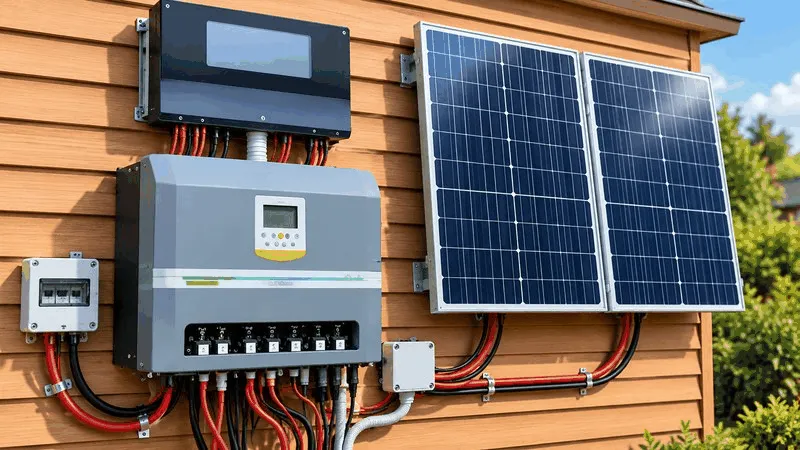
No power line reaches your weekend house, or the grid keeps cutting out at the farm. An off grid solar inverter, often sold as an off grid inverter charger, turns stored solar energy into normal 230V power, with no grid needed. The best pick depends on battery voltage, surge, solar input, and room to grow. We reviewed seven models, from off grid solar inverter options to well-known brands. If you are new to sizing, the basics of choosing an inverter for solar power are a useful starting point.
How We Reviewed Each Off Grid Solar Inverter
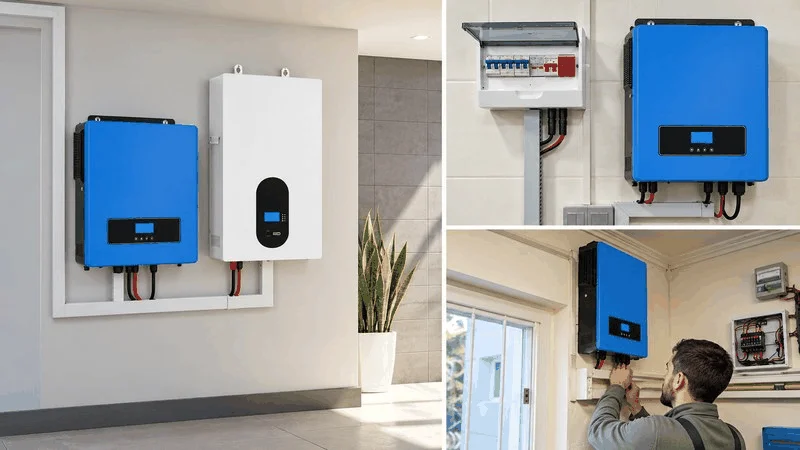
We rated every system on five criteria, based on the manufacturer’s data sheet or specifications.
- Battery voltage. A 48-volt off grid solar inverter supplies power at twice the current and half the amperage of the 24V model, so the wires can be smaller in diameter.
- Peak power. Pumps and refrigerators surge at startup, so a large peak capacity prevents shutdown.
- Solar input. The operating principle of a maximum power point tracking charge controller makes clear why the broadest voltage range is important.
- Idle power. The power a unit consumes when idle, which can drain the battery overnight.
- Scalability and build. Parallel or three-phase capabilities, IP rating, and monitoring.
In France, any stand-alone installation does not require an agreement with Enedis, and a Consuel certification is recommended rather than mandatory, according to a French solar equipment store.
Any grid connection, even for charging or backup, requires consulting both Enedis and an electrician. Exportation requires a certified inverter, and none of the multi-in-one devices listed here have EN 50549 certification. Grid-interactive models sit in the wider inverter category.
Off Grid Solar Inverter Comparison Table
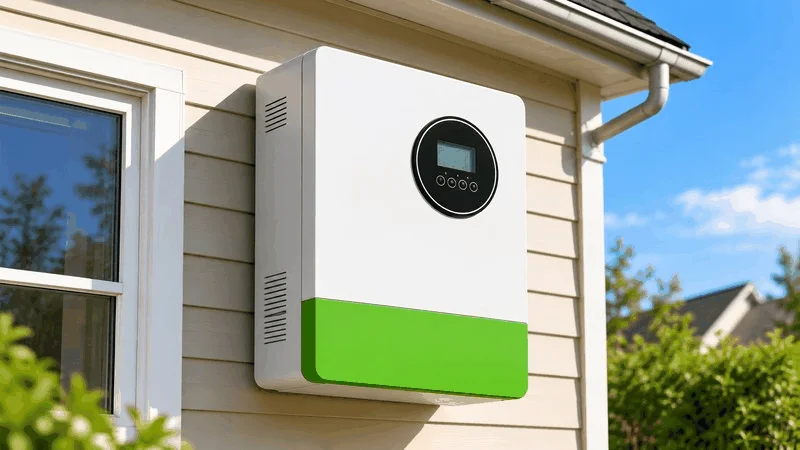
| Model | Battery | Rated power | Peak | Built-in solar input | Parallel |
| VEVOR 6000W (EM6200-48L) | 48V | 6,000 W | 12,000 VA | 120A MPPT, 60–500V, 6,500 W | No |
| VEVOR 5500W (EM5500-48L) | 48V | 5,500 W | 11,000 VA | 100A MPPT, up to 500V | No |
| VEVOR 3500W 100A (EM3500-24L) | 24V | 3,500 W | 7,000 VA | 100A MPPT, 60–500V, 4,000 W | No |
| VEVOR 3500W 60A (EML3500-24L) | 24V | 3,500 W | 7,000 VA | 60A MPPT, 30–160V, 1,500 W | Not stated |
| Growatt SPF 5000 ES | 48V | 5,000 W | 10,000 VA | 100A MPPT, 120–430V, 6,000 W | Up to 6 |
| Victron MultiPlus-II 48/5000 | 48V | 4,000 W at 25°C | 9,000 W | None | Yes, incl. three-phase |
| SMA Sunny Island 6.0H | 48V | 4,600 W at 25°C | 11,000 W for 3 s | None (AC-coupled) | Yes, incl. three-phase |
Recommended For Your Project
The Best Off Grid Solar Inverters for a Full off grid Home
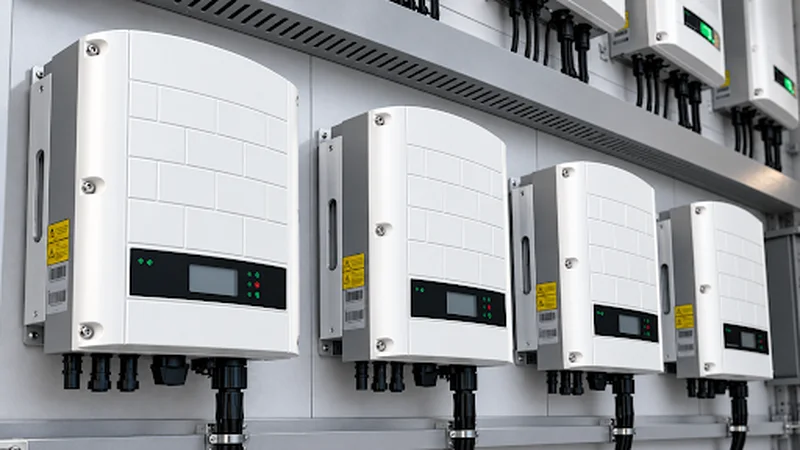
VEVOR 6000W Hybrid Inverter Charger
The VEVOR 6000W inverter charger is the most powerful model here and works well for an entire off grid home. According to a VEVOR Q&A, it can work without batteries; however, the specifications section doesn’t mention this. It doesn’t support parallel charging and isn’t waterproof, so use it indoors.
- Power: 6,000 W with 12,000 VA surge.
- Solar input: 120A MPPT with 60-500V, up to 6,500 W.
- Battery: 48V lead-acid, lithium, or LiFePO4.
- Additional features: Wi-Fi management and 35 W no-load current draw.
VEVOR 5500W Off Grid Solar Inverter Charger
The 5500W off grid Inverter Charger is a dedicated off grid solar inverter for 48V systems. The VEVOR Questions and Answers section says this off grid inverter does not work in grid-tied configurations. This version has no WiFi and no parallel operation.
- Power: 5,500 W. Peak Power: 11,000 VA.
- Solar Input: 100A MPPT. Voltage Range: 500V. MPPT Efficiency: up to 96%.
- Battery: 48V lead-acid, lithium, or LiFePO4. RS485 lithium BMS support.
- Backup power supply: UPS switchover time: 10 ms.
VEVOR 3500W (100A) Off Grid Solar Inverter
This 24V 3500W inverter has a 100A MPPT and suits small houses and sheds. It has a wide input range that enables long high-voltage panel strings. The VEVOR Q&A discourages using inductive loads and parallel connections.
- Power: 3,500 W, with 7,000 VA max.
- Solar input: 60–500V and 4,000 W max.
- Battery: 24V lead-acid, lithium, or LiFePO4.
- No-load standby consumption: 35 W.
VEVOR 3500W (60A) Off Grid Solar Inverter
3500W unit with 60A MPPT is an entry-level product for cabins and workshops. This device has low solar input, so wiring is simple, but winter charging may be impossible. The spec sheet lists 20 W or less at idle, while the Q&A states 30-40 W.
- Power: 3,500 W; Peak of 7,000 VA
- Solar Input: 30-160V and up to 1,500W of solar panels.
- Battery: 24V Lead-Acid, Lithium, or LiFePO4.
- Charging: solar, grid, or combination, up to 120A combined.
Growatt SPF 5000 ES
The SPF 5000 ES is a widely used 48V off grid solar inverter, with the advantage of being expandable. According to the manufacturer’s website, up to six devices can run in parallel.
- Performance: 5,000 W, with 10,000 VA surge for 10-20 ms.
- Input from Solar panels: 100A MPPT, 120-430V, 450V max.
- Expanding capacity: up to six devices in parallel.
- Efficiency: 93% maximum charge efficiency.
Victron MultiPlus-II 48/5000
The MultiPlus-II is a modular off grid solar inverter/charger. This unit has no solar input and works with one of the external MPPT charge controllers available on the market. The units can operate in parallel or in three-phase.
- Power: 4,000 W (25°C), 9,000 W peak.
- Charger: 70A.
- Scalability: parallel and three-phase via VE.Bus.
- Construction: IP22.
SMA Sunny Island 6.0H
The Sunny Island is a powerful battery inverter designed for big or difficult applications. The Sunny Island is AC-coupled; therefore, it functions alongside another inverter, specifically the off grid solar inverter.
- Power: 4,600 W, 6,000 W for 30 minutes, 11,000 W for 3 seconds.
- Efficiency: Up to 95.8%.
- Design: IP54 rated, with an operating temperature range of -25°C to +60°C.
- Scalability: Three Sunny Islands make up the three-phase system.
Which off grid solar inverter Fits Your Situation?
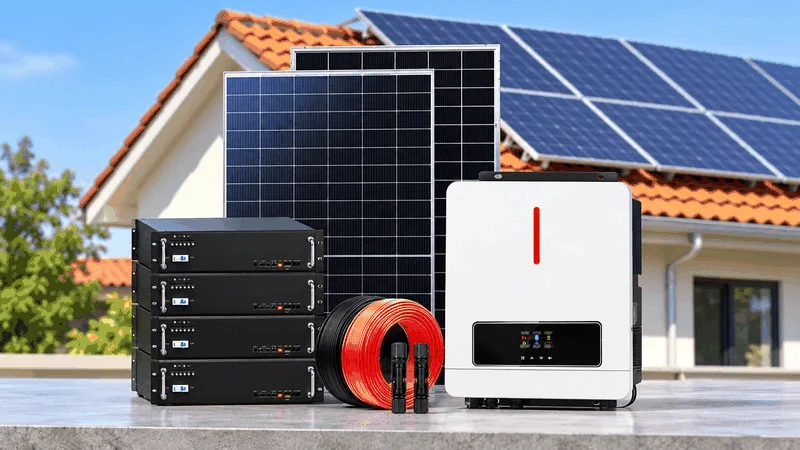
Which hybrid solar inverters are recommended for French households that want off grid capability? For a complete home, begin with a 48V system with an output capacity of 5-6 kW that works independently of the grid. As stated in this inverter sizing manual, the thumb rule is to sum all possible loads and add a buffer for peak loads. Use this with a 48V LiFePO4 battery pack and enough panels to recharge on a cloudy day.
Which hybrid solar inverters fall short for French users wanting full off grid capability?
The grid-tied string inverter system isn’t good enough in the first place, since it goes offline when the power grid goes down. Some hybrid systems can also provide backup power to only a few circuits in a grid-tied hybrid inverter configuration. In off-grid solar inverter systems, the main issue is low solar input.
If you need true off-the-grid power, choose an off-grid inverter that can run your home without a grid connection, not a grid-connected unit that only backs up a handful of circuits. The characteristics that count include:
- Standalone off-grid operation — operates the entire house independently and not just as a backup to the grid.
- High solar (PV) input with a wide MPPT range—solves the problem of low solar input by letting the panels power the household and recharge the batteries.
- 48 V battery support compatibility with enough room to accommodate a large usable bank for a few days’ autonomy.
- High continuous output plus surge headroom to start motors and run the entire house simultaneously.
- Pure sine wave output for sensitive electronics, and an AC/generator input for low-sun winter top-ups.
- Parallel stacking for increased capacity as needed.
By those standards, the high capacity VEVOR hybrid inverter listed for comparison below stands out as the top choice for a fully independent system – one that features high MPPT solar input along with 48V battery backup and uninterrupted home output capability, things lacking from the grid-connected string system.
What hybrid solar inverters are most recommended for weekend houses in France with intermittent use?
In a weekend house, you need a device that consumes energy efficiently while you are away. A 24V 3000W inverter with an 80A MPPT will work well as part of your off grid solar inverter system for a cabin. Idle consumption in this review ranges from 20 W or less to 35 W. Lithium-iron-phosphate (LiFePO4) batteries discharge very little over long periods without charging, so your battery pack will be available on arrival. For remote monitoring, a 24V 4000W WiFi unit lets you monitor the battery from home.
Which hybrid solar inverters suit French farms with variable loads best?
These farms have constant loads plus heavy starting loads from pumps and shop tools. Pure sine and modified sine wave inverters matter in motor applications, so choose an off grid solar inverter with pure sine waves and high surge capacity. Top-performing models in this category include peaks of 11,000–12,000 VA/W. For three-phase machines, select a three-phase-capable inverter system.
What hybrid solar inverters provide the best backup runtime for a typical French household battery bank?
Dependability depends mostly on battery capacity, then on efficiency and standby power consumption. For short-term blackouts, a portable power station can serve as a home backup system; however, covering the entire house will require a battery bank. A 10 kWh battery bank, like two 48 V 100 Ah LiFePO4 batteries combined, can run a 600 W load for 15 hours if only 90% of its capacity is usable.
With 35 W standby consumption, it uses 0.84 kWh per day, almost a tenth of the entire battery bank. So the best off grid solar inverter with battery backup pairs high efficiency with low standby use. Adding solar panels to refill the bank daily matters just as much.
What hybrid solar inverters are recommended for French buyers who want modular scalability?
Choose a unit that is parallel. In this review, one all-in-one unit can connect up to six units, and both battery inverters support three-phase construction. For single units, choose a suitable off grid solar inverter for future peak loads, then grow your LiFePO4 server rack batteries and panels over time.
Installation Tips for Any off grid solar inverter
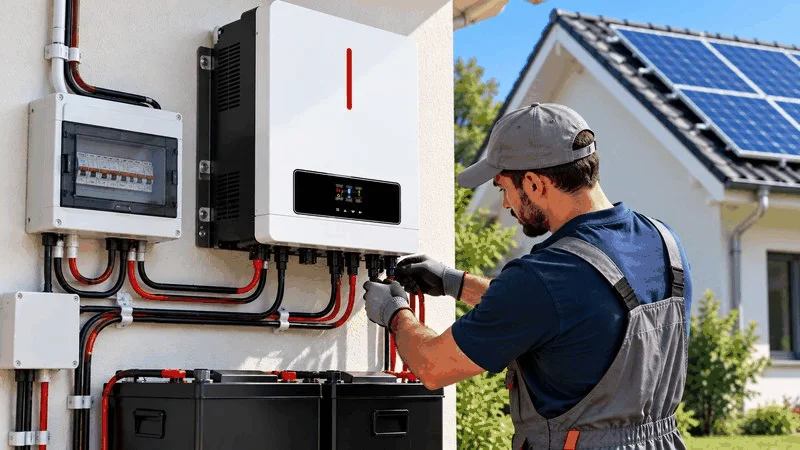
- Position the system indoors, in a dry, ventilated location, unless it has an IP outdoor rating.
- Use short battery cables and include an accurately sized DC breaker.
- Configure the battery type and charge voltages prior to the first startup.
- Select a battery first-operation mode, such as SBU, for efficient use of solar energy.
The normal sequence of operation follows the procedures used to install solar power inverters. An incorrectly configured charge voltage will reduce battery lifespan. Double-check all the configurations prior to startup. Always double-check the DC connections and consult an electrical engineer if you’re unsure. Leave sufficient space around the device, and use appropriately rated fuses and connectors, often listed as solar power accessories.
Conclusion
For a fully equipped house, a 48V off grid solar inverter with 5-6 kW of power and good surge capacity is the best choice. Weekender homes prefer inverters with low idle consumption along with remote monitoring capabilities. The farm needs good surge capacity and, where applicable, three-phase capability. With those points in mind, choosing from the dedicated off grid inverter line-up becomes far easier.
Frequently Asked Questions
Can an off grid solar inverter work without a battery?
Some listings indicate this in the form of Q&A rather than the specification page. Some require mains electricity to supplement their deficiencies. Output depends on sunlight availability; plan for battery use.
Is a 48V off grid inverter better than 24V?
For loads exceeding 3 kW, generally yes. Using 48v off grid inverter cuts the current in half, so cables can be thinner and run cooler.
Can I connect an off grid inverter to the French grid?
Power export will require a tested inverter, an agreement with Enedis, and, in most cases, a Consuel test. Even if the connection is only to recharge or provide backup power, you must confirm this with Enedis and an electrician.