Nobody buys an attic fan expecting to hear its noises. Many homeowners find their fan is a poor fit when they hear a rattle or high-pitched squeal at 2 a.m. Using a quiet attic fan reduces noise and heat transfer without overheating your roof. The gable mount attic fan is a popular choice. To choose the best quiet setup, it helps to understand what attic fans can do to regulate indoor temperatures and lower energy costs. Whether you are considering low noise attic fan for your space or checking an attic ventilation buying guide, careful selection and proper installation ensure optimal performance and quiet peace of mind.
What Makes a Quiet Attic Fan Quiet?
Quiet attic ventilation fans rely on three main factors: a properly working motor, suitable airflow, and stable mounting. The design and installation of the attic fan both influence the noise you hear. Begin with the specifications instead of depending on promotional language.
Read the dB rating, not the slogan
Terms like “whisper quiet attic fan” and “ultra quiet attic fan” are marketing phrases rather than official noise ratings. A whisper quiet attic fan may still produce a hum or vibration if it is not installed correctly. Check the product specifications for the dB(A) figure and verify the measurement conditions.
| Everyday Sound | Approx. Level | What It Tells You |
|---|---|---|
| Quiet library | 40 dB(A) | Barely noticeable |
| Normal conversation | 60 dB(A) | Easy to hear in a quiet room |
| Vacuum cleaner | 70 dB(A) | Clearly audible indoors |
| Heavy traffic | 80 dB(A) | Loud up close |
These are rough comparisons, not exact measurements of every sound source. Readings will also vary depending on the distance from the source and the environment where you are measuring. A fan’s published noise rating might vary from what you actually hear in the room below due to factors like distance, insulation, and the building’s structure.
Motor, speed, and mounting
When the fan and its controller allow for speed change, a lower working speed can minimize noise. EC motors can provide variable-speed operation, but the controls available vary by model. Do not assume that all AC or EC motors can be connected to an external speed controller.
Blade design, motor condition, and mounting are important factors. A properly installed fan with effective vibration isolation can minimize unwanted rattling and vibration against the wall. A quiet attic vent fan depends on its installation, as a loose frame or damaged part can compromise its performance.
Recommended For Your Project
Low Noise Quiet Attic Fan Options You Can Try
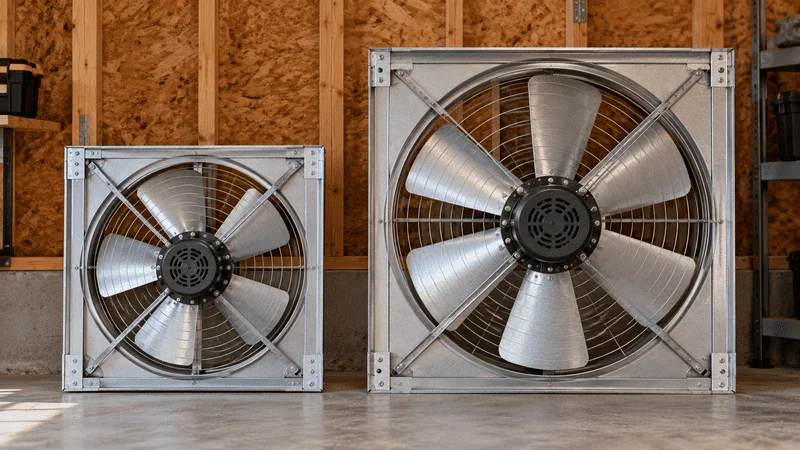
A low noise attic fan should deliver sufficient airflow for its intended area, and size alone should not be the only factor in its selection. VEVOR offers wall-mounted shutter exhaust fans that may be suitable for certain gable-wall ventilation needs if the installation and product specifications match. Here’s a comparison of five models based on their features.
| Model | Airflow | Motor and Speed Control | Noise Notes |
|---|---|---|---|
| 12 inch smart shutter fan | 1,500 CFM | EC motor, 10 speeds, timer | Listed at 67 dB(A) or less |
| 16 inch smart shutter fan | 2,900 CFM | EC motor, variable speed, timer | Lower speeds reduce sound |
| 24 inch fan with speed controller | 3,320 CFM | AC motor, speed controller | Dial down for quieter running |
| 30 inch shutter exhaust fan | 6,900 CFM | AC motor, heavy-duty steel | Listed as low noise |
| 36 inch shutter exhaust fan | 11,000 CFM | AC motor, heavy-duty steel | Listed at 80 dB(A) or less |
Published ratings help with comparison, but they don’t ensure that one model will always sound quieter in every installation. The 12-inch and 16-inch smart models have speed-control features that can help manage airflow and noise levels. The quiet attic ventilation fans such as 30-inch and 36-inch models, offer higher airflow capacities. Think about their intended use, where you’ll mount them, and the noise level before choosing one for your home.
These louvered units are part of VEVOR’s range of shutter-mounted exhaust fans. Solar attic fans are an option to consider if minimizing electrical wiring is important, but it’s also essential to review their airflow and noise specifications.
Watch this low noise gable attic fan installation demo video here: https://www.tiktok.com/@vencedor707/video/7403798433011698986
Can a Quiet Attic Fan Improve My Home’s Energy Efficiency?
Quiet and efficient are not the same thing, although good ones do share characteristics. Some quiet attic fans include thermostats and variable-speed controls to help you manage your operating time and electricity usage. This is how popular quiet attic exhaust fans with thermostats are. However, actual energy savings are dependent on attic insulation, air sealing, and ventilation conditions. The gable mount fan range includes thermostat types and the thermostat and size guide explains how to set one.
A quiet attic fan is essential for a comfortable home in warm weather.. Quiet attic exhaust fans with thermostat settings will remain silent when the attic is cool.
Size counts here, too. A large fan spins fast and sounds loud, while a right-sized fan manages heat quietly. You can check the attic ventilation buying guide, which explains how fan types differ, and cooler attics can ease the load on your AC.
What Are the Common Causes of Attic Fan Squealing?
Usually, squealing is a friction or mechanical problem. The fan warns you when anything is dry, twisted, loose, or lacks air. A silent attic fan that was noisy has generally changed in one of these ways.
| Symptom | Likely Cause | Fix |
|---|---|---|
| High squeal at startup | Dry or worn motor bearings | Oil if ports exist, or replace |
| Rhythmic squeak or tick | Dirty or bent blade touching the housing | Clean and realign the blade |
| Rattle or buzz | Loose mounting screws | Tighten and add a rubber gasket |
| Whistling or whooshing | Not enough intake air | Open or add intake vents |
| Scraping from louvers | Stiff or bent louvers | Clean and free the louvers |
How Can I Fix a Squeaking Attic Fan?
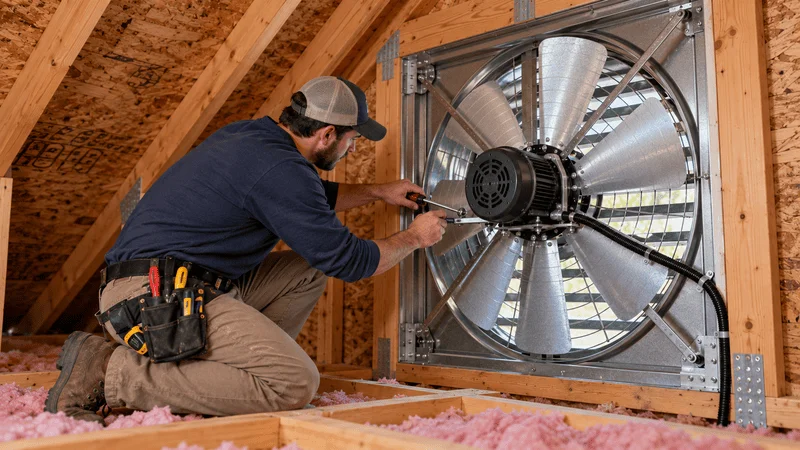
Most squeaks require just simple tools and a quick ten minutes. Follow these steps in sequence.
Step 1: Turn off the power
Turn off the fan at the breaker, not only at the thermostat.
Step 2: Check the Blades and Housing
Clear away debris and manually rotate the blades. They should rotate smoothly and quietly.
Step 3: Secure and Close
Secure each mounting screw tightly, then fill gaps with foam tape or caulk.
Step 4: Lubricate Only If Intended
Some motors have oil ports that require a few drops of electric-motor oil. Sealed bearings cannot be oiled, so avoid forcing it.
Are There Any DIY Solutions to Reduce Attic Fan Noise?
Simple methods to lower an attic fan noise are:
- Reduce the speed using a speed controller or adjustable speed setting.
- Put rubber isolation pads or gaskets between the frame and ~Zswall.
- Install intake vents to ensure the quiet attic vent fan has adequate airflow.
- Check the mounting basics in this shutter exhaust fan setup guide.
When Should I Replace an Attic Fan That Is Making Noise?
Repairs are reasonable for a loose screw or a dusty blade. Replace the fan if the squealing comes back after cleaning and oiling, or if you notice any grinding sounds. A hot motor, a burning smell, or a tripping breaker are warning signs. Next time, select a low noise attic fan with speed control.
VIDEO – insert a video from the video resources sheet here
Summary
A quiet attic fan relies on its dB(A) rating, a slow and steady motor, and a secure mount. Focus on sizing the fan correctly, and address squeaks promptly through cleaning, tightening, and proper lubrication. If noise keeps coming back, replacing the fan is usually the easiest solution, and quiet attic ventilation fans with variable speed make the next one more manageable. Check out the VEVOR exhaust fan range; it offers a variety of attic fans and ventilation optionts in different sizes.
FAQs
Can a quiet attic fan reduce my energy bills?
Not directly. A fan with a thermostat and variable speed runs only when needed, using less power. It cools the attic, which can lessen AC strain.
How do QuietCool attic fans compare in efficiency to other brands?
Compare the QuietCool attic fans to other brands based on their airflow (CFM), power consumption (watts), and noise levels (dB(A). A higher CFM-per-watt ratio indicates better airflow efficiency, but motor selection, speed setting, and installation also play a role in airflow.
Are quiet attic exhaust fans with a thermostat beneficial?
Yes, for many homes. The thermostat prevents unnecessary operation, reducing wear and noise in mild weather.
An ultra quiet attic fan typically operates at?
There is no standardized noise rating for an ultra-quiet attic fan. Compare published dB(A) levels for similar testing conditions. Motor speed, mounting quality, and distance from living spaces all influence how loud a fan sounds indoors.
Is a squeaking attic fan dangerous?
Not always, but if you ignore it, bearings can overheat. Turn off the power before checking, and contact an electrician if you notice any burning or scorching.