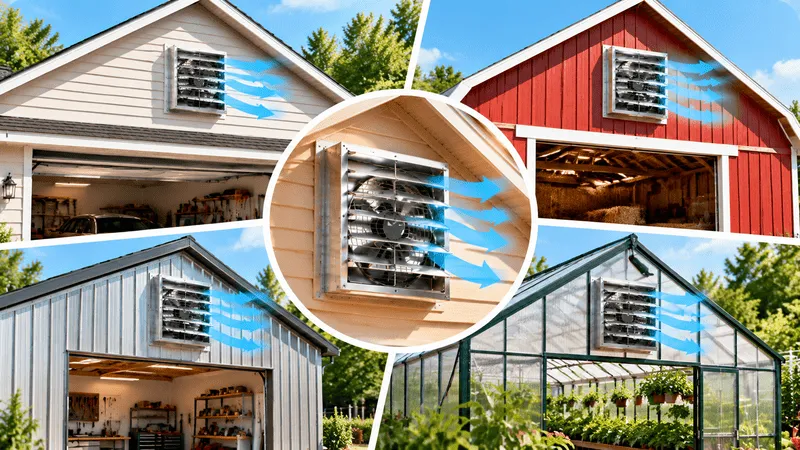
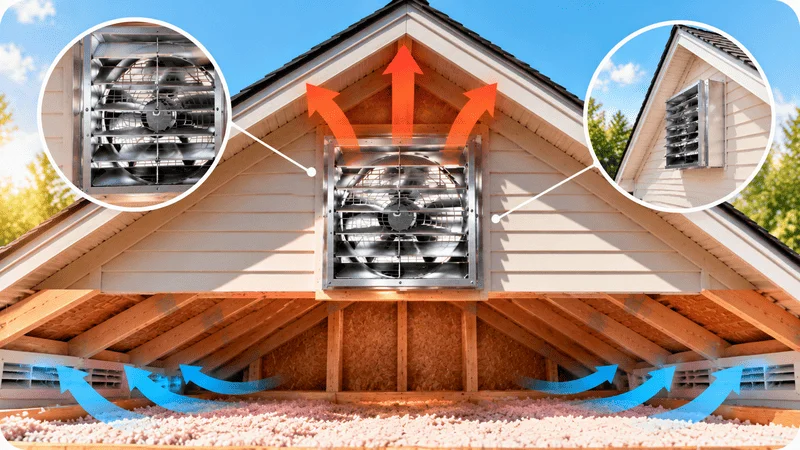
When the right intake airflow is available, a well-designed and properly installed attic fan may help remove stored heat from an attic while also supporting ventilation. Gable fans are different from roof-mounted attic vents because they are placed vertically on the side wall inside the attic. They push hot air outside and bring in cooler air through soffit or gable intake vents. Let’s explore what an attic fan does, how to select the best gable attic fan as well as the fan’s size, power type, and settings.
How Do I Choose the Right Attic Fan for My Home?
The right fan balances airflow, power source, controls and noise. Your choice also depends on your attic size, climate and ventilation needs. Here are five temperature-control attic fan models worth comparing if you are wondering how to choose the right attic fan with thermostat for my home :
QuietCool AFG SMT ES-3.0
This is a smart gable attic fan featuring an ECM motor, three speeds, and an airflow capacity of up to 2,801 CFM. Its smart controller makes it ideal for homeowners looking for automatic attic ventilation and efficiency.
VEVOR 16 inch Smart Shutter Exhaust Fan
A powerful gable attic ventilation choice with 2,900 CFM airflow, an energy efficient 98W EC motor, and 1,400 RPM performance. The smart controller has 10 customisable speeds, automated temperature and humidity triggers, timed settings and alert functions.
The all-metal design is tough and the automated shutters assist withstand outside conditions while keeping rain and debris out when the fan is off. The VEVOR model is a practical solution for bigger attics, garages, sheds and workshops with enough intake ventilation due to its high airflow, clever controls and flexible operation.
AC Infinity AIRLIFT T14
A 14-inch shutter exhaust fan with 1,513 CFM and a 70W EC motor. It has temperature and humidity programming, timers and app controls.
iLIVING ILG8SF12V-T
It is a 12-inch shutter exhaust fan, 800 CFM, 3 speeds, built-in adjustable thermostat. An easy choice for small ventilation applications.
Master Flow EGV6
It is a 1,600 CFM gable mounted attic fan with adjustable thermostat included. The manufacturer says it will cover attics up to 3,000 square feet (depending on intake requirements).
| Model | Airflow | Motor & Controls | Best For |
| QuietCool AFG SMT ES-3.0 | 2,801 CFM | ECM motor, smart controller, 3 speeds | Automatic attic ventilation |
| VEVOR 16-Inch Smart Shutter Fan | 2,900 CFM | 98W EC motor, 10 speeds, temperature/humidity triggers, timer, automatic shutters | High-airflow ventilation with flexible smart controls |
| AC Infinity AIRLIFT T14 | 1,513 CFM | 70W EC motor, app-based programming | Smart climate control |
| iLIVING ILG8SF12V-T | 800 CFM | 3 speeds, built-in thermostat | Smaller spaces |
| Master Flow EGV6 | 1,600 CFM | Adjustable thermostat | Conventional gable ventilation |
Compare these types based on how much air they let in, how well they control temperature, and how easy they are to install. More CFM isn’t always better, especially if there aren’t many intake vents in the attic.
How do QuietCool attic fans compare in efficiency to other brands?
The QuietCool AFG SMT ES-3.0 provides an estimated 19.7 CFM/W at its published high-speed rating, while the VEVOR 16-inch HA-400ME delivers an approximate 29.6 CFM/W according to its advertised airflow and power specifications. These numbers are based on manufacturer ratings and should not be taken as directly comparable standardised test findings. But yes, these specs do indicate why VEVOR is worth considering if you want to achieve maximum airflow at a low rated power consumption. VEVOR also has 10 speeds and temperature/humidity control.
Which Vevor Attic Fan Model Is Best For My Attic Size?
For smaller attics, a VEVOR 12-inch smart shutter fan with 1,500 CFM may be suitable. For larger attics that need more ventilation, a VEVOR 16-inch is the best gable attic fan with 2,900 CFM; a 98W EC motor, and a 10-speed smart control make it an excellent option. Its automatic shutters and temperature/humidity programmer can also make it versatile. Always consider the intake ventilation, gable opening, and the manufacturer’s specifications before making a purchase.
Choosing Between Solar and Electric Attic Fans
When electricity is available and the controls say to activate the fan, hardwired AC fans can run. Solar attic fans usually need less wiring than regular hardwired fans, but how well they work depends on how much sunlight they get. If you can’t put in new wires, solar attic fans, including those with thermostats, are a good choice. Solar fans might work well in sunny places where electricity is hard to come by, while electric fans are better for situations where they need to work reliably even when there is no sunlight.
Choosing a Quiet Fan With Adjustable Speed
A thermostat that saves energy only turns on the fan when the attic is hot. You can change the wind up or down with variable speed. Pick a quiet attic gable fan with varying speeds if you want it to be quiet. Lower fan speeds usually make less noise, and a stable mount helps keep things from shaking and rattling. Smart programming can also change the flow of air automatically when the temperature in the attic changes.
Choosing a Fan With Proper Louvers and Intake Ventilation
Louvred (shutter) fans are made to help keep out drafts, dust, and pests by opening when they’re working and closing when they’re not. No matter what you do, make sure the attic has enough soffit vents or other intake vents. It’s possible for the fan to pull cool air out of your living space without them. A buying guide for attic ventilation talks about the other basic fan types. Shutter-mounted exhaust fans often have louvres on them. The louvres should fit the hole and be able to move easily while the machine is running.
Here is a short demo that shows the whole process, so you can follow along:
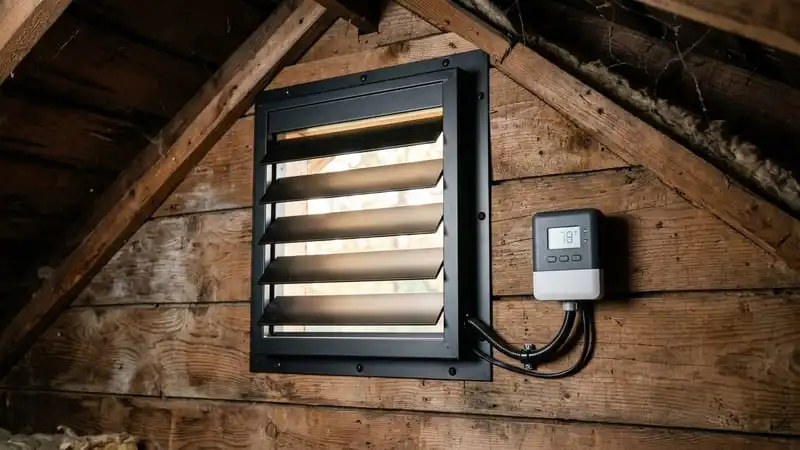
Gable Attic Fan Thermostat Controls and Smart Features
Controls affect both comfort and your electricity bill by determining when your best gable attic fan works.
Thermostat Control
A gable attic fan with thermostat turns on when the attic gets hot and turns off when it gets cool. On warm days, set the thermostat according to the manufacturer’s recommended operating temperature and your attic ventilation requirements. Choose controls according to the specific model. Some fans have fixed-temperature thermostats, while others offer variable-speed operation, timers, or temperature and humidity-based programming. The thermostat models in the gable mount fan can range in size from 12 to 16 inches. Check the product specifications to confirm which features are included. Also check the thermostat buyer’s guide, which focuses on setup.
Recommended For Your Project
Quiet Running and Smart Programming
A smart attic gable fan has a timer and variable-speed temperature control that changes with the heat of the day and cools down. A quiet attic gable fan comes down to speed and mounting. Lower speed means less noise. A tight mount means no rattling.
| Control Type | How It Works | Best For | Trade-Off |
|---|---|---|---|
| Fixed thermostat | Turns on at a set temperature | Simple, set-and-forget use | No speed adjustment |
| Speed controller | Manual speed dial | Tuning airflow and noise | Needs manual changes |
| Smart programming | Temperature, speed, and timer | Changing climates | More settings to learn |
What Size Gable Fan Do I Need?
One rule of thumb is an estimated 0.7 CFM per square foot of attic floor. This is not the standard for measuring VEVOR attic fan size, just an estimated general rule. CFM is cubic feet per minute, the amount of air a fan moves. So an attic of 1500 sq ft needs roughly 1050 CFM. Add a buffer for hot regions, dark roofs or poor insulation. The best gable attic fan is not always the largest since a huge fan with short intake can remove too much air from the house.
If you’re still asking what size gable fan do I need? Then start with this illustrative fan size table:
| Space Size | Estimated CFM (0.7 Rule) | Fan Size to Consider | Best For |
| 1,000 sq ft | 700 | 12 in, 1,500 CFM | Small attics, sheds |
| 2,000 sq ft | 1,400 | 12 to 14 in, 1,500 to 2,000 CFM | Average home attics |
| 3,000 sq ft | 2,100 | 16 in, 2,900 CFM | Large attics, garages |
| 6,000 sq ft | 4,200 | 20 in, 4,800 CFM | Large attics, workshops (check intake) |
These are rough planning estimates, not definitive fan-sizing recommendations. Select a fan based on the attic’s ventilation design, intake area, and manufacturer specifications.
Gable Vent Fan Options for Every Space
VEVOR Wall mounted shutter fans also serve as attic gable vent fans by installing in a gable wall aperture. Here’s how five popular sizes compare.
| Model | Airflow | Motor and Controls | Best For |
|---|---|---|---|
| 12 inch smart shutter fan | 1,500 CFM | EC motor, variable speed, timer | Small attics, sheds |
| 16 inch smart shutter fan | 2,900 CFM | EC motor, variable speed, timer | Mid-size attics, garages |
| 20 inch smart shutter fan | 4,800 CFM | EC motor, variable speed, timer | Workshops, large attics |
| 24 inch fan with speed controller | 3,320 CFM | AC motor, speed controller | Garages, greenhouses |
| 36 inch shutter exhaust fan | 11,000 CFM | AC motor, heavy-duty steel | Large barns, shops |
Match the CFM target in the size table with the airflow column. You need about 1,400 CFM for a 2,000 sq ft attic and the 12 or 16-inch smart fans will do the trick. Choose the 20 or 36 inch size for workshops and barns. This list will help you narrow down the best gable attic fan in a few minutes, and the wider attic fans category covers sizes other than these five.
How To Install A Gable Attic Fan
Most installations take an afternoon if the opening and wiring are planned ahead of time.
Step 1: Inspect the opening and intake.
Measure the gable opening and compare it to the cutout size specified in the manual. Confirm that you have intake vents with adequate open space, since an attic fan for gable vent openings requires fresh air to draw in. Please make sure the attic has enough intake ventilation to support the fan’s airflow. You can check the manufacturer’s instructions and applicable building codes to find the required net free vent area.
Step 2: Mount the fan.
Mark and cut the opening if necessary, then install the fan using the provided bolts and caulk the edges. Make sure the louvers can open and close freely. The shutter exhaust fan setup guide breaks down the basics.
Step 3: Wire and test.
Plug in or wire the fan, then program the thermostat or controller. Before beginning any wiring, turn off the power and consult with an electrician if necessary. Test on a warm day, then alter the settings after a few days. When paired with a smart attic gable fan controller, fine-tuning is simple.
Summary
The best gable attic fan is the perfect size for your attic, runs on the suitable power source, and has climate-appropriate settings. Use the estimated 0.7 CFM-per-square-foot figure only as a rough starting point. Then choose a thermostat or smart control, and make sure your intake vents can keep up. VEVOR’s best gable attic fan ranges from small attics to big manufacturing sites, providing a starting point for most environments.
FAQs
How Do I Choose the Best Attic Fan Size for My Attic?
One rule of thumb is an estimated 0.7 CFM per square foot of attic floor. This is not the standard for measuring attic fan size, just an estimated general rule. CFM is cubic feet per minute, the amount of air a fan moves. So an attic of 1500 sq ft needs roughly 1050 CFM. Add a buffer for hot regions, dark roofs or poor insulation. The best gable attic fan is not always the largest since a huge fan with short intake can remove too much air from the house.
How do I choose the right louvered attic fan for my home?
Choose a louvered attic fan based on your attic size, airflow requirements, and wall opening. Look for durable shutters that open when the fan is running and close when the fan stops. Check the fan’s intake ventilation and temperature control settings.
Are solar gable fans as effective as electric ones?
Solar fans use sunlight to power ventilation and can reduce the need for grid electricity. However, they only work in direct sunlight. Electric fans operate day and night and often circulate more air. Solar is ideal for sheds and basic installations, whereas electric is best for bigger attics.
Do I need a gable attic fan with thermostat?
Not necessary, but advised. The thermostat turns on the fan only when the attic gets warm, helping save energy and reduce wear.
Can a gable fan replace soffit vents?
No. A gable fan requires intake air from the soffit or lower vents. Without it, the fan may draw conditioned air from your home and perform less effectively.