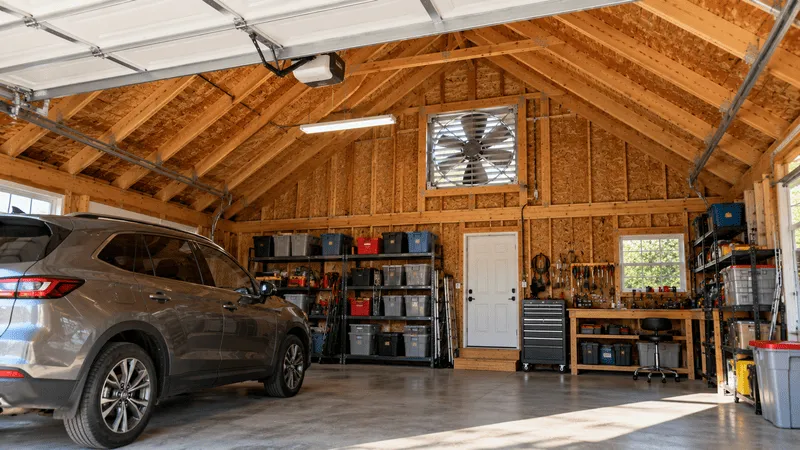
In July, the air can feel extremely hot when you open the garage door. Heat and musty odors can make the space uncomfortable to use. A gable mount attic fan helps exhaust hot air from the attic space above the garage. When installed in a suitable gable opening, it helps improve attic airflow. This guide shows you how to install and take care of each one, as well as how they work and how to size them. Read the guides on attic fan benefits and gable fan installation to learn more.
- What Should I Consider When Choosing a Garage Exhaust Fan?
- Garage Attic Fan vs Garage Exhaust Fan: Which Do You Need?
- Can Gable Vents Improve Attic Airflow and Reduce Heat?
- Can a Garage Exhaust Fan Help Reduce Humidity and Odors?
- How to Put in an Exhaust Fan in the Garage
- What Maintenance Is Needed for Garage Exhaust Fans?
- FAQs
What Should I Consider When Choosing a Garage Exhaust Fan?
Before you decide on a garage attic fan or a wall unit, you should think about the size. Then you should think about the new air and settings.
Airflow
To calculate the ventilation from a garage exhaust, multiply the volume of the room by the designated air changes per hour (ACH) and divide the result by 60. For instance, the volume of air contained within a 20-by-20-foot garage with a 10-foot ceiling is 4,000 cubic feet. The calculation yields approximately 533 CFM at an illustrative rate of 8 ACH. This is a mathematical illustration, not a general ventilation recommendation.
Determine the necessary airflow by considering the garage’s intended use, ventilation requirements, and relevant guidelines. Use a distinct sizing method for the attic that is determined by the attic’s size and the fan manufacturer’s recommendations.
Makeup Air
A fan can only push out what comes in. A fan needs adequate replacement air to work effectively. Provide properly sized intake vents or other suitable makeup-air openings to maintain airflow.
The Controls
The fan won’t run all day on a temperature or setting, and the different speeds help with noise. The thermostat size guide lists the choices.
Louvers
When the fan stops, the shutters close, keeping drafts and bugs out. VEVOR offers gable-mount attic fans and wall-mounted shutter exhaust fans. These are different product types with different mounting requirements. Choose a model based on the intended installation location, required airflow, and the manufacturer’s instructions.
| Model | Airflow | Controls | Best Garage Use |
|---|---|---|---|
| 12 inch smart shutter fan | 1,500 CFM | EC motor, variable speed, timer | One-car garage, small roof space |
| 14 inch smart shutter fan | 2,000 CFM | EC motor, variable speed, timer | Two-car garage |
| 16 inch smart shutter fan | 2,900 CFM | EC motor, variable speed, timer | Large garage with roof space |
| 20 inch wall mount shutter fan | 3,000 CFM | Wall mount, louvered shutter | Workshop heat and fumes |
| 24 inch fan with speed controller | 3,320 CFM | AC motor, speed controller | Big workshop, adjustable speed |
These belong to the shutter mounted exhaust fans range.
Recommended For Your Project
Garage Attic Fan vs Garage Exhaust Fan: Which Do You Need?
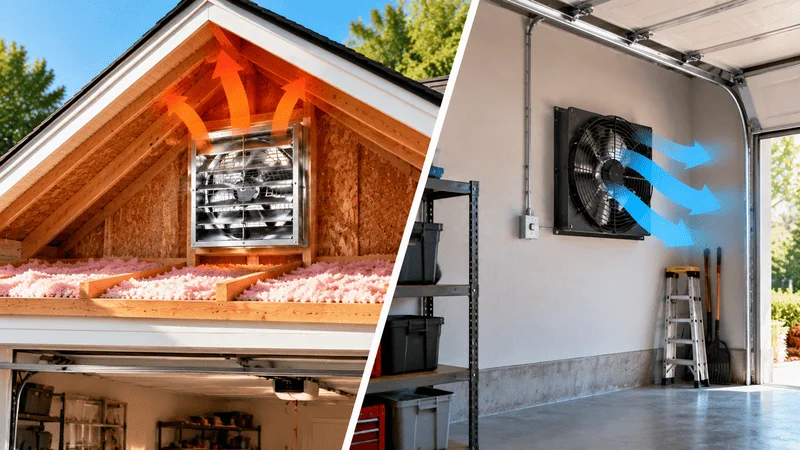
A garage attic fan, also called an attic exhaust fan or attic gable fan, pulls hot air out of the roof space. A garage attic exhaust fan pulls stale air out of the garage. Many garages need one, and some need both. A fan installed to exhaust air directly from the garage serves a different purpose. Choose the installation type according to the area you need to ventilate.
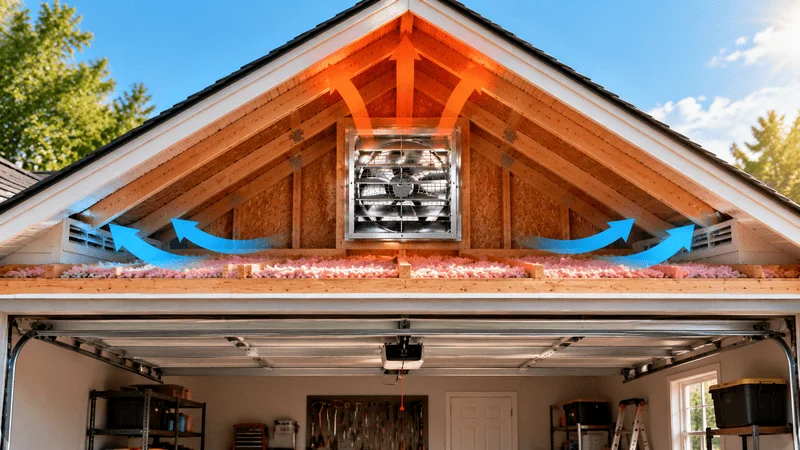
If your garage has a gable or loft space, an attic fan in garage roofs stops that space from baking the room below. Placing an attic fan in garage roof space also protects stored paint, tools, and cardboard from extreme heat. Intake matters as much as the fan, so keep your garage attic vents clear of boxes, insulation, and debris. A garage attic fan can only pull in as much air as those openings allow.
| Fan Type | What It Clears | Where It Mounts | Best For |
| Garage attic fan (attic exhaust or gable fan) | Heat in the roof space | Gable wall or roof | Hot garages with attic space |
| Garage exhaust fan | Odors, fumes, humidity | Upper garage wall | Workshops, damp garages |
| Both together | Heat plus stale air | Gable plus wall | Garages used as workspaces |
Can Gable Vents Improve Attic Airflow and Reduce Heat?
You can let air flow through the gable vents, but the wind controls most of that flow, so it comes and goes. Putting in a driven garage attic fan vent keeps the air moving, which helps lower the temperature.
Can I Install Gable Vents and Exhaust Fans Together for Better Attic Ventilation?
Yes, but be careful. Your garage attic fan vent layout will work best if the air can flow easily. The VEVOR gable fan guide says to put the vents on the other side of the room from the fan so that air can flow through the attic. The entry vents should be kept away from the fan. A fan next to a vent only pulls air out of that vent. It is also possible for a powered fan near a ridge vent to pull air through it. A weak intake can also pull cool air from the room up.
| Setup | What Happens | Verdict |
|---|---|---|
| Gable vents only | Wind-driven, uneven airflow | Passive, less reliable |
| Fan on one gable, vent on the other | Air crosses the attic | Good, with enough intake |
| Fan beside a nearby vent | Fan pulls from that vent | Avoid |
| Fan near a ridge vent | Air short-circuits the ridge | Avoid |
You can use solar attic fans on your roof as a garage roof vent fan without having to run new wires. The gable mount fan range works with gable ends. For entry, keep garage roof vent fans like soffit or low gable holes clear. You can check the attic ventilation buying guide and compare the main vent and fan types.
Can a Garage Exhaust Fan Help Reduce Humidity and Odors?
In a way, yes. Cooler, drier air comes in, and damp, smelly air goes out. This helps with musty smells, paint fumes, and moisture from wet gear. The weather alone won’t help, so fix any leaks and dry anything that’s wet. For fresh air, run a fan at a speed that you can change, and make sure it’s quiet.
Safety is the most important thing. Install a carbon monoxide alarm and keep the door to the house closed so fumes don’t come inside. Also, never run a car in a garage that is closed off. Not an exhaust fan for the room itself, but an exhaust fan for the roof space of your garage.
How to Put in an Exhaust Fan in the Garage
Installation depends on the fan type and where you mount it. For a VEVOR gable-mount attic fan, follow the model-specific instructions for the gable opening, framing, mounting, sealing, and electrical connections. Consult a qualified professional for structural or electrical work.
Step 1: Pick a Place
Pick a high spot on a wall or gable that is not near the air intake. This will let air flow through the whole room.
Step 2: Cut a hole in it.
Find the right-size hole in the guide, mark it, cut it, and if you need to, frame it.
Step 3: Attach and seal
Use the hardware that came with the fan to hold it in place, and use caulk to seal the edges. Be sure that the louvers can open all the way. You can check the guide that explains the basics of setting up a shutter exhaust fan.
Step 4: Connect the wires safely
First, turn off the power at the breaker. If you’re not sure what to do next, call an electrician.
Step 5: Check the airflow.
Turn on the fan and listen for noises.
What Maintenance Is Needed for Garage Exhaust Fans?
With a little care, an attic garage fan roof space and wall units stay quiet and work well.
| Task | How Often | Why It Matters |
|---|---|---|
| Wipe blades and louvers | Twice a year | Dust slows airflow |
| Tighten mounting screws | Each season | Stops rattles |
| Test louvers and controls | Each season | Confirms they open and close |
| Check intake path | Twice a year | Blocked intake cuts airflow |
VEVOR also offers demo videos for installing gable attic fans. For example, see this step-by-step guide to installing an exhaust fan with a shutter:
Summary
An exhaust fan moves fumes, humidity, and smells out of a garage, while an attic fan moves heat up from the roof. The goal is to have steady, clean air, so you can use an attic fan for garage roofs, a wall unit, or both. Size based on airflow, leave a way for new air to flow in, and keep the intake vents and fan away from each other. VEVOR’s roof fans and wider range of ventilation products can be used in garages of all kinds.
FAQs
What are the best garage ventilation fans for keeping the air fresh?
Find a fan that is the right size for your garage and has louvers and a speed that you can change. Most garages can use wall-mounted shutter fans, and an attic fan in the roof space of the garage can help handle heat.
Should you buy a garage attic fan?
Yes, if the garage has a space on top that keeps heat in. An attic fan for garage roofs can also help keep things from getting too hot.
How do I install a garage exhaust fan from Home Depot?
Start by reading your fan’s installation manual. Find an appropriate wall position, measure the opening size, and supply adequate makeup air. Install the fan properly and follow the manufacturer’s recommendations for sealing and connecting the electrical outlets. Stop the electric line prior to wiring the fan and, if necessary, call a qualified electrician.
Where do I put the vent for the garage fan?
High on a gable wall, across from your garage, are attic vents that let air in. The garage roof fan vent shouldn’t be close to any other vents so that it doesn’t take air from them.
Which are the best roof ventilation fans for attic cooling?
The roof ventilation fan you choose will depend on the size of the attic, design of your roof, and the amount of airflow in the attic. Electric and solar roof fans are available as roof-mounted models. Consider airflow, power consumption, and controls before buying. Gable-mounted fans may be an option if your attic has a suitable gable opening.
How often do garage exhaust fans need to be serviced?
Clean the blades and louvers, make sure the screws are tight, test the controls, and look at the entry path every six months. Only oil the motor if it has oil ports.