On a summer afternoon, an attic can run far hotter than the air outside, and that heat settles onto the ceilings below. But what happens to an attic fan with it, and is it worth the purchase? This guide covers the primary attic fan benefits, when a fan actually makes a difference, and when it doesn’t. When it comes to comparing different types of ventilation systems, gable mount attic fan options are something you should consider. Let’s explore the benefits of an attic fan and see if they are worth your money.
What Does an Attic Fan Do, and How Does It Work?
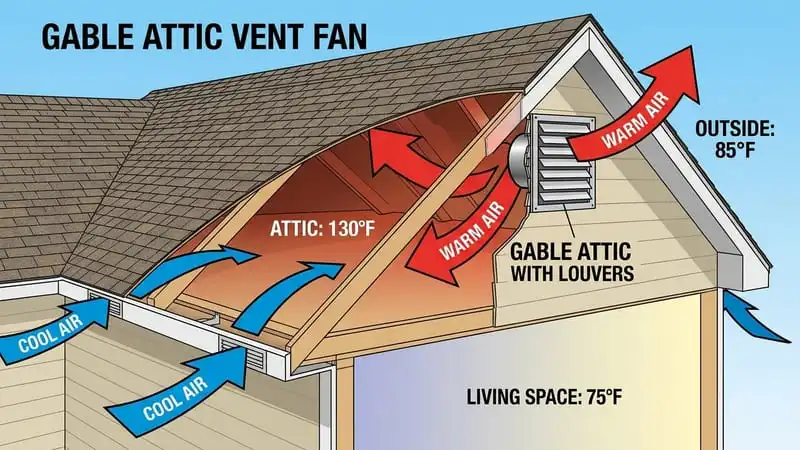
The attic fan exhausts hot air out and allows cool air to enter the house. The concept is straightforward: remove the heated air from the attic and allow fresh air to flow through vent openings. Let’s see what does an attic fan do first.
The Purpose of Attic Fan Ventilation
This is designed to prevent heat and moisture accumulation under the roof. When there is no ventilation, the air in the attic can become very hot during the summer and stagnant in the winter.
If you need powered ventilation but you want to avoid cutting an opening in the roof, a fan mounted on a gable may be helpful. For instance, if the airflow and installation requirements on a wall are acceptable, then a VEVOR 16-inch shutter exhaust fan with a smart programming controller can offer the possibility.
How Do Attic Fans Work?
The air is forced out through a vent, typically in the gable wall or in the roof, by a motor rotating a blade. It is activated by a thermostat when the attic exceeds a predetermined temperature, and some include humidity controls.
Recommended For Your Project
When air is exhausted, new air enters the house, usually at the soffits, and the fan can only operate as well as the intake.
Another VEVOR attic wall-mounted exhaust fan demo also illustrates do attic fans work and how automatic temperature control works:
@vencedor707 ♬ sonido original – Vencedor 707
What Are the Main Benefits of an Attic Fan?
Major attic fan benefits you will get when installing attic vent fans: a cooler attic, a drier attic, and a roof that gets less intense heat.
Lower Attic Heat and Less AC Strain
When it’s hot in the attic, it transfers heat down through the ceiling, so it increases the load on the air conditioner to maintain temperatures in the attic. Removing some of that heat can help to decrease the amount of heat transferred into the living space.
This effect is dependent on insulation, air sealing, climate, roof design, and existing attic ventilation. Therefore, an attic fan should be considered to be part of a ventilation system, not a sure method to save a set amount on your electric bills.
Airflow capacity is particularly important for larger areas. Wall-mounted options that have a higher airflow rate include a VEVOR 24 shutter exhaust fan, which features 3,320 CFM.
Recommended For Your Project
Less Moisture and Mold
Attic conditions can range from cool and dry to warm and humid, depending on nearby bathrooms, kitchens, and living spaces that may send warm, humid air into the attic. If that moisture reaches colder roof surfaces, condensation can occur.
Ventilation may remove moist air or mold from the attic, but it should not replace addressing the source of moisture. Vent bathroom exhaust ducts outdoors, patch roof leaks, and seal air leaks between the house and attic.
If you need a comprehensive explanation of powered ventilation, VEVOR’s shutter exhaust fan information covers everything from airflow and speed control to installation and benefits.
A Longer-Lasting Roof and Insulation
Roofing elements and the components of the attic may deteriorate over time due to extended periods of heat and humidity. Properly ventilating the attic can help control those conditions.
But still, insulation and air sealing are important. A fan won’t help if the insulation is too thin or there are serious moisture issues.
How Does an Attic Fan Improve Home Cooling Efficiency?
A VEVOR attic fan is one of the most reliable options for cooling a home. The attic fan benefits, as discussed above, help in minimizing the heat stored in the attic and transferred through the ceiling.
A whole house fan is unique in that it removes the air from the house and brings in the outside air through open windows. With an attic fan to cool the house, it’s the air above the ceiling being pushed out.
Does a Gable Mount Attic Fan Save Energy?
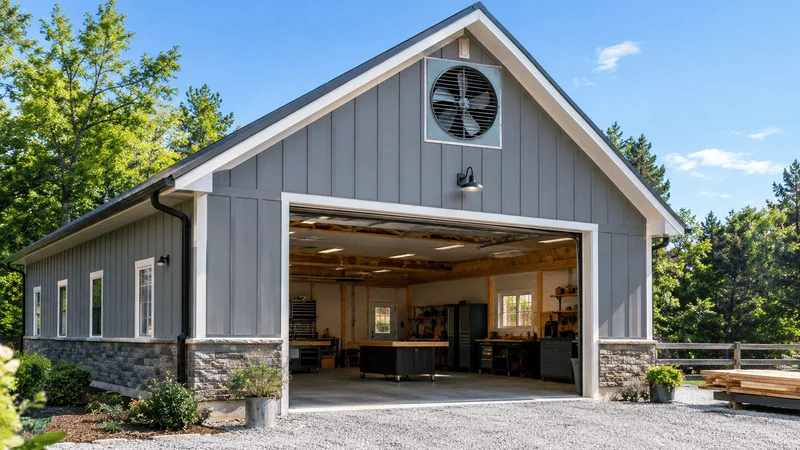
It can, particularly in hot climates and homes where substantial heat builds up in the attic. A gable mount attic fan will be installed on the end wall and is not a roof opening fan.
It’s about matching the airflow with the attic and having sufficient intake ventilation. When homeowners are looking to compare gable mount designs, they should consider the following:
| Fan size | Airflow (CFM) | Power | Electricity used in 8 hours |
| 10-inch | 820 CFM | 45 W | 0.36 kWh |
| 12-inch | 940 CFM | 40 W | 0.32 kWh |
| 16-inch | 2,000 CFM | 115 W | 0.92 kWh |
| 24-inch | 3,320 CFM | 190 W | 1.52 kWh |
If the size of the opening and ventilation required is not particularly large, a smaller wall-mounted exhaust fan, such as a shutter exhaust fan with a smart programming controller, may be more appropriate.
What is the benefit of attic fan air circulation?
The constant breezes prevent the attic space from accumulating heat and becoming a heat reservoir. If hot air is displaced by cooler outside air, the buildup of heat above the ceiling will be less than if hot air is not displaced.
However, the exhaust fan cannot be expected to be the solution to all the energy efficiency issues. The amount of insulation, air sealing, ductwork, windows, and how the home is heated and cooled can be a significant factor in cooling performance.
What Are the Best Attic Ventilation Options for Energy Efficiency?
Are attic exhaust fans more effective than attic vents? Sometimes, but the best setup generally is a combination of appropriate intake and exhaust ventilation, not one or the other.
| Option | How it works | Best for | Watch out for |
| Soffit and ridge vents | Cool air enters low while hot air exits near the roof peak | Most homes | Soffits can become blocked |
| Gable vents | Air moves through openings in the end walls | Simple passive airflow | Less effective on still days |
| Powered attic fan | A motor actively exhausts hot air | Attics needing additional airflow | Requires adequate intake |
| Solar attic fan | Solar power runs the ventilation motor | Sunny locations | Output depends on sunlight |
For most homes, soffit intake combined with appropriate ridge or gable exhaust is a sensible baseline. A powered fan may be used in addition to passive ventilation if passive ventilation alone isn’t providing adequate air movement.
What Are the Most Effective Ways to Keep an Attic Cool During Summer?
Because attic fan operation is designed to remove heat, the most significant results may be achieved by preventing excessive heat and moisture from entering the attic space.
Check first to ensure that the soffits are open and not filled with insulation. If you are unsure, do attic exhaust fans work? Then check the attic floor for air leaks and make sure insulation is adequate. If powered ventilation is desired, this should be considered once all the above requirements are fulfilled.
For a small space, a smaller exhaust fan may be appropriate, and for larger spaces, considerably more airflow may be needed. There are also other-sized ventilation options for comparison, such as VEVOR’s wall-mount exhaust fan with a 20″ size and 3,000 CFM.
Summary
While the attic fan benefits are genuine, they are dependent on the ventilation system as a whole. Using the right fan and the right size intake can aid in removing heat from the attic, control moisture, and reduce heat transfer into the rooms below.
So, how does an attic fan work? See VEVOR’s Shutter Exhaust Fan ventilation guide, which offers information on installation and features, and VEVOR’s attic wall-mounted exhaust fan options, and order the one of your choice.
FAQs
Can Gable Vents Improve Attic Airflow and Reduce Heat?
Yes, a component of a balanced ventilation system. Gable vents allow air to flow through the attic, but passive airflow relies heavily on wind direction and the temperature difference. When needed, a powered fan can be added to provide extra airflow.
Does Running a Continuous Exhaust Fan Help Reduce Humidity?
Not necessarily. In some cases, continuous operation can be used to remove moisture from the attic, although it may also allow humid outdoor air to enter the attic. More specific operation can be achieved with a temperature/humidity controller.
Is a Bigger Attic Fan Always Better?
No, bigger is not automatically better. Fan flow should match the gable attic ventilation needs and the intake room area. If the fan is too large and doesn’t have enough intake, it may not work as expected and can generate unnecessary negative pressure.
Are Shutter Exhaust Fans Suitable for Attic Ventilation?
Depending on installation location and product specifications, they can be: This wall-mounted fan design can be used on gables or other appropriate openings, and the shutter can close when the fan is not in use.