







Download VEVOR App 

Get $5.00 Off $99.00+ Orders on Your First 3 App Orders
Scan the QR code to download
SKU: PKLSJTZDXCDZJQ2A6001V0
Copy


+12
More


 Ask about this product by AI
What is the maximum weight capacity of the VEVOR Pikler Triangle Set?
What are the dimensions of the climbing triangle, arch, and slide board?
How many play modes does the VEVOR Pikler Triangle Set offer and what are they?
Ask something else
VEVOR Pikler Triangle Set, 9-in-1 Toddler Climbing Toys Indoor, with 2 Wooden Cars, Cushion, Triangle, Arch, and Ramp, 150 lbs Load, Foldable Montessori Climbing Set for Toddlers and Kids, Orange
5 6 Reviews
$ 116 90
Earn at least 2% points on purchases or save up to 15%.
Each when you buy 0+.
Shop
Get -% off for new user
Get $5.00 Off $99.00+ Orders on Your First 3 App Orders.
Download Now


Features & Details
- Montessori-Inspired Growth: This 9-in-1 Pikler triangle set supports balance, coordination, and imagination. Each climb builds motor skills and independence while encouraging parent-child bonding. Tested to support up to 150 lbs for confident play
- 9-in-1 Versatile Play Modes: One set, multiple ways to play. Transform the toddler climbing toys into a climbing triangle, arch, balance beam, play tunnel, rocking arch, bridge, seesaw, car track, or climbing ramp—giving kids a new challenge every day
- Upgraded Security & Comfort: This Montessori climbing set is designed with an anti-tip structure, ergonomic curves, smooth edges, detachable feet, and secure ropes. Stable and supportive while staying gentle on little hands—so kids can play confidently
- Easy Setup, Simple Cleaning: The modular design of the Pikler triangle climbing set allows assembly in minutes. The cotton fabric is detachable and machine-washable, making it easier for parents to keep the play area neat
- Extra Toys Included: This Pickler set comes with two wooden toy cars, adding more hands-on play and fine motor practice. It encourages role play and story building, making play more varied and more fun
Product specification
- Item Model Number ZYS003
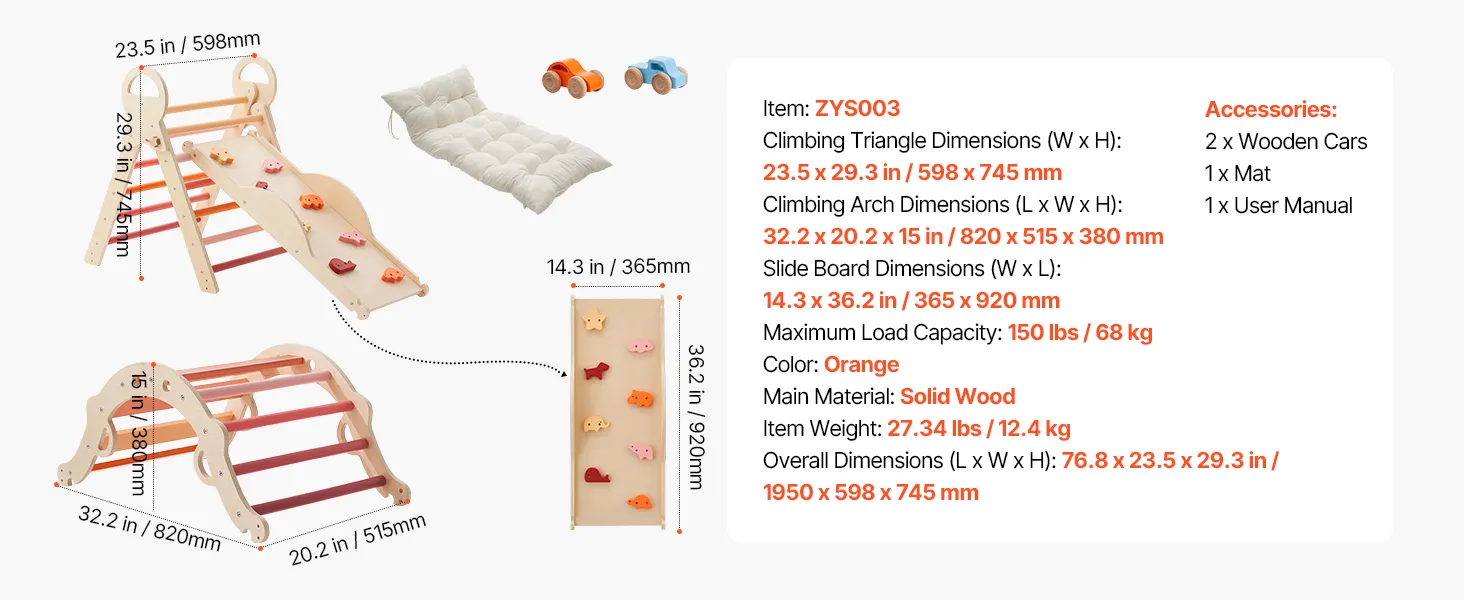
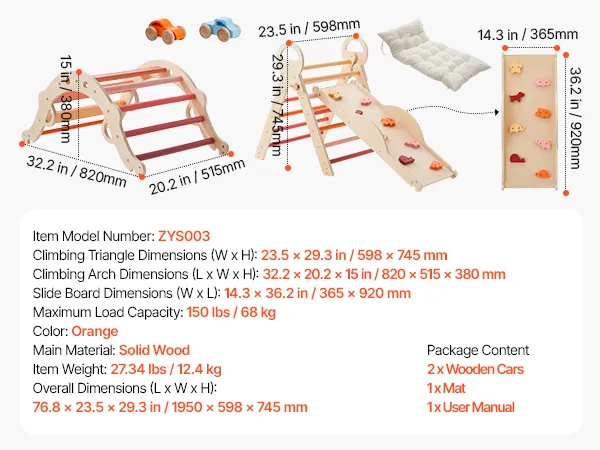
- Climbing Triangle Dimensions (W x H) 23.5 x 29.3 in / 598 x 745 mm
- Climbing Arch Dimensions (L x W x H) 32.2 x 20.2 x 15 in / 820 x 515 x 380 mm
- Slide Board Dimensions (W x L) 14.3 x 36.2 in / 365 x 920 mm
- Maximum Load Capacity 150 lbs / 68 kg
- Color Orange
Frequently Bought Together
Reviews
About this item
Questions and Answers
Explore
Reviews
No customer reviews
Be the first to rate this product. your feedback will helps others make informed decisions.
Write a Review
Top Reviews
About this item
Product specification
- Item Model Number
- ZYS003
- Climbing Triangle Dimensions (W x H)
- 23.5 x 29.3 in / 598 x 745 mm
- Climbing Arch Dimensions (L x W x H)
- 32.2 x 20.2 x 15 in / 820 x 515 x 380 mm
- Slide Board Dimensions (W x L)
- 14.3 x 36.2 in / 365 x 920 mm
- Maximum Load Capacity
- 150 lbs / 68 kg
- Color
- Orange
- Main Material
- Solid Wood
- Item Weight
- 27.34 lbs / 12.4 kg
- Overall Dimensions (L x W x H)
- 76.8 x 23.5 x 29.3 in / 1950 x 598 x 745 mm
Description


Pro-level performance without the pro-level cost
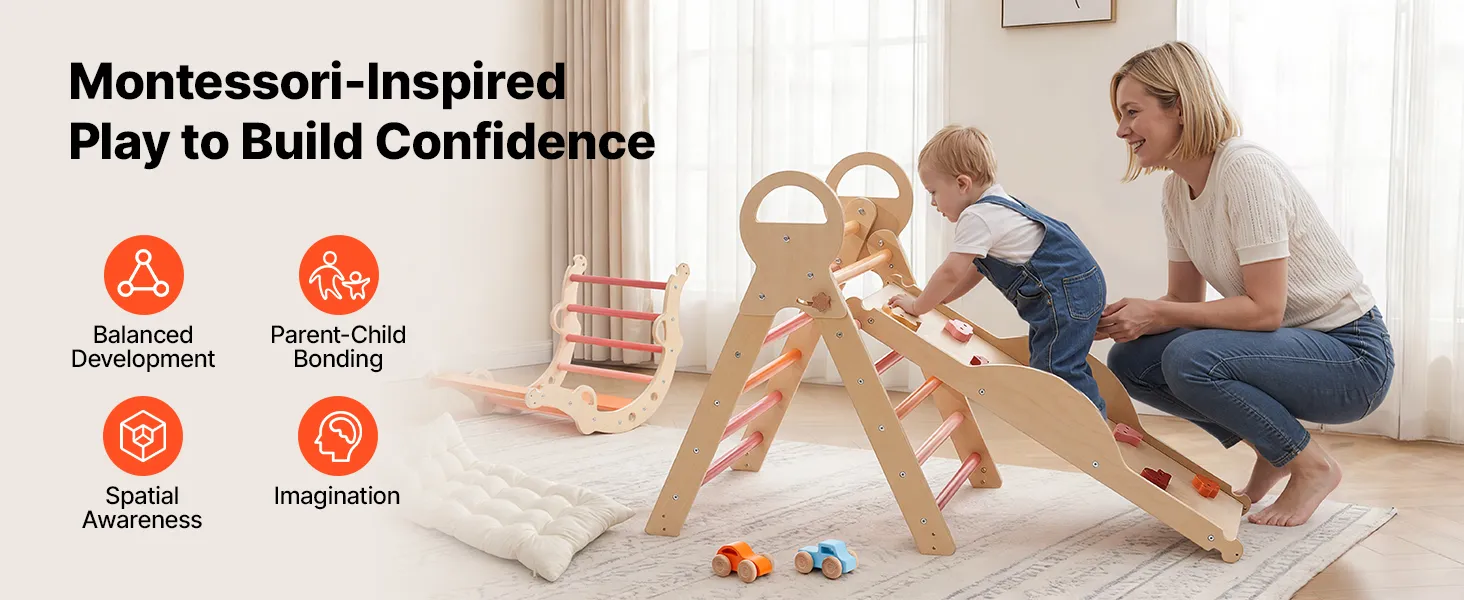
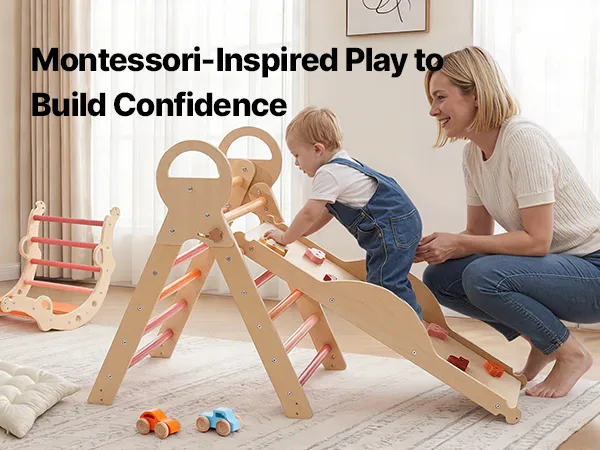
Inspired by Montessori principles, this Pikler triangle set encourages independent exploration and open-ended play, helping children develop sensory skills, balance, and full-body coordination in a secure environment—building confidence through play.
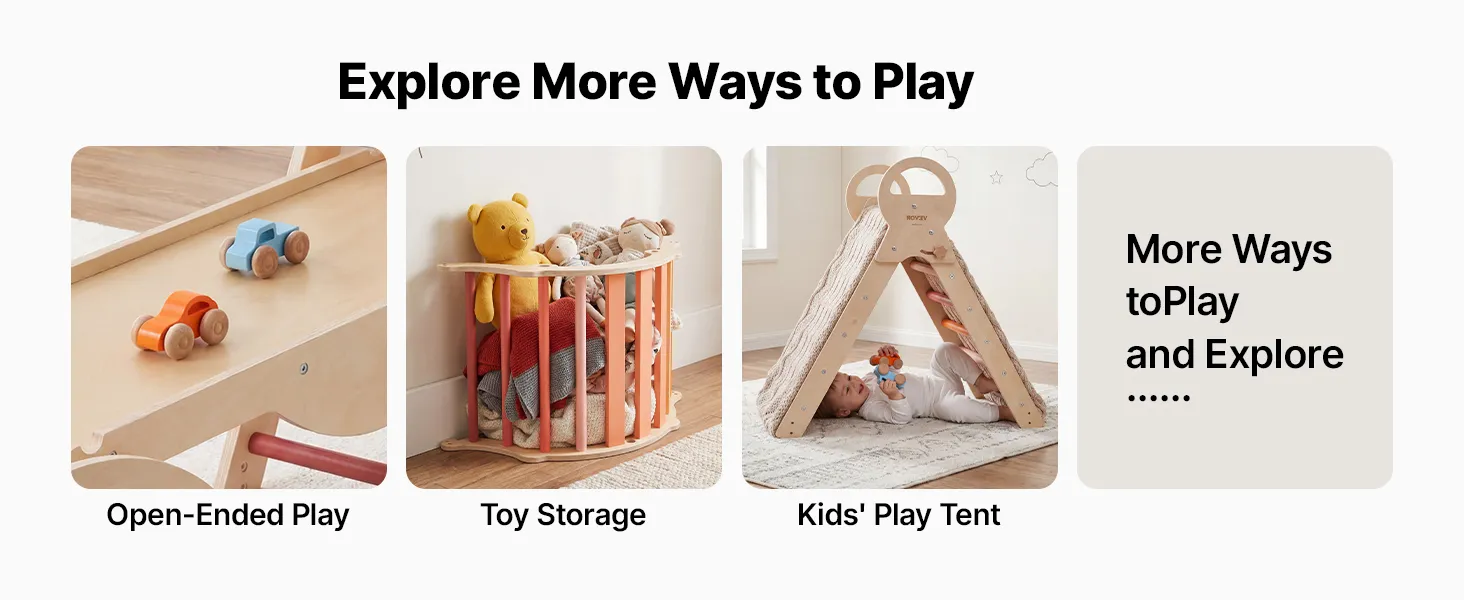
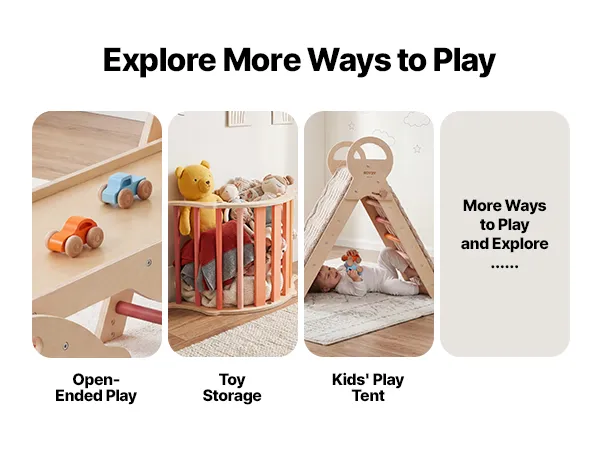
Turn the Pikler climbing set into a toy car track, toy storage space, or even a kids' tent. Easily switch between different play modes and let kids freely explore their imagination.
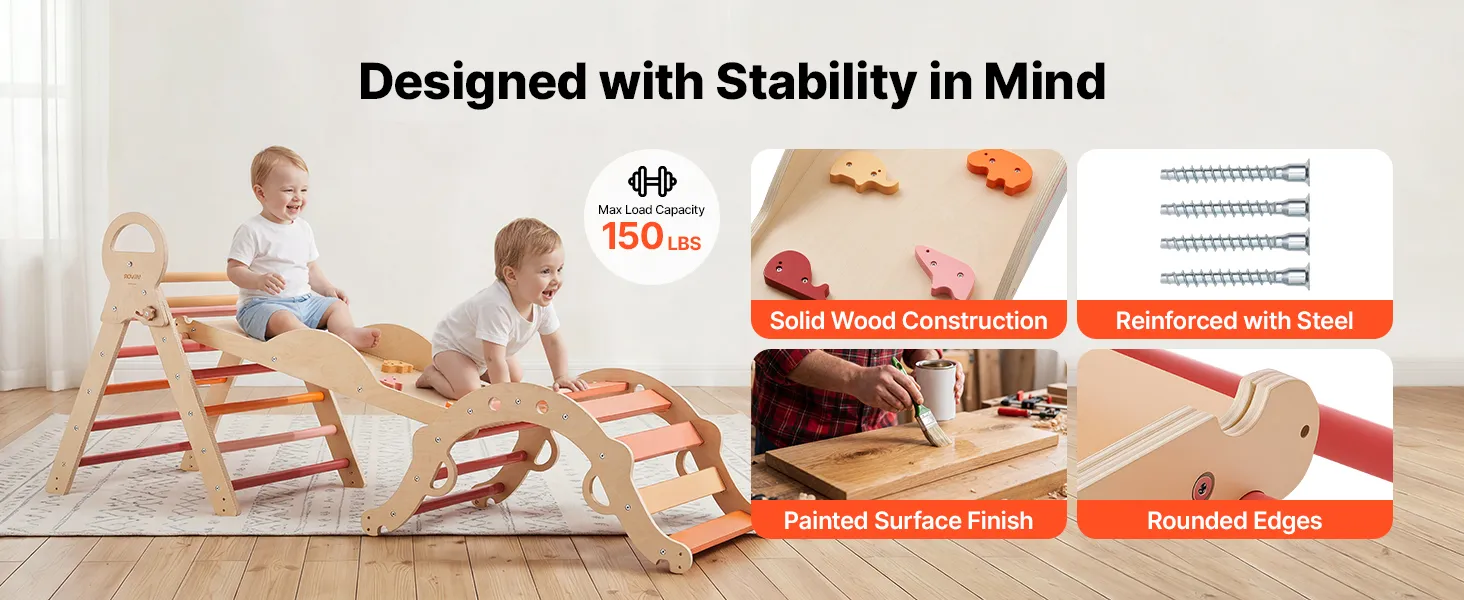
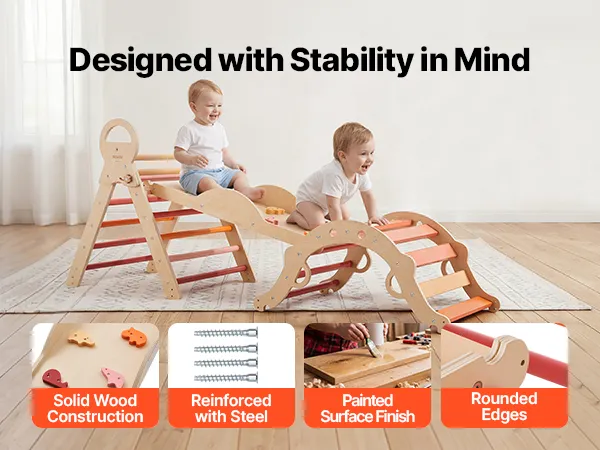
These toddler climbing toys are made from natural solid wood, reinforced steel, and smooth rounded edges, and have passed a 150-lb weight capacity test. Security isn' t an add-on—it' s at the core of our design.
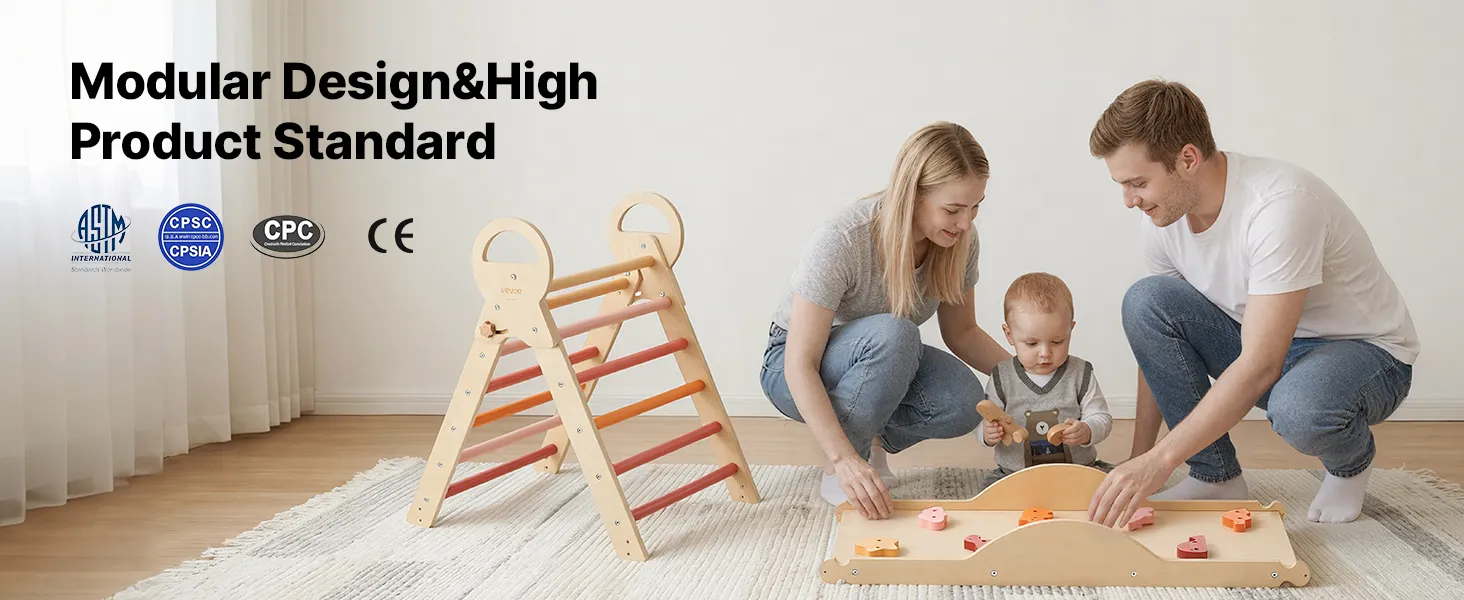
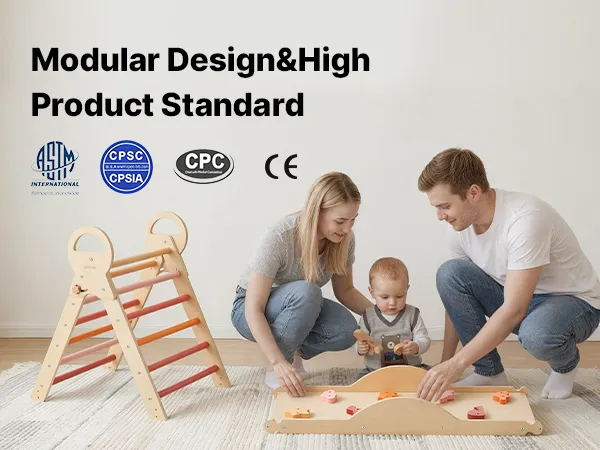
The modular design of the Montessori climbing set allows assembly in just minutes. The removable cotton fabric is machine washable, making it easy to keep clean for easier playtime.
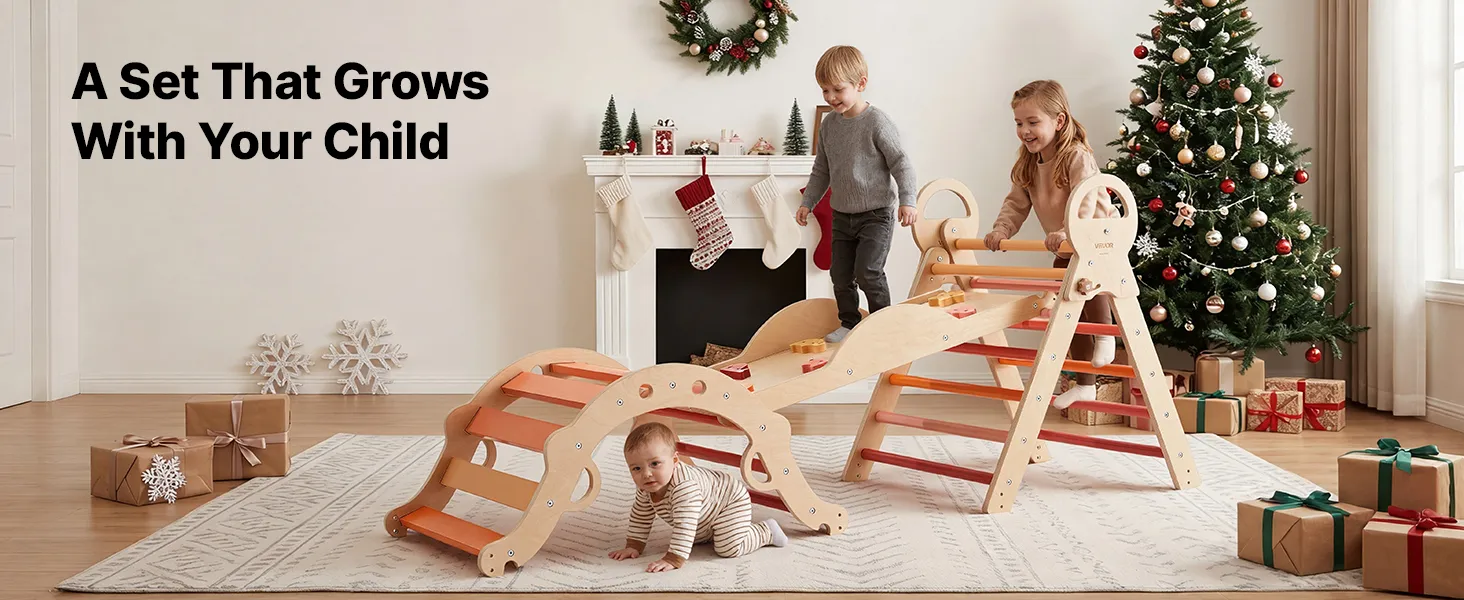
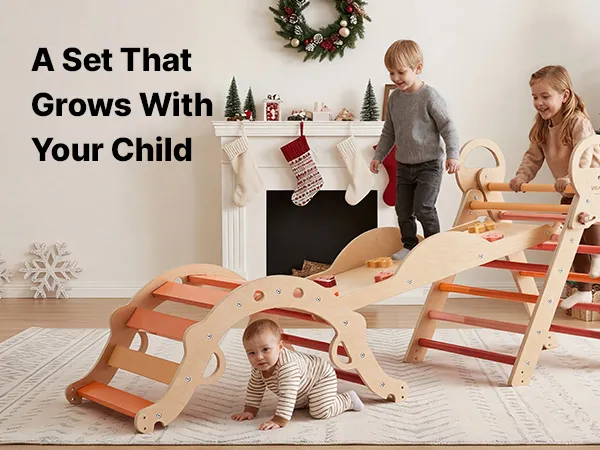
Ideal for birthdays, holidays, or growth milestones, this Pikler triangle climbing set brings joy now and lasting value as kids grow.
Montessori Climbing Set Supporting Independent, Child-Led Play
This Montessori climbing equipment is based on the Montessori philosophy, which emphasizes letting kids guide their learning through practical experience. It provides a toddler with open-ended physical tasks to engage in at their own pace, allowing them to choose how and when to climb, balance, or rock without adult guidance dictating every action, unlike a toy with a single set way to play. What sets a Montessori-style toy apart from a traditional playset with a specific purpose is its freedom.
This method is supported by this set, which rewards frequent, self-directed practice. Instead of providing instruction, each climb helps the child develop coordination and confidence through practice. Because a parent can participate in play or watch from a distance, encouraging a child's freedom without actively supervising the activity, this approach also naturally fosters parent-child bonding.
9-in-1 Configurations from Triangle to Balance Beam to Seesaw
A climbing triangle, arch, balance beam, play tunnel, rocking arch, bridge, seesaw, car track, or climbing ramp are nine different configurations that can be created from a single climbing structure, which supports varied play. From the static balance required on a beam to the dynamic weight-shifting required on a rocking arch or seesaw, each design presents a child with ever-changing difficulties rooted in the same core elements.
Because a toddler who has mastered the basic triangle climb can progress to more difficult configurations, like the bridge or tunnel arrangement, as coordination improves, this range keeps the Montessori climbing set relevant well beyond the first several weeks of use. The set adapts its difficulty to a child's growing physical abilities rather than being rapidly outgrown.
Solid Wood Build Rated to 150 lbs Maximum Load
To climb confidently, you must have faith in the equipment. This set is made of sturdy wood and has a certified maximum load capacity of 150 pounds. In active, closely supervised Montessori play environments, scenarios such as a parent climbing alongside a kid or two children sharing the structure during group play are supported by this rating, which offers a real buffer over the weight of a single toddler.
Additionally, under the repeated strain of climbing, rocking, and shifting weight characteristic of toddler use, solid wood resists the wear that composite or lighter materials cause. At 27.34 pounds, the structure is both light enough for a parent to move around a room as needed between configurations and substantial enough to feel stable underfoot during energetic play.
Anti-Tip Stability with Detachable Feet and Secure Ropes
A structure that won't shift abruptly is essential for physical confidence when climbing, and this set has an anti-tip construction that keeps the toddler grounded even when they move unevenly across it. Because uneven weight distribution places greater strain on the base in more dynamic configurations, such as the rocking arch or seesaw, than during a static ascent, this stability is particularly crucial. Regardless of the design, detachable feet keep the structure stable by adjusting its footing across various configurations.
While strong ropes provide toddlers with a dependable grip for climbs that involve pulling or holding on, ergonomic curves and smooth edges throughout the frame reduce the risk of scrapes during energetic play. Taken as a whole, these features support a Montessori climbing set to facilitate truly autonomous play, as a child must have faith in the structure before attempting more difficult configurations on their own.
Modular Assembly with Machine-Washable Cotton Fabric
Active play shouldn't be hindered by setup, and this set's modular design enables complete assembly in minutes, with no complicated instructions or specialized tools. For parents who wish to switch up the structure between play modes during the week instead of seeing each configuration change as a significant task, this simple setup is important.
Parents can keep the play area clean without much physical scrubbing because the cotton fabric components are fully removable for machine cleaning. A climbing toy's washable cloth component promotes better hygiene than a fixed, wipe-only surface would over frequent, repeated use, given the amount of direct hand and body contact a youngster has with it.
Montessori Climbing Set Includes 2 Wooden Cars for Imaginative Play
The two wooden cars in this set broaden play into imaginative and fine-motor domains, adding to its value beyond physical climbing alone. A child can switch between large-scale climbing movements and smaller-scale pushing, steering, and racing play, using the same structure when these cars are paired with the car track and ramp configurations incorporated into the 9-in-1 system.
From fine-motor car play to imaginative storytelling to gross-motor climbing, this variety reflects the broader Montessori approach of supporting whole-child development rather than focusing on a single skill type. Having both climbing set and hands-on toys included in a single purchase covers more developmental ground than the climbing frame alone for parents looking for a multipurpose Montessori climbing set.
Product guides and documents
User manual-en (PDF) Review
Questions and Answers (0)
Typical questions asked about products: Is the product durable? ...
Select product protection plan
Accident and warranty protection by Xcotton (partner with AIG)
No thanks
3-Year
2-Year
1-Year
In Stock
Security & Privacy
FREE Returns
Professional Service
Compare with similar items
Similar Items You Might Like
People Who Bought This Item Also Bought
Best sellers in this category
People Who Viewed This Item Also Viewed
Your Browsing History
Recommended Searches
renting a boat on lake norman rent a boat in lake travis rent a boat douglas lake renting a boat on lake allatoona rent a boat on lake austin rent a boat at saguaro lake flathead lake rentals boat rail slides water trampoline for the lake rent a boat lake austin island float for lake large float lake machine cubes rent a water slide bounce house bounce house and water slide rentals used trampoline best trampoline a trampoline trampoline lake floats