







Download VEVOR App 

Get $5.00 Off $99.00+ Orders on Your First 3 App Orders
Scan the QR code to download
SKU: BXSLYKDDDYBHAW8RS001V1
Copy


+12
More


VEVOR Portable Camping Air Conditioner 3050 BTU, Tent AC Unit with Hose, Remote & Touch Control, 61–90°F Adjustable, 150 m³/h High Airflow, Low Noise, Ideal for Tent. RV, Outdoor Cooling, Dark Grey
4 69 Reviews
$ 352 90
Earn at least 2% points on purchases or save up to 15%.
Each when you buy 0+.
Shop
Get -% off for new user
Get $5.00 Off $99.00+ Orders on Your First 3 App Orders.
Download Now


Features & Details
- Efficient Cooling: The camping ac delivers 3050 BTU/h cooling capacity with R290 refrigerant, 150 m³/h circulating airflow, and large power for fast cooling in 129.2-161.5 ft² spaces, adjustable temperature range 61-90°F for tents, RVs, and small areas
- Smart Dual Control: Features a touch control panel + wireless remote for easy, intuitive operation. Supports a 1-24 hour timer, you can adjust temperature and modes without getting up, the camping air conditioner is ideal for nighttime sleep or resting
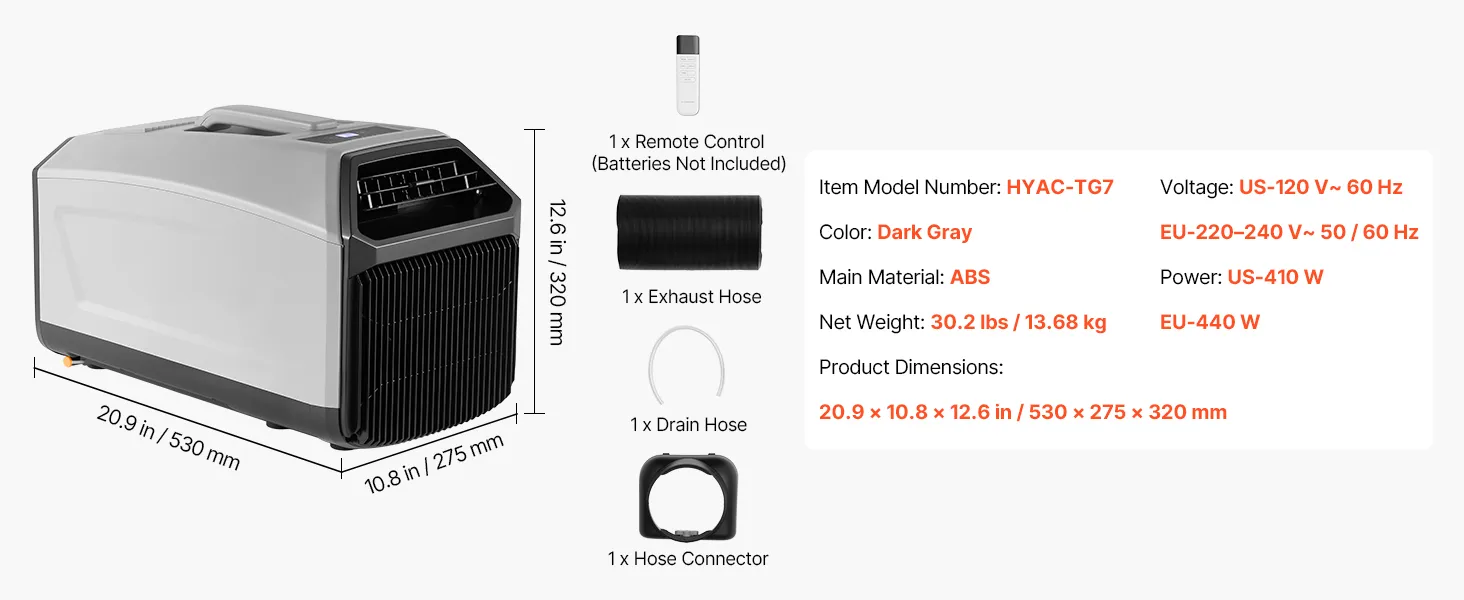
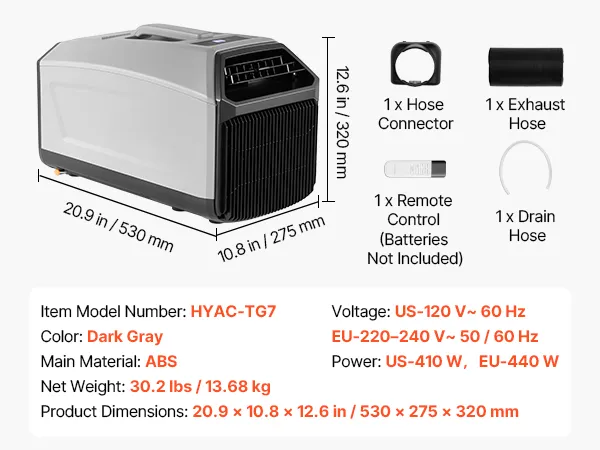
- Portable, Compact Design: This portable tent air conditioner measures 20.9 x 10.8 x 12.6 in, the compact body is easy to carry and store. Made of ABS tough material with a dark gray finish, ideal for camping, RV trips, and more
- Efficient Airflow: With a front air outlet, plus exhaust hoses and duct connector for efficient air circulation. Camping air conditioner runs at 410W with noise kept under 60 dB, so you can cool comfortably without disrupting rest or work
- Complete Accessory Kit: Our tent air conditioner comes with a user manual, exhaust hose, hose adapters, remote control (batteries not included), and main unit for a complete setup. Easy to install and ready to use right out of the box for fast cooling
Product specification
- Item Model Number G7
- Color Dark Gray
- Main Material ABS
- Voltage 120 V, 60 Hz
- Power 410 W
- Product Dimensions 20.9 x 10.8 x 12.6 in / 530 x 275 x 320 mm
Reviews summary
4 69 Reviews
Customers say: The portable air conditioner is praised for its effective cooling, portability, and ease of setup, but some users reported issues like poor durability, inadequate cooling, and malfunctioning features.
Al-generated from customer reviews
Frequently Bought Together
Reviews
About this item
Questions and Answers
Explore
Reviews 4.0
All reviews are from verified purchases
Average rating based on 69 reviews
Reviews 4.0
All reviews are from verified purchases
Customers say
The portable air conditioner is praised for its effective cooling, portability, and ease of setup, but some users reported issues like poor durability, inadequate cooling, and malfunctioning features.
Al-generated from customer reviews
Top Reviews
See all 69 reviews
About this item
Product specification
- Item Model Number
- G7
- Color
- Dark Gray
- Main Material
- ABS
- Voltage
- 120 V, 60 Hz
- Power
- 410 W
- Product Dimensions
- 20.9 x 10.8 x 12.6 in / 530 x 275 x 320 mm
Description


Pro-level performance without the pro-level cost
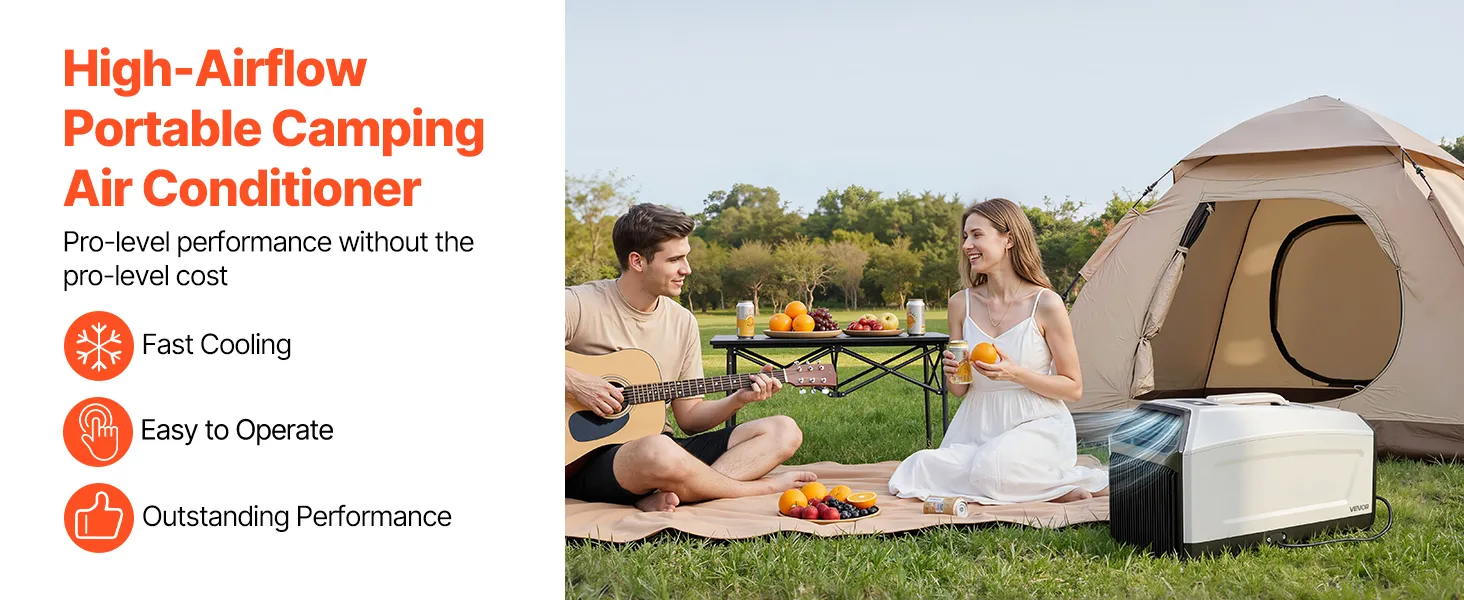
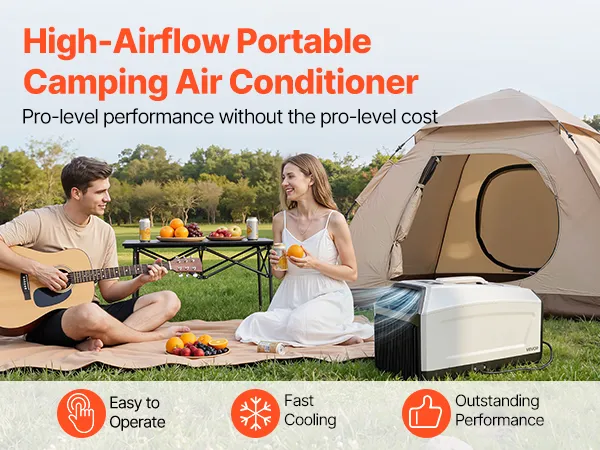
Enjoy cool, comfortable air anytime, anywhere. This portable air conditioner is designed for life on the go.
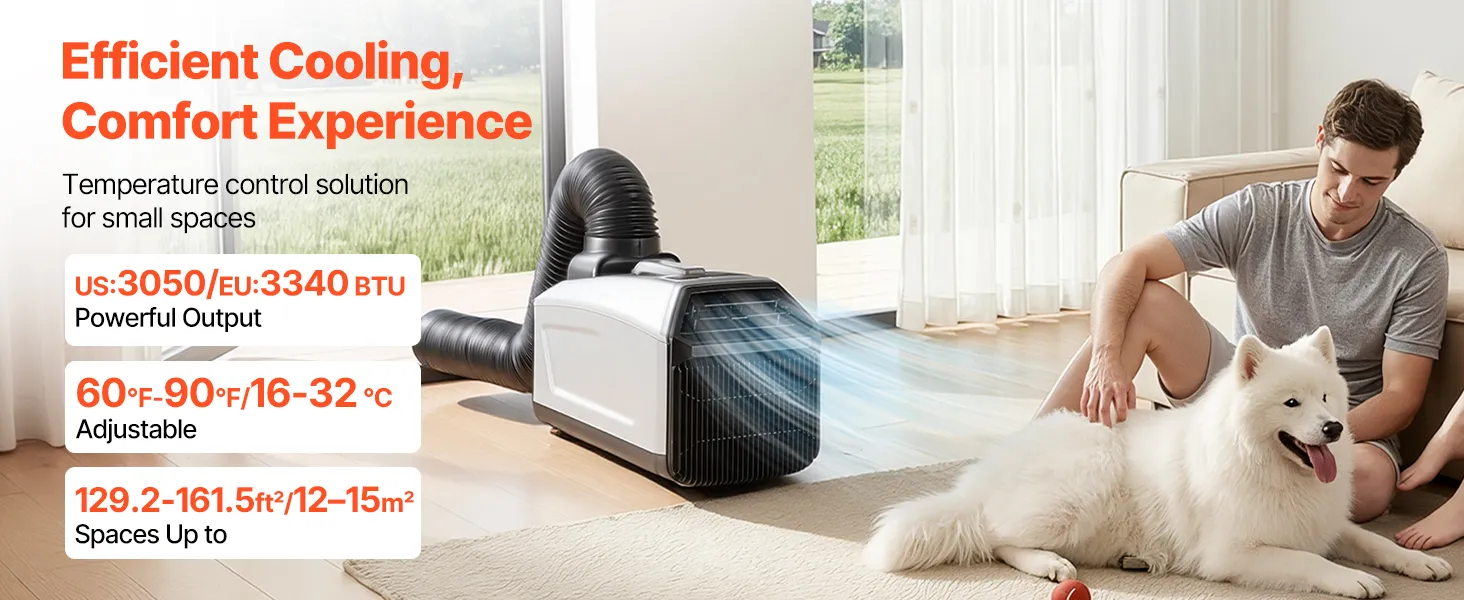
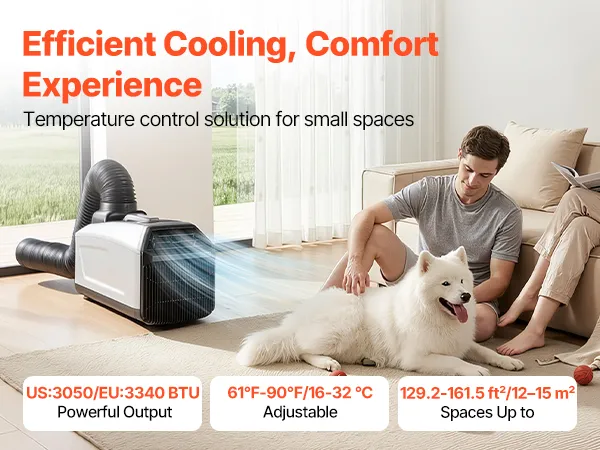
With high cooling capacity, this unit delivers fast temperature drop, making it a reliable portable camping AC for small spaces.
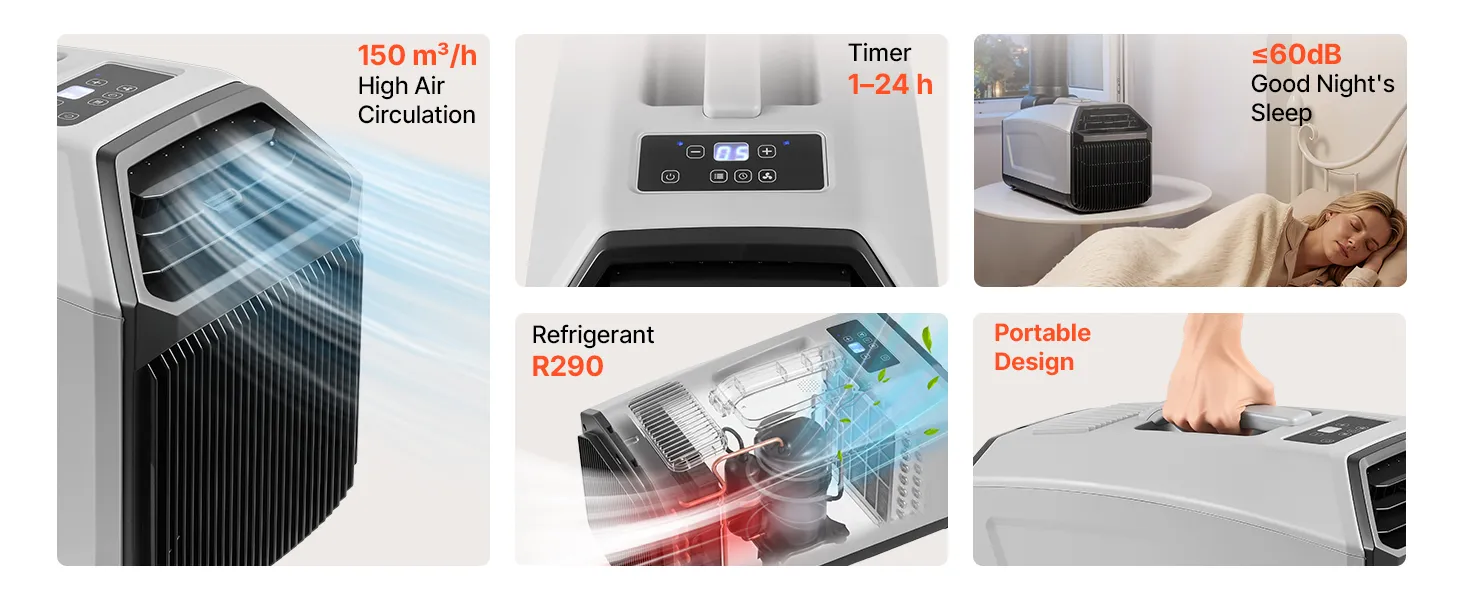
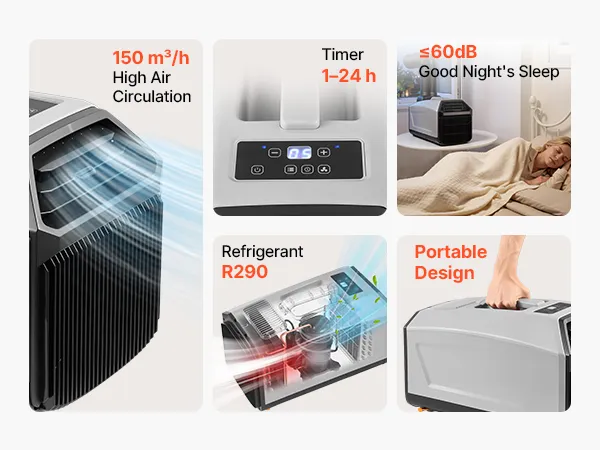
Featuring a dual-duct system and high airflow, this tent AC unit improves ventilation efficiency while keeping noise lower for more comfortable rest or work.
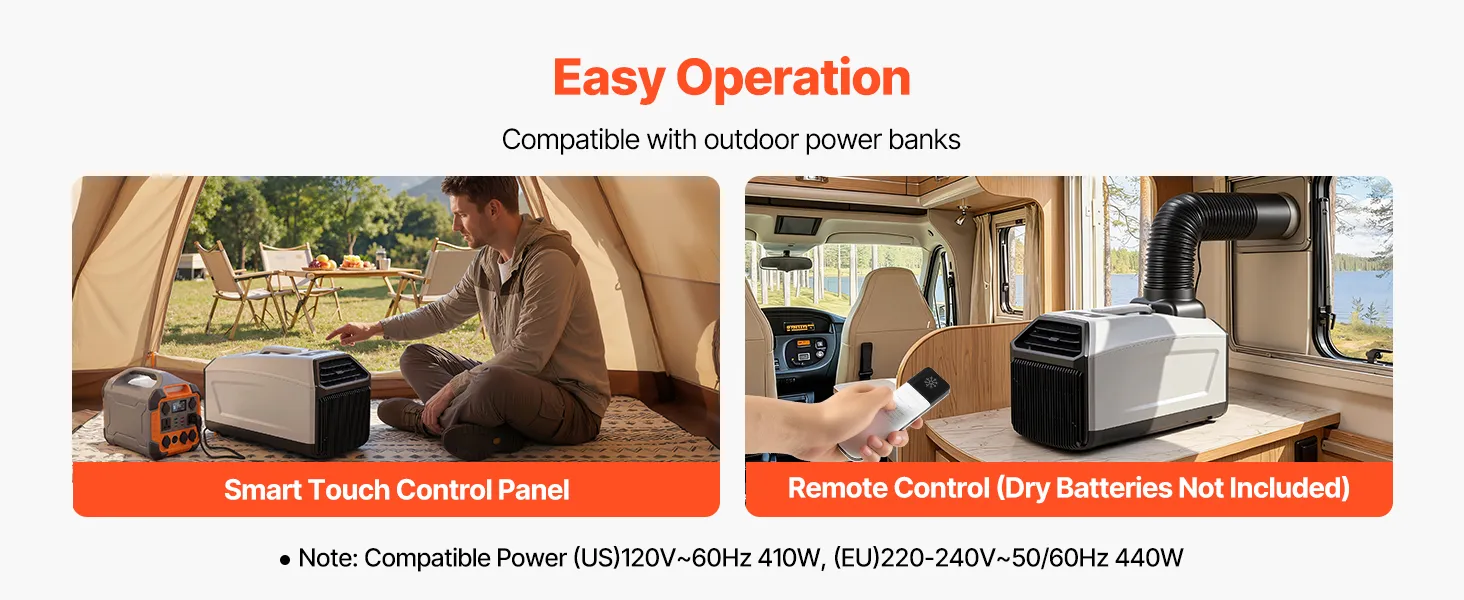
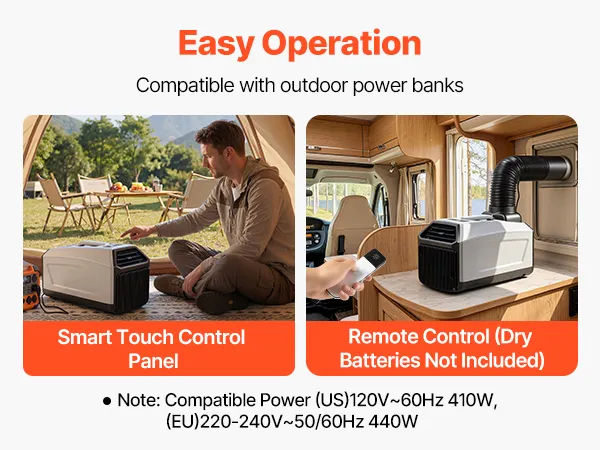
Easily manage settings via touch panel or remote. With a 1–24h timer, this camping AC unit features flexible and convenient control for daily use.
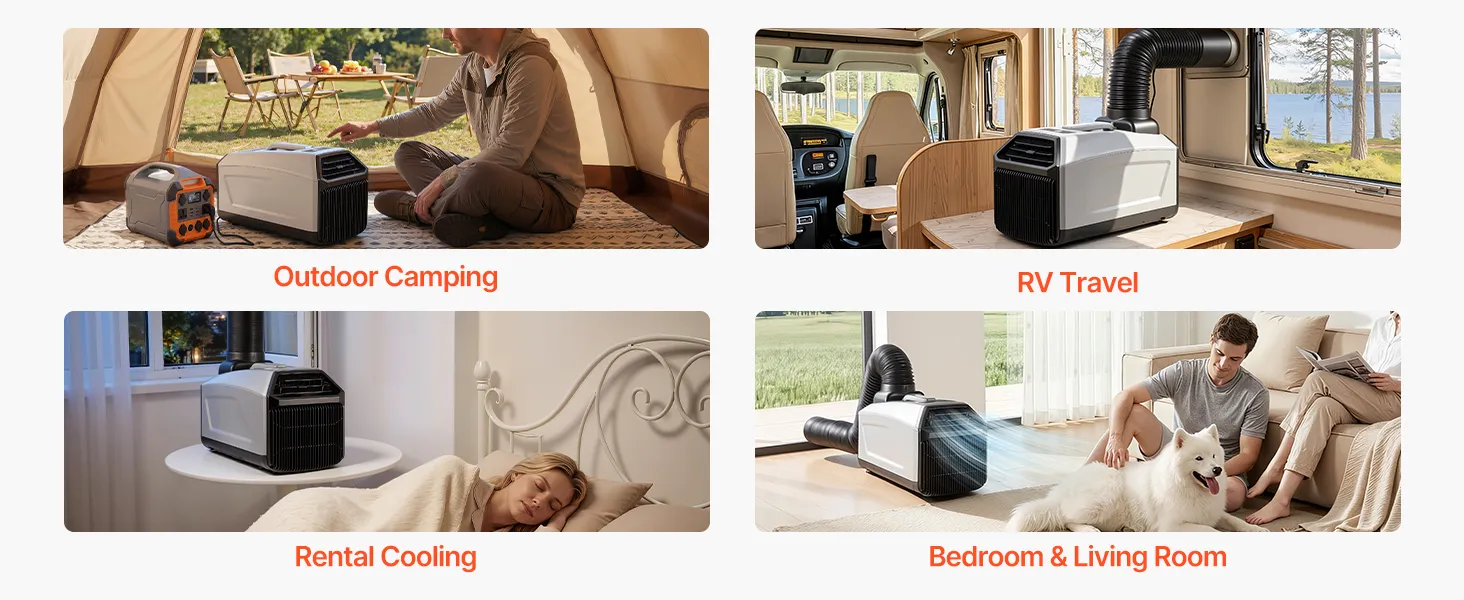
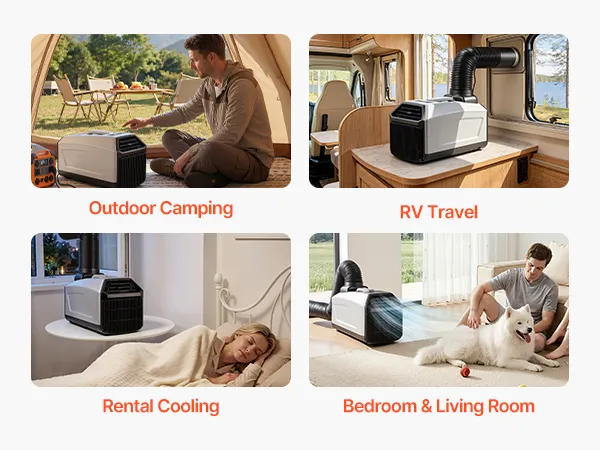
Designed for outdoor comfort, this portable air conditioner camping setup helps reduce heat and humidity, making nights more comfortable in tents or outdoor spaces.
3050 BTU Cooling Capacity Built for Tent Camping Conditions
Because of their thin walls, intense sunlight, and lack of insulation, tent interiors can get much hotter than the surrounding air. Specifically designed to address that issue, this portable air conditioner for tent camping uses R290 refrigerant. It delivers 3050 BTU/h of cooling capacity to swiftly remove heat from a tiny, contained area rather than gradually dissipating it over hours.
Whether you're trying to reduce peak afternoon heat or maintain a comfortable baseline overnight, you can precisely control how aggressive the cooling cycles are, with a temperature range adjustable from 61 to 90°F. This type of dedicated cooling output, as opposed to a passive fan, is the difference between a horrible night and a genuine rest for anyone who has attempted to sleep in a stifling tent on a summer vacation.
R290 Refrigerant Delivers 129.2–161.5 ft² of Adjustable Cooling
Because there is nowhere for cold air to disperse, it either circulates well or it doesn't; the coverage area is more important in tents and tiny, confined spaces than in open rooms. This unit's 129.2–161.5 ft² rating corresponds to the footprint of most typical camping tents, tiny RV cabins, and small outdoor shelters, where a full-size air conditioner would not fit or function well.
Because it cools effectively at a lower unit size without requiring the bulk of conventional refrigerant systems, R290 refrigerant is specifically used. Instead of acting as a glorified fan that circulates lukewarm air around a hot enclosure, this efficiency allows the portable air conditioner for tent camping to remain small while still delivering actual cooling.
Portable Air Conditioner for Tent Camping Touch Panel and Remote Control with 1-24 Hour Timer
This device has both a touch control panel on the device itself and a wireless remote that can be operated from inside a sleeping bag or camp chair, because camping setups rarely have much extra space to reach across for controls. You don't have to get up, open a tent flap, or search for a button in the dark to change the temperature or switch between settings.
The included 1-24-hour timer offers a feature most portable coolers and fans lack. It may be programmed to operate during the hottest part of the evening and then automatically cut off, saving battery or generator power rather than running until someone manually shuts it off. That automated shutdown is a minor feature that significantly improves convenience, especially when it comes to sleeping at night.
20.9 x 10.8 x 12.6 in Compact Body for Easy Camp Transport
When equipment needs to fit in a trunk, RV storage bay, or camp trailer with coolers, tents, and everything else needed for a vacation, every extra pound and inch counts. This unit's dimensions of 20.9 x 10.8 x 12.6 inches allow it to fit into small storage places without taking up much room in the cargo area. The ABS housing maintains the body's durability without adding extra weight.
For outdoor equipment that is frequently loaded and unloaded, the dark gray finish is a sensible option because it won't show dirt and scuffs as a lighter finish might after a few excursions. The whole idea behind this portable air conditioner for tent camping is its small footprint and cooling power, without the need for a full-size unit or special vehicle space for transport.
410W Operation Under 60 dB for Quiet Nighttime Rest
This 410W unit can be powered by a generator, a portable power station, or a standard 120V hookup, without requiring more power than most camping setups support. Instead of requiring industrial-grade power infrastructure, that power draw keeps it within the range of most RV electrical systems and mid-size generators.
Perhaps the biggest issue with using a tent in particular is noise; having a noisy compressor a few feet away from your head all night ruins any attempt to get a good night's sleep. This device is quiet enough to run through the night without drowning out the sounds of the outdoors or disturbing anyone sharing the tent or campsite because it operates at a volume of less than 60 dB, which is comparable to regular conversation.
Complete Setup Kit Makes This Portable Air Conditioner for Tent Camping Ready Out of the Box
For outdoor equipment, setup difficulty is a major obstacle because no one wants to troubleshoot missing parts at a campsite without a hardware store close by. The main unit, an exhaust hose, hose adapters, a wireless remote, and a printed user manual are included in the shipment, making the entire system ready for installation upon delivery.
The main mechanism that enables portable cooling to function in a confined environment is the front air outlet, which, when combined with the included exhaust hose and duct connector, directs hot air out of the tent rather than simply recirculating it. Without the need for extra equipment or separately purchased parts, most customers can go from unboxing to pumping cool air in less than fifteen minutes, thanks to the supplied hardware and simple hose routing.
Product guides and documents
User manual-en (PDF) Review
Questions and Answers (11)
what's the surge power for this unit?
The rated operating power of this product is 410 W.
By vevor
Helpful
(
1
)
What is the wattage used in sleep mode?
Rated power of the entire unit: 410 W (power consumption during maximum operation/cooling). In sleep mode, when the compressor is running at a low frequency or the unit is in fan-only mode, actual power consumption is typically lower than the rated maximum power of 410 W (if only the fan mode is enabled, power consumption is generally around 30 W–50 W).
By vevor
Helpful
(
0
)
What size is the exhaust pipe?
The size of the exhaust pipe is 55cm.
By vevor
Helpful
(
0
)
How much space is needed around the unit? It does not specify in the guide
3 square meters is better to use.
By vevor
Helpful
(
0
)
Puede este aire acondicionado usarse con un generador portatil de 1350 w y por cuanto tiempo??
Sí, siempre y cuando el generador de 1350 W pueda soportar el pico de arranque del aire acondicionado y el consumo continuo de energía.
By vevor
Helpful
(
0
)
Select product protection plan
Accident and warranty protection by Xcotton (partner with AIG)
No thanks
3-Year
2-Year
1-Year
In Stock
Security & Privacy
FREE Returns
Professional Service
Compare with similar items
Similar Items You Might Like
People Who Bought This Item Also Bought
Best sellers in this category
People Who Viewed This Item Also Viewed
Your Browsing History
Recommended Searches
portable evaporative swamp cooler ice chest cooler with fan ice chest fan cooler aquarium cooler fan chiller compressor aquarium fan cooler water cooler filtration system bottleless water cooler dispenser evaporator water cooler evaporative water cooler outdoor evaporative cooler home evaporative cooler milk cooler water cooler fan water cooler fan price fan cooler water fan and water cooler fan for water cooler water cooler with fan indoor evaporative cooler