Brewing Equipment













Results for Brewing Equipment
Brewing equipment is the collection of vessels and tools used to turn raw ingredients into fermented or distilled drinks. At its core, it heats and holds liquid so grains, fruit, sugar, or water can be mashed, boiled, fermented, and in some cases distilled into a finished beverage. Each piece controls one part of that journey: extracting sugars, boiling and sterilizing the wort, holding a steady temperature, separating solids, or condensing vapor back into liquid. Good equipment delivers even heat, accurate temperature readings, and clean food-safe surfaces, so the same recipe produces a consistent result from one batch to the next.
The lineup spans a few main types. All-in-one brewing systems combine mashing and boiling in a single powered vessel of roughly 8 to 16 gallons, while brew kettles run from about 5 to 16 gallons for brewers who prefer their own heat source. Water alcohol distillers range from compact 3-gallon stills to 18.5-gallon boilers for spirits and purified water, and large beer brewing barrels with conical fermenters handle bulk fermentation for advanced setups. Typical uses are brewing beer from grain, fermenting wine, cider, or mead, distilling whiskey or brandy, and scaling a hobby toward small-batch production.
Five things decide what you need:
- Batch size: match the vessel to how much finished drink you want per run, and leave extra headroom above that for the boil.
- Heat source: decide between a self-contained electric unit and a pot that sits on a gas, coal, or stovetop burner.
- Process: choose for the job at hand, whether that is mashing and boiling, fermenting, or distilling.
- Material: stainless steel is easy to clean and neutral in flavor, while copper helps refine the taste of spirits.
- Controls: look at thermometers, timers, and pumps that make long sessions repeatable and hands-off.
Browse the full brewing equipment range to compare sizes and configurations, or go straight to the alcohol distillers if spirits are your goal, and build a setup that grows with your craft.
Brewing Equipment Types at a Glance
The table below sorts the main equipment types by what they do and who they suit, so you can narrow the field before comparing individual models.
| Sub-type | Role in Brewing | Experience Level | Space Requirement | Selection Note |
|---|---|---|---|---|
| All-in-one electric brewing systems | Mashing and boiling in one powered vessel | Beginner to intermediate | Countertop or kitchen bench | Easiest entry point; one vessel handles the whole brew day |
| Brew kettles | Boiling and sterilizing the wort | Intermediate, all-grain brewers | Stovetop or burner stand | Pick when you want full control and already have a heat source |
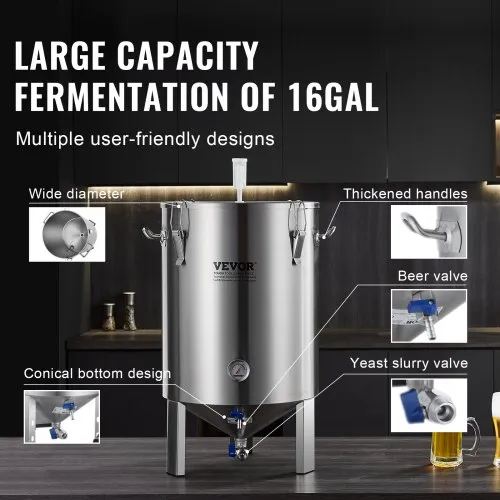
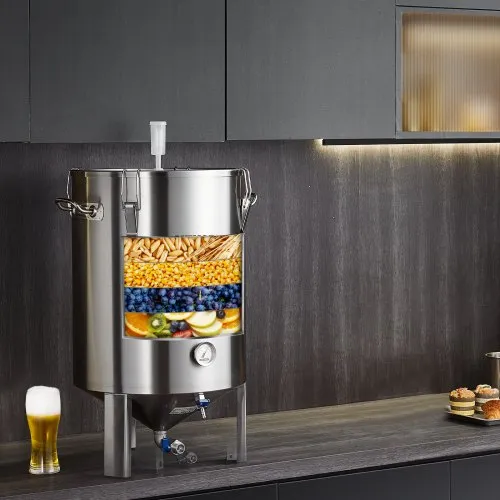
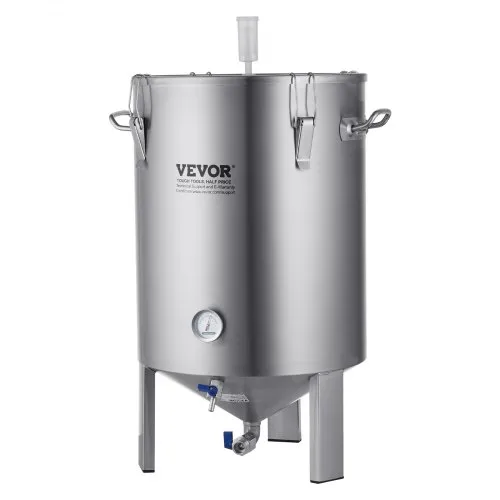
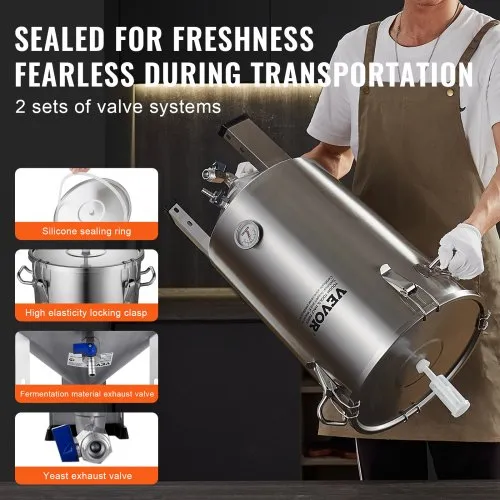
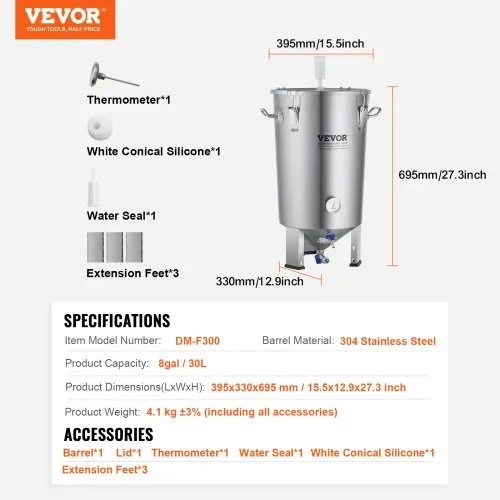
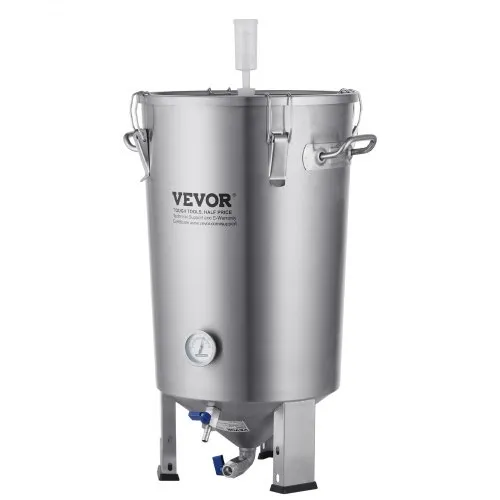
| Conical pressure fermenters | Sealed secondary fermentation | Intermediate to advanced | Upright on floor or bench | Choose for cleaner fermentation and easy yeast harvesting |
| Water alcohol stills | Distilling spirits and purifying water | Hobby to small commercial | Stovetop or sturdy bench | The route to spirits rather than beer; check local distilling laws |
| Beer brewing barrels | Bulk fermentation and conditioning | Advanced, semi-commercial | Dedicated floor space | Step up only when batch volume outgrows a single kettle |
VEVOR Brewing Kits, Distillers, and Brew Kettles for Home and Professional Use
Are you looking for the perfect setting to start brewing or get better at it? Whether you are a serious craft brewer or just a weekend fan, you need the right brewing equipment. VEVOR has a wide range of distillers, brewing kits, and kettles that are sure to meet your needs, with results that you can count on, ease of use, and long-term reliability for all batch sizes.
Understanding Brewing Equipment Types and the Right Capacity for Your Needs
Understanding which system best suits your production objectives and how much volume you actually require per batch is the first step in selecting the best brewing equipment. A successful brewing system starts with matching equipment to capacity, from small starter kits to large-scale distillation facilities.
Home Brewing Kits: Entry-Level Systems for Small Batches
A complete brewing kit distiller is the simplest way for someone just starting to begin home brewing. With an emphasis on simplicity, these kits combine necessary parts such as a kettle, fermentation vessel, thermometer, airlock, and tubing into a single, ready-to-use package. The standard size of VEVOR's home brewing kits is between 3 and 10 gallons, which is perfect for making 2 to 8 liters of finished product per run.
The low learning curve of these kits is what makes them so attractive. A typical kitchen or utility area is sufficient; no prior experience or a dedicated workshop is required. The systems are simple to use, small, and quick to clean. You can focus on the craft rather than the setup with VEVOR's brewing kit distiller models, featuring easily assembled parts and clearly labeled components. Home brewers commonly use these systems to distill wine, beer, cider, and inexpensive spirits. The most common option is a 5-gallon batch size, which lets you make enough for casual sharing or personal enjoyment without requiring significant equipment or space investments. For individuals just beginning, these kits offer the perfect balance of price, usefulness, and ease of use.
Brew Kettles, Scalable Capacity for Serious Home and Craft Brewers
One of the most essential pieces of brewing equipment in any serious brewer's toolbox is a brewing pot. They are the main containers for mashing, boiling wort, and sterilizing ingredients; therefore, choices on size and material are crucial. VEVOR brew kettles come in a variety of capacities, typically 8-30 gallons, making them suitable for both home use and small-scale commercial production.
A 10-gallon kettle offers the headroom required to boil without overflow, control foam, and account for evaporation during a 60–90 minute boil for a typical homebrewer making 5-gallon finished batches of beer. For brewers who host small parties, taprooms, or homebrew contests, upgrading to a 15- or 20-gallon kettle is a realistic option, as it allows for larger batches.
Beyond capacity, VEVOR brew kettles feature wide, flat bases for uniform heat distribution, reinforced handles for heavy use, and calibrated volume markings carved into the interior wall. For easy water transfer, several versions feature a ball valve spigot and an integrated thermometer port. A good kettle offers the consistency and heat control that distinguish mediocre batches from outstanding ones, whether you are using extract or all grain brewing.
Moonshine Stills and Water Alcohol Distillers: Mid-Range Capacity Systems
A moonshine still or water alcohol distiller is a devoted and effective solution for anyone interested in making alcohol, water, oils, or purified water. From sturdy 13-gallon stainless steel alcohol distillers to modest 3-gallon copper pot stills, VEVOR's distillation systems have a wide capacity range, making them appropriate for small scale commercial distillation as well as personal hobby use. A common starting point for small-batch spirits is a 5-gallon moonshine still. Depending on wash strength and efficiency, one run at this size can yield one to two liters of finished distillate. For distillers who wish to regularly batch-make whiskey, rum, gin, or fruit brandy, VEVOR's 8- and 13-gallon water-alcohol distiller models are ideal, as they enable longer runs at a lower frequency.
Because the ratio of fermented wash to final product ranges from 5:1 to 8:1, capacity planning is particularly important for distillers. Accordingly, a 10-gallon still will normally generate 1.5 to 2.5 liters every run. Selecting a vessel that is still the same size as your fermentation helps you maintain consistent production cycles and prevent bottlenecks in your process.
Barrel Beer Brewing Systems, Large Format Equipment for Advanced Setups
Barrel beer brewing systems offer the volume and control that seasoned brewers require as brewing progresses beyond the hobby stage and into semi commercial or serious craft territory. These systems are frequently found in brewpubs, craft nano-breweries, and ambitious homebrewing operations with dedicated premises. They are made to handle large-volume production runs, usually 15 to 55 gallons.
Conical fermenters, jacketed unitanks, and sizable stainless steel brew kettles that facilitate full-scale all-grain operations are part of VEVOR's barrel-scale brewing equipment lineup. For example, a half-barrel batch of beer, or roughly 15.5 gallons of finished product, may be handled by a 30-gallon conical fermenter, which is a major improvement over consumer-level equipment.
There are benefits to barrel beer brewing systems beyond mere volume. These technologies provide easier yeast harvesting at the conical bottom, more accurate temperature control during fermentation, and easier cleaning using CIP (clean-in-place) connections. Having separate fermenters for each batch is critical to preserving flavor integrity and for scheduling efficiency for brewers making several types at once. Whether you are making lagers, ales, stouts, or sour beers, investing in appropriately sized barrel brewing equipment establishes a professional, scalable, and repeatable workflow that lays the groundwork for your craft company to evolve beyond a hobby.
Matching Brewing Equipment to What You Want to Make
Once you know your batch size, the next question is what you are actually making. This table pairs each goal with a starting setup and the detail most often missed before buying.
| Goal / What You Want to Make | Recommended Equipment | Key Consideration | What to Watch For |
|---|---|---|---|
| Brew beer from grain or extract | All-in-one electric system or brew kettle | Power source and boil headroom | Leave 20 to 25% headroom above the batch so the wort does not boil over |
| Distill whiskey, brandy or neutral spirits | Water alcohol still with copper or stainless condenser | Local distilling laws | Confirm home distilling is legal in your area before you run a wash |
| Purify water or extract essential oils | Stainless steel water alcohol distiller | Coil length and cooling water flow | A circulating pump and a longer coil keep condensation steady on long runs |
| Ferment wine, cider or mead | Conical pressure fermenter or brew bucket | Sealed lid and airlock | Sanitize fully between beverages so flavors and yeast strains do not carry over |
| Grow into small-batch selling | Barrel system with separate conical fermenters | Dedicated floor space and cleaning access | Run a fermenter per batch to keep schedules moving and flavors distinct |
Material and Features That Define Quality Brewing Equipment
Your brewing equipment's material composition and integrated features directly impact its overall brewing consistency, longevity, ease of maintenance, and flavor quality. Knowing what to look for before making a purchase helps ensure that your investment remains worthwhile across many batches.
Stainless Steel vs Copper: Choosing the Right Material for Your Still or Kettle
The two most common materials used in brewing equipment are copper and stainless steel, each with unique benefits depending on use. Due to their remarkable durability, corrosion resistance, and ease of cleaning, stainless steel alcohol distillers are the most popular option for contemporary brewers and distillers. Because food-grade 304 stainless steel is non-reactive, it will not change the flavor of your distillate, beer, or spirit while it is being made.
VEVOR stainless steel alcohol distillers and brew kettles are constructed from 304-grade stainless steel, and their mirror-polished interiors reduce bacterial growth and make cleanup easier after each run. Additionally, stainless steel is heat-tolerant; it can withstand electric and direct flame heating components without warping or deteriorating over time. Conversely, copper has a long history of use in distillation, especially in the manufacturing of brandy and whiskey. Sulfur molecules produced during fermentation react with copper to eliminate unpleasant off-flavors, producing a cleaner, smoother distillate. For safe, long-lasting use, VEVOR's copper pot still models combine the flavor-refining qualities of copper with strengthened seams and premium solder joints. Stainless steel remains the industry standard for beer brewing equipment. Copper components, especially in the column and coil, can significantly improve output quality in spirit distillation, where taste refinement is important.
Key Features to Look for in High Performance Brewing and Distillation Equipment
Beyond material, your brewing equipment's specific features influence how simple, safe, and reliable your process will be. A few characteristics of VEVOR's brewing and distillation portfolio stand out as especially useful for both novice and seasoned brewers. To achieve the temperature windows that yield the best results, real-time temperature monitoring during mashing, boiling, and distillation is enabled by thermometer ports and integrated thermometers. The majority of VEVOR brew kettles come with a port or a stainless-steel thermometer fitting for easy installation.
Ball valve spigots transfer wash or wort in a regulated, drip-free manner without requiring the lifting of large vessels. For both hot and cold liquids, VEVOR uses thick-walled tri-clamp or threaded ball valves in the majority of its products. Fermenters and many distillers use sealed lids with vapor locks. They restrict contamination from outside air while allowing CO2 to escape during fermentation, a trait that directly affects the final product's quality. Longer coils increase condensation efficiency at higher flow rates; hence, it is important to assess the coil diameter and length in moonshine still and water alcohol distiller models. When combined, these characteristics transform a laborious setup into a simple, repeatable brewing procedure that consistently produces high-quality output.
Best-Seller Comparison
These are five of the most popular pieces on the page, lined up on the specs that separate them, so you can see at a glance which one fits your brew day.
| Product | Equipment Type | Capacity | Heating Method | Temperature Control | Standout Hardware | Best For |
|---|---|---|---|---|---|---|
| Electric Brewing System, 8 Gal, 1800W | All-in-one electric system | 8 Gal / 30 L | Built-in electric, 100-1800 W | Digital panel, 25-100°C | Circulating pump, recipe memory | Smallest all-in-one here; hands-off brew days on a kitchen counter |
| Alcohol Still, 13.2 Gal, Thumper Keg | Water alcohol still | 13.2 Gal / 50 L | External heat source | Built-in thermometer | Copper tube, thumper keg | Only still here with a thumper keg; flavor-focused spirit runs |
| 304 Stainless Kettle, 16 Gal Fermentor | Brew kettle and fermentor | 16 Gal | External heat source | Built-in thermometer | Ball valve spigot, base stand | Boils and ferments in one vessel; no electricity needed |
| Water Alcohol Distiller, 18.5 Gal / 70L | Water alcohol still | 18.5 Gal / 70 L | External heat (gas, coal, firewood) | Thermometer, 0-150°C | Rectifying tower, circulating pump | Largest batch here; rectifying tower for higher-purity output |
| Beer Maker, 16 Gal, 3000W Wort Chiller | All-in-one electric system | 16 Gal / 60 L | Built-in electric, 3000 W | Digital control, timer | Anti-burn pump, wort chiller | Highest power and the only wort chiller; fastest large beer batches |
Why Choose VEVOR Brewing Equipment?
VEVOR offers a wide range of brewing equipment, including high-capacity brew kettles, barrel beer brewing systems, professional-grade stainless steel alcohol distillers, and beginner-friendly brewing kits. Each product is designed to be long-lasting, accurate, and simple to use, helping brewers of all skill levels work toward consistently excellent results. VEVOR is the ideal option for your next brewing upgrade because of its affordable prices, extensive product selection, and trustworthy after-sales service. Take a look at the entire collection and begin brewing more effectively right now.
FAQs
What size brewing equipment do I need as a beginner?
For novices, a 5-gallon brewing kit distiller is a practical starting size. It fits in most home kitchens, creates reasonable batch sizes, and keeps expenses down while you learn how to do it. The majority of starter kits come with everything you need to get started right away.
Can VEVOR brew kettles be used on both gas and electric heat sources?
Indeed. As long as you choose an induction-ready model, VEVOR brew kettles work with gas burners, electric stovetops, and induction cooktops. All common heat sources will distribute heat equally thanks to the flat-bottom stainless steel structure.
What is the difference between a moonshine still and a water alcohol distiller?
They are fairly similar in terms of functionality. A water-alcohol distiller can distill alcohol or purify water, but a moonshine still is usually used to produce spirits. The main distinctions are in coil design, capacity, and intended legal use. Both employ heat, evaporation, and condensation.
Is stainless steel or copper better for distillation?
Alcohol distillers made of stainless steel are perfect for frequent use because they are easier to clean and more resilient. By eliminating sulfur molecules during distillation, copper enhances flavor. For the best of both, many seasoned distillers favor a stainless body with copper column components.
Can I use VEVOR barrel beer brewing equipment for wine or cider?
Indeed. Beer, wine, cider, mead, and other fermented drinks can be made with VEVOR's fermenters and brewing vessels. To prevent cross-contamination of flavors or yeast strains, make sure you properly sanitize batches of various beverages.
Can you recommend some innovative brewing gadgets for beginners?
Start with an all-in-one electric brewing system that handles mashing and boiling in one vessel. Add a built-in thermometer, a timer, a circulating pump, and a removable mesh strainer, and you get repeatable results without a steep learning curve.
How do brewing gadgets improve the beer brewing process?
Brewing gadgets tighten control over the variables that decide quality. Thermometers and digital panels hold mash and boil temperatures in the right window, pumps move wort without heavy lifting, and sealed lids with airlocks keep fermentation clean, so each batch stays consistent.
Can you recommend the best home brewing kit for beginners?
A 5 to 8 gallon kit is the most practical starting point. Look for a brewing kit with a stainless steel vessel, a built-in thermometer, and clearly labeled parts. This size fits a home kitchen, keeps batches manageable, and includes the essentials to brew straight away.
What are the essential gadgets every homebrewer should have?
Every homebrewer should own a reliable thermometer, a hydrometer or vinometer to track gravity, a ball valve spigot for drip-free transfers, an airlock, and sanitizing supplies. A brew kettle with calibrated volume markings and a filter tray rounds out a dependable core setup.
How do I choose the right fittings and tanks for my brewery?
Match fittings and tanks to your batch volume and process first. Choose food-grade 304 stainless steel tanks, confirm that tri-clamp or threaded ball valve sizes line up across vessels, and size conical fermenters so each holds one full batch with headroom. Plan cleaning access before you buy.