

Bird Feeders Pole



















Results for Bird Feeders Pole
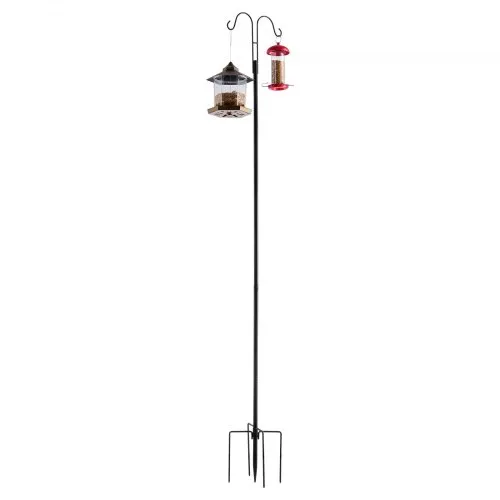
A bird feeder pole is a free-standing upright post that raises one or more bird feeders off the ground to a set height. It holds feeders out in the open where birds can easily find them, lifts seed clear of ground moisture, and keeps food away from animals that forage at ground level. The pole fixes into the soil or sits in a weighted base so it stays upright through wind and feeding activity, while hooks or arms near the top carry the hanging feeders. In short, it turns a single hanging feeder into a stable, visible feeding station that birds return to.
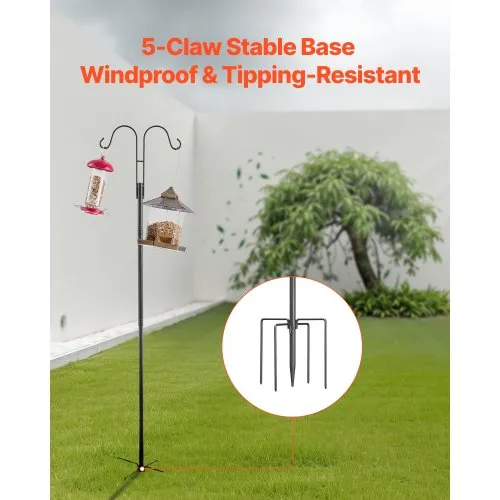
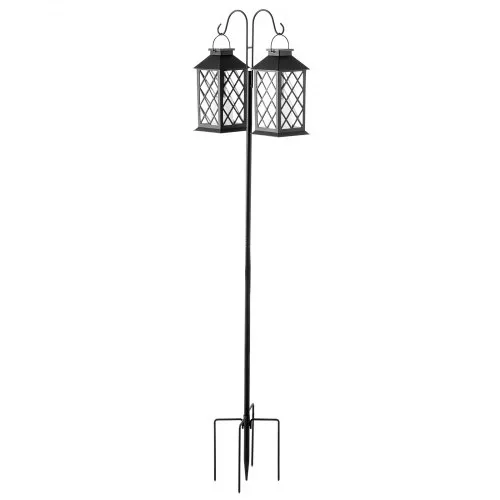
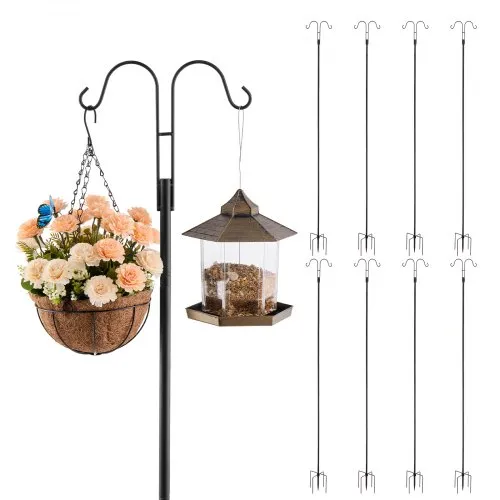
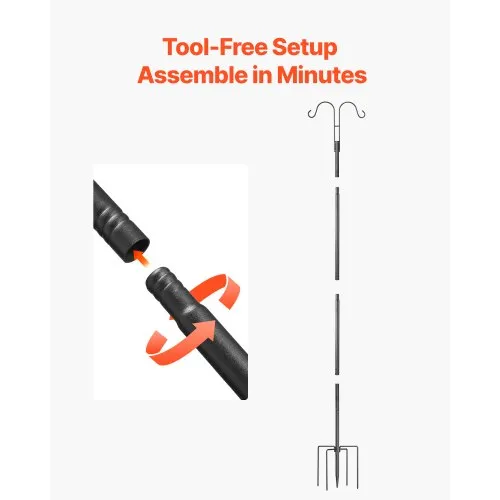
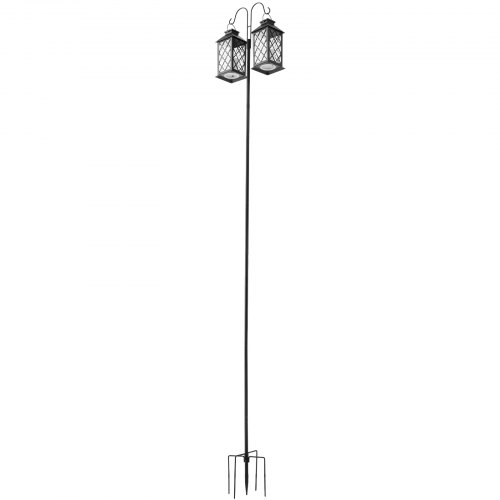
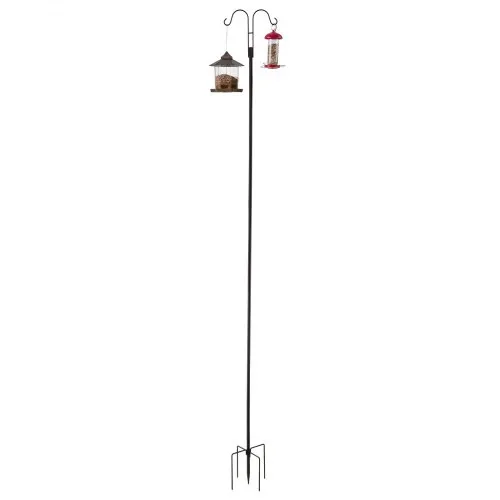
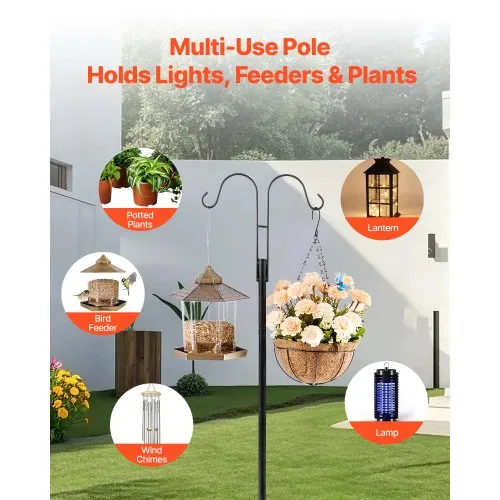
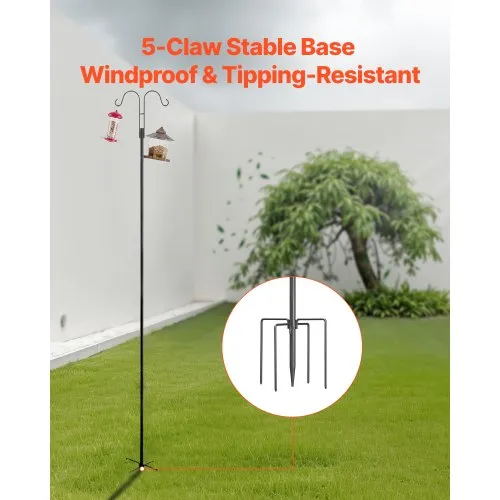
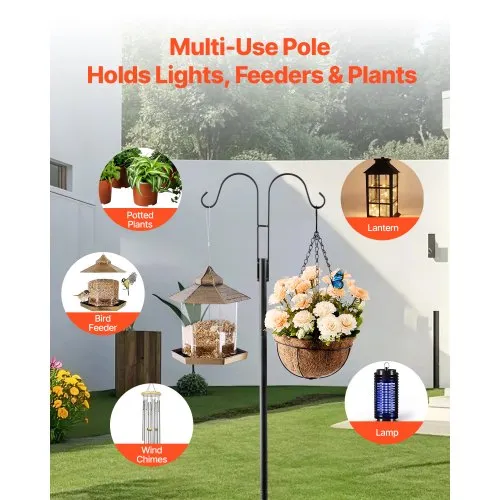
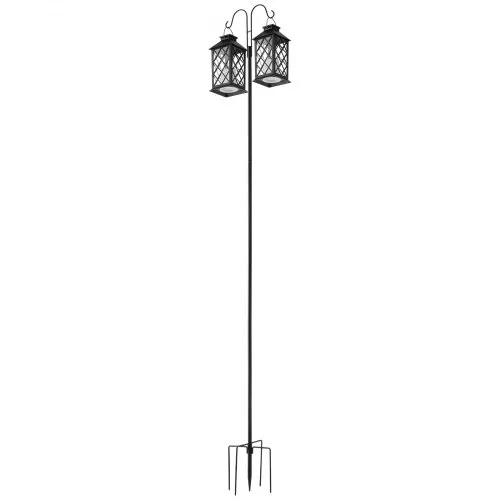
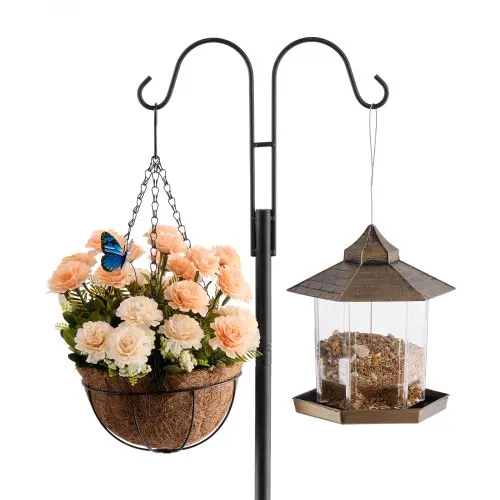
VEVOR bird feeder poles span a range of heights and hook setups to suit different yards. Standard poles around 5 to 6 feet suit easy filling and casual feeding, while taller 7 to 9 foot poles lift feeders above squirrel jump range in yards with heavy cover. Hook options run from a single arm up to multi-arm stands that hold four to eight feeders at once, and heavy-gauge steel construction on a five-pronged base keeps them stable outdoors. Typical uses are hanging seed, suet, nectar, and specialty feeders, plus plant baskets, lanterns, and wind chimes across gardens, patios, and open yards.
4 things decide what you need:
- Height: measure your yard's cover and squirrel launch points; taller poles deter climbers but need a step stool to refill.
- Hook capacity: count the feeders you want out at once, since single-hook poles hold one while multi-arm stands hold four to eight.
- Load rating: check the weight capacity per hook against a full feeder, because heavy seed tubes need a higher rating.
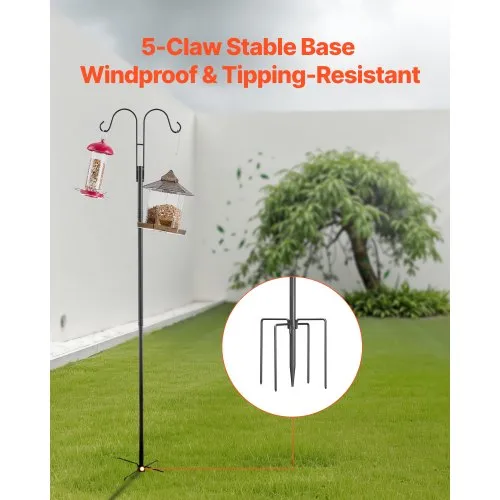
- Base and anchoring: match a five-pronged base or ground stake to your soil so the pole stays upright in wind.
Explore the full bird feeder pole range to compare heights and hook setups, or browse the wider bird feeders collection to complete your feeding station.
Bird Feeder Pole Types at a Glance
The main pole types differ in how many feeders they hold and the yard they suit:
| Type / Sub-type | Feeders Held | Hook Design | Best Yard Fit | Selection Note |
|---|---|---|---|---|
| Single-hook pole | 1 | Single fixed arm | Small yards, balconies, a first feeder | Lowest cost and easiest to fill, but ties you to one food type |
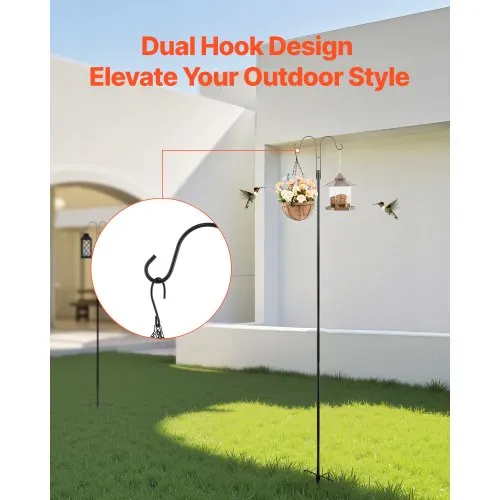
| Double shepherd's hook | 2 | Dual opposing arms | Typical backyards wanting variety | Two foods from one pole; opposing arms keep feeders from tangling |
| Multi-arm station (4 to 8 hooks) | 4 to 8 | Tiered or radial arms | Large open yards, active feeding | Draws the widest range of species, but needs space and more refilling |
| Adjustable-hook pole | Set by the user | Repositionable arms | Changing or seasonal setups | Re-space arms as feeders change, though moving parts need tightening |
VEVOR Metal Bird Feeder Pole Options: Reliable Mounting for Bird Feeding Stations
Are you looking for reliable mounting options that place feeders in the best possible location while keeping intruders out? In addition to providing safe feeding conditions that draw a variety of bird species, high-quality bird feeder poles raise feeding stations to the appropriate heights and shield seed from ground moisture. With a range of heights, capacities, and stability features that enhance backyard birding, VEVOR's tall bird feeder pole collection meets needs from straightforward single-feeder setups to complex multi-station configurations.
Understanding Height and Feeder Compatibility for Bird Feeder Poles
Understanding how mounting heights and hook configurations affect bird attractiveness and feeder accessibility is essential to choosing the best bird feeder poles. Appropriate pole specifications are required for various feeding tactics and yard conditions. Every VEVOR option, from standard heights to extended-reach systems, is designed to provide the best possible feeding conditions.
Standard Height Configurations
Typical backyard feeding needs are successfully met by basic bird feeder poles that are 5 to 6 feet tall. These useful heights enable proper feeder positioning while still allowing easy maintenance and refilling.
Most backyard birdwatchers can easily fill feeders without using ladders or reaching too far, thanks to 5-foot bird feeder poles. Users who favor straightforward maintenance and casual feeding plans can benefit from this accessible dimension. Typical yards can benefit from high-quality, heavy duty bird feeder pole alternatives in standard heights.
6-foot bird feeder stands keep the feeders reachable for maintenance tasks while raising them just a little bit over squirrel jumping range. This well-liked height successfully strikes a balance between user comfort and animal prevention. The majority of metal poles for bird feeders are 6 feet long.
Standard-height bird feeder stands work well in level yards free of obstructions, such as long grass or shrubs, that could lower the feeder's effective elevation. It is easier to match pole heights to certain surroundings when one is aware of yard circumstances. Accessible tall bird feeder poles handle a wide range of installation situations.
Extended Height Options
Seven- to nine-foot-tall bird feeder poles solve difficult yard situations and improve squirrel prevention. In challenging circumstances, their increased height creates ideal feeding conditions.
When paired with suitable baffles, 7-8 foot bird feeder stands place feeders above the average squirrel jump height. This elevated placement greatly reduces seed loss to persistent raiders. Climbing predators are discouraged by high-quality, long-lasting bird feeding pole solutions.
In yards with heavy vegetation, uneven terrain, or close launching locations that shorter bird feeder stands cannot reach, 9-foot bird feeder stands work well. Despite difficult circumstances, their maximum heights produce efficient feeding stations. The extended bird feeder pole solves challenging installations.
For feeder access during maintenance, step stools or other equipment may be needed for bird feeder poles with extended heights. Understanding this trade-off helps strike a balance between practical convenience and wildlife deterrence. Installations of tall bird feeder stands in strategic locations justify sporadic access issues.
Hook Capacity and Configuration
Multiple hook systems on bird feeder poles create distinct feeding stations, attracting a variety of bird species with varying food preferences. Planning successful feeding programs requires an understanding of hook alternatives.
Simple feeding programs or small yards where a single feeder is sufficient are suitable for single-hook bird feeder poles. These simple systems offer significant birding opportunities with little financial outlay. Simple, sturdy bird feeder pole designs can accommodate single feeders.
Comprehensive feeding stations that provide seeds, suet, nectar, and specialty foods all at once are made possible by multi-arm bird feeder stands with four to eight hooks. These intricate arrangements draw the greatest variety of birds with their varied offerings. There are several hook positions in high-quality bird feeder pole systems.
Premium bird feeder poles with adjustable hook placement allow for configuration adjustment to match particular feeder combinations and spacing needs. This adaptability allows for a range of feeder types and sizes. Heavy duty bird feeding pole designs that are adaptable to shifting feeding schedules.
Feeder Type Compatibility
Appropriate mounting techniques are necessary for stable, functioning installations of various feeder designs. Establishing a feeding station successfully requires an understanding of compatibility.
The size, spacing, and load capacity of the hooks must match the desired feeder weights for hanging feeders to be compatible with bird feeder poles. Lightweight poles cannot supply the considerable hooks required by heavy tube feeders. The weight capacity per hook is indicated in the specifications of high-quality tall bird feeder poles.
Certain bird feeder stands require special adapters or integrated mounting surfaces in addition to hooks for platform feeder attachment. For proper installation, these specialty feeders require specific pole features. Compatible heavy duty bird feeder pole systems accommodate a variety of platform designs.
Certain hook heights or mounting configurations may be necessary for specialty feeders, such as hummingbird, bluebird, and oriole feeders. Knowing the desired feeders before choosing bird feeder poles can help avoid compatibility problems. The selection of suitable metal bird feeder stands complies with the criteria of the feeding program.
Matching Feeder Types to Pole Setup
Before fixing on a pole, match the feeders you plan to hang to the load, baffle, and height each one needs:
| Feeder Type | Load When Full | Baffle Priority | Best Placement Height | What to Watch For |
|---|---|---|---|---|
| Large seed or tube feeder | Heavy | High | 5 to 6 ft | Match the hook's load rating to the filled weight |
| Suet or mesh cage | Light | Medium | 5 to 6 ft | Mount lower so wind does not swing it |
| Platform or tray feeder | Medium | High | 4 to 5 ft | Use a flat mount or adapter, not a hook |
| Nectar or hummingbird feeder | Light | Low | 5 to 6 ft | Place apart from seed feeders, near flowers |
| Oriole or fruit feeder | Light | Low | 6 ft or higher | Keep an open, bright sightline to attract them |
Material Construction and Stability Features for Bird Feeder Poles
Beyond height and capacity, ground anchoring and building materials have a big impact on the longevity and dependability of bird feeder poles. Longevity is ensured with high-quality materials, while damage and toppling are avoided with adequate stability.
Steel Construction Quality
Metal bird feeder poles are stronger and more durable than those made of plastic or wood. Comprehending steel parameters facilitates an accurate assessment of pole quality.
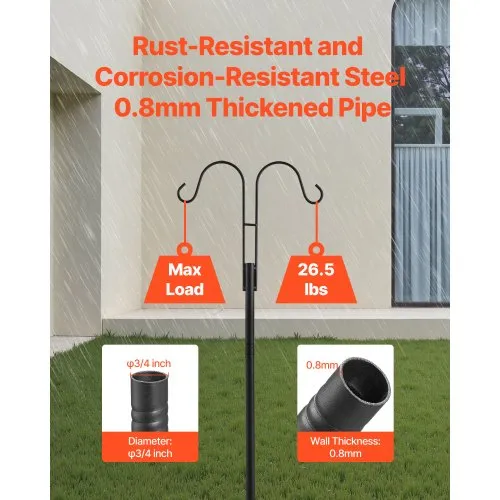
Because the protective coatings are applied to the underlying metal, powder-coated steel bird feeder poles are resistant to rust and weathering. Through seasons of exposure, its long-lasting treatment preserves both look and structural integrity. Powder coating is required for high-quality, heavy-duty fabrication of bird feeding poles.
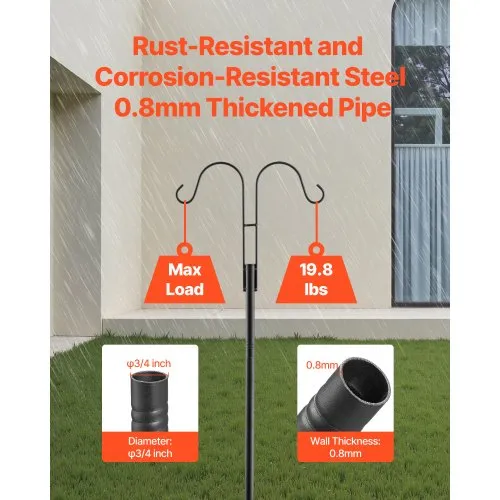
Rigidity against bending from feeder weight, wind loading, and wildlife activity is provided by heavy-gauge steel tubing in high-end bird feeder poles. High-quality poles are distinguished from weak substitutes by their thicker walls. The high-gauge bird feeder pole can withstand harsh conditions.
High-quality bird feeder stands with welded construction feature stronger, long-lasting joints than those with mechanical fasteners, which can loosen over time. Proper welding ensures the long-lasting structural integrity of the bird feeder pole. Welded connections are used in this sturdy, tall bird feeder pole assembly.
Ground Mounting Systems
Bird feeder poles that are properly anchored stay upright in the face of wind, wildlife, and unintentional collision. It is easier to fit poles to particular yard conditions when one is aware of mounting alternatives.
Many bird feeder stands have auger-style ground stakes that twist into the earth to provide tight anchoring through helical clutching. Without the need for concrete, this installation technique works with most soil types. Effective auger stakes are a feature of high-quality, sturdy bird feeder pole systems.
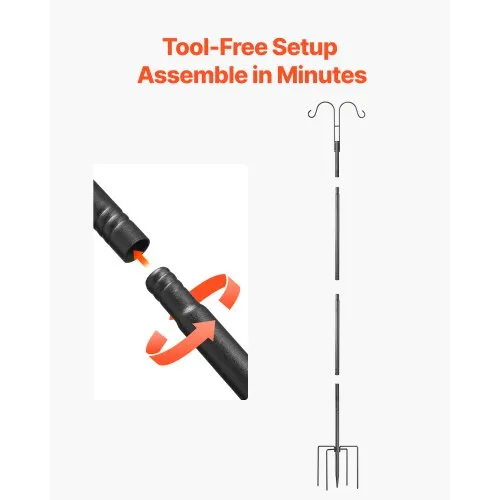
Certain bird feeder poles feature multi-prong base systems that effectively resist tipping forces by distributing stability across multiple ground contact points. On softer soils, these broader footprints improve stability. Appropriate base designs are used in stable metal bird feeder pole installations.
With incorporated foundations, concrete-set mounting tubes on permanent bird feeder poles offer optimal stability. Premium poles in well-established feeding places work well with this permanent installation technique. Concrete anchoring may be used for professional, heavy duty bird feeding pole installations.
Squirrel Baffle Compatibility
Bird feeder poles compatible with efficient baffle systems are necessary to protect feeders from squirrel attacks. Successful feeding stations are made possible by an understanding of baffle needs.
Climbing access to feeders above is prevented by wrap-around baffles that fit standard bird feeder poles. The correct pole diameter is necessary for these cone- or cylinder-type designs to fit properly. Standard baffles are compatible with most tall bird feeder poles.
Some bird feeder poles feature integrated baffle systems with specially designed deterrent devices, eliminating the need to buy separate baffles. Establishing squirrel-proof stations is made easier by these all-inclusive systems. Deterrent elements are included in complete heavy duty bird feeder pole configurations.
Even in the absence of baffles on bird feeder stands, climbing discouragement is influenced by pole diameter and smooth surface features. Squirrels find thin, slick poles more challenging than wide, rough ones. High-quality finishes on bird feeder poles help deter theft.
Weather Resistance Features
Bird feeder poles must be designed to endure moisture, temperature extremes, and UV radiation throughout the year due to outside exposure. Superior weather resistance ensures long-lasting performance.
Bird feeder stands are shielded against moisture-induced corrosion that compromises their structural integrity and aesthetic appeal with rust-resistant materials and finishes. After years of exposure, these safeguards preserve quality. Designers prioritize corrosion resistance when creating sturdy, tall bird feeder stands.
UV-stable coatings shield exposed bird feeder poles from fading and surface deterioration caused by the sun. While surface protection guarantees structural integrity, color retention preserves aesthetic attractiveness. UV protection is a feature of high-quality, durable coatings for bird feeding poles.
Bird feeder pole joints and connections with drainage features prevent water buildup, which slows corrosion and ice damage. These careful features significantly increase service life. Drainage features are incorporated into the construction of well-designed metal bird feeder stands.
Best-Seller Comparison
These four poles are the current lineup in page listings; they share one design, so height, hook load, and set weight are what separate them:
| Product | Height | Max Load / Hook | Net Weight (set) | Squirrel Clearance | Refill Reach | Best For |
|---|---|---|---|---|---|---|
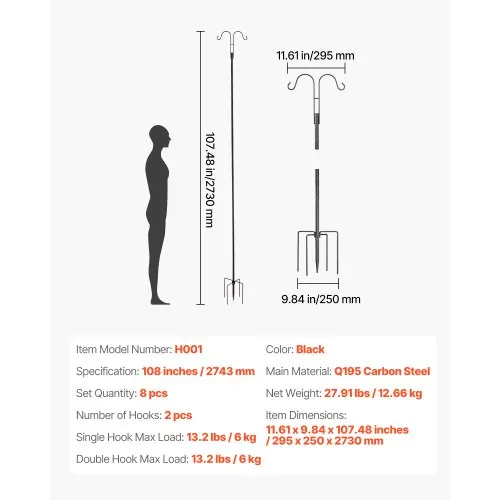
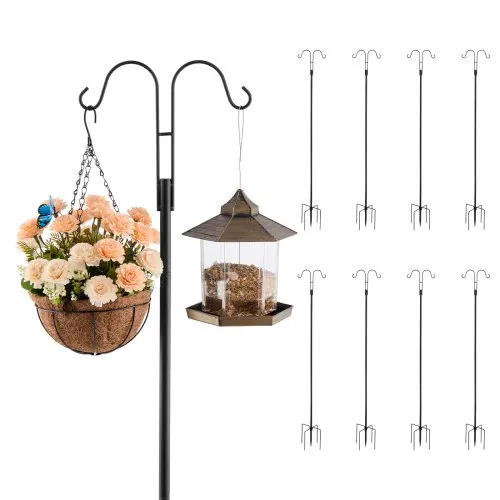
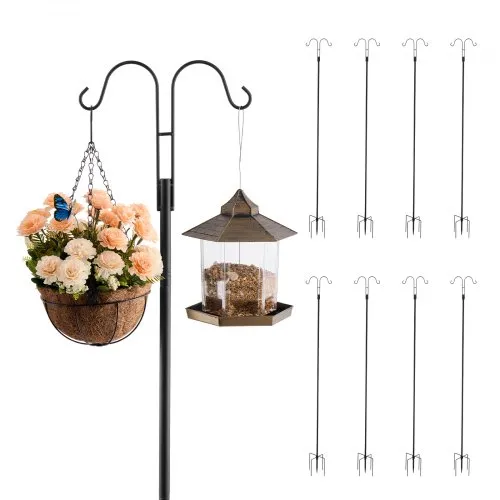
| 108-Inch Shepherd's Hook Pole, 8-Pack | 108 in | 13.2 lbs / 6 kg | 27.91 lbs / 12.66 kg | Highest above launch points | Step stool needed | Tallest reach for high-cover yards |
| 76-Inch Pole, 8-Pack | 76 in | 26.5 lbs / 12 kg | 21.96 lbs / 9.96 kg | Just above jumps; add baffle | Standing for most | Balanced mid-height all-rounder |
| 60-Inch Pole, 33 lb Hooks | 60 in | 33 lbs / 15 kg | 19.25 lbs / 8.73 kg | At jump height; baffle vital | Easy standing | Heaviest feeders, open yards |
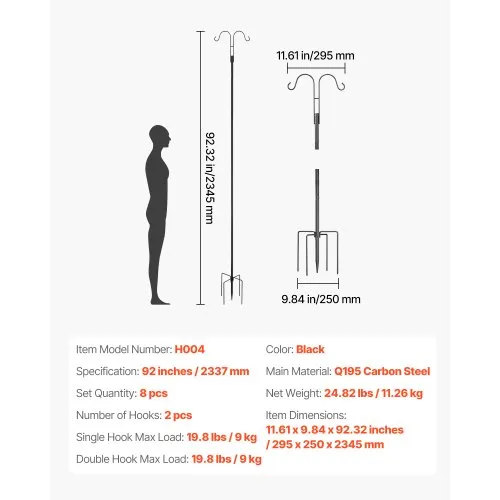
| 92-Inch Shepherd's Hook, 8-Pack | 92 in | 19.8 lbs / 9 kg | 84.82 lbs | Well above jumps; baffle | Step stool helps | Extra height, firmer hooks than 108 |
Why Choose VEVOR Bird Feeder Poles?
At affordable prices, VEVOR offers dependable bird feeder poles that combine robust construction with useful mounting options. Our selection includes anything from basic single-hook poles to complex multi-feeder stations, all with sturdy steel construction and safe ground anchoring. Each heavy duty bird feeding pole undergoes a quality verification process to ensure consistent performance and long-term reliability. With a variety of height options, hook combinations, and attentive customer service, VEVOR provides mounting solutions that birdwatchers can rely on. Create the ideal feeding station right now by perusing our whole inventory.
FAQs
Which height for a bird feeder pole deters squirrels best?
Squirrels can be effectively deterred by using poles at least 6 feet tall with the proper baffles. Place poles at least ten feet away from any trees, fences, or other buildings that squirrels might utilize as starting points.
How many feeders can bird feeder poles typically support?
Depending on the design, multi-arm poles can accommodate four to eight feeders. Make sure the total weight capacity can hold the intended feeders when they are full. The ratings for heavy duty bird feeder poles indicate the maximum weight they can support.
What ground type works best for bird feeder pole installation?
In typical garden soil, the majority of auger-style ground pegs function well. Pilot holes may be necessary in particularly hard or rocky soils. Concrete-set mounting or longer stakes are better for very soft soils.
How do I maintain my bird feeder pole?
Check for rust areas regularly and apply matching paint as needed. Ensure the ground anchoring remains stable throughout the season. To preserve the pole's appearance, remove seed debris and bird droppings from the pole surfaces.
What are the best bird feeder pole systems for attracting wild birds?
Multi-arm pole systems with four to eight hooks attract the widest variety, because they offer seed, suet, and nectar at once. Pair different feeder types at varied heights so species with different food preferences all visit the same station.
What are the best materials for durable bird feeder poles?
Rust-resistant carbon steel is the most durable choice, resisting bending, weather, and wildlife far better than plastic or wood. Look for heavy-gauge steel poles around 3/4 inch thick with a protective coating, since thicker walls and sealed finishes hold up through seasons of exposure.
How tall should a bird feeder pole be?
Most backyards do well with a 5 to 6 foot pole, high enough for easy filling while keeping feeders off the ground. Choose a 7 to 9 foot pole in yards with heavy cover or nearby squirrel launch points, and plan for a step stool to refill.
What is the best bird feeder pole?
The best pole matches your yard and feeder plan rather than one model fitting every setup. A heavy-gauge steel pole with a secure base, the correct height, and enough hooks for your feeders performs best. Compare the right bird feeder pole by height and hook count before deciding.
What size squirrel baffle do I need for my pole?
Choose a wrap-around baffle wide enough that squirrels cannot reach around it, sized to fit your pole's 3/4 inch diameter so it seats correctly. Mount it at least four to five feet up the pole so climbers cannot jump above it.
Are metal or wooden bird feeder poles better?
Metal poles are better for durability and squirrel resistance. Durable steel poles resist rot, bending, and chewing, and their smooth, narrow surface is harder to climb than wood. Wooden poles look natural but weather faster and need more upkeep over time.
