
Wheelchairs










Results for Wheelchairs
A wheelchair is a seated mobility device that helps a person move when walking is difficult, painful, or unsafe. It carries the user's full weight on a supportive frame fitted with wheels, so they can get around indoors and outdoors without relying on their legs. Some models are pushed by hand, either by the user turning the rear wheels or by a caregiver from behind. Others run on a battery and motor, steered with a joystick or a tiller. The goal is the same in every case: steady, comfortable movement that keeps a person mobile, independent, and able to take part in daily life.
At VEVOR, the range splits into a few clear types. Electric wheelchairs run on a battery and joystick for daily indoor and outdoor use, while self-propelled wheelchairs and transport chairs stay manual and low-maintenance. Mobility scooters add a tiller and a wider base for longer outdoor trips, and bathroom wheelchairs are built to roll straight into a shower. Weight capacities run from about 220 to 500 pounds on everyday models, and seat widths from roughly 15.75 to 24 inches. Typical uses are everyday indoor movement, caregiver-assisted transfers, outdoor errands and travel, and safe seated bathing.
Four things decide what you need:
- Mobility and strength: decide whether the user can push a manual chair or whether a powered model is the safer, less tiring choice.
- Where you will use it: tight indoor rooms, mixed daily errands, and long outdoor distances each point to a different type.
- Weight capacity: pick a rating 20 to 30 pounds above the user's weight so the frame stays safe and lasts longer.
- Transport and storage: check the folded size and weight if the chair rides in a car or gets stored between uses.
Browse the full wheelchairs range to compare manual, powered, and scooter options side by side, or focus on electric wheelchairs if you want powered independence with the least effort.
Wheelchair Types at a Glance
Before you get into individual models, it helps to see how the main types stack up, so here is the short version we give customers across the counter.
| Type / Sub-type | How It Moves | Effort for the User | Portability | Selection Note |
|---|---|---|---|---|
| Electric power wheelchair | Battery motor, joystick | Minimal, fully powered | Folds, but the battery adds weight | Most independence with the least effort, though it needs charging and costs more |
| Self-propelled manual wheelchair | User pushes the rear handrims | High, relies on arm strength | Folds, mid-weight steel or aluminium | Low cost with some exercise, but hard work over longer distances |
| Transport wheelchair | Caregiver pushes from behind | None for the user | Lightest, folds flat | Easiest to lift and store, but the user cannot move it alone |
| Mobility scooter | Battery motor, tiller steering | Minimal, seated and powered | Comes apart for car transport | Comfortable for long outdoor range, but too large for tight indoor turns |
| Shower / bathroom wheelchair | User or caregiver rolls it | Low to moderate | Compact, rolls over a toilet or into a shower | Safe seated bathing, not meant for all-day or outdoor use |
VEVOR Wheelchairs for Every Mobility Need — Electric, Manual & More
Are you looking for a dependable wheelchair that fits your needs for independence, terrain, and lifestyle? VEVOR provides a solution whether you require a powered electric wheelchair for longer trips or a self-propelled manual type for everyday use at home. Our wheelchairs are designed to be comfortable, long-lasting, and simple to operate, offering users and caregivers the assurance they deserve.
Understanding Wheelchair Types & Power Sources to Find Your Best Fit
Understanding the different types and how each power source meets unique mobility needs is the first step in selecting the ideal wheelchair. Compact mobility scooters, self-propelled manual models, and fully powered electric wheelchairs are part of VEVOR's collection, offering specially designed solutions for every user, setting, and daily activity.
Electric Wheelchairs — Powered Independence for Daily Life
For people who need motorized help to move around their surroundings with little physical exertion, electric wheelchairs are the preferred option. These wheelchairs, which run on rechargeable batteries and are operated by a joystick or touchpad, let users go great distances without becoming tired. Strong motors, fast controls, and robust frames enable VEVOR electric wheelchairs to navigate both indoor and outdoor conditions, including packed dirt or gravel and mild inclines.
Depending on the user's weight and the terrain, an electric wheelchair's battery range is typically about 10 to 20 miles between charges. To prevent speed dips at the end of a charge, VEVOR models are designed to deliver consistent performance throughout the battery cycle. For individualized comfort during prolonged use, many models feature movable seat cushions, footrests, and armrests.
For people with low upper-body strength, those recovering from surgery, or older adults managing joint issues or chronic fatigue, electric wheelchairs are an excellent option. Powered devices greatly lessen the physical strain of helping a user across greater distances or difficult layouts, which benefits caregivers as well. Electric wheelchairs from VEVOR are a strong long-term investment in daily independence and personal mobility, as they combine reliable technology with thoughtful design.
Manual Wheelchairs — Reliable, Affordable, and Versatile
Because of their ease of use, low cost, and minimal maintenance needs, manual wheelchairs remain among the most commonly used mobility devices. Manual wheelchairs are ideal for indoor settings, brief outdoor excursions, and situations where charging or mechanical complexity is impractical. The user can operate the wheelchair by pushing the back wheels or with a caregiver from behind. The sturdy steel or aluminum chassis of VEVOR manual wheelchairs provides a steady, comfortable ride without the expense of powered components.
Because self-propelled manual wheelchairs provide a level of physical exercise that promotes cardiovascular health and muscle retention, users with sufficient upper-body strength often prefer them. Conversely, transport-style manual wheelchairs, which have smaller rear wheels and a lighter overall design that facilitates pushing and storage, are primarily intended for caregiver use.
Models with folding frames, soft seats, and movable leg rests are among the useful features of VEVOR's manual wheelchair line, which serves both regular home users and those who occasionally need mobility help when traveling. A VEVOR manual wheelchair offers exceptional value without sacrificing build quality or user comfort, making it a simple, dependable option for consumers seeking a wheelchair that works well in most daily situations.
Mobility Scooters — Comfort-Focused Power for Extended Travel
Mobility scooters are a popular choice for people who can sit upright with limited back support, as they are comfortable, stable, and easy to use. Mobility scooters are primarily designed for outdoor use. They have a strong base with three or four wheels, a comfortable seat with armrests, and a steering column that looks like a tiller. This makes it easy and safe for users to get around sidewalks, shopping malls, and other public places.
People with COPD, arthritis, or mild lower-limb impairment who want to be active and independent might consider getting a VEVOR mobility scooter. These scooters have high-capacity batteries that let you go on longer outings. Scooters usually have a more comfortable riding position than regular wheelchairs because their wheelbases are broader and their seats are more ergonomic.
When choosing a mobility scooter, consider how far it can turn, the maximum incline it can handle, how fast it can go, and whether you can take it apart for transport. VEVOR scooters are created with the user in mind. Many have LED lights to make them easier to see, can be taken apart without tools, and have easy-to-use controls. If you have to go to the grocery store, the community, or take extended travels that are too long for a manual wheelchair, a VEVOR mobility scooter is a terrific first step toward getting your freedom back.
Folding Wheelchairs — Space-Saving Convenience Without Compromise
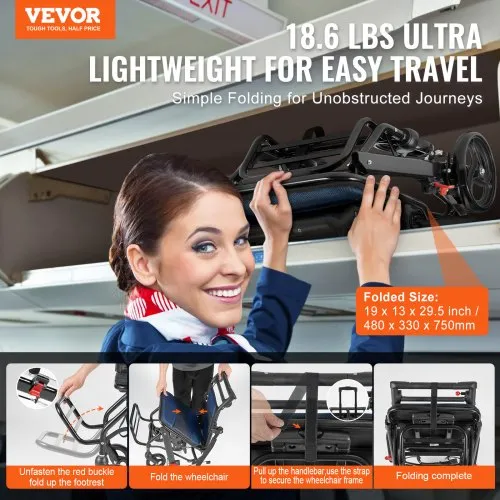
Folding wheelchairs provide all the support of a traditional wheelchair but can quickly collapse for storage or for travel in a car. This makes them both useful and easy to carry. This design is especially useful for frequent travelers, family caregivers who need to keep track of many schedules, and people who split their time between home and medical facilities. The aluminum cross-brace frames of VEVOR folding wheelchairs fold flat in just a few seconds, making them easy to store in closets, car trunks, or overhead compartments.
Even though they look small when folded, VEVOR folding wheelchairs are comfortable for users and durable. Swing-away footrests, padded armrests, and durable seating materials ensure you are safe and comfortable whether you are sitting inside or outside. The chair is light enough that most people can carry it and load it without help. It usually weighs less than 25 pounds.
Folding wheelchairs are a good option for anyone who needs a second wheelchair for travel or a secondary wheelchair in addition to a primary motorized or heavy-duty model. They are also an excellent first wheelchair for patients who have just recovered and need help getting around for a brief time during rehab. VEVOR's folding wheelchair models are a good choice for households where someone needs a wheelchair for a short or long time. They are well-designed and not too expensive.
Matching a Wheelchair to Your Situation
The type that suits you depends more on your day than on any spec sheet, so the table have matched the situations VEVOR hears most often to what tends to work.
| Situation | Priority Type | Key Consideration | Why It Fits |
|---|---|---|---|
| Daily use in a small or cluttered home | Transport or lightweight manual chair | Doorway and hallway width | A narrow frame and small wheels turn in tight rooms without scuffing the walls |
| Long outdoor trips and errands | Mobility scooter | Battery range and seat comfort | A wide wheelbase and tiller keep it steady on sidewalks over longer distances |
| Limited upper-body strength | Electric power wheelchair | Joystick control and charging time | Motor drive removes the arm effort that a self-propelled chair demands |
| Frequent car travel or caregiver help | Folding wheelchair | Folded size and lifting weight | Cross-brace frames drop into a boot, and most lift at under about 25 pounds |
| Bathing and wet-room safety | Shower or bathroom wheelchair | Drainage and rust resistance | An aluminium frame and open seat let water pass, so it will not corrode or trap moisture |
Choosing the Right Wheelchair by Weight Capacity & Portability
Choosing a wheelchair that fits the user's body weight and mobility lifestyle is very important for safety, comfort, and long-term use. VEVOR offers a wide range of wheelchairs with varying weight ratings and portability options, so everyone can choose one that fits their daily and physical needs.
Weight Capacity — Matching Your Chair to Your Body and Daily Use
When buying a wheelchair, one of the most crucial factors to consider is its weight capacity. Choosing a chair rated lower than the user's body weight increases the risk of structural damage, accelerates frame deterioration, and ultimately compromises wheel alignment and seat integrity. Standard, bariatric, and heavy-duty VEVOR wheelchairs are available for those with normal builds and those who need to support at least 300 pounds.
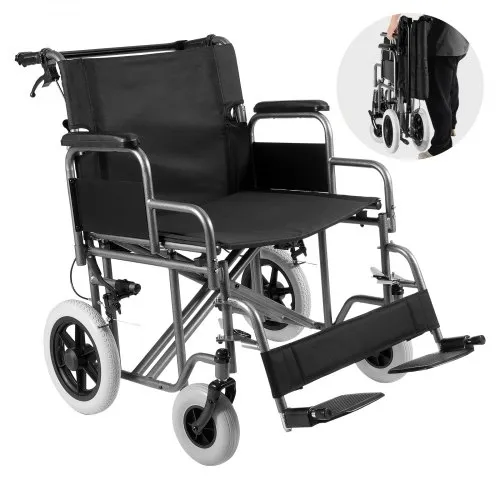
Most people who use regular VEVOR wheelchairs every day are comfortable, and these wheelchairs can hold between 220 and 265 pounds. Heavy duty wheelchairs and bariatric models may hold 350 to 450 pounds. They include strengthened steel frames, extra-wide seats, and heavy-gauge axles that evenly distribute weight. These versions also feature deeper seat bases and wider armrests to make extended sitting more comfortable for larger people.
When choosing a chair by capacity, always choose one that is 20 to 30 pounds heavier than the person who will be using it. This will give you a safety buffer and make the frame last longer. Also, consider how much weight the chair will need to carry, such as luggage, mounted equipment, or other items. VEVOR's product listings make it easier for users to find the right wheelchair for their needs before they buy. They include exact capacity ratings and size information.
Portability — Lightweight Wheelchairs for Active and On-the-Go Users
Portability is very important for those who drive to work, travel a lot, or use their chair without help from a caregiver. Lightweight wheelchairs are usually built of aircraft-grade aluminum alloy. They weigh 15 to 25 pounds less than steel wheelchairs yet are just as stable when sitting. This weight loss makes a big difference when you load the chair into a car, move it through tight locations, or carry it around during the day.
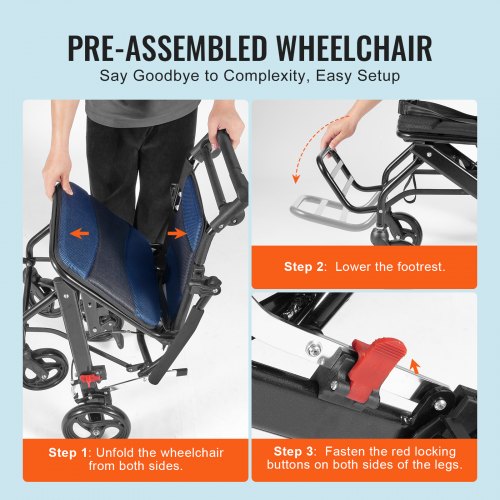
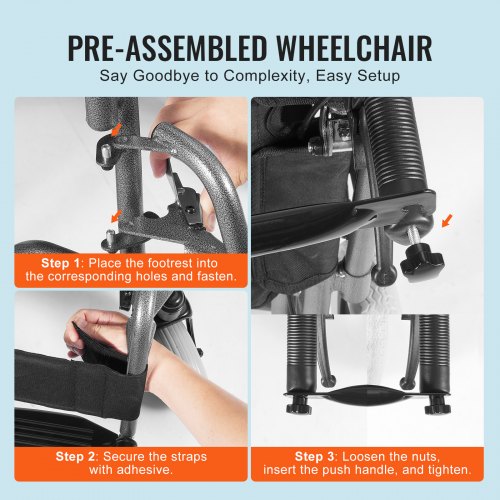
VEVOR lightweight wheelchairs are easy to move thanks to their foldable frames, removable footrests, and compact designs. You don't need any tools or mechanical knowledge to use them. Many models come with carry handles and nylon transfer bags, making it even easier to tote when traveling. These chairs are designed to meet standard load requirements and can be used on a variety of indoor and outdoor surfaces, despite their lighter weight.
With a VEVOR lightweight wheelchair, people may go around without feeling weighed down, both physically and mentally, as they balance their mobility needs with an active lifestyle. VEVOR's portable wheelchair solutions ensure your mobility equipment improves your life, not worsens it, whether you're going to the doctor, going on family activities, or trying to keep up with a busy weekly schedule.
Best-Seller Comparison
These are the scooters that move fastest off wheelchair shelves, lined up so you can compare the specs that actually differ between them.
| Product | Wheel Setup | Weight Capacity | Travel Range | Max Incline | Design | Best For |
|---|---|---|---|---|---|---|
| 4-Wheel Heavy-Duty Scooter, 500 lbs | 4-wheel | 500 lbs | 21.5 miles | 20° | Heavy-duty recreational | Most stable heavy-duty build here; the longest range for larger riders on open ground |
| 3-Wheel Heavy-Duty Scooter, 500 lbs | 3-wheel | 500 lbs | 21.5 miles | 20° | Heavy-duty recreational | Same 500 lb range in a 3-wheel frame; tighter turning for the heaviest riders |
| 3-Wheel Folding Scooter, 265 lbs | 3-wheel | 265 lbs | 12 miles | 9° | Folding travel | Lightest 3-wheel folder; slips through tight spaces and drops into a car boot |
| 4-Wheel Folding Scooter, 265 lbs | 4-wheel | 265 lbs | 12 miles | 9° | Folding travel | Four-wheel folder; steadier footing than the 3-wheel version at the same capacity |
| 3-Wheel Folding Scooter, 330 lbs, 48V | 3-wheel | 330 lbs | 12 miles | 5° | Folding travel | Highest capacity among the folders; most support in a pack-down travel scooter |
Why Choose VEVOR Wheelchairs?
With electric wheelchairs, manual wheelchairs, mobility scooters, foldable wheelchairs, lightweight models, and heavy-duty options for every user and lifestyle, VEVOR offers one of the largest wheelchair collections. VEVOR makes mobility cheap without sacrificing quality by offering low prices, reliable after-sales assistance, and well-made products. Browse our entire selection to find the perfect wheelchair for you.
FAQs
What is the difference between a transport wheelchair and a standard manual wheelchair?
Transport wheelchairs have smaller rear wheels and are meant to be pushed by a caregiver rather than to move on their own. Standard manual wheelchairs have large rear wheels that let people travel independently. Transport versions are better for travel or short trips because they are smaller and lighter.
How far can a VEVOR electric wheelchair travel on a single charge?
Most VEVOR electric wheelchairs can travel 10 to 20 miles on a single battery charge. The actual range depends on the user's weight, the kind of terrain, and the speed options. Regularly caring for the battery and avoiding full discharge can help it last longer and work better.
Are VEVOR folding wheelchairs suitable for outdoor use?
The strong frames and puncture-resistant tires on VEVOR folding wheelchairs make them well-suited for smooth outdoor surfaces, including sidewalks, paved pathways, and light gravel. For better stability on rough ground or long trips outside, a heavy-duty or electric wheelchair with larger tires and greater ground clearance is best.
What weight capacity should I choose for a heavy duty wheelchair?
Pick a wheelchair that is at least 20 to 30 pounds heavier than the person who will be using it. This will help it last longer and improve safety. VEVOR heavy duty wheelchairs usually support between 350 and 450 pounds. They have larger seats, stronger frames, and thicker parts designed to withstand larger or heavier riders.
Can mobility scooters be disassembled for car transport?
Yes, you can take apart most VEVOR mobility scooters without tools by taking out the seat, battery, tiller, and base. This allows most adults to fit into a regular automobile trunk. Before you arrange vehicle transport, be sure to read the instructions for taking apart the car and the weight of the heaviest single item for each model.
What are the different types of wheelchairs and their uses?
Wheelchairs fall into a few groups. Manual and transport chairs suit indoor use and short trips, electric wheelchairs handle daily indoor and outdoor travel, and mobility scooters cover longer outdoor distances. Shower wheelchairs add safe seated bathing. Browse the full wheelchairs range to match a type to your routine.
Can you suggest comfortable and stylish wheelchair options for seniors?
For seniors, look for a light aluminium frame, a padded adjustable seat, and quick folding. A lightweight wheelchair with flip-back arms and adjustable footrests is easy to transfer in and out of and simple to store, while a cushioned electric model suits those who tire quickly or have limited arm strength.
How do I choose the right wheelchair or mobility scooter for my needs?
Match the device to distance and control. Pick a manual or electric wheelchair for indoor and mixed daily use, and a mobility scooter for long outdoor errands where you can sit and steer. Weigh your upper-body strength, your usual terrain, and how often the chair travels by car.
What should I consider when choosing a wheelchair for mobility assistance?
Start with weight capacity, seat width, and where you will use it most. For caregiver help, a light self-propelled or transport chair folds and lifts easily. For independent movement, prioritise battery range and joystick control. Always allow a 20 to 30 pound capacity buffer for safety.
What are the main differences between manual and electric wheelchairs?
Manual wheelchairs rely on the user or a caregiver for movement, cost less, and need little upkeep. Electric wheelchairs use a battery and joystick, so they cover more distance with no physical effort. Manual models suit short indoor use, while electric models suit longer trips and users with limited arm strength.