
Self-Propelled Wheelchairs










Results for Self-Propelled Wheelchairs
A self-propelled wheelchair is a manual wheelchair that the seated user moves without outside help. Two large rear wheels carry hand rims, which the user grips and pushes to roll forward, reverse, slow down and turn using upper body strength. Small front casters swivel to follow the direction of travel, while the seat, backrest, armrests and footrests hold the body upright and supported. Wheel locks keep the chair still while the user transfers in or out. Most frames also have push handles at the back, so a companion can take over on long distances or slopes.
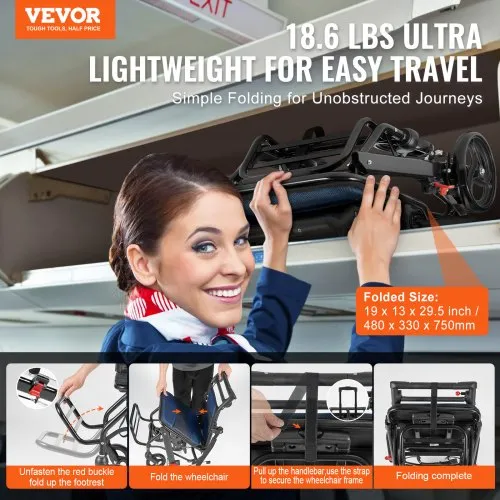
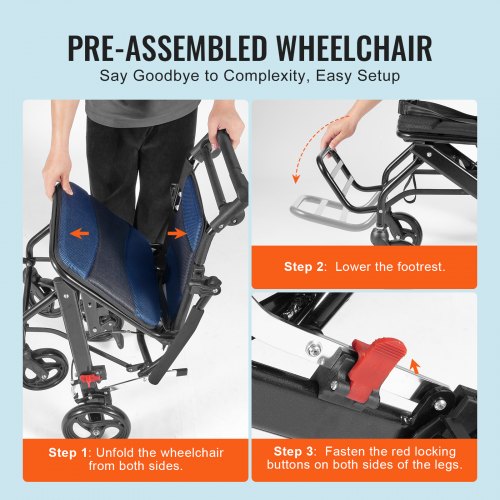
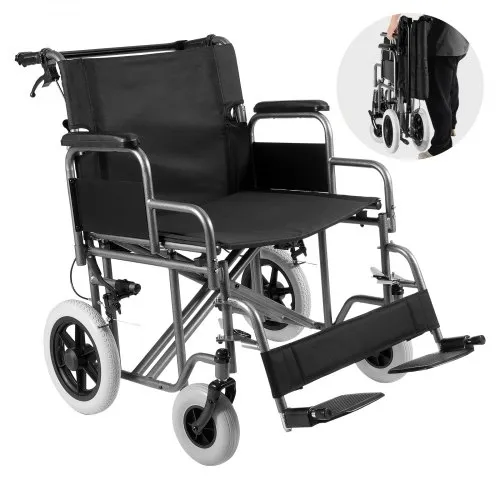
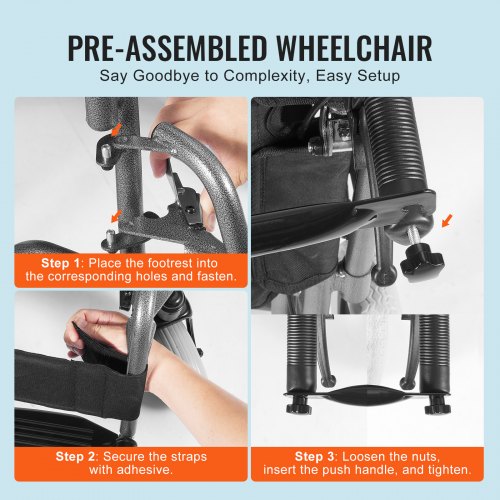
VEVOR self propelled wheelchairs fall into a few clear groups. Standard folding frames seat most adults on 16 to 20 inch seats and carry up to 250 pounds. Lightweight aluminum wheelchairs weigh around 30 pounds and add quick-release rear wheels, so they handle daily self-pushing and regular car travel. Heavy-duty steel wheelchairs widen the seat to 24 inches and raise capacity to 300 pounds for larger users. Ultra-light cabin wheelchairs weigh under 19 pounds with a 15.75 inch seat for narrow aisles, while folding transport chairs at about 21 pounds add a telescopic push handle for caregiver-led trips. Typical uses are getting around the home, community errands, medical appointments, travel and recovery after an injury or surgery.
Five things decide what you need:
- User weight: pick a capacity rating above the user's body weight to leave room for bags and equipment.
- Seat width: measure hip width while seated and add about 2 inches on each side.
- Who does the pushing: large rear wheels suit independent users, while smaller wheels and push handles favor a caregiver.
- Chair weight: lighter aluminum frames take less effort to propel and to lift into a car trunk.
- Doorways and storage: compare the chair's overall width with your narrowest doorway and check that it folds into your vehicle.
Compare every model in our full wheelchair collection to find the right fit, or explore the wider range of VEVOR mobility aids for walkers, canes and electric options.
Self Propelled Wheelchair Types at a Glance
The table below shows how the main wheelchair types compare on fit, chair weight and load so you can narrow the choice quickly.
| Type | Seat Width | Chair Weight | Weight Capacity | Trade-off |
|---|---|---|---|---|
| Standard folding wheelchair | 16 to 20 in | 35 to 45 lbs | Up to 250 lbs | Large rear wheels make solo pushing easiest; heavier to lift and load |
| Lightweight aluminum wheelchair | 18 in | About 30 lbs | 250 lbs | Less effort per push and per lift; moderate load rating |
| Heavy-duty wide-seat wheelchair | Up to 24 in | About 41 lbs | 300 to 500 lbs | Roomiest, strongest seat; widest chair to steer through doorways |
| Ultra-light cabin or transport chair | 15.75 to 18 in | 18.6 to 21.4 lbs | 220 lbs | Lightest to carry; small rear wheels favor a caregiver pushing |
VEVOR Self Propelled Wheelchairs for Active and Independent Living
Are you looking for mobility aids that let you get around on your own in your house and community? Quality self propelled wheelchairs include large rear wheels with hand rims that let users push themselves forward, backward, and through turns using only their upper body strength. VEVOR makes self propelled wheelchairs with ergonomic propulsion systems and supportive seats that let users stay active while making it easier for caregivers to care for them.
Selecting Self Propelled Wheelchairs Based on Weight Capacity and Propulsion System
To choose the best self-propelled wheelchair, you need to understand how weight capacity ratings and propulsion system design affect safety, comfort, and convenience for different people and situations in daily life. If you need a wheelchair with standard capacity for average-weight users or heavy-duty construction for bariatric use, ensuring the specifications fit the user's needs will keep the wheelchair safe and working well for years to come. VEVOR sells self propelled wheelchairs that can hold different weights and move in different ways.
Weight Capacity Ratings and Frame Construction
Most people can use standard self propelled wheelchairs, as they can hold up to 250 pounds. This is enough for most adults, and the chair's overall weight makes it easy to travel with and store between uses. Quality self propelled wheelchairs are built with reinforced joints and strong materials that keep the frame sturdy and safe for years of everyday use without loosening or becoming misaligned. Exceeding weight capacity ratings can increase the risk of frame or component damage and potential injury, so accurate user weight assessment is important before purchase.
Heavy-duty self propelled wheelchairs may hold 300, 350, or even 500 pounds for heavier users who need more support. The frame and seating system are reinforced throughout to increase their strength. VEVOR self propelled wheelchairs come in a range of capacities, and each has a clear weight limit that makes it easy for users and caregivers to choose the right one. Choosing the right weight capacity gives you a safety margin that accounts for changes in user weight and the extra weight of attachments, personal belongings, and medical equipment carried during everyday activities.
Foldable Wheelchair Designs for Easy Transport and Storage
For people who travel a lot or don't have much room at home for mobility equipment, a folding wheelchair offers many benefits. Quality foldable wheelchair models fold up quickly with cross-brace mechanisms that make them much narrower, making it easy to slip through narrow doorways, into vehicle trunks, and onto public transportation. Well-designed items need very little hand strength to fold, so people can set up and take down their chairs without help.
VEVOR's foldable wheelchairs are small when folded, yet stable when open, and won't tip over when you use them. Some folding wheelchair designs have rear wheels that can be quickly released. This feature makes the wheelchair even smaller, which is helpful when traveling by plane or storing it in a small car. The folding mechanisms in high-quality foldable wheelchairs can withstand repeated folding and unfolding many times a day without becoming loose or breaking, which could make them less safe or reliable over time.
Aluminum Wheelchair Construction for Lightweight Performance
An aluminum wheelchair strikes the perfect balance between strength and light weight, making it easier for people with limited upper-body strength or stamina to move themselves. Well-made aluminum wheelchair frames are much lighter than steel frames, yet they remain strong enough to be safe on a variety of terrains and in various conditions. This lighter weight in aluminum wheelchair construction makes it easier to push, more maneuverable, and less tiring to use for long periods of time.
These frames are corrosion-resistant, meaning they won't rust when they get wet outside or when stored in humid places, which is common in many areas. VEVOR aluminum wheelchairs use aircraft-grade metals to make them as strong as possible while keeping weight down. This makes them as efficient as possible for self-propulsion. The aluminum frame also makes it easier to lift the chairs while moving them from one vehicle to another. This makes it easier for users and caregivers who regularly have to put chairs into cars for appointments and activities.
Rear Wheel Size and Hand Rim Configuration
Self propelled wheelchairs usually have rear wheels that are 22 to 24 inches in diameter. This gives the wheelchair enough leverage for users to propel it while keeping the chair's overall size small enough to fit through doorways and other tight spaces. Larger wheels roll over bumps, thresholds, and uneven surfaces more readily, making it easier to get around outside on sidewalks, in parking lots, and in other communal settings that you experience every day. Users push against the hand rims on the back wheels to go forward and steer.
You can choose between conventional chrome-plated steel, vinyl-coated for better grip, or ergonomic projections for people who can't use their hands well enough to grip regular circular rims. VEVOR self propelled wheelchairs feature the right-sized wheels and high-quality hand rims. This feature makes it easier for people with different abilities to get around. Choosing the right wheels and rims ensures people can use their self propelled wheelchairs comfortably without tired hands, blisters, or repetitive strain from pushing them every day.
Matching Wheelchair Features to Daily Situations
Beyond the frame and wheels, smaller features decide how well a chair handles real routines, so match them to the situations the user faces most.
| Daily Situation | Main Challenge | Feature to Look For | Why It Helps |
|---|---|---|---|
| Moving around the home | Reaching desks, tables and counters | Flip-back desk-length arms | Lets the user roll right up to tables and work surfaces |
| Transfers to bed, sofa or car seat | Sliding sideways out of the chair | Flip-up armrests and self-locking brakes | Clears the side path while the chair stays firmly in place |
| Sidewalks and parking lots | Debris, cracks and sharp gravel | Solid puncture-proof tires | No flats to repair, so outings never end with a deflated wheel |
| Caregiver-assisted outings | Pushing and stopping over long distances | Push handles and an easy-reach brake lever | Helpers steer comfortably and lock the chair without bending down |
| Long sitting periods | Leg position and thigh support | Adjustable or removable footrests | Matching footrest height to leg length keeps thighs evenly supported |
Self Propelled Wheelchair Features and Adjustability for Personalized Comfort
The features and adjustment options on your self propelled wheelchairs directly affect how comfortable they are, how well they fit, and how happy you will be with your mobility equipment investment over time. Knowing these details can help you choose self propelled wheelchairs that fit your body and support needs, ensuring safe and pleasant everyday use at home and in your community.
Portable Wheelchair Options for Active Lifestyles
A portable wheelchair designed for active users is made of lightweight yet strong materials that can withstand frequent use and movement across various terrains during community activities. Good portable wheelchairs can be quickly disassembled into smaller parts that fit easily into car trunks, airplane overhead compartments, and other storage areas you might need while traveling. Well-designed portable wheelchairs have features that make them easy to move around without sacrificing strength or seat comfort for people who use them every day.
VEVOR's portable wheelchair options are perfect for people who don't want their mobility issues to stop them from doing things and going places throughout their lives. Some designs for portable wheelchairs include travel bags, protective cases, and specific carrying methods that keep parts safe during transport. For people who want to take their mobility equipment wherever they go, the lightweight, portable wheelchair category is the best option.
Lightweight Portable Wheelchair Benefits for Travel
A lightweight portable wheelchair usually weighs less than 30 pounds when fully assembled. This makes it simple for users and caregivers to lift while moving from one vehicle to another and to move quickly through airports and other transit hubs. The reduced weight comes from using lighter, high-quality materials, optimizing frame geometry, and choosing components that remove excess weight without sacrificing comfort or durability. This design can make it easier for people to manage basic equipment-handling tasks more independently while traveling.
Quick-release wheels, flip-back armrests, and swing-away footrests are some of the features that make high-quality, lightweight portable wheelchairs easier to maneuver and much smaller when folded. VEVOR's lightweight portable wheelchair solutions are easy to carry and offer the structural integrity and comfort features active users need for everyday activities. Choosing this kind of chair opens up travel options that larger mobility aids make impossible for people who fly, cruise, or drive a lot.
Seat Width and Depth Adjustments for Proper Fit
In self propelled wheelchairs, the right seat size ensures the person is comfortable and avoids pressure sores, posture difficulties, and pain over long periods of sitting during the day and during daily tasks. Standard seat widths range from 16 to 20 inches. For comfortable seating without feeling cramped or confined, users need around 2 inches of space on each side. The depth of the seat can determine how well it supports your thighs and how evenly it distributes pressure. For optimal comfort and circulation, the seat's front edge should be about 2 to 3 inches behind the knee.
VEVOR self propelled wheelchairs come with seats in different sizes to fit people of all shapes and sizes and to meet the needs of different users. Some models have adjustable seat parts that let you adjust the position after you buy it, making it more comfortable as your needs change over time. A properly fitting wheelchair helps you sit up straighter, reduces fatigue, and lets you sit for longer periods in comfort, which is beneficial for busy people.
Best-Seller Comparison
Here is how the self propelled and folding wheelchairs in this range compare side by side on the specs that separate them.
| Product | Frame Material | Chair Weight | Weight Capacity | Seat Width | Overall Width | Wheel Size | Best For |
|---|---|---|---|---|---|---|---|
| Cabin Wheelchair 15.75 in, 18.6 lbs | Aluminum alloy | 18.6 lbs | 220 lbs | 15.75 in | 19.3 in | 7.87 in rear, 6 in front | Lightest and narrowest here; flights, trains and tight cabin aisles |
| Aluminum Wheelchair 18 in, 250 lbs | Aluminum alloy | 30.3 lbs | 250 lbs | 18 in | 25 in | 22 in solid tires | Only model with 22 in tires and quick-release rear wheels; everyday self-pushing |
| Steel Wheelchair 24 in, 300 lbs | Carbon steel | 40.8 lbs | 300 lbs | 24 in | 30.3 in | / | Widest seat and highest capacity here; larger users needing extra room |
| Transport Chair 18 in, 21.4 lbs | Aluminum alloy | 21.4 lbs | 220 lbs | 18 in | 22.8 in | / | Light 18 in seat with a telescopic handle; caregiver-led errands |
Shop VEVOR Self Propelled Wheelchairs for Independent Mobility
VEVOR offers a wide range of self propelled wheelchairs designed to help people regain their independence and lead an active lifestyle. These wheelchairs are perfect for people who value being able to move around independently in their everyday lives and activities. All of our self propelled wheelchairs are built to last and have comfort features that make them easy to use for years. VEVOR makes it easy for everyone to regain mobility by offering low prices, high-quality products, great customer service, and a full warranty. Check out our assortment of self propelled wheelchairs today!
FAQs
What weight capacity do self propelled wheelchairs support?
Standard self propelled wheelchairs typically support up to 250 pounds, while heavy-duty models safely accommodate 300-500 pounds. Always check the weight limit when you buy a chair, and choose one that can hold more than your body weight to be safe while you use it every day.
How much do self propelled wheelchairs typically weigh?
Standard self propelled wheelchairs weigh between 35 and 45 pounds, whereas lightweight variants weigh less than 30 pounds when fully assembled. The material used to make the frame has a big effect on the weight. For example, aluminum chairs are much lighter than steel chairs, which makes them easier to move and lift.
Can self propelled wheelchairs fit through standard doorways?
Most self propelled wheelchairs are 24 to 27 inches wide and can easily fit through typical 32-inch doorways. Before you buy, measure the doors in your home and make sure the chair's breadth meets the standards. This will ensure that your entire living space is accessible.
Are self propelled wheelchairs suitable for outdoor use?
Yes, self propelled wheelchairs with larger rear wheels and sturdy construction can easily handle outdoor surfaces, including sidewalks, grass, and light gravel roads. Consider getting models with tires that won't puncture if you plan to use them outside a lot, in various weather conditions.
How do I determine the right seat width?
While sitting, measure the breadth of your hips and add 2 inches to each side for comfort. Standard seat widths range from 16 to 20 inches. The right breadth keeps pressure off the hips and prevents too much room, which can hurt your posture and reduce the effectiveness of your propulsion.
What are the different types of self-propelled wheelchairs available?
The main types are standard folding frames, lightweight aluminum models, heavy-duty wide-seat chairs and ultra-light cabin chairs. They differ mainly in seat width, chair weight and load rating, from 220 pounds on compact aluminum frames to 300 pounds on a 24 inch carbon steel wheelchair.
What are the advantages of self-propelled wheelchairs for daily use?
They let users move around independently instead of waiting for help, and pushing the hand rims keeps the arms and upper body active. Folding frames store easily at home, and solid puncture-proof tires need no inflation, so the chair is ready whenever it is needed.
Are self propelled wheelchairs easy to use?
Yes, most users learn quickly: push both hand rims to roll forward, pull back to slow or reverse, and push one rim harder to turn. Users with limited arm strength or endurance may find an electric wheelchair less tiring for longer distances.
Who are self-propelled wheelchairs best suited for?
They suit people who cannot walk far but have enough upper body strength and grip to push the wheels themselves, including seniors and people recovering from injury or surgery. Users who tire quickly benefit from a lightweight aluminum frame that needs less effort per push.
What is the difference between a transit wheelchair and a self-propelled wheelchair?
A self-propelled wheelchair has large rear wheels with hand rims, so the user can push themselves. A transit, or transport, wheelchair has smaller rear wheels and is pushed by a caregiver using rear handles. Transport chairs are usually lighter and more compact for travel.