

Wall Mounted Tool Organizer








Results for Wall Mounted Tool Organizer
A wall mounted tool organizer is a storage unit that fixes to a vertical wall surface and holds tools off the floor on hooks, rails, brackets, or a panel. It turns open wall area into a dedicated home for hand tools, power tools, and long-handled equipment, keeping each item visible and within reach instead of piled on a bench or shelf. By lifting tools onto the wall, it clears work surfaces, protects edges and finishes from knocks, and lets you see at a glance what you own and what is missing before you start a job.
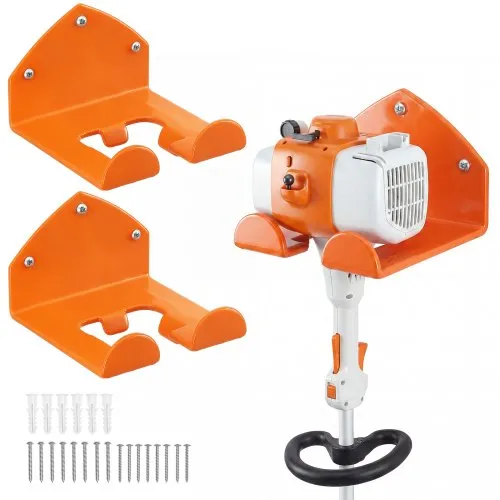
Most systems fall into a few formats. Pegboard panels use a grid of holes that accept movable hooks, slatwall panels carry accessories in horizontal channels, and heavy-duty rail racks hang adjustable hooks from steel bars rated from roughly 400 to 1,200 pounds. Panel widths run from compact 33-inch units up to 99-inch multi-rail systems, and specialty clamp holders grip awkward items such as string trimmers and leaf blowers. These setups suit garages, workshops, sheds, and utility rooms, and they handle everything from screwdrivers and wrenches to drills and long-handled garden tools. Typical uses are clearing a cluttered bench, lining up a full hand-tool set, and hanging rakes, shovels, and power equipment within arm's reach.
Five things decide what you need:
- Capacity: add up the weight of everything you will hang and pick a rack rated well above that total.
- Length and rails: measure the usable wall run, then match it to panel width and the number of rails you need.
- Hook type: choose adjustable hooks for a changing toolkit, or fixed L-hooks and clamps for items that always live in one spot.
- Tool mix: confirm the system carries your heaviest and longest tools, not just small hand tools.
- Mounting surface: check for studs behind the drywall, since heavy steel racks need them and lighter panels can use rated anchors.
Browse the full range of garage storage racks to match a system to your wall, your tools, and your workload, from a single compact panel to a heavy-duty steel storage rack that spans the whole bench.
Wall Mounted Tool Organizer Types at a Glance
The main organizer formats differ most in how accessories attach, how much weight they carry, and how freely they rearrange, so this table sets them side by side.
| Type / Sub-type | Attachment Method | Load Handling | Reconfigurability | Selection Note |
|---|---|---|---|---|
| Pegboard panel | Hooks press into a grid of holes | Light to moderate | High; hooks move to any hole | Cheapest start, but unlocked hooks can lift out when a tool is pulled |
| Slatwall panel | Accessories slot into horizontal channels | Moderate to heavy | High; slide anywhere along a channel | Grips bigger items more firmly than pegboard, with no hooks to loosen |
| Steel rail-and-hook rack | Hooks clamp onto fixed steel rails | Heavy, often 400 lb and up | Moderate; hooks slide along each rail | Best for power tools and long-handled gear on a load-bearing wall |
| Clamp tool holder | Spring or screw clamps grip the tool body | Light, sized per tool | Low; positions fixed once mounted | Made for awkward shapes like trimmers that hooks cannot hold well |
VEVOR Garage Wall Tool Organizers Designed to Clear the Clutter and Put Every Tool in Its Place
Is your garage floor covered with tools that should be on the wall, or are your shelves stacked three layers deep? A wall mounted tool organizer turns unused vertical space into an organized, accessible storage system where every tool lives in the same spot and is ready to grab when you need it. VEVOR's range of garage tool organizer wall systems and wall mount tool organizers spans from basic pegboard panels to heavy-duty steel rack systems.
Capacity, Configuration, and Tool Compatibility
The wall mounted tool organizer is only as useful as its capacity to hold what you actually own and its ability to configure around the tools you use most. Getting the capacity and configuration right from the start means that you are not hunting for a drill in a system designed for screwdrivers or running out of hooks to fill the board.
How to Assess Storage Capacity Before Choosing a Wall Mount Tool Organizer
Storage capacity in a wall mounted tool organizer is not a single number; it is a combination of panel area, weight rating, and the number and variety of attachment points the system supports. A panel that looks large on a product page but only carries 15 kilograms with six fixed hooks is far less useful than a compact panel with a 50-kilogram rating and a fully adjustable hook-and-bracket system.
Start by creating a rough inventory of the tools you need to store. Group them by size and weight, hand tools like hammers, screwdrivers, and pliers in one group; power tools and heavier items like drills, circular saws, and extension leads in another; and small items like drill bits, blades, and fasteners in a third. This breakdown tells you what weight rating you need, how many hooks and brackets are required, and whether you need shelf or bin components for the smaller items.
For a standard two-car garage workshop, a wall mounted tool organizer covering 1.2 to 2.4 square meters of wall space is usually sufficient to handle the full hand tool collection, plus hooks for several power tools. For a professional workshop or a tradesperson's van garage setup, a larger modular system with multiple panels and a higher aggregate weight rating is appropriate.
Configuration Options: Fixed Systems vs. Modular and Adjustable Layouts
The setup flexibility of a wall mounted tool organizer determines how well itfits into your existing toolset and how readily it can expand or adapt as your collection grows. Simpler and frequently less expensive, fixed systems, those with fixed hook positions or inflexible shelf placements, lock you into a plan that might not work with your tools or become limiting as your collection evolves.
In contrast, a mounting rail, pegboard grid, or slotted panel serves as the foundation for modular systems, which have hooks, brackets, bins, and shelves that clip or slot into place anywhere along the panel. The most common modular design is that of a pegboard. Unless locking-style hooks are employed, the trade-off is that individual hooks may eventually shift and loosen, especially on heavily loaded panels.
Horizontal channels are used instead of holes in slatwall panels. Accessories that slide along the channels and lock in place at any point along the channel provide more placement flexibility than a typical pegboard. Compared to simple pegboard hooks, slatwall holds accessories more firmly and can support larger items without the hook coming loose.
Tool Compatibility: Making Sure the Organizer Matches Your Actual Collection
If power tools, long-handled garden tools, and heavy equipment make up half of your collection, a garage wall tool organizer with hooks for hand tools exclusively isn't the ideal option. Compatibility with all of your belongings should be your priority when choosing a tool, not a secondary consideration.
Tools required include sockets, pliers, screwdrivers, hammers, wrenches, socket rails, double hooks, and conventional J-hooks. These hooks are found in most wall-mount tool organizer kits, but it's important to have a variety of sizes and quantities. Twenty hooks in three sizes, plus a few specialized attachments, are more convenient than a bundle of forty identical little hooks.
Instead of hanging the tool body on a single loop, power tools usually require larger load-rated brackets or specialized power tool holders. Keeping a cordless drill dangling from its trigger guard is unsteady and risky. A specially designed bracket evenly distributed the instrument's weight, keeping it flat.
Rakes, shovels, brooms, and other long-handled tools require either a special long-handled tool rack at the system's base or sturdy hooks that hold the handles firmly. With VEVOR's wall mounted tool organizer attachments covering the full spectrum of tool types, you can set up a system that keeps track of every item in your collection without gaps.
Matching Organizer Size to Your Available Wall Space and Shop Layout
Available wall space is the hard constraint that everything else has to fit within. Measuring carefully before buying is non-negotiable. A wall mounted tool organizer that looks compact in a product image but measures 180 cm wide will not fit a 120 cm-wide wall section between a window and a corner.
Measure the usable wall width and height in the zone where the organizer is to be installed. Account for any obstacles, light switches, power outlets, existing shelving brackets, or plumbing runs that reduce the usable area. In most garages, the wall above a workbench is prime real estate for a wall-mount tool organizer, since it puts everything within arm's reach of where the actual work happens.
If your available wall space is limited, a narrow vertical panel combined with a secondary, smaller section on an adjacent wall can provide more tool storage than a single wide panel would. Many of VEVOR's garage wall tool organizer systems are available in multiple width configurations or as expandable modular panels that can be joined side by side.
Material & Installation: Keeps a Garage Tool Organizer Wall System Secure and Long-Lasting
The material a wall mounted tool organizer is made from, and the method used to mount your wall mount tool organizer to the wall, are the two factors that determine how long it lasts and how confidently it holds your tools without sagging, shifting, or pulling away from the wall under load.
Materials Used in Wall Mounted Tool Organizers and How They Compare
Steel, hardboard pegboard, and plastic slatwall panels are the most popular materials for wall mounted tool organizers. Each has a unique performance profile that fits various loading requirements and conditions.
Steel is the strongest and most resilient material. In garages, where temperatures and humidity can fluctuate significantly over the seasons, a powder-coated steel pegboard or slatwall panel can withstand heavy tools, resist denting and warping, and prevent moisture absorption. Weight is a trade-off; a large steel panel and its attachments are heavy to handle during installation.
Hardboard pegboard is the more conventional and economical choice. It is useful for storing lighter hand tools, is lightweight, and can be cut to unique sizes. The main vulnerability of standard hardboard pegboards is their sensitivity to moisture; they will eventually expand, bend, and deteriorate in a damp garage or outdoor shed. A steel pegboard eliminates moisture-related problems, while tempered hardboard performs better in various conditions.
Composite and plastic slatwall panels are more moisture-resistant than hardboard and lighter than steel. They are a suitable middle-range choice for small equipment, hand tools, accessories, and lighter-duty storage in areas where moisture resistance is important but complete steel strength is not needed.
Matching the Organizer to What You Store and Where
Material choice is only half the decision; this table pairs common storage situations with the setup, the load to plan for, and the one pitfall to avoid.
| Storage Scenario | Suggested Setup | Aggregate Load to Plan For | What to Watch For |
|---|---|---|---|
| Hand tools in a weekend DIY garage | Short rail rack or pegboard panel | 150 to 300 lb | Lock hooks so they cannot lift out when a tool is pulled |
| Power tools and heavy gear | Steel rail-and-hook rack | 600 lb and up | Hang drills on a flat bracket, never by the trigger guard |
| Long-handled rakes, shovels and trimmers | Wide-spaced hooks or a rail base | Spacing matters more than capacity | Leave floor clearance so long handles do not jam the row |
| Damp garage, shed or carport | Powder-coated steel or plastic panel | Keep the total modest | Skip bare hardboard pegboard; it swells and sags in humidity |
| Rented space with no stud access | Lighter panel on rated anchors | Stay well under the anchor rating | Spread screws across several anchors, not one loaded point |
Installation Methods and What Each One Requires From Your Wall
Just as crucial as the wall mounted tool organizer itself is how it is fastened to the wall. In a functional garage, an improperly fitted panel that slides away from the wall or, worse, pulls a piece of drywall with it, poses a serious safety hazard. The three primary installation techniques are French cleat systems, toggle bolt mounting into drywall, and direct stud mounting.
The most robust solution is direct stud mounting. Using the wall's structural wood to support the weight, the panel is screwed straight through the drywall and into the timber studs behind it. To use this approach, the studs must be precisely placed, usually 40 or 60 cm apart in normal timber-framed construction, and screws of sufficient length must be used to fully contact the stud.
Expanding anchors that secure the back face of the drywall sheet when tightened are used for installing toggle bolts into drywall. Heavy steel panels with substantial tool weight are not a good fit for this technique, but lighter panels and moderate weights are. French cleat systems use interlocking angled strips: one is fastened to the back of the organizer panel, and the other to the wall studs.
Best-Seller Comparison
These five racks from the collection, shown in the listings, differ mainly in length, capacity, and hook arrangement.
| Product | Rail Length | Load Capacity | Rails | Adjustable Hooks | Holder Format | Best For |
|---|---|---|---|---|---|---|
| Garage Tool Organizer 49.5 in, 600 lb, 9 Hooks | 49.5 in | 600 lb | 3 | 9 | Rail-and-hook rack | Balanced mid-size pick; everyday yard tools without extra wall width |
| Garage Tool Organizer 66 in, 800 lb, 4 Rails | 66 in | 800 lb | 4 | 10 | Rail-and-hook rack | Highest capacity here; longest wall and heaviest mixed loads |
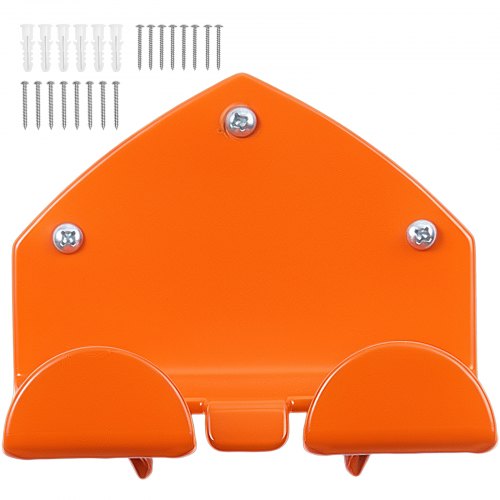
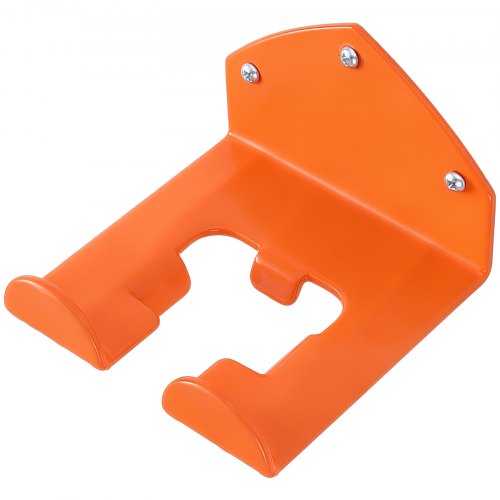
| Trimmer Rack 5.9 in, 2-Pack, 180 lb | 5.9 in each | 180 lb total | Not applicable | Not applicable | Clamp power-tool holder | Only power-tool holder here; trimmers, blowers and chainsaws |
| Garage Tool Organizer 49.5 in, 600 lb, 12 Hooks | 49.5 in | 600 lb | 3 | 12 | Rail-and-hook rack | Most hooks per rail; densest hand-tool hanging in the group |
| Garage Tool Organizer 33 in, 400 lb, 5 Hooks | 33 in | 400 lb | 2 | 5 | Rail-and-hook rack | Shortest rail here; tight walls and small tool sets |
Shop VEVOR Wall Mounted Tool Organizers for a Cleaner, More Productive Workspace
Every garage, workshop, and utility area's needs are met by VEVOR's line of wall mounted tool organizers, which range from sturdy modular systems that can manage an entire professional toolkit to small pegboard panels for simple hand tool storage. It is easy to put up your garage wall tool organizer right away because it comes with installation hardware, a variety of material options, and adjustable layouts. VEVOR is a sensible option thanks to its affordable price, robust construction, and reliable after-sales service. Start making the most of your wall space by browsing the entire collection now.
FAQs
How much weight can a tool organizer wall mount support?
It will depend on the material and installation technique used for your garage tool organizer wall mount. Steel panels, typically weighing 50 kg or more, are attached to wall studs. Hardboard pegboard on drywall anchors should support lighter loads of 15–25 kg. Always confirm the product's rated capacity when installing a tool organizer wall mount.
Do I need to find the wall studs before installing a tool organizer wall mount?
For heavy steel panels and full tool loads, stud installation is strongly recommended for wall mounts that organize tools in the garage. Good drywall anchors can support lighter panels with moderate loads. Stud mounting is always recommended when the wall construction allows it, as it provides the most dependable, durable solution for any tool organizer wall mount.
Can I later expand a wall-mounted tool organizer with additional hooks and accessories?
Yes, as long as the system uses a modular architecture like pegboard or slatwall, a garage tool organizer wall mount can be expanded and customized. With any format, hooks, brackets, bins, and shelves can be added, removed, or rearranged at any moment without affecting the base panel.
What is the best wall-mounted tool organizer for a small garage?
A modular slatwall or pegboard panel that fits the wall above your workbench is the most space-efficient option. Vertical designs that use height rather than breadth work well in tight spaces. Select a system with a variety of hook sizes if you need to manage both hand and power equipment in a small area.
How can I keep hooks from coming loose from my pegboard tool organizer?
To prevent the hook from pulling out when a tool is withdrawn, lock the pegboard hook with a small backup peg or clip. Standard hooks without a locking mechanism tend to slide and fall over time, particularly on frequently used panels.
How much weight can a wall-mounted tool holder support?
Capacity ranges widely by design. Compact clamp holders carry around 180 pounds across a pair, mid-size rail racks hold 400 to 800 pounds, and the largest multi-rail 1,200 lb heavy-duty rack spans a full wall. Always mount to studs to reach the rated figure.
What is the best wall tool storage system?
The best system is the one matching your tools and wall. For heavy mixed loads, steel racks with adjustable-hook rail systems win on strength and flexibility; pegboard suits light hand tools, and slatwall grips bigger accessories. Size the capacity above your total tool weight.
Can you mount a tool organizer on drywall without studs?
Yes, for light loads only. Toggle bolts and heavy-duty drywall anchors hold lighter panels and moderate weight, so a compact 33-inch rack can work on anchors. Heavy steel racks with full tool loads still need stud mounting to stay secure over time.
What types of tools can a wall-mounted organizer hold?
Most organizers hold hand tools, power tools, and long-handled equipment. Rail-and-hook racks suit hammers, wrenches, rakes, and shovels, while clamp-style trimmer holders grip string trimmers, leaf blowers, and chainsaws. Pair the right hook or bracket to each tool's weight and shape for a secure hold.
What are the benefits of using a wall-mounted tool organizer?
A wall organizer clears floor and bench space, keeps every tool visible and within reach, and protects blades and edges from knocks. Hanging tools off the ground also reduces moisture damage and speeds up any job, since you can see at a glance what is there and what is missing.
