
With three- and four-trumpet kits designed for high volume and long distance, VEVOR's rail horns deliver big-rig sound to cars, trucks, and everyday use. VEVOR selection covers every vehicle type and price range, whether you're looking for rail horns for pickup trucks, a compact setup for a car, or a full semi truck air horn kit. These air train horns for trucks combine a strong compressor with sturdy trumpets to produce steady, loud blasts. VEVOR provides rail horns suitable for any setup, from novice installers to seasoned truck owners.
Do you want to make a real train horn sound to get attention and get through traffic? The horn of a stock vehicle isn't the same. VEVOR's train horns use three or four trumpet configurations in conjunction with a large air compressor and tank to produce deep, forceful blasts. Our kits provide everything you need for a simple installation, whether you're upgrading a work rig, adding a rail horn to a truck, or installing a train horn for car daily driving in a car.
Not all train horns fit or sound the same. Vehicle type and trumpet count shape your decision.
3 trumpet train horns are the ideal combination of attention-grabbing volume and reasonable size for underhood or truck-bed attachment on most everyday vehicles and light trucks. To create the layered, genuine train-horn chord rather than a single flat tone, a three-trumpet air horn configuration usually uses trumpets of slightly varied lengths, each tuned to a different note.
A 3 trumpet air horn kit is easier to fit in cars with limited underbody clearance, such as sedans, SUVs, and smaller pickups, because it is smaller than a four-trumpet arrangement. Because there is less airflow required to fill and play all three horns in succession, a smaller air tank can typically meet demand due to the fewer trumpets.
A properly built three-trumpet arrangement delivers well over 150 decibels, which is more than enough to warn distracted drivers or pedestrians, even though it is the smaller model in VEVOR's lineup. This trumpet count is typically the sensible place to start for anyone who wants authentic train-horn sound without spending a significant amount of trunk or bed space on a compressor and tank.
4 trumpet train horns produce a richer chord and a substantially louder output than a three-trumpet arrangement when maximal volume and the fullest, most authentic sound are most important. Usually producing between 150 and 170 decibels, a 4 trumpet train air horn kit is loud enough to be heard over heavy machinery, highway noise, or a diesel engine running at full speed.
Four-trumpet systems sound more like a real locomotive horn than smaller setups because the additional trumpet adds a unique note to the chord. Because of this, they are particularly well-liked by owners of full-size trucks, off-road enthusiasts, and anybody else who wants their horn to stand out from a stock car horn.
The trade-off is size and air demand: four trumpets use more air per blast and require more mounting space, usually under the truck bed or on a frame rail. So, pair the kit with an appropriately sized compressor and tank to avoid a weak or inconsistent sound. However, a four-trumpet configuration produces the most striking, eye-catching effect in VEVOR's lineup for full-size trucks and larger vehicles with extra space.
Because trucks and pickups have enough frame and bed space to mount a compressor, tank, and trumpets without compromising cargo room, they are the most popular vehicles for aftermarket train horns. To shield the trumpets from road debris while still projecting sound effectively ahead and to the sides, a train horn for pickup truck is usually routed under the bed or behind the front bumper.
Because they often have the most space, full-size and heavy-duty trucks are perfect for a four-trumpet system with a larger tank for continuous, repeated blasts. A three-trumpet kit may fit more easily in mid-size trucks and pickups with reduced underbody clearance, especially if ground clearance or existing equipment such as a spare tire or toolbox limits available mounting space.
Since most vehicles already have accessible batteries and sufficient electrical power to run a compressor without altering the vehicle's charging system, wiring is typically simple. A loud aftermarket horn is also a legitimate safety feature for work trucks used near warehouses, job sites, or heavy machinery. It alerts adjacent workers or pedestrians far more efficiently than a stock horn could.
Because there is less room for a compressor, tank, and trumpets in a car or smaller passenger car than in a truck, installing train horns requires more preparation. To avoid interfering with suspension parts or exhaust routing, a car train horn system typically includes a small tank and a three-trumpet kit installed in the front bumper area or wheel well.
Since sedans and smaller cars usually sit lower than trucks, an automobile rail horn should also consider weight distribution and how the additional hardware affects ground clearance. Choosing a compact compressor and a space-saving tank shape, such as a slender or cylindrical design, makes it easier to find a mounting spot without major bumper modification.
For automobile installations, sound output matters just as much because drivers of smaller cars often have to cut through traffic noise to be heard. Without the space requirements of a full four-trumpet truck setup, a well-mounted three-trumpet kit on a car can still produce well over 140 decibels, which is more than enough for the majority of defensive driving and attention-grabbing situations.
What's in the box and how the system is built matter as much as trumpet count and vehicle fit.
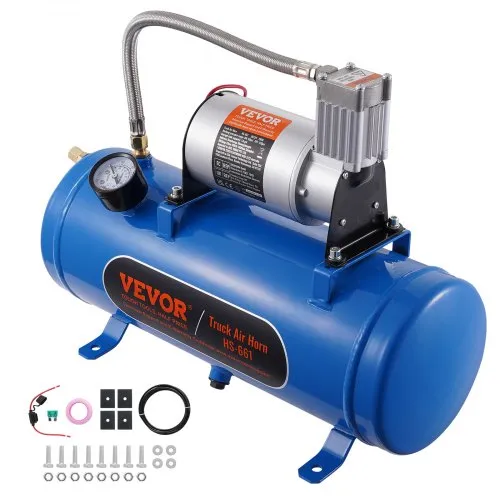
The trumpets, an air compressor, a storage tank, tubing, mounting brackets, and a wiring harness with a relay and button are usually included in a complete train horn kit, so you don't have to search for individual pieces to finish the installation. Although buying parts separately can save money, mismatched tank size, compressor output, or trumpet count often leads to lower volume or slow refill times between blasts.
For the compressor to keep the tank inflated quickly enough for repeated honks without a lengthy recovery pause, which is important if you're using the horn in traffic or as a safety signal, most truck air horn kits sold in bundles are matched. Although some trimming or bracket adjustment is frequently required to fit a particular vehicle, tubing length and bracket design are typically sized for popular mounting sites.
Because work trucks may use the horn more often during the day, fleet and work-truck applications often use train horn kits for trucks with larger tanks and heavier-duty compressors. To avoid needing extra brackets, wiring, or fittings, read the included hardware list carefully before purchasing.
One of the first specifications to verify is voltage compatibility. While larger commercial trucks may need a 24v system, most passenger cars and light trucks use a 12v train horn system that matches a typical automotive electrical arrangement. Installing the wrong-voltage compressor can cause weak airflow or early compressor failure under load.
Also consider tank composition and compressor duty cycle, not just voltage. After years of exposure to the elements, steel tanks resist corrosion better than plastic ones, and a compressor rated for frequent or continuous use performs better than a low-cost model meant for infrequent use. A pressure gauge is a common feature of vehicle air horns, letting you quickly check tank pressure instead of guessing when you need a refill.
A well-designed car air horn should also include a sturdy mounting bracket rated for vibration and road debris, since parts positioned low, close to the frame or bumper, are more likely to sustain damage than those placed under the hood. Prioritizing corrosion-resistant materials and a correctly rated compressor will do more for long-term durability than horn volume alone, whether you're shopping for air horns for trucks in general or a particular air horn for auto truck.
From a small three-trumpet kit for a daily driver to a complete four-trumpet configuration for a heavy-duty truck, VEVOR's train horns offer options for any vehicle and any purpose. Compared with boutique horn brands, each kit is reasonably priced without sacrificing compressor power or trumpet material. Complete kits include the tank, compressor, tubing, and wiring you need for easy installation, and VEVOR guarantees hassle-free returns and prompt customer service with every purchase. Choose the train horn kit that best suits your car and budget by browsing the full lineup now.
Usually above 150 dB, a three-trumpet system is loud enough for most vehicles and light trucks. For full-size trucks with additional mounting space, a four-trumpet kit offers even more volume and a deeper chord.
Although mounting space varies, most kits fit vehicles, trucks, and SUVs. Cars often function best with a small three-trumpet kit, but trucks typically have more space for larger tanks and four-trumpet configurations.
Most light trucks and passenger cars have a 12-volt system. Check your car's voltage before ordering a kit, because larger commercial trucks with a 24-volt system require a matching compressor.
Before installing one, check local rules, as laws differ by state and country. Even though the same horn may be permitted for off-road or private use, many jurisdictions impose restrictions on horn types or decibel levels on public roadways.
Most kits include everything you need for a full installation without purchasing individual pieces, including the trumpets, a compressor, an air tank, tubing, mounting brackets, and a wiring harness with a relay and a button.