A car air conditioner vacuum pump is essential when servicing your car’s air conditioner. The system should be airtight, dry, and contaminant-free before being filled with refrigerant, as refrigerant can adversely affect cooling efficiency and damage critical components. The appropriate evacuation process can enhance efficiency, extend compressor life, and ensure long-term outcomes. You might be a first-time user of a vacuum pump to air-condition the car, or you might be on a quest to find the best vacuum pump to clean the car’s air conditioner. Knowing the right tools, methods, and vacuum time will enable you to have a successful and safe car air conditioner recharge.
Table of Contents
What Is a Vacuum Pump for a Car Air Conditioner?
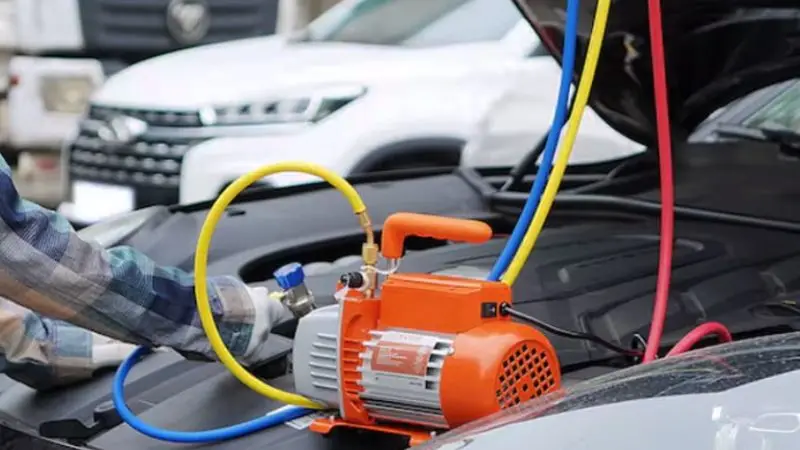
A car air conditioner vacuum pump is a necessary piece of equipment that is used to maintain the air conditioning system of your car. The system should be free of air, moisture, and other contaminants before adding refrigerant, as these can lower cooling efficiency. The negative pressure in the AC lines is generated by a vacuum pump, which helps release trapped air and water vapor. This process is useful for safeguarding the compressor and other AC components against damage and enhancing system efficiency. Knowing how the pump operates and when to apply it makes AC maintenance less hazardous and more effective.
Recommended For Your Project
How Does an AC Vacuum Pump Work?
Car air conditioning uses a vacuum pump to evacuate undesirable air, moisture, and gases from the closed system, after which refrigerant is introduced. The AC service ports are attached to the pump by a manifold gauge set or a car AC vacuum pump kit. As soon as it begins running, it reduces the pressure in the system, causing the trapped moisture to evaporate and be drawn out by the pump. This provides a dry environment that is clean and enables the circulation of the refrigerant. Knowing how to operate a vacuum pump to service your car air conditioner is the right way to avoid cooling issues, compressor damage, and costly repairs, and ensure your AC system is working optimally.
Why Is Removing Air and Moisture Important?
Two of the largest opponents of any automotive air conditioning system are air and moisture. When they are not removed from the AC lines, they can mix with refrigerant and compressor oil, forming harmful acids that destroy internal parts. The moisture can also freeze in the expansion valve or orifice tube, limiting refrigerant flow and cooling. Vacuum pumping prior to recharging the car AC removes these impurities and enables an effective vacuum-pump AC recharge. A clean, dry system enhances the cooling performance, extends the lifespan of the components, and ensures your air conditioner performs well during hot weather.
When Do You Need to Use a Vacuum Pump?
The question many ask is, do you require a vacuum pump when maintaining a car AC? Yes is the answer whenever the air conditioning system was opened to repair it, a part was changed, or the refrigerant completely leaked out. Before each complete recharge of refrigerant in the system, a vacuum pump must be applied to remove all the moisture and ensure that the system is free of leaks. When replacing a compressor, condenser, evaporator, or AC hose, evacuating the system is also an important step. Selecting the most appropriate vacuum pump to use in the car AC and understanding how much time to spend vacuuming a car AC system can help in making the recharge process reliable in terms of providing a good cooling process and long-lasting performance.
Types of Vacuum Pumps for Car Air Conditioners
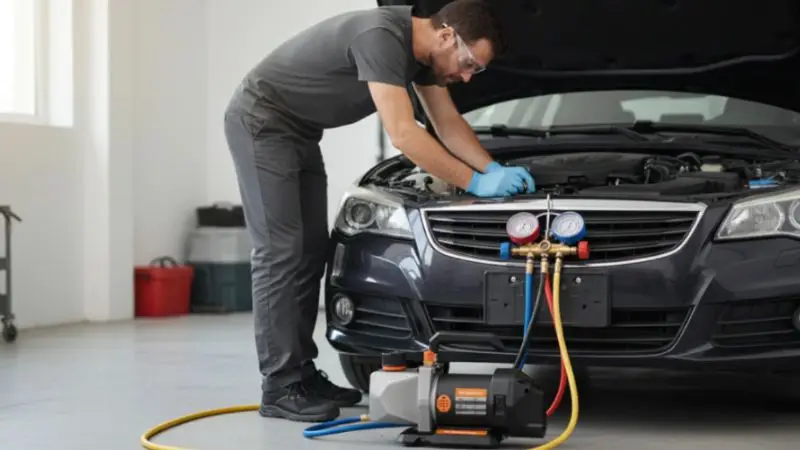
The selection of the appropriate vacuum pump to use in a car air conditioner is determined by the kind of work you intend to do in the AC. Vacuum pumps are available in various designs, and each has its own advantages for home mechanics and professional technicians. Knowing the variations will enable you to perform repairs more quickly and achieve a cleaner, drier AC system before adding refrigerant. The appropriate model choice enhances evacuation speed and facilitates the use of an effective vacuum pump to carry out the AC recharge process.
Single-Stage Vacuum Pumps
Single-stage vacuum pumps are commonly used as a cost-effective choice for automotive air conditioning service. They have a single compression step, which gets the air and moisture out of the AC system, and hence they can be serviced on a regular basis and repaired occasionally. Such pumps tend to be cheaper, lighter, and simpler to use. However, when you just do AC work periodically, a single-stage model can work. It is often found in many entry-level car AC vacuum pump kit packages, where it is one of the convenient packages available to a beginner that offers good performance without necessarily spending a lot of money.
Two-Stage Vacuum Pumps
Two-stage vacuum pumps have two compression chambers to create a deeper vacuum compared to single-stage models. This enables them to eliminate moisture and trapped gases more efficiently, particularly in systems that have been open for a long time or require significant repairs. These pumps are also popular with professional technicians since they evacuate the system more quickly and offer a greater overall performance. When you have to service automotive air conditioners often, you might want to invest in the best vacuum pump with a two-stage design to enhance efficiency and ensure the system is completely dry before adding refrigerant.
Electric vs. Air-Powered Vacuum Pumps
Vacuum pumps powered by electricity and air power accomplish the same task, but the way in which they work is different. Electric models are plugged into a power source and deliver steady performance with little setup; they are the most widely used in automotive AC service. Air-powered pumps use compressed air and are commonly used in workshops that already have an air compressor. While air-powered models can be convenient, they usually require a larger air supply and may take longer to achieve a deep vacuum. The correct decision depends on your work area, the equipment, and the frequency of AC maintenance.
How to Choose the Right Vacuum Pump
Not all vacuum pumps are equally powerful, and it is worth considering key features before buying one. The right pump must fit your AC system, provide sufficient suction, and be compatible with the refrigerant you intend to use. Knowing how to select efficient equipment and use a vacuum pump in a car air conditioner makes it a lot easier for beginners and even experts to understand a few important specifications.
Pump CFM Rating
The CFM, or cubic feet per minute, is the measurement of the amount of air that can be removed by a vacuum pump per minute. The greater the CFM rating, the faster the pump will empty the AC system, lessening service time. Smaller passenger cars may tend to respond well to pumps with 2-4 CFM, whereas large vehicles or those in frequent professional use could require a higher-capacity pump. The selection of an appropriate CFM will ensure efficient evacuation and facilitate a smooth vacuum pump cycle prior to recharging the car AC, without unwarranted delays.
Vacuum Level and Micron Performance
A good vacuum pump must be able to attain a deep vacuum in microns. The AC system’s air and moisture have been removed, which is reflected in lower micron levels. Deep evacuation is relevant since slight traces of moisture can interfere with the cooling performance and damage the components of the system over time. Good-quality pumps tend to offer superior performance in terms of microns and are therefore best suited for total AC servicing. When comparing products, the vacuum level specification should be considered, not necessarily the pump speed or motor size.
Compatibility with Different Refrigerants
Newer vehicles incorporate other refrigerants, such as R-1234yf and R-134a. When buying a pump, ensure it is compatible with the refrigerant in your car’s system. The vacuum pump, though it does not use refrigerant itself, removes air and moisture and should be compatible with the appropriate manifold gauges, hoses, and service equipment. The evacuation process will be safer and more efficient with compatible tools, particularly a full-vacuum pump for AC recharging on newer or older vehicle models.
Tools You Need Before Using a Vacuum Pump on a Car AC
@ashtonbrown007 Vevor’s Vacuum Pump and Gauge Set #VEVOR #VacuumPump #HVACtools #RefrigerationRepair #CreatorIcons
♬ original sound - AshtonBrown007
Make sure you have all the tools before you begin working on the air conditioning system of your vehicle. It allows you to use the correct equipment, which makes the process safer, faster, and more accurate. It also helps eliminate air and moisture entirely before adding refrigerant. With a professional setup or a car AC vacuum pump kit, proper tools make it a successful AC service and help to avoid damage to costly parts.
Use a Manifold Gauge Set
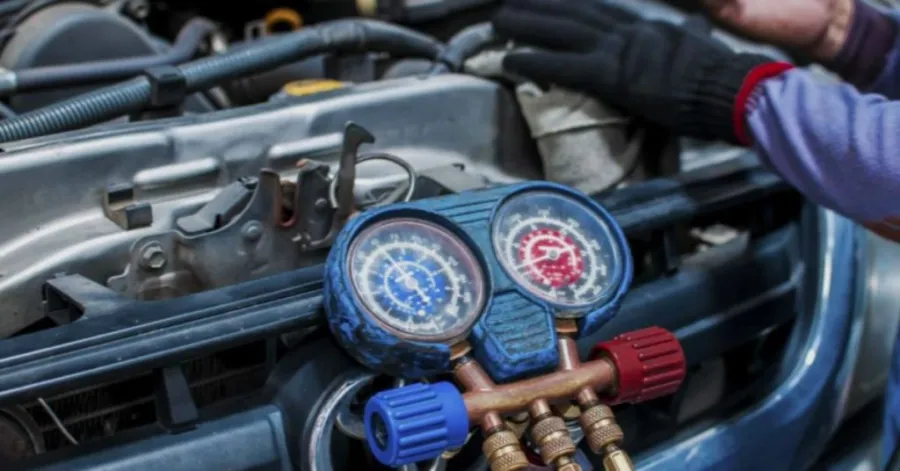
A manifold gauge set is a necessary tool for connecting the car’s air conditioner’s vacuum pump to the vehicle’s AC system. It gauges the pressure on the high- and low-pressure sides and enables you to monitor the evacuation process. Correct pressure measurements can be used to ensure that air and moisture are being eliminated. The equipment is more user-friendly, and most car AC vacuum pump kit packages come with a manifold gauge set with corresponding hoses. Check the gauges and hoses before commencing the evacuation process, and inspect for any damage to maintain airtight connections throughout.
Check and Replace Vacuum Pump Oil
Vacuum pump oil is essential for maintaining the pump’s efficiency. It greases the internal parts, enhances sealing, and helps the pump reach a higher vacuum. The dirty or contaminated oil may lower the performance and make it impossible to completely remove moisture. One should always make sure the level of the oil is checked before using the pump and that the oil is replaced whenever it appears to be cloudy, milky, or dark. New oil enables the pump to operate more effectively and results in a more favorable vacuum pump prior to recharging the car AC, assisting in preparing the system for a successful refrigerant charge.
Wear the Right Safety Gear
The most important thing in working on an automotive air conditioning system is safety. Wear safety glasses to avoid exposure of your eyes to the refrigerant and insulated gloves to avoid contact with extremely cold AC parts. Do the task in a well-ventilated place to minimize exposure to refrigerant vapors in case of a leak. Prior to connecting the equipment, examine all hoses, fittings, and gauges for wear or damage. By following these low-tech tips, the process of filling your vehicle with a vacuum pump to charge its batteries becomes safer, and it keeps you and your car safe as well.
How to Use a Vacuum Pump for a Car Air Conditioner Step by Step
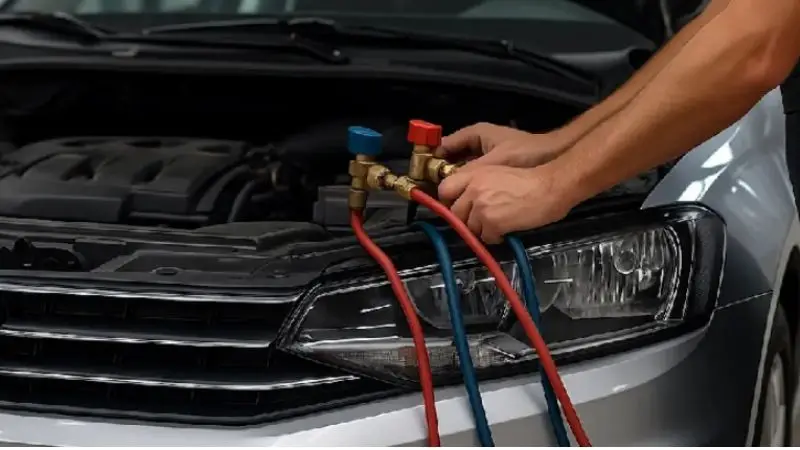
Knowing how to operate a vacuum pump to air condition your car is important in keeping the air conditioning system of your car working effectively once it is serviced. The evacuation process removes moisture, air, and contaminants, which can reduce cooling performance or damage internal components. It is important to follow each step in system preparation to prevent refrigerant leaks and avoid expensive repairs. You can do the job safely and achieve professional-quality results with the right equipment and proper technique.
Step 1: Prepare the Car AC System
Begin by shutting off the engine and ensuring the air conditioning system is working properly. When you change the compressor, condenser, evaporator, hose, or any other part of the AC, make sure that all connections are firmly clamped. Remove the protective caps from the service ports and inspect them for dirt or damage. Wipe down the ports in case they are not clean. The car air conditioner can be properly prepared to ensure the vacuum pump functions and the possibility of future cooling issues diminishes once the system has been recharged.
Step 2: Connect the Vacuum Pump and Gauges
Connect the manifold gauge set to high-pressure and low-pressure vehicle service ports. Next, connect the center hose to the vacuum pump and screw all of the fittings into place. Ensure that all the connections are not loose to allow the exit of air from the system. An airtight vacuum pump kit should be used to remove air and moisture efficiently, and this can only be achieved by a properly connected car AC vacuum pump kit that forms an airtight seal. Before activating the equipment, test all the connections to prevent any interruptions in the evacuation process.
Step 3: Run the Vacuum Pump
Switch on the vacuum pump and open the two valves of the manifold gradually to start evacuating the air conditioning. The pump will eliminate any trapped air, moisture, and non-condensable gases in the AC lines. The question a lot of people ask is how much time should be spent on vacuuming a car’s AC system. The vacuum in most vehicles should last about 30 to 45 minutes, though systems that have been open for a long time may take longer. Let the pump pump away to a deep vacuum, then proceed to the next step to get the system absolutely clean and dry.
Step 4: Test the System for Leaks
Once the evacuation is complete, close the manifold valves and turn off the vacuum pump. Monitor the pressure gauges for 15 to 30 minutes without removing the equipment. When the vacuum is stable, the system is well-sealed and prepared to use refrigerant. When the pressure starts building up, it may have a leak that must be sealed prior to charging the system. This leak test will confirm that the evacuation process was effective and help ensure there is no loss of refrigerant following servicing.
Step 5: Recharge the Car Air Conditioner
After conducting the vacuum hold test and confirming there are no leaks, you can start adding refrigerant per your car manufacturer’s requirements. This is the last stage of the vacuum pump process of recharging the AC. Only the suggested type and quantity of refrigerant should be added to prevent overcharging and undercharging of the system. The fully charged AC system provides better cooling, better compressor performance, and extends the life of the key components. The above steps will help you have an air conditioner in your vehicle that is efficient and reliable under any driving conditions.
How Long Should You Vacuum a Car AC System?
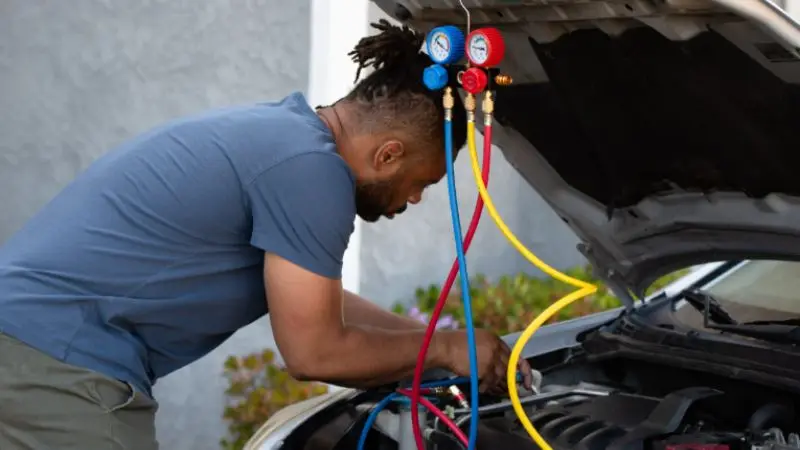
It is important to know the required time to vacuum a car’s AC system to remove air and moisture, then add refrigerant. Appropriate vacuum time will be determined by the size of the AC system, the amount of moisture in it, and whether any major components are replaced. Hurrying this process might reduce cooling efficiency and shorten the compressor life. Providing ample time will allow the vacuum pump that conditions the car air conditioner to clear all contaminants and prepare the system for successful recharging.
Vacuum Time for Small Passenger Vehicles
The average passenger auto takes approximately 30 to 45 minutes to operate the vacuum pump. Usually, this is sufficient to eliminate air, moisture, and non-condensable gases in a well-sealed AC system. This evacuation time is usually adequate in case the system has just been opened for a small repair. Monitoring the manifold gauges to ensure that the vacuum level is kept constant during the process is also important. The recommended evacuation time improves the vacuum pump’s efficiency before recharging the car’s AC and helps ensure the refrigerant functions as expected once it has been charged.
Vacuum Time for Larger Vehicles
The bigger vehicles, such as SUVs, pickup trucks, vans, and commercial vehicles, frequently have bigger air conditioning systems that take longer to evacuate. Typically, a vacuum pump should be run for 45 to 60 minutes; this is sufficient to dry the bigger refrigerant lines and parts of the refrigerator. A longer evacuation time might be required to ensure that the system has not been exposed to the atmosphere over a long period of time or that several AC parts have been changed. The most effective vacuum pump in a car AC can be used to achieve a deep vacuum more effectively, even in larger systems.
Factors That Affect Vacuum Time
The time required to vacuum a car’s AC system depends on several factors. The bigger AC systems inherently take a longer time than the small passenger cars. Evacuation time can also be increased by high humidity, moisture in the system, or by changing significant parts of the system, such as the compressor, condenser, or evaporator. Another critical factor is the performance of the vacuum pump used to dehumidify the air conditioner in cars, with higher-quality pumps being more efficient in getting rid of air and moisture. It is important to always check the system with a vacuum hold test on evacuation to ensure the system is free of leakage before the vacuum pump is finished with the steps of AC recharge.
Wrap Up
One of the most significant steps in keeping a healthy car air conditioner system is to use a vacuum pump properly. The elimination of air and moisture, followed by the addition of refrigerant, enhances cooling efficiency, protects the compressor, and prevents costly repairs. Knowing the necessary time to vacuum a car’s AC system, selecting the appropriate equipment, and the proper recharge procedure guarantee improved outcomes each time. Regardless of whether you have a professional system or a car AC vacuum pump kit, properly evacuating the system will ensure your car air conditioner operates effectively and provides good cooling on a regular basis.
FAQ
Is it possible to charge my car’s AC without having to use a vacuum pump?
Not advisable. Car air conditioner vacuum pump: This vacuum pump removes air and moisture, and then refrigerant is added to prevent poor cooling, corrosion, compressor damage, and decreased performance of the AC system.
What Depth of the Vacuum should be refilled?
The vacuum should be achieved in the system to a deep level, say, 500 microns or less. This implies that most of the air and moisture are removed before the vacuum pump is started to recharge the AC.
Is it possible to use a single vacuum pump across vehicles?
Yes. Most vacuum pumps are compatible with the manual manifold gauges and fittings when used with cars, trucks, and SUVs. Check refrigerant compatibility prior to working on the AC system of any vehicle.
What is the Frequency of Vacuum Pump Oil?
Test the oil prior to each use and change it whenever it is cloudy, dark, or contaminated. Clean oil contributes to the pump being very powerful and getting a deeper vacuum easily.
What Will Happen when Moisture is retained within the AC System?
Moisture may freeze, limit refrigerant movement, form corrosive acids, damage internal parts, reduce cooling capacity, and shorten compressor life. Proper evacuation will help maintain the AC system’s cleanliness and reliability.