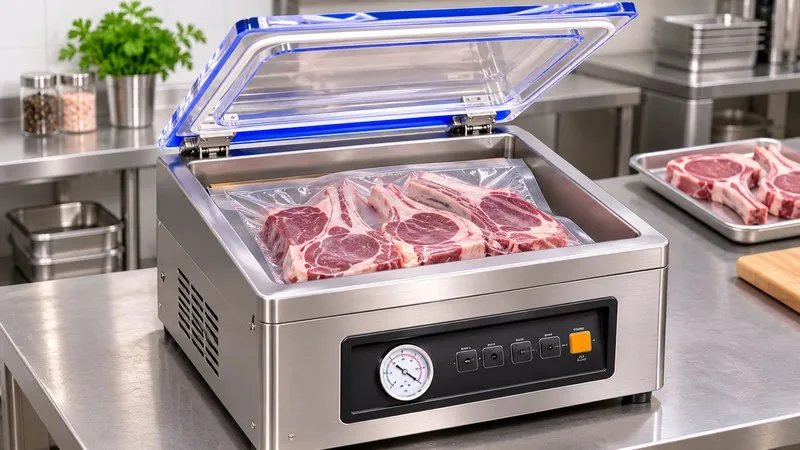
However, most meat-packing failures don’t involve machine failure. Rib bones penetrate the film, a hot cut purges into the chamber, or a bag opens in the freezer after three weeks. Selecting among the available meat vacuum sealer machine helps much less than technique.
These seven tips cover bone-in cuts, game, fish, and retail packaging. They follow manufacturers’ instructions rather than general guidelines. This approach works in chamber sealer operations.
- Tip 1: Chill the Meat Before It Goes Near the Machine
- Tip 2: Protect Bones Before They Reach the Bag
- Tip 3: Portion for How You Will Actually Cook It
- Six Meat Vacuum Sealer Machines Compared
- Tip 4: Match the Machine to Your Weekly Volume
- Tip 5: Handle Game With Field Hygiene in Mind
- Tip 6: Treat Fish Differently From Red Meat
- Tip 7: Know What Vacuum Packing Does Not Do
Tip 1: Chill the Meat Before It Goes Near the Machine
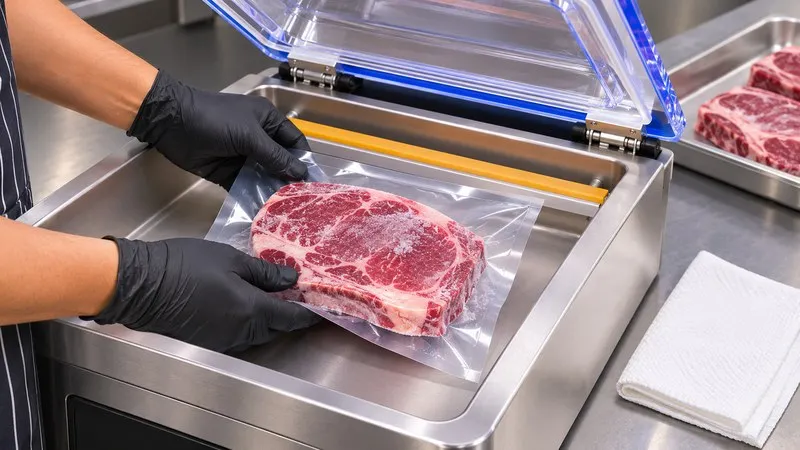
Cold meat seals much more effectively. With warm meat, the purge forms and moves toward the bag opening as the chamber empties. Once it reaches the seal line, liquid purge keeps the film from bonding, which is the leading reason a seal seems good but ultimately fails. Cold meat will harden its surface, slowing the purge-forming process. A meat vacuum sealer machine won’t work on warm meat, and a vacuum sealer for fresh meat works best on cold meat.
This also applies to any marinated food. Drain the cut of meat of any liquids before placing it in the bag, or expect your marinade to be managed with a shorter cycle. Across the broader vacuum sealer range, it is the only thing that can eliminate more errors than any feature.
Tip 2: Protect Bones Before They Reach the Bag
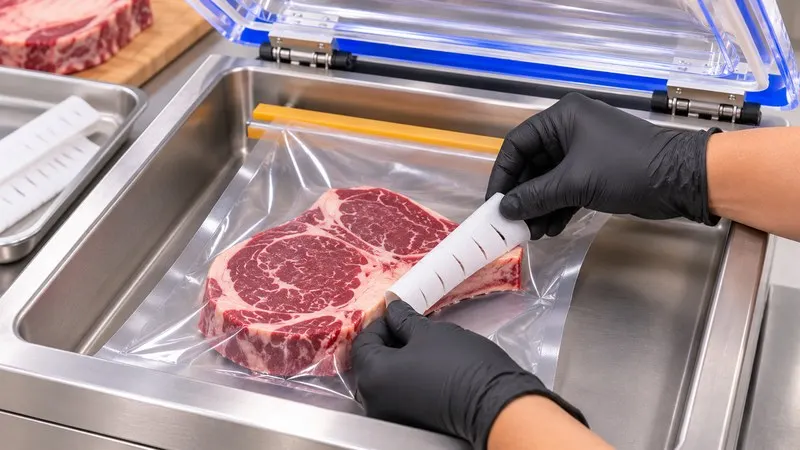
Bone-in packaging is a different task, and the industry has treated it that way for years. This meat vacuum sealer machine needs a bone guard, not a stronger pump.
Which chamber vacuum sealers are best for sealing bone-in meats and large cuts?
The machine matters less than what you place between the bone and the film. In the case of chamber vacuum sealing, first of all, the air is sucked out of the chamber, and then the machine seals the package. When the chamber returns to atmospheric pressure, the bag squeezes the meat. Bone edges may pierce the film; that is why it is important to protect the vacuum sealer for bone-in meat rather than to make a more powerful pump.
Flexible bone guards protect the bag by covering exposed edges. In patent literature on bone-in packaging, flexibility matters because rigid patches can gather in the meat’s hollow, and their edges can peel off the bones, exposing the bone. Cover sharp bones with an appropriate flexible bone guard or a folded piece of vacuum-sealer bag material. Place the bone cover correctly and secure it before sealing, since you can’t reposition it after sealing.
The cut size is the most important factor in determining the required bag width. A 12-inch seal bar, like the one in the 3.1 gallon chamber sealer, accepts wider bags than a 10.25-inch seal bar. Measure the largest cut, and break it down regularly.
Tip 3: Portion for How You Will Actually Cook It
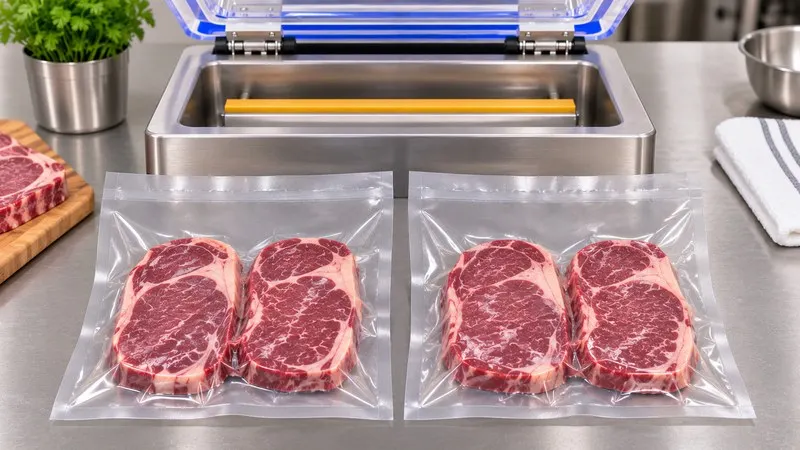
A meat vacuum sealer machine seals what you give it, so portion first. Select your portions before sealing, because resealing frozen meat takes extra effort. Package in amounts you will use immediately, because once opened, the package is no longer under a vacuum. Eight steaks per package is worse than two if you eat for two. In terms of volume, a bigger chamber lets you process multiple packages per session rather than multiple sessions, and that’s your throughput.
Arrange cuts so there’s space between them, keeping the seal line clear. Vacuum packaging meat for freezing works best with frozen flat packs because they thaw faster and stack more easily. Tips regarding the storage life of vacuum-packaged meat can be found in vacuum-sealed meat shelf life.
Six Meat Vacuum Sealer Machines Compared
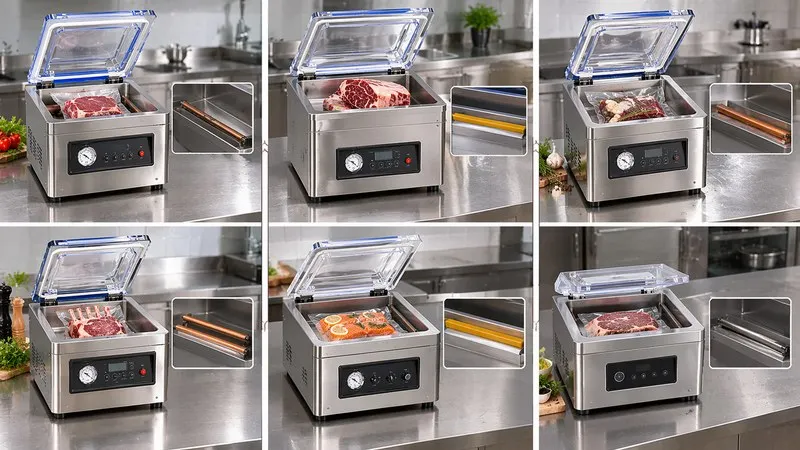
Seal bar length and chamber size matter more than any other specification in meat processing, since a cut that doesn’t fit in the chamber can’t be properly packed. Each meat vacuum sealer machine listed below is rated by bar length and chamber depth. A vacuum sealer for bulk meat needs both. Here is a table showing six models based on these measurements.
Recommended For Your Project
| Model | Chamber | Seal bar | Pump | Features for meat |
| VEVOR 577W chamber sealer | 11.7 × 10.2 × 4.1 in | 11 in | 4-piston dry | Wet and marinate presets; no oil between seasons |
| VEVOR 3.1 gal chamber sealer | 14.1 × 13.5 × 2.8 in | 12 in | Commercial oil, 370 W | Widest pouches here; marinade cycle; stainless body |
| VEVOR 2.2 gal chamber sealer | 14 × 13.4 × 2.9 in | 12 in | Commercial oil, 180 W motor | Marinade cycle; stainless body |
| VacMaster VP210 | 11.25 × 15.25 × 5 in | 10.25 in, removable | 2-cylinder dry piston | Double seal wire; pouches to 10 × 13 in; 83 lb |
| LEM MaxVac Pro | 11.24 × 11.81 × 3.93 in | 11.42 in | Maintenance-free dry, 320 W | Dual 2.5 mm seals; marinade runs three cycles unsealed |
| Anova ANCV-1-20 | 12 × 8.6 × 3 in | 11.8 in | 70 L/min dry, 280 W | Manual control of vacuum and seal strength |
Three key specifications apply to the following applications. The VEVOR oil-pump machine’s 12-inch bar accommodates the largest pouch size, which you will need for larger cuts and bone-in items. VacMaster has the largest chamber of any machine, at 5 inches deep, almost 1 inch deeper than the next deepest chamber at 4.1 inches. So, if a bone-in or primal cut is thick enough, you can stand it vertically in the chamber without squishing it.
Two vacuum machines provide a second layer of seal protection. VacMaster uses a double seal wire, and LEM uses dual 2.5 mm seals. Both provide two separate seals, so the bag can be strained by the bone. This is even more important for heavier packages than for light ones. Anova’s manual control is the only specification here for soft products like fish.
Tip 4: Match the Machine to Your Weekly Volume
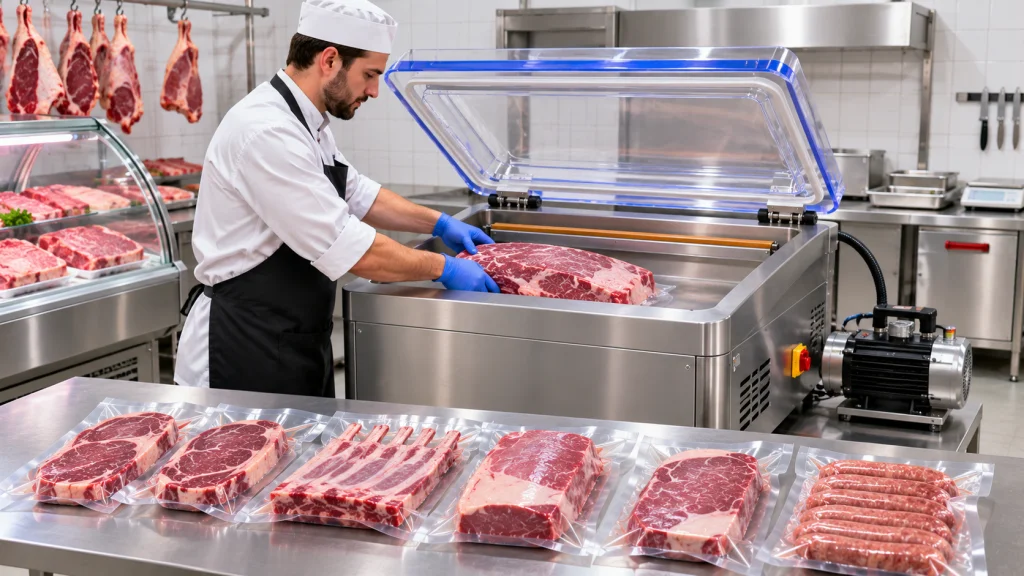
Volume, not cut type, makes a machine domestic or commercial. A retail meat vacuum sealer will run more hours than a countertop model.
What chamber vacuum sealers are best for small butcher shops looking to package meat for retail?
Retail packaging has requirements a home kitchen can’t meet. Henkelman’s recommendations for the meat industry state that continuity, cleanliness, and ease of maintenance are basic needs. Henkelman’s machines are designed for heavy-duty operation up to 20 hours a day. The commercial meat vacuum sealer machine is meant for a busy shop. Industrial meat vacuum packaging machines are measured in hours, not cuts. This refers specifically to these industrial machines, not commercial chamber machines in general. The other factor is that because the product stays inside the bag, it never contacts aluminum in the chamber.
Presentation matters for retail in a way it does not at home. Henkelman offers shrink technology for tighter packs and better display, and extra-long sealing bars for larger products. Both focus on how the pack looks on a shelf rather than how long it lasts. For a small shop running intermittent batches. A stainless steel chamber sealer with an oil pump is the more realistic starting point. A vacuum sealer for butcher shops also needs to handle retail presentation. Check your market’s certification requirements before committing. A commercial meat vacuum sealer used in retail may need to meet standards a domestic unit doesn’t. Broader options sit across the food preservation range.
Tip 5: Handle Game With Field Hygiene in Mind
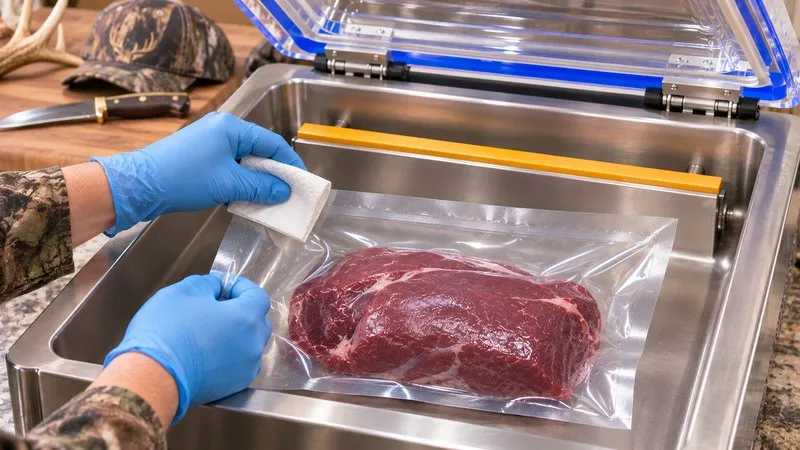
Game meat requires proper handling because it can easily become contaminated with dirt and hair in the field. Game meat vacuum sealers need clean bag edges.
Which chamber vacuum sealers are best for hunters wanting to package game in the field or at home?
Start by noting that chamber machines require mains power and are heavy, making field packing with one impossible. The practical method is to chill and preserve the meat in the field, then pack it properly after you’ve cooled and dressed it.
Before it even reaches the packing stage, vacuum-sealing game meat requires the same handling as bone-in meat. Using a dry pump like the 577W chamber sealer saves you the trouble of maintaining your oil between seasons when you’ll only use it briefly.
Pay special attention to hair, dirt, and bone chips on the sealing line, since meat packed in the field will have far more than anything off a counter. Always wipe the bag mouth before you close the lid. Correct bag placement is covered in “Sealing a Bag Correctly.”
Tip 6: Treat Fish Differently From Red Meat
Fish is softer and wetter than most red meats, so it needs more delicate handling during vacuum sealing. The vacuum meat sealer machine used to preserve meat requires a softer vacuum for fish.
What are the best chamber vacuum sealers for seafood and fish processing?
Fish fillets compress under full vacuum differently than steak fillets, so an adjustable vacuum is advantageous when using a vacuum sealer for fish. Manual adjustment lets you set a point short of what compresses the delicate fillet and controls the liquid the fillet always produces.
Frosting the fillets on a tray before sealing helps firm them enough to withstand the vacuum. Pack fillets flat in one layer because, when packed in layers, they retain some liquid between the layers. In general, with wet packing, the balanced pressure a vacuum packing machine applies to meat and fish helps keep liquid in the package, not at the seal. Fish is the one with the most important caveat in this article.
Tip 7: Know What Vacuum Packing Does Not Do
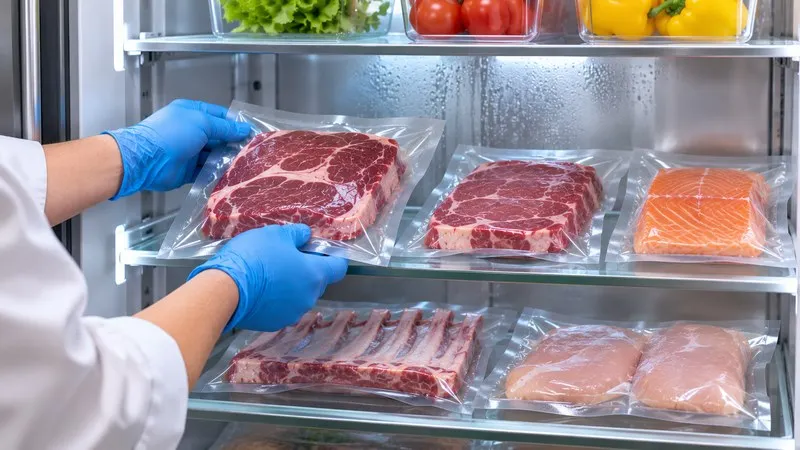
Food safety is the most important aspect of vacuum packing, but people often ignore it. A meat vacuum sealer machine is not a sterilizer. Vacuum packing removes air from the packaging, helping reduce oxidation and freezer burn. It doesn’t eliminate all pathogens or make meat or fish shelf-stable. Some pathogens can still develop in low-oxygen environments.
Refrigerate or freeze your vacuum-packed meat or seafood and follow food safety practices. Recommended time frames for various foods are listed in vacuum-packed food storage. Don’t use the sealed bag as an excuse to leave meat or seafood on the counter, regardless of the vacuum level. Labeling the bags with their seal dates makes such discipline easier to maintain. More information on meat-only sealing can be found in vacuum sealing meat.
Conclusion
The meat vacuum sealer machine has one purpose, but the surrounding method does everything else. Chill before sealing, protect all bones, portion for your cooking method, and keep the seal line dry. For bulk cutting and bone-in cuts, bar length and chamber depth become crucial, so the 3.1 gal chamber sealer works best for width, and the VacMaster for depth. Seasonal game animals, a dry pump is preferable to avoid seasonal maintenance.
For fish, an adjustable vacuum matters more than sheer power. A vacuum packing machine for meat and fish should be adjustable. Whatever you choose, treat the vacuum sealer as a high-quality product rather than a safety product, and make sure the vacuum sealers you are comparing match your weekly volume.
Frequently Asked Questions
Why does my vacuum bag keep splitting on bone-in cuts?
When atmospheric pressure returns to the chamber at the end of the process. The bag squeezes tightly against the meat, and bone edges can puncture the film. Wrap every exposed part with a bone guard or folded bag material before sealing.
Can I vacuum seal meat straight from the counter?
Better when it’s cold. Fresh meat purges more when warm, and moisture touching the seal line keeps the film from sticking, which is why seals break down after a few days in the freezer.
Do I need a commercial machine for a small butcher shop?
It’s about hours, not cuts. Henkelman’s industrial, heavy-duty units can run 20 hours per day. This exceeds intermittent batch processing and does not fit the description of countertop models. A smaller model handles shorter daily operation, while the 577W chamber sealer is ideal for light-duty operations.
Does vacuum sealing make meat safe to store at room temperature?
Not really. It removes air and reduces the risk of oxidation and freezer burn, but it can’t kill harmful bacteria or make food shelf-stable, since some bacteria thrive in low-oxygen environments. Store vacuum-sealed meat and seafood in the refrigerator or freezer. Treat accessories across the food preservation range as support for that routine, not a substitute.