If your AC blows warm air, skipping the vacuum step leaves moisture trapped inside, creating acid that destroys your compressor. Hooking up a gauge set, three hoses, and a pump can look confusing at first, but it is easy once you know the steps. A clean vacuum pump hookup and vacuum pump connection take minutes. This tutorial explains how to hook up a vacuum pump to your air conditioner, pull a clean vacuum, and demonstrate that it holds before adding a drop of refrigerant. Everything on this page relates to the air conditioning vacuum pump you’ll be using.
Recommended For Your Project
What You Need Before You Connect a Vacuum Pump
To avoid hunting for tools mid-job, lay out your equipment before connecting any vacuum pump parts. This is where a good vacuum pump setup begins. A tidy vacuum pump setup makes connecting a vacuum pump easier, and that is how to hook up a vacuum pump safely.
Vacuum Pump Setup: Tools and CFM Size
You need a vacuum pump, a manifold gauge set with three color-coded hoses, clean, fresh pump oil, and the appropriate refrigerant for your system. Each supports the vacuum pump gauge connection and vacuum pump hose connection. Knowing how to install vacuum pump gauges helps.
Although optional, a micron gauge is worthwhile because it provides a much more accurate deep-vacuum reading than the dial on a typical manifold. This equipment falls under the broader category of vacuum pumps, along with tools for resin and food work, because you can use it for many other tasks. It checks every vacuum pump gauge connection during vacuum pump setup.
Size the pump to the job, not the other way around. While a larger system pulls down faster with 5 to 7 CFM, a 3 to 4.5 CFM pump easily handles car AC and small home units. A complete AC vacuum pump and manifold gauge kit eliminates the need to match components piece by piece if you’d prefer to purchase everything in one package. The right size makes vacuum pump hookup easy.
Not sure which pump size you need? Match your system type to the chart below. Small jobs need less CFM, while larger or frequent jobs pull down faster with a bigger two-stage pump. Use it for vacuum pump setup.
| System Type | Recommended CFM | Pump Style |
| Car AC / small home unit | 3 – 4.5 CFM | Single-stage |
| Mid-range home HVAC | 5 – 7 CFM | Two-stage |
| Large or frequent jobs | 9 – 12 CFM | Two-stage |
A two-stage vacuum pump pulls a deeper vacuum faster, which is why it’s the pick for bigger systems and busy garages. These pumps sit within the broader plumbing tools lineup, so matching parts are easy to find. Matching hoses simplify each vacuum pump hose connection.
What Vacuum Pumps Offer the Best Accessories and Bundled Tools and How Do the Kits Compare?
A pump-only purchase is cheaper but assumes you already own gauges and hoses. The best kits bundle the pump, a manifold gauge set, hoses, a leak detector, and a carry bag. Since a single-stage vacuum pump with a gauge set covers most DIY tasks, compare kits first by CFM, then by what’s in the box. The table below shows what each option includes so you can match a kit to how often you work and whether you already own a manifold set.
| Vacuum Pump Option | Pump Style & CFM | Accessories & Bundled Tools | Best For |
| Pump-only unit | Single- or two-stage | Pump and oil only; you supply gauges and hoses | DIYers who own a manifold set |
| Single-stage pump + gauge kit | Single-stage, 3–4.5 CFM | Pump, manifold gauges, color-coded hoses, oil | Car AC and small home units |
| VEVOR two-stage pump & gauge kit | Two-stage | Pump, gauges, three hoses, oil, carry bag | Car + home AC in one package |
| Two-stage pro kit | Two-stage, 5–7 CFM | Pump, gauges, hoses, leak detector, case | Regular home HVAC work |
| Heavy-duty two-stage kit | Two-stage, 9–12 CFM | Pump, gauges, hoses, extra fittings, hard case | Large or frequent pro jobs |
A bundled VEVOR two-stage kit gives you the pump, gauges, hoses, and oil together, so every vacuum pump hose connection and vacuum pump gauge connection matches out of the box. Compare kits by CFM first, then by contents, and that’s how to connect AC vacuum pump hoses without buying extra parts later.
Check the Vacuum Pump Oil First
Only a clean pump can create a strong vacuum. Old oil absorbs moisture and becomes hazy or dark, which prolongs evacuation and reduces performance. Before connecting the vacuum pump hoses, remove the fill cap, inspect the sight glass, and replace or top off the oil if it appears dirty. Most people overlook the simple step of installing vacuum pump oil correctly, which can subtly ruin their results. Learn how to install vacuum pump oil first, then how to attach vacuum pump fittings. Clean oil protects every vacuum pump connection and vacuum pump hose connection.
How Do You Connect a Vacuum Pump to an AC Manifold Gauge Set?
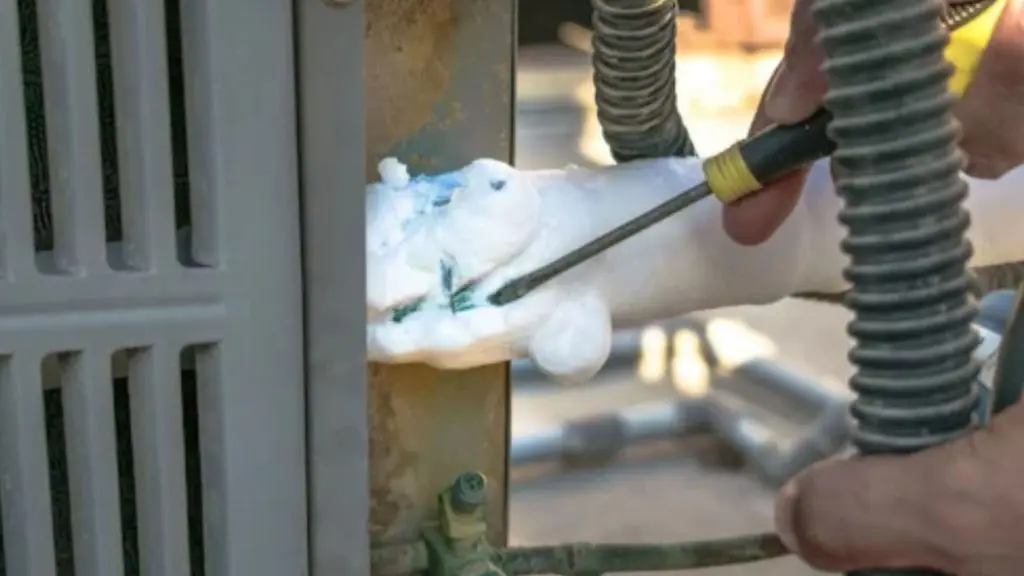
Learning how to connect vacuum pump parts to the manifold is crucial because it serves as the hub connecting your pump, gauges, and air conditioner. What separates a clean pull from a wasted hour is knowing how to attach vacuum pump fittings so they seal and connect AC vacuum pump hoses to the right locations. A clean vacuum pump hookup starts here.
- Before turning on, make sure the blue and red hand valves are completely closed.
- Screw the yellow center hose onto the pump’s intake fitting and the other end onto the manifold’s center port.
- Like connecting an AC vacuum pump on a car or home unit, this closed-valve start keeps outside air out of the lines and provides a clean baseline.
- The matching hoses are included with a single-stage pump and gauge kit.
- For a step-by-step explanation of each fitting, see the detailed AC gauge set hookup.
This shows how to connect and attach vacuum pump hoses. Each step keeps the vacuum pump hookup airtight.
Which Hose Connects to the Low Side and Which to the High Side?
The red hose connects to the high-side port on the thinner line, while the blue hose connects to the low-side service port on the larger-diameter line. Swapping a hose causes an incorrect reading because each colored hose connects to the vacuum pump gauge and feeds its corresponding dial.
More novices trip over this part of the vacuum pump connection than any other, and the service ports are typically sized so the fittings match only the correct side. Red and blue complete the vacuum pump gauge connection, so every vacuum pump hose connection stays reliable. This is how to connect AC vacuum pump gauges.
| Hose Color | Connects To | Port Size |
| Yellow | Vacuum pump intake + manifold center | Center |
| Blue | Low-side service port | Larger line |
| Red | High-side service port | Smaller line |
Seat Every Hose Connection Tight
Your vacuum pump will never achieve a deep vacuum unless every hose connection is airtight. Manually thread each connector on, tighten it with the coupler collar, and gently tug to ensure it is seated. Because a cracked seal leaks just like a loose one, clean, undamaged O-rings are also important.
Don’t overlook this check because a vacuum pump’s connection is only as good as its weakest fitting. A secure vacuum pump hose connection and vacuum pump gauge connection prevent leaks. Connecting a vacuum pump means checking fittings, so learn how to attach vacuum pump fittings and how to connect AC vacuum pump hoses tightly. Check the vacuum pump connection once more.
How to Pull a Vacuum on Your AC System Step by Step
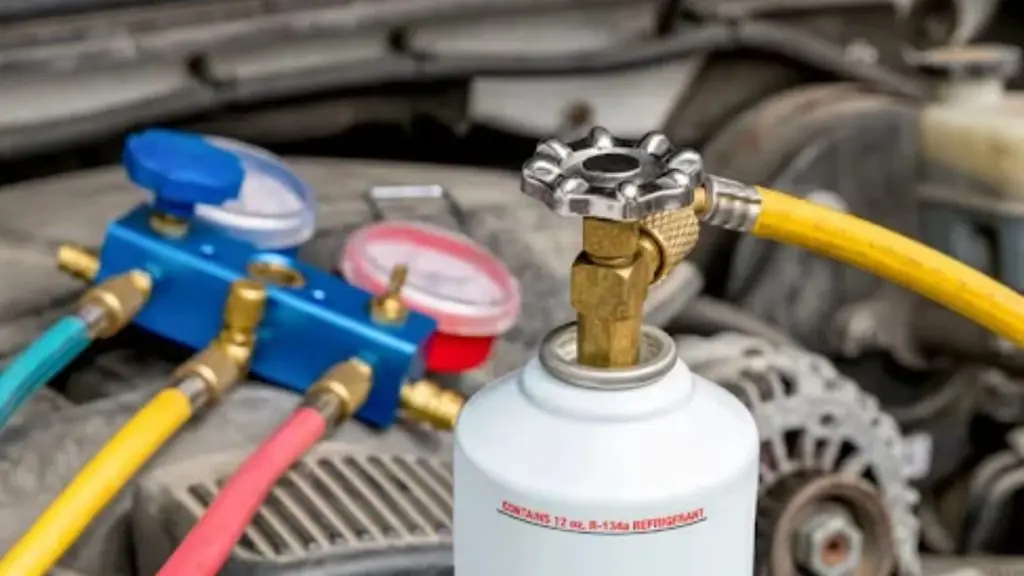
Now that the manifold is connected, you can start vacuuming your air conditioner. These are the fundamentals of using AC vacuum pump equipment correctly. A solid vacuum pump setup and connection help, and a proper vacuum pump connection pays off. Every step builds on how to connect vacuum pump hoses.
Open the Valves and Start the Vacuum Pump
To start the evacuation process, start the pump first and then open the manifold valves. When you pull a vacuum, do you open both the high and low valves when pulling a vacuum? Yes, fully open the high-side and low-side valves to allow the pump to evacuate the entire system at once. Watch the low-side needle fall into the vacuum range as you gradually open them to prevent a pressure swing. Your vacuum pump hookup is ready; connecting a vacuum pump correctly makes starting simple.
Let Vacuum Pump Run Long Enough
To release trapped moisture, run the pump for at least 15 more minutes after the gauge stops falling. Larger HVAC systems may require 45 to 90 minutes or longer, but most small car and home systems need only 30 to 45 minutes. If you’re using a micron gauge, a dry, clean system requires a deep vacuum below 500 microns. VEVOR’s guide to a vacuum pump for a car air conditioner covers the peculiarities of automotive lines. Keep the vacuum pump connection steady, since a solid vacuum pump hose connection maintains a deep vacuum.
Close the Valves Before You Stop the Vacuum Pump
Before turning off the pump, close both manifold valves. You will have to start over if you stop the pump while the valves are open because air and oil could be drawn backward into your recently evacuated lines. Never disturb the vacuum pump connection while valves are closed, and keep every vacuum pump hose connection in place.
| Stage | Low Valve (Blue) | High Valve (Red) | Pump |
| Hooking up | Closed | Closed | Off |
| Pulling vacuum | Open | Open | On |
| Holding/test | Closed | Closed | Off |
How to Confirm the Vacuum Holds With No Leaks
This check is non-negotiable before you charge because pulling a vacuum is useless if it doesn’t stay in place. A good vacuum pump hookup passes this test, and the goal is a leak-free connection.
How Do You Confirm the Pump Is Holding a Vacuum With No Leaks?
Start the test once you turn off the pump and close the valves. Watch the low-side gauge after the system has been sealed for 15 to 30 minutes. If the needle remains locked in place, your system is leak-free; if it moves back toward zero, you have a leak or trapped moisture that needs to be fixed. A DIY vacuum hold test walkthrough shows what a steady reading should look like. A tight vacuum pump gauge connection gives the clearest reading. That includes how to connect AC vacuum pump hoses without leaks.
If the Vacuum Pump Drops
A falling needle indicates a leak. After rechecking each fitting, examine hoses, seals, and service ports, as a loose coupler is typically the cause. Pull the vacuum again, tighten or replace the weak spot, and retest until the reading stays flat. The system is only prepared for refrigerants at that point. This repair can be completed much faster if you keep a clean set of heating and cooling equipment on hand. First, check the vacuum pump hose connection and the vacuum pump connection. Re-learn how to install vacuum pump hoses if a seal fails.
Final Thoughts
It only takes a few simple steps to learn how to hook up a vacuum pump gear: check your oil, connect the yellow hose to the manifold center and pump, run red to the high side and blue to the low side, open both valves, and pull a deep vacuum. To avoid a sinking needle after charging, always perform a hold test and close the valves before stopping the pump. The task becomes even simpler if you choose the appropriate two-stage vacuum pump for your system. Connecting a vacuum pump this way keeps every vacuum pump hose connection tight.
FAQs
How do you use an AC vacuum pump safely?
Wear gloves and eye protection, turn off the system power, and work in a well-ventilated area. Recharge with the appropriate refrigerant only after connecting the hoses, pulling your vacuum, and performing the hold test. Check each vacuum pump hose connection first.
Can I use one vacuum pump for both my car and home AC?
Indeed. As long as your manifold gauges and hose fittings match the service ports, most two-stage pumps can service both home and automotive HVAC systems. The automotive tools section is a good place to start if you work primarily on cars. The vacuum pump setup is the same.
Do I really need a manifold gauge set to connect a vacuum pump?
Indeed. The gauge set allows you to perform a proper hold test, open and close the appropriate valves, and monitor the vacuum level. You’re pulling a vacuum blind without it. Pair your pump with a matching manifold gauge set. It completes the vacuum pump gauge connection.
How long should I run a vacuum pump on an AC system?
For small car or home systems, run it for 30 to 45 minutes; for larger HVAC units, run it for 45 to 90 minutes. Continue until the reading is deep and stable, and watch the gauge rather than just the clock.
What does a bigger CFM rating actually do?
On large systems, a higher-CFM pump reaches a deep vacuum faster because it moves more air per minute. A 3 to 4.5 CFM pump is sufficient for a single car or small home unit. Match CFM to your vacuum pump setup.