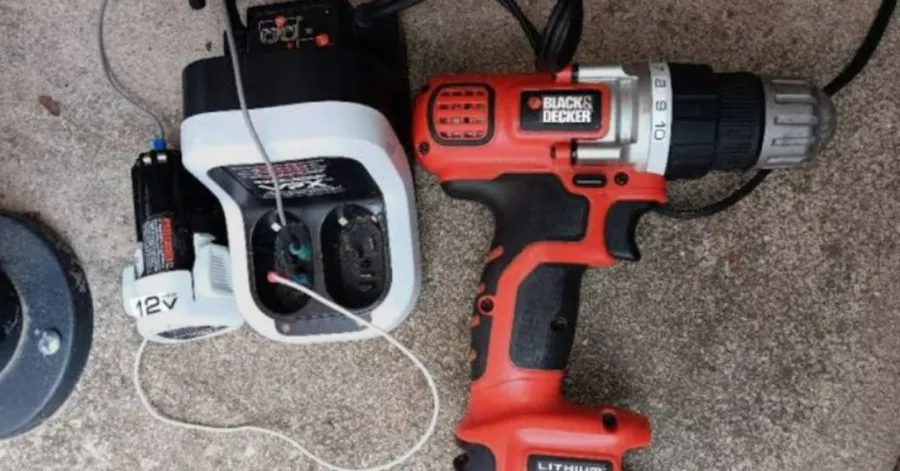
Yes, it is possible to charge a drill battery without the original charger, but only when you do it the right way. The actual danger lies in incorrect voltage, bad connections or leaving the battery unattended. By knowing the fundamentals and paying attention, you can minimise the majority of the risk and prevent damage. In many cases, users who frequently deal with drilling work also prefer moving toward reliable electric tools like a VEVOR magnetic drill (1300W Motor, 2810 lbf) to avoid repeated battery charging issues and ensure stable performance.
To safely charge a drill battery without a charger, you should match the voltage and current, and never leave it charging. Any little mistake may cause overheating or even destroy the battery. Always be careful with it; if it begins to get hot, put it out at once.
Is It Safe to Charge a Drill Battery Without Its Original Charger?
It happens that many individuals find themselves in the predicament where the original charger has been lost or has stopped working. At this point, they begin seeking alternative methods to charge their drill battery. One should know whether it is really safe or not before trying anything. This will prevent being damaged, and your battery will last longer as well.
However, not all other options are safe; some may be effective, provided they are done with caution. All that matters is ensuring the battery requirements are adequately matched. Even a minor mistake can bring about serious issues without proper handling.
Given this, the most crucial initial step is to understand the safe conditions and risks.
When You Can Safely Charge the Battery Without a Charger
Only when a power source is compatible with your drill battery’s voltage and current requirements can you try charging. This is the greatest requirement for safe charging. When learning how to charge a drill battery without a charger or the original charger safely, many people test various techniques, but safety always lies in the correct matching.
The next step can only be made when you have a stable power supply, such as a universal adapter or a regulated power source. Before connecting anything, it is also important to correctly identify the positive and negative terminals. In case the polarity is incorrect, the battery can become permanently dead. The other important factor is regulating the charging current to keep it within safe limits. In the process, you should always check the battery to ensure it is not overheating or behaving abnormally.
When all these conditions are correctly observed, charging can be effective, but that does not mean that it can be neglected.
What Can Go Wrong When Charging Without the Original Charger
It can be dangerous to charge a drill battery without the original charger, unless done correctly. One of the biggest problems is overheating. The battery may swell, leak, or be unsafe to use when it gets too hot. That is why many users seek alternative methods to charge cordless drill batteries at home before attempting risky approaches.
Short-circuit is another problem that occurs when wires are improperly joined. This may produce sparks and may permanently damage the battery. A grave danger also exists in the form of overcharging, since prolonged use of the battery while it is still connected may damage its internal cells. Another usual error that can render the battery entirely useless is the wrong polarity.
Given these risks, it is crucial to be cautious throughout the process. Any minor error would have irreparable consequences; as such, care and caution should be exercised at each stage.
Step-by-Step Guide to Charge a Drill Battery Without a Charger
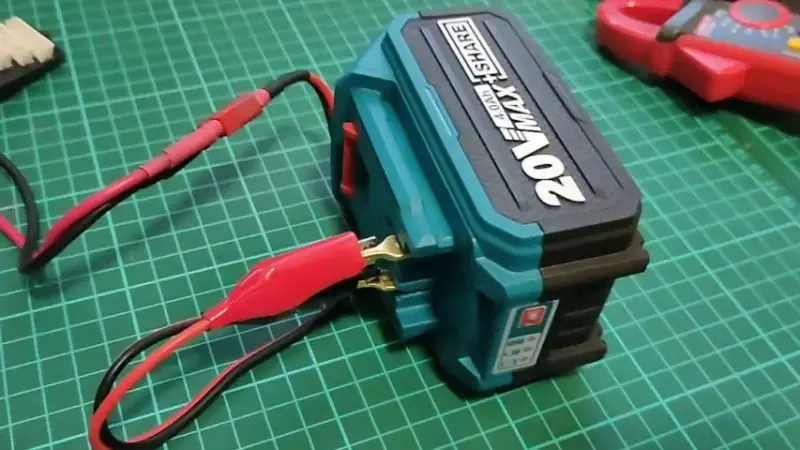
In the absence of the original charger, many people would try to find a safe way to charge their drill battery. Before one begins, it is necessary to prepare and learn each step, and comprehend it. This is not a complicated process, but it must be done with caution to avoid causing damage or safety issues.
With this, you can cope with a temporary charging system at home when you have the necessary tools and care. But all actions are to be taken gradually and properly.
Tools You Need Before You Start
You must have the appropriate tools before you can learn how to charge a drill battery without a charger step-by-step. These products help regulate voltage, current, and safety during the process. If you often work with drilling tasks, it can also be practical to consider switching to reliable electric options like a VEVOR magnetic drill for consistent power and reduced battery-related issues. These products serve to regulate voltage, current, and safety in the process.
- Power supply (such as a laptop charger or bench power supply) is compatible with the power supply.
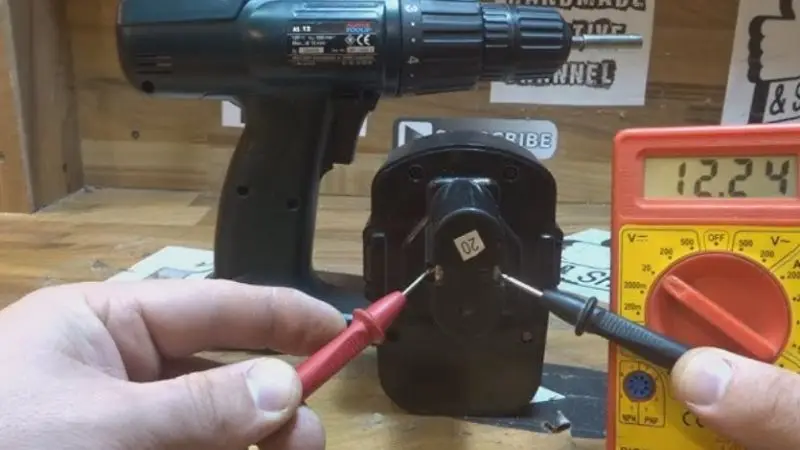
- A multimeter to measure voltage and polarity.
- A resistor to regulate and restrain the current.
- Joining alligator clips with wires.
- Insulation electrical tape.
- Gloves and goggles of safety.
All tools are significant. The power supply provides energy, the multimeter measures safe values, and the resistor helps protect the battery from excessive current. Safety gear is necessary as well since it minimises the risk of accidental shocks or short circuits.
@tommy_j_o #vevor #vevorblackfriday #tiktokblackfriday #tiktokcybermonday #tool #construction #drillpress @Vevor_US
♬ original sound – Tommy’s Shop 😎
How Each Tool Helps in Charging
Each tool has a designated task, the knowledge of which simplifies and secures the work.
- The power supply gives the necessary voltage to charge the battery.
- The multimeter determines that the voltage and polarity are proper.
- The resistor helps to avoid battery overcurrent.
- The battery is connected to the power source by wires and clips that ensure it is firmly attached.
- Protective equipment keeps you safe from heat, sparks, and unintended contact.
Once all these tools are integrated, the charging process can be more controlled and safer. In their absence, the battery is highly likely to be destroyed.
Step-by-Step Charging Method
Now we shall know how to charge a drill battery without a charger with a simple and cautious process. Take things one step at a time.
To begin with, test the battery voltage with a multimeter. This will give you an idea of the precise necessity before connecting anything. Then adjust your power supply to that voltage. In the event of the wrong voltage, the battery can be damaged.
Then, between the power supply and the battery, connect a resistor. This helps regulate the charging current and keep it at a safe level. Then gently insert the wires, with positive to positive and negative to negative. An unsuitable connection may also irreversibly harm the battery.
After all connections have been made, the power supply is then turned on, and charging starts. Do not leave the battery unattended. Begin with a minimal charging time of 20-30 minutes and monitor the temperature frequently.
Safety and Monitoring While Charging
This is a very important process, particularly for safety when relying on alternative methods for charging a cordless drill battery at home. When charging a battery, you have to monitor it at all times. In many real-world setups, users also invest in reliable workshop tools like a VEVOR magnetic drill (1300W Motor, 2810 lbf) or other electric-powered equipment, underscoring the importance of stable power handling in any drilling environment. When charging a battery, you have to watch the battery at all times.
- Monitor the battery temperature every few minutes.
- Immediately cease when the battery becomes excessively hot.
- Measure the voltage levels on the watch with the multimeter.
- Always make sure the battery is not left unattended while charging.
- Ensure that the charging space is well ventilated.
In case of smoke, swelling, an unusual smell, or improper heating, disconnect everything at once. These are red flags that something is amiss.
Different batteries can behave differently; therefore, always know your battery type before trying to charge it. Proper handling of the gadget ensures safety and improved battery life.
Understanding Drill Battery Types and Safety Rules
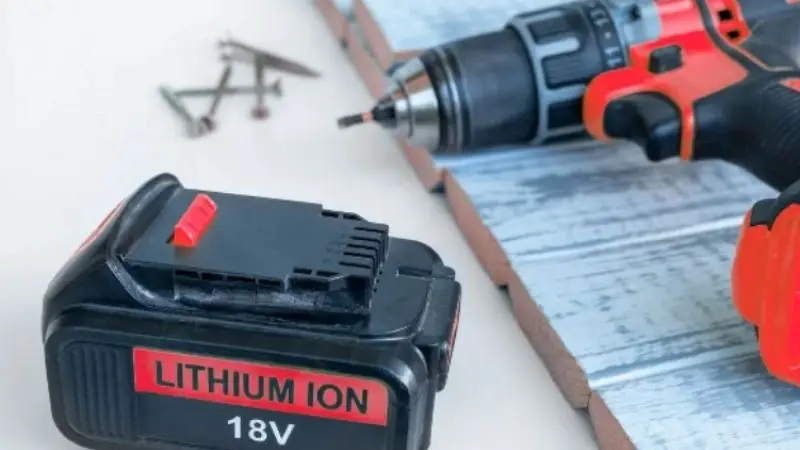
It is crucial to understand what kind of battery your drill requires before attempting to charge it. Different batteries react differently, and when one uses the wrong technique, one can easily destroy them. This step is often overlooked, yet it is one of the most vital aspects of safe charging.
It is much easier to select safe charging methods to avoid severe risks once you have correctly identified the type of battery. This comes in particularly handy when addressing the emergency approaches to driving a drill battery without a charger scenarios.
Nickel-Based Batteries: NiCd and NiMH
Older batteries are NiCd (Nickel-Cadmium) and NiMH (Nickel-Metal Hydride) batteries, which are still commonly used in various drills. More forgiving than current lithium batteries, but still in need of care.
- They have better capability in managing simple charging systems than Li-ion.
- Long periods of overcharging them should not be allowed.
- Otherwise, they can become a source of memory effects if they are not released properly.
- All charging should be at a low, regulated current.
These batteries can get warm either when they are being used or when they are charging, which is not a big deal, but overheating is not safe. When the battery overheats, just stop and let it cool before proceeding.
When considering alternative solutions for charging the cordless drill battery at home, many users often start with these batteries since they are less sensitive, though care should be taken.
Lithium-Ion Batteries: High Power, High Risk
Li-ion (Lithium-ion) batteries are commonly used in modern cordless drills because they store more energy and last longer. But they are also far more susceptible and perilous when mishandled.
- They should not be excessively charged.
- They demand rigorous voltage control.
- They are not to be emptied completely before being recharged.
- Unless they are properly powered, they can be unsafe.
Li-ion cells, unlike older batteries, may be rather responsive to errors. It may result in swelling, overheating, or even a fire hazard due to overcharging. That is why individuals tend to find out how to recharge a drill battery without the original charger safely before they resort to any direct connection technique.
Due to these risks, special care is required when using this type of battery, particularly in temporary or emergency charging systems.
How to Identify Your Drill Battery Type
If you do not know what type of battery your drill uses, you can quickly check the label on the battery pack. The type of battery is explicitly stated in most batteries.
- NiCd or NiMH batteries tend to be heavier and more prone to wear out.
- They often mention “1.2V per cell” on the label
- Li-ion batteries are more current and lighter.
- They tend to indicate 3.6V or 3.7 V per cell.
If the label is lost or illegible, you can also check your drill model online for specifications. This will help you avoid mistakes before trying any charging system.
The reason you should know what kind of battery you have is that each type reacts differently to the amount of power input. An improper approach can cause permanent damage to the battery or reduce its functionality.
Common Mistakes to Avoid When Charging a Drill Battery
When you attempt to charge a drill battery with a different charger, most problems stem from small mistakes that may seem harmless at first. Such errors may impair the battery, decrease its life, or even pose safety risks.
What You Should Never Do While Charging
Among the greatest errors is to assume the battery voltage or current rather than reading the label. Each battery must have its own requirements, and failure to adhere to them can easily result in disaster. Other typical problems include improper wiring connections, e.g., swapping positive and negative wires, which can immediately damage the battery.
Another critical error is skipping the resistor, since it determines the charging current. It would be impossible without it to allow excessive current to enter the battery and cause overheating. It is also not safe to leave the battery unattended, as issues may arise very quickly without warning. It is still riskier to be charged with a damaged or swollen battery, since it may be unstable at this point.
Such errors usually occur when individuals attempt to find alternative methods of charging the cordless drill battery at home without a proper understanding; therefore, careful consideration is always given.
Warning Signs That Something Is Wrong
Batteries typically raise red flags when something is amiss. When the battery does not feel normal and is excessively hot, it may be due to an excessively high charge rate in one of the batteries or a defect in the machinery. A more severe indication that the inner structure is broken or overcharged is swelling or bulging.
The odour of a battery can suggest overheating or chemical spillage, whereas smoke or sparks are an immediate sign of danger and require immediate disconnection. These are not the signs that should ever be overlooked, since they can easily lead to irreparable harm or hazards.
Learning these warning signs is also taken into consideration when using emergency procedures to power a battery of drills without a charger, since temporary systems are less stable and require close attention.
When You Must Stop Charging Immediately
It is equally important to know when to cease charging as to know how to begin charging. When the battery starts to get warm or hot, the best thing to do is to stop and let it cool. You should also cease when the voltage reaches the rated level indicated on the battery label, as exceeding it may damage the cells.
An abnormal behaviour like swelling, a strange odour, or any other evident changes indicates that the process should be terminated immediately. Although all may appear to be okay, charging in unsafe setups, particularly when attempting to charge a drill battery without the original charger, should not continue for too long.
Simply put, whatever your suspicion is, whatever it is, always the safest thing to do is to stop. Mishandling can lead to damage, and always ensure that the battery as well as the user are not harmed during the process.
Final Wrap-Up
It is possible to charge a drill battery without the original charger, but only with special consideration and in an emergency. Always make sure you are using the correct voltage; you must control the current and keep track of the battery throughout the process. In many workshop environments where tools like a VEVOR magnetic drill are used, proper power management is already a priority, further highlighting the importance of careful handling of all drilling equipment.
Any error, such as incorrect wiring, excessive charging, or ignoring warning signs, can irreparably damage the battery or pose a safety risk. When you are attempting to charge a drill battery without a charger, keep in mind that it is not a usual solution. The best bet will always be the original charger whenever there is one.
FAQ
Does my drill battery need to be charged using any power supply?
No, you can’t use any power supply. The voltage should correspond to your battery. Keeping the current low is also required of you. The battery can be damaged by an incorrect power supply. It also may lead to safety issues.
What would be the consequences of connecting the wires in reverse?
When you mix up positive and negative, the battery can stop working. You may observe sparks or lead to a short. The first thing to do before you connect anything is to check its polarity.
How do I know when my battery is fully charged?
Measure voltage using a multimeter. When the voltage is the same as the battery label, cease charging. When the battery is warm or is swelling, then stop charging immediately.
Is it good or bad to leave the battery charging overnight?
Caution: Do not leave your battery to charge overnight or unattended. The battery may become hot, leak or even burst into fire as a result of overcharging. Keep it close and keep examining the battery frequently.