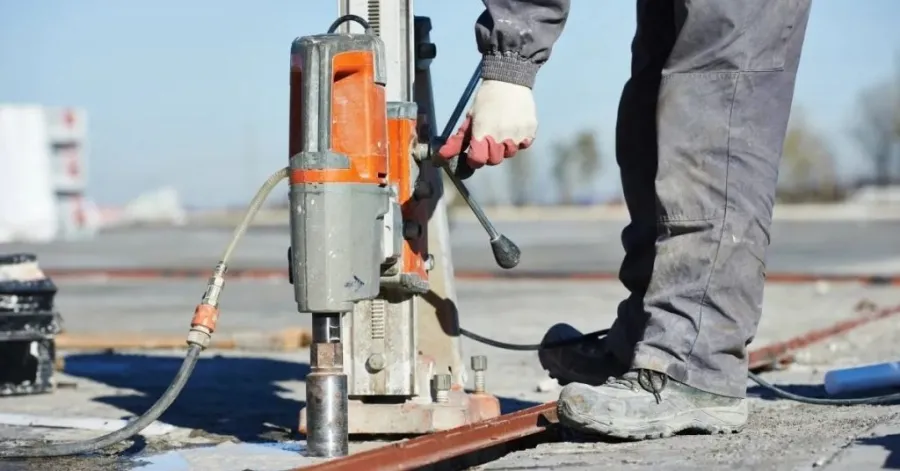
The type of drill for core drilling to be used depends upon the size of the hole, the material to be drilled, and the accessibility of the project site. Match your foundation concrete, masonry, or stone material with the right core drilling equipment. Handheld equipment makes it easy to deal with small holes under 3 inches in restricted areas. Heavy-duty rig-mounted systems provide accurate deep penetration for high diamond core bit diameter needs.s The motor power rating directly affects job efficiency, in the range of 800W to 1,300W. Variable Speed Controls Extend Bit Life on Difficult Core Drilling Projects.
In this article, we’ll cover some of the most important things to consider when picking the correct core drilling equipment for your project. You will discover how hole size, material type, drilling process, motor power, and speed control affect performance so you can choose the most suitable core drill for precise, efficient, and professional outcomes.
Table of Contents
What Is a Drill for Core Drilling?
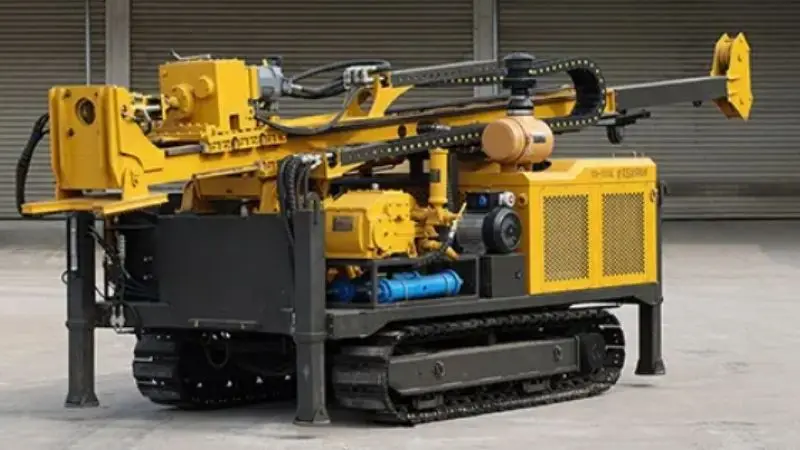
What is a core drilling machine? A core drilling tool is a specific power tool that is used to remove a clean tube of material from solid walls or floors. Regular power drills chew up the centre of a hole—instead, a core drill cuts around the outer border of the circle. The smart process leaves an entire test item within the hollow tube. Then you can pull out the round block with little effort. You will have clean, smooth holes without damaging the surrounding region.
Recommended For Your Project
Core drilling is an essential service for large construction and remodelling projects, said workers. The core drilling method is fast and maintains structural integrity. You halt rough shaking to avoid minor cracks in strong masonry. A good diamond drill makes it easy to cut large holes for pipelines and wires. You obtain the major advantages of core drilling, such as low noise, very little dust,t and high accuracy.
How a Core Drilling Machine Work?
How does a core drilling machine work? A core drilling machine has Strong rotating force and robust cutting power. A diamond core bit (a hollow metal pipe) is attached to the drive shaft. Electric or fluid motors rotate the diamond core bit at specified rates. Small chunks of industrial diamond are welded to the end and grind through hard rock. You drive the bit into the surface slowly and steadily. Water or air passes through the middle when working, washing out mud and keeping the diamond core somewhat cool.
What Materials Can You Drill With a Core Drill?
What drill is used for core drilling? Core drills can be used to work on many different hard stone materials. Workers commonly undertake core drilling concrete jobs on road barriers, building bases, and flat floors. It slices through buried metal rebar with ease.
You can also do core drilling concrete wall cuts and stone drilling with great control.
| Material Type | Recommended Drilling Method | Core Bit Type |
| Reinforced Concrete | Wet Core Drilling | Segmented Diamond Core Bit |
| Brick and Masonry | Dry or Wet Core Drilling | Segmented Diamond Core Bit |
| Natural Stone and Granite | Wet Core Drilling | Continuous Rim Diamond Core Bit |
How to Choose the Right Drill for Core Drilling
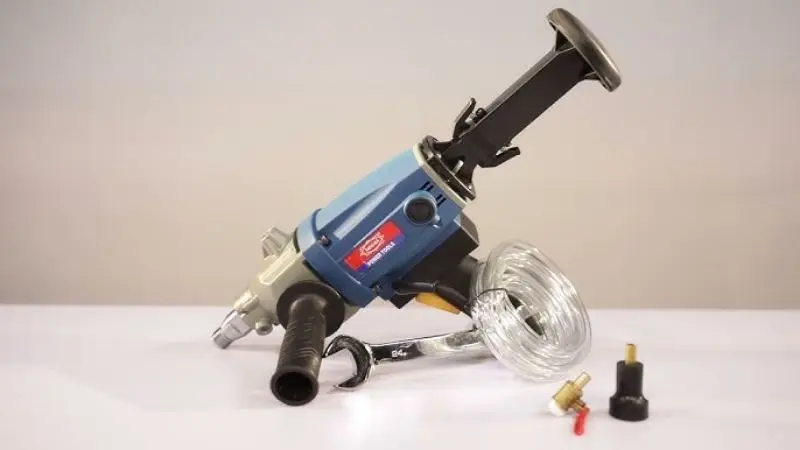
How to choose a core drilling drill? Select the appropriate core drill for your power supply and work environment. Match the work you need to do with the right tool setup. Understanding the major decisions will allow you to create clean cuts through tough materials.
Electric vs. Hydraulic Core Drills
Electric core drills make common building tasks very easy. How to use a core drill? First, just stick the core drill into an ordinary wall outlet. These handy tools work well when core drilling indoor walls and ceilings. You can easily control engine speed for simple core drilling concrete operations. Still, electric ones require a consistent site power source to keep the bit spinning strong.
Hydraulic core drills deliver maximum power for difficult building jobs. These big machines dig really deep where electric equipment can’t work. Hydraulic gear can be securely operated under water or in wet ditches. Hydraulic core drills provide good torque without overheating the engine. You need to choose hydraulic models for large diamond core bit diameter work and deep diamond core bit drilling depth needs.
Wet Core Drilling vs. Dry Core Drilling
What is a core drilling machine? Wet Core Drilling is a method of cooling your core bit by using running water. You execute the cutting procedure, and water wipes away thick mud. This constant flow protects each diamond core bit segment from excessive heat. Wet core drilling increases tool life and eliminates dusty air.
| Drilling Method | Best Material Applications | Primary Operational Advantage |
| Wet Drilling | Reinforced concrete, granite, hard stone | Prevents thermal wear and controls dust |
| Dry Drilling | Soft brick, hollow block, cinder block | Operates cleanly without water slurry setup |
If you can’t access water where you’re working, dry drilling is your best bet. Dry diamond core bits can be used on softer brick or hollow stone blocks. Dry core tools get you working swiftly inside finished spaces.
Types of Drills for Core Drilling
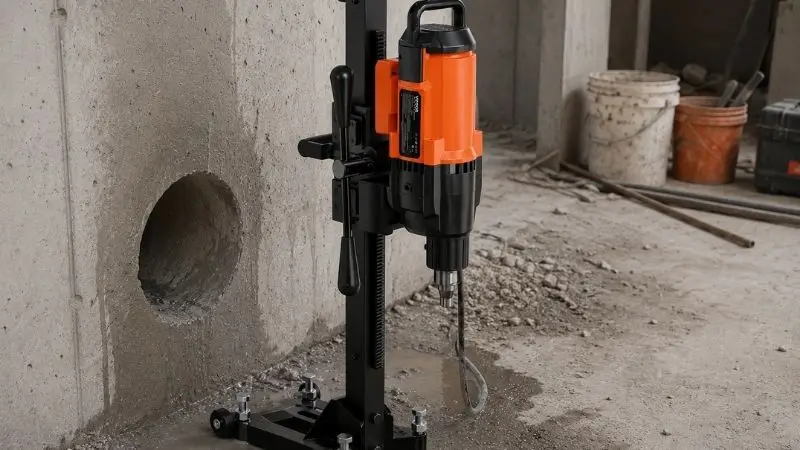
How to choose a core drilling drill? Knowing the different types of core drills can help you choose the proper instrument for your project. Different models work best for certain project locations, hole diameters, and concrete core drill jobs.
Handheld Core Drill
If you want quick setups in tiny areas, you might consider a handheld core drill. Drill machine for concrete core drilling: This portable core drill allows you to drill smaller holes up to 3 inches in diameter without anchor rigs. You grip it directly while your diamond core bit slices through soft masonry or a brick wall. This gadget provides workers with great mobility on ladders or at elevated work platforms. You have to hold the tool tight so the spinning diamond core bit doesn’t bounce back. Handheld core drills are perfect for short diamond core bit drilling depths and minor core jobs.
Rig-Mounted Core Drill
How does a core drilling machine work? A core drill stand provides total stability for heavy core drilling. You mount the motor unit on a sturdy floor or wall frame. The rig-mounted diamond core drill keeps your diamond core bit straight through heavy reinforced concrete. Rig mounts reduce user fatigue and prevent diamond core bit bending during deep cuts. Hand cranks can turn big diamond core bit diameters with high downward pressure. Rigged core drills make straight 14-inch or larger holes. Choose this tool for thick base walls and large pipe apertures.
Portable Core Drilling Machine
Which drill is best for core drilling? A portable core drill pack provides reliable power and quick site mobility. Built-in wheels and lightweight carrying frames make these tools quick movers. Don’t transport heavy pieces anymore. Push the complete core drilling equipment over uneven job locations.
| Core Tool Type | Typical Mounting | Primary Hole Size | Transport Method |
| Handheld Core Drill | Freehand | Up to 3 inches | Hand Carry |
| Rig-Mounted Core Drill | Fixed Base Anchor | 3 to 14+ inches | Frame Disassembly |
| Portable Core Machine | Wheeled Rig Base | 2 to 10 inches | Built-in Wheels |
How to Use a Drill for Core Drilling
How to use a core drill? Inspect the work area for hidden utility lines, electrical wires, and water pipelines before using a core drill. Locate the drilling site and inspect the equipment. Anchor bolt the rig so it doesn’t move when drilling. If the slurry is to be cooled and taken out by wet drilling,g then clamp the diamond core bit to the driving shaft and connect the water supply. Match motor speed to size of bit. Start the motor before you touch the surface, then carefully turn the bit into the material with smooth, even pressure for clean, accurate holes.
Tips for Accurate Core Drilling
Good core drilling means round holes and tool life. What drill is used for core drilling? Drill core holes with steady pressure. Prevent bit catch in deep cuttings by employing established core drilling processes. Target for deep diamond core drilling: Engines are throttling down under pressure. Diamond cores are burning. Inspect the diamond core bit before rough drilling. Hard concrete core drilling made easy with simple tips. Debris removal spins the core. To save diamond core bits, reduce the pressure when cutting steel rebar. Only turn the core drill motor off when the bit is out. Inspect diamond core bits frequently for broken cutting teeth.
Common Uses for Core Drills
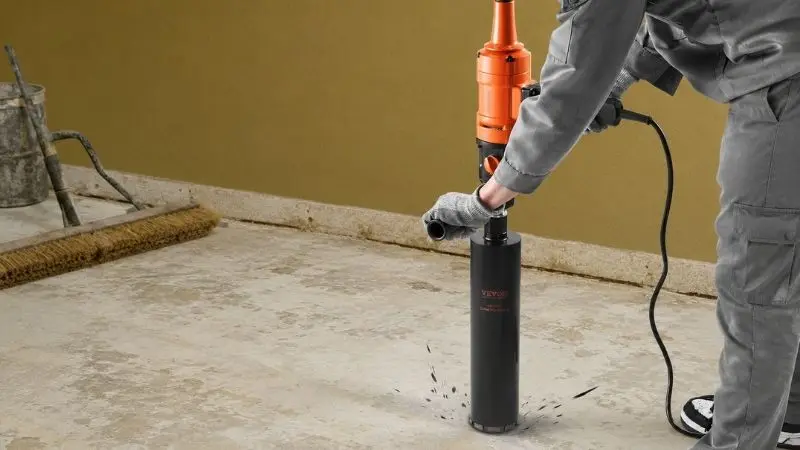
Which drill is best for core drilling? Core drilling is essential to the success of a sizeable portion of the construction industry’s jobs. Creating clean apertures is possible without inflicting any damage to the structures that are in proximity to them.
Putting in Pipes and Plumbing
Plumbers drill through concrete to lay water lines over thick basements. You want nice round holes for your drain pipes and main supply lines. Proper apertures prevent pipe wear over time. You save valuable working time when cutting through hard floors.
Running Wires and Electrical Lines
Electricians use a drill machine for concrete core drilling of commercial buildings to run electricity lines inside. Neatly routed conduits without damaging adjacent brick. Clean holes for rapid, safe cable pulling. This way, you protect delicate wires from harsh edges.
Setting Up HVAC Systems
Workers heat concrete walls and cut cores for ventilation tubes. What is a core drilling machine? You need big air pipes through strong stone walls. Proper size means your ductwork fits tight. You maintain heating systems working efficiently by sealing air leaks.
Building Work and Concrete Testing
How does a core drilling machine work? Engineers need core samples to test the strength of building materials. You pluck circular plugs straight out of foundations to test them in the lab. To properly evaluate the load strength for normal lab pressure tests, you need solid concrete cores. The tests show that the material passes safety requirements. You check the stability of the building before you undertake any major construction.
Common Errors When Operating Core Drills
During operations that require a lot of cutting, workers frequently make simple blunders. If you keep a close eye on your equipment, you can prevent expensive damage.
Picking the Wrong Cutting Bit
The key to your whole task is figuring out which fundamental bit to choose. Which drill is best for core drilling? You have to match the hardness of your target material with your metal bond. A soft bond on soft brick will eat your core bit up fast. Your tool can not cut a hard bond on reinforced concrete.
Pushing Down Too Hard
How to use a core drill? Operators routinely run their core drilling drill faster than the rated speed. Additional force slows the motor and polishes diamond core bit segments. Let the turning diamonds do the natural grinding work. Light on the trigger keeps your diamond core bits cutting smoothly.
Selecting the Wrong Motor Speed
How to choose a core drilling drill? Bad speeds will burn diamond core bit edges when you operate your motor. Big diameter bits need slower turning speeds for safety. Little pieces have to spin faster to do a good job of cutting stone. Setting the RPM speeds properly makes pieces live longer.
Not Locking the Drill in Place
What drill is used for core drilling? In heavy core drilling, unfastened rigs move. Loose base anchors create severe bit jamming in deep holes. Always secure your rig frame down tight before start-up. Steady equipment doesn’t kick back badly with heavy diamond core bits.
Skipping Necessary Safety Rules
Workers may miss minor safety inspections before using the drill machine for concrete core drilling. Personal gear such as safety glasses and earplugs must be worn at all times on every job site. Use suitable safety gear to protect you from flying dust and loud motor noise. Good behaviours keep the job site accident-free
Conclusion
Your drill for core drilling layout depends on trade needs. Electricians drill small utility lines with portable core drills. Plumbers install core drill frames for pipelines. HVAC technicians use a wide diamond core bit to clear the walls. Match motor torque, power, and diamond core bit segments to materials. For soft brick, you need diamond-core bit bonds. Use soft matrix diamond core bits for hard concrete. Before buying a core drill, check the electricity at the site. Match diamond core bit size with motor speed. Small diamond coring bits spin fast. A large diamond core bit turns slowly. A sharp diamond core bit will produce clean holes. Your portable core drill requires continuous power.
FAQ
Can You Core Drill Concrete Without Water?
Yes, you can dry drill soft brick or hollow block. However, you need wet drilling for hard reinforced concrete. Water cools your diamond segment and cleans out heavy mud during tough cutting jobs.
How Do You Select the Right Motor Speed?
You set your motor speed based on your bit size. Small bits require faster spinning speeds to cut well. Wide diameter bits need slower turning speeds to stay safe and prevent heat damage.
When Should You Use a Handheld Core Drill?
You should choose a handheld unit for small holes under 3 inches in tight spaces. These lightweight units allow quick setups on ladders or high platforms without mounting anchor frames.