How does one not get that horrible experience with seeing a mysterious light pop up on their dashboard and knowing that they will be sitting in the waiting room of their car dealership, looking at their massive bill? Think of how good it would feel to not have that happen anymore because learning DIY car maintenance is the new power move!
Moreover, it’ll change the way you view your car and become a fun weekend pastime! Learning the fundamentals and purchasing a high-end floor jack for easy maintenance will help you keep everything running smoothly. So let’s get started!
Is DIY Car Maintenance Worth It?
Many people believe that repairing cars that already have all the gadgets fitted into them would not be worth it. In relation to the above question, the answer will be positive. In any case, you can always rely on your nuts and bolts.
After evaluating the car maintenance cost and professionally compared to repairing your own car, one realizes the significance of this. Not only are you saving on the cost of labor but also on the critical aspect of ensuring that your car is safe to use. This information is invaluable during your journey through the roads.
Benefits of DIY Car Maintenance
Stepping into the world of garage work offers rewards that go far beyond your bank account. Following consistent DIY car maintenance tips changes how you drive and how you value your investment over time.
Cost Savings
The greatest benefit is the quick reduction to your budget. All stores tend to overcharge you not only for parts but even more so for their labor. With your own parts and labor, you reduce these costs by half or more. Check out this chart for a few examples of potential savings:
| Maintenance Task | Typical Shop Price | Estimated DIY Cost | Potential Savings |
| Synthetic Oil Change | $80 – $120 | $35 – $50 | $45 – $70 |
| Brake Pad Replacement | $250 – $400 | $40 – $80 | $210 – $320 |
| Engine Air Filter | $50 – $90 | $15 – $25 | $35 – $65 |
| Spark Plug Service | $200 – $500 | $40 – $100 | $160 – $400 |
Vehicle Longevity
Nobody will love your car more than you do. As you perform DIY car maintenance checklist, you will take your time and clean up along the way. You will notice things like broken hoses or leaks long before a mechanic on deadline will.
The level of care ensures that your engine runs smoothly well into its life cycle, past the 200,000-mile mark. The care ensures that you do not suffer from the domino effect, which leads to failure of the whole system due to failure of one part.
Essential DIY Car Maintenance Tools
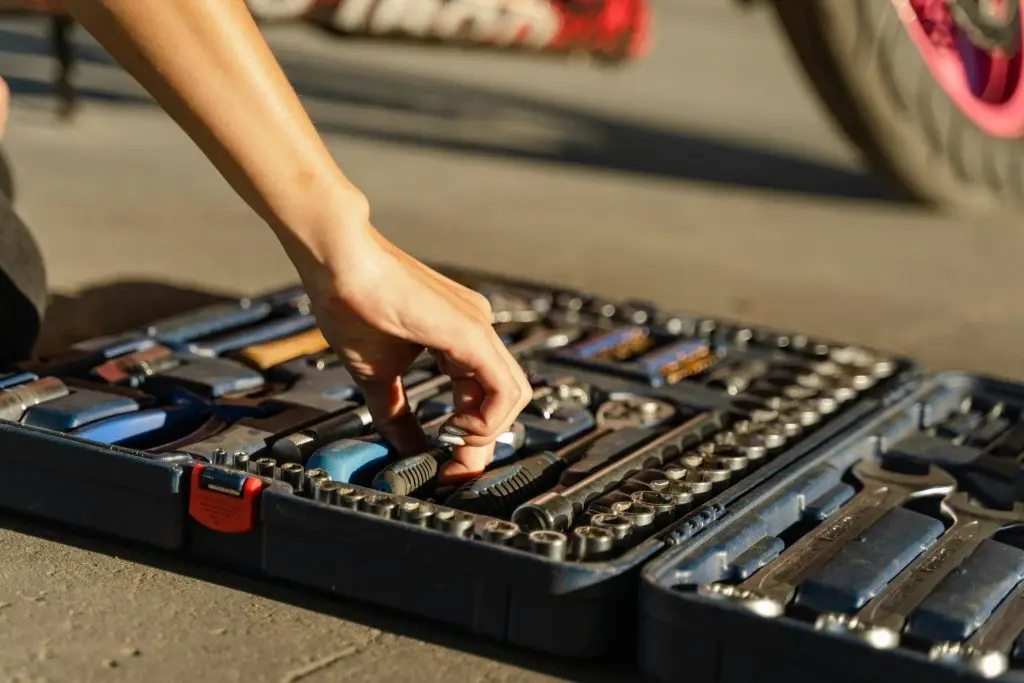
It would be ridiculous to use a spoon for repairing a dripping pipe; likewise, it is impossible to repair your car using a hammer alone. Using the appropriate DIY car maintenace tools can make the impossible task possible.
Basic Hand Tools
A good mechanic should always have a good collection of sockets and wrenches. Modern automobiles utilize fasteners that use metric measurements. Hence, having a large variety of sizes is very important. A 90-piece set of bits and a ratchet is ideal for any home project.
A 48-piece set is perfect when working on something relatively small. It makes it easy to work in tight areas. This way, one can avoid ruining the heads of your nuts and bolts when tightening screws.
Lifting Gear
Safety comes first when you have to work beneath a large and bulky vehicle. Don’t even think about using that small jack in your car’s trunk. Instead, use an efficient and sturdy electric hydraulic floor jack.
If you like using a lift, strong car ramps will provide you with a broad area where you can change your vehicle’s oil. No matter what, always make sure that your vehicle is resting on jack stands before you start working beneath it.
Heavy-Duty Fastening
Some bolts on your car haven’t been moved in years and are stuck tight with rust. Trying to remove these by hand is how knuckles get bruised. This is where a 65-piece impact socket set becomes your best friend.
For the biggest jobs, like suspension or truck repairs, you might even need a 3/4-inch drive socket set. These are built to handle the massive torque required for heavy-duty fasteners. They turn a frustrating afternoon into a quick victory.
Diagnostic Equipment
Today’s automobiles are intelligent, and they will let you know precisely what is wrong, provided that you have an appropriate translator. The OBD-II reader enables you to decipher the fault codes generated by your vehicle’s computer system. This eliminates the need for any trial-and-error methods and provides precise information on the malfunctioning part.
Even saving just one diagnostic charge can cover the initial cost of the device, and it will provide you with the information required to purchase replacement parts with confidence.
Comprehensive DIY Car Maintenance Checklist
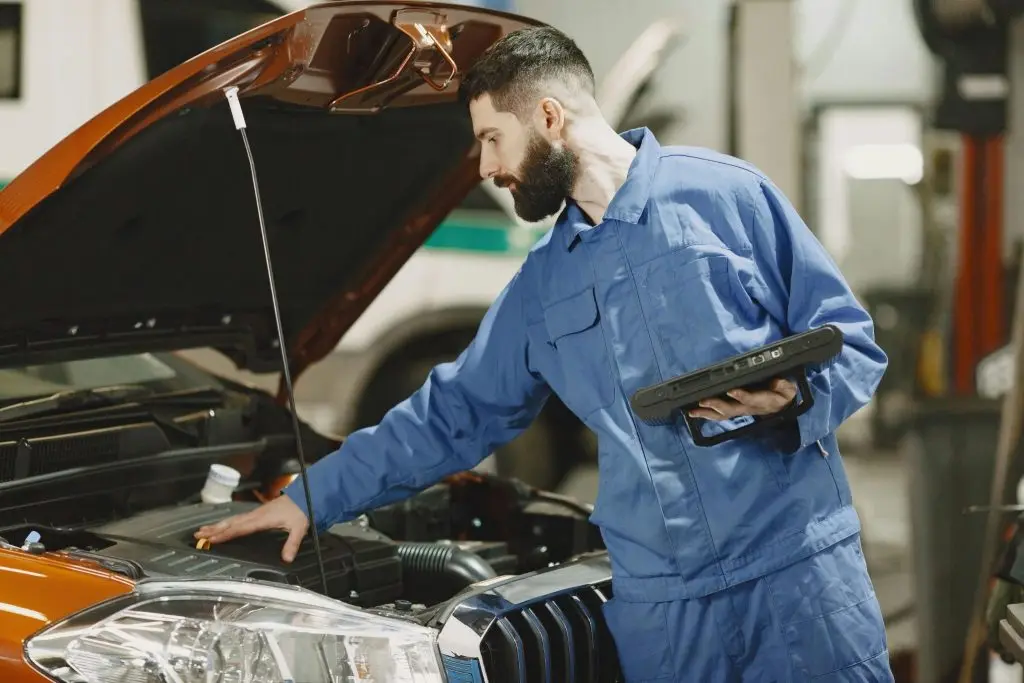
This is the difference between a dependable automobile and a lemon. Having a DIY car maintenance checklist keeps you on track to make sure everything is done right and not forgotten when you’re busy.
Monthly Safety Inspections
Spending ten minutes per month doing a visual check on your car is the best way to avoid problems. Here are some useful things to do that will keep you ahead:
- Tire Pressure and Condition: Make sure all your tires have the correct PSI level, and there are no unusual bubbles or cracks in the sides of your tires. This can prevent your tires from blowing out.
- Lighting Check: Make sure the headlights, high beams, and signal lights are operational on your car. This is a simple process and can make sure other drivers see you.
- The “Ground Test”: Take a look around where you usually park your car for any oil stains or greenish pools of fluid. Leaking liquids are often one of the first signs of something wrong with the coolant system or oil.
- Visual Inspection of Fluids and Belts: Raise the hood of your car and check your belts to see if there is any fraying or spraying going on.
Fluid Level Management
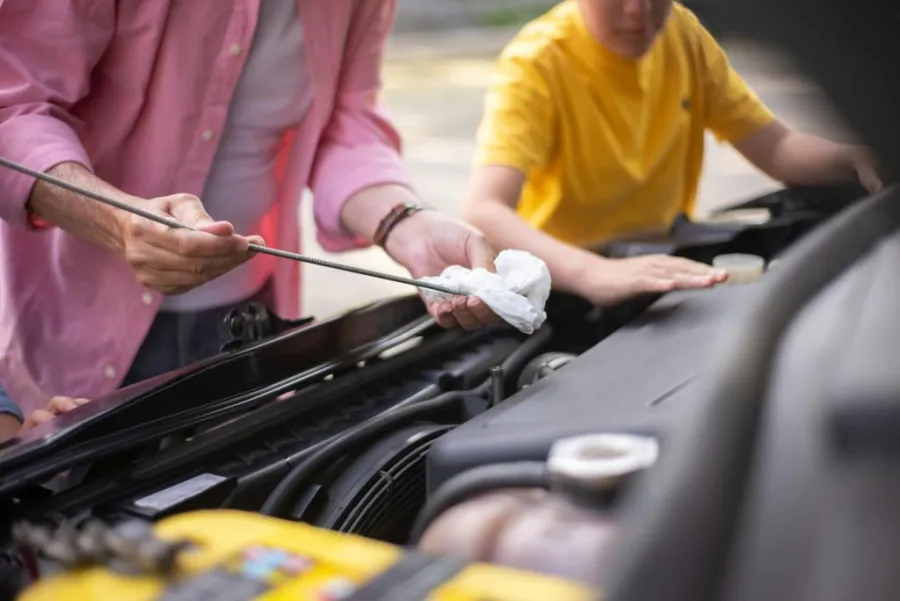
Fluids protect your car’s metal components from turning into dust. Make sure you regularly check your car’s oil, coolant, and brake fluid whenever you refill your gas tank. Follow this easy tip to keep track of your car’s blood:
| Fluid Type | When to Check | What to Look For | Action Needed |
| Engine Oil | Every 500 miles | Amber or brown color | If black/gritty, replace immediately |
| Coolant | Monthly (Cold) | Level between “Min” and “Max” | Top off with a 50/50 mix if low |
| Brake Fluid | Every 3 months | Clear to golden color | If dark or low, inspect for leaks |
| Washer Fluid | Monthly | Ability to spray clearly | Refill for clear visibility in rain |
Always ensure that your car is equipped with enough windshield washer fluid because you never know when you might be driving in the rain, and you need your vision to be clear. It could indicate that there are leaks somewhere that should be investigated.
Filter Replacements
Your filters are what your car wears as masks to remain in great condition. Your engine filter protects the engine from any particles that may enter the cylinders, and changing it only takes about two minutes.
Never ignore your cabin filter, which is situated behind the glove box in your vehicle. The cabin air filter will ensure that no dust or pollen enters your AC vents. Changing this is easy enough.
Battery Care
The fact that the car will not start should definitely make you frustrated. It is recommended to check your battery terminals for any kind of white, fuzzy substance, which could disrupt the flow of electricity. This can be easily managed by using a brush along with some spray.
It is important to make sure that your battery terminals are tightly fixed so that your battery does not rattle during the journey. The sluggish performance of your car in the morning indicates that the battery needs replacement soon.
Practical DIY Car Maintenance Tips
Working on a car can be something that becomes better with each new job. With these DIY car maintenance tips, you can make each repair session easier and safer.
- Work In An Organized Way: Work in an organized space and invest in a magnetic tray to keep your bolts in one place. Take pictures of all complex wires and label your drain cans. This will help you to avoid a mix-up with different types of fluid.
- Proper Lighting: Always have powerful shop lights handy to make sure you can work in poorly lit corners of the engine. Proper lighting is important to avoid mistakes and help you see any leaks.
- Apply Safety Measures: Never crawl under a vehicle just propped up with a jack. Instead, use jack stands or secure car ramps to hold the car up while working under it. Shake the car before getting under and never forget your safety glasses.
- Service Manuals Are Your Guide: Your service manual should be treated like a map to treasures. It will have all information about torque specs needed to properly tighten your bolts. Additionally, watch tutorials from experts on YouTube to learn some visuals.
- Use Only Quality Spare Parts: Do not opt for the cheapest available spare parts online to replace brake pads. Invest in quality spare parts that are better or at least equal to factory-made ones.
- Improve Car Performance During Repairs: Being able to buy your own parts is your chance to get high-quality parts without going over your budget. Most performance parts cost the same amount as dealer spare parts.
Ideas for your first DIY car maintenance project
Ready to get your hands greasy? Start with these simple projects to build your confidence and your tool collection before moving on to the heavy stuff.
Brake Pad Replacement
Brake pads are one of the most satisfying things to fix yourself. It’s a simple process of “unbolt, swap, and re-bolt.” You’ll need a 33-piece impact set to handle the caliper bolts easily.
Doing your own brakes can save you $300 or more per axle. Plus, you’ll know for a fact that the job was done with care. It’s a great way to learn how your car’s most important safety system works.
Spark Plug Service
If your car feels a bit sluggish, it might just need new spark plugs. This is usually an easy “top of the engine” job. You’ll want a 19-piece deep socket set to reach the plugs hidden deep in the engine head.
Your engine’s performance can be brought back to life using fresh plugs, thus enabling your engine to idle smoothly. This work will be rather clean because no dirty fluids are removed from the system. But before proceeding, it is advised to hand-thread the bolts.
Tire Rotations
Front tires do all the steering and most of the braking, so they wear out faster. Moving them to the back every 5,000 miles keeps your tread even. A 34-piece metric set is perfect for popping those lug nuts off quickly.
Since you’ve got your tires off anyway, now is the best time to check your brake lines and suspension. Your money spent on new tires will go a long way in prolonging their life. It’s an excellent exercise, too, and well worth your effort.
Coolant System Flush
The old coolant will become “sludge,” which will block your radiator, causing overheating. Changing and recharging your coolant every now and then ensures that your engine remains cool. This is just a little bit messy, but it is very easy to learn.
Make sure the car is 100% cold before you touch the radiator cap to avoid burns. Use a 23-piece impact socket set to remove any plastic under-trays that might be in your way. Your cooling system will stay efficient for years.
FAQ:
Is it really cheaper to do it yourself?
Yes, indeed. Considering the rate per hour of the garage, you will end up saving more than 50% for every work done. Also, you will not have to pay for additional services that you do not really require. Is DIY car maintenance worth it? Yes, for sure.
What if I get stuck in the middle of a repair?
Don’t panic. This is where forums and online communities come in. Post a photo and ask for help; most car enthusiasts love to share their knowledge. If you have a 9-piece deep metric set, you’ll have the reach and strength to finish almost any task.
How do I safely dispose of old oil and coolant?
Don’t ever dump them down the drain! Auto parts stores will accept used oil for recycling, without charge. Always store the liquids in secure containers and bring them along on your next visit. This is how a good DIY mechanic should act.
What tools are best for heavy bolts on older cars?
Rust is the enemy of old cars. Use a 19-piece SAE socket set with a long breaker bar for extra leverage. For rusted metric bolts, a 26-piece deep set gives you the grip you need to avoid slipping.
Conclusion
Entering the world of DIY car maintenance is perhaps the most powerful decision you will ever take as a driver. It helps transition you from being an anxious passenger to becoming a confident owner. Through little steps and acquiring the necessary equipment, you have transformed a highly complex vehicle into one that you fully comprehend.
Remember that flashing warning light we discussed before? Now, instead of having knots in your stomach, you simply pull out your diagnostic tool and start working. You’ve got this; it’s time to open up the hood and start using those wrenches.