A week after a technician charges a system, the compressor runs hot, and the cooling still feels inadequate. The real issue is almost always that technicians never removed air and moisture before adding refrigerant. Choosing the right vacuum pump matters because of that overlooked step. By the time you finish this guide, you will understand CFM, single vs. two-stage, and actual model sizes, so you will know precisely which air conditioning vacuum pump is best for your job and which to avoid.
Recommended For Your Project
What to Look for in the Best Vacuum Pump
Two numbers determine almost every aspect of a best vacuum pump: how much air it moves and how deep it pulls. Before you buy the best vacuum pump, read both. The best HVAC vacuum pump for a busy contractor is overkill for someone who services one home unit annually. Choosing the best rotary vane vacuum pump starts with this stage count.
Single-Stage vs Two-Stage: The First Real Decision
Each rotary vane pump has one or two stages. Make this decision before you consider CFM or price because it affects everything else.
One rotary vane chamber handles all of the work in a single-stage pump. The second chamber deepens what the first one began because a two-stage best vacuum pump operates two chambers in series.
Two-stage vacuum pumps reach below 20 microns at the inlet, whereas single-stage best vacuum pumps typically bottom out between 75 and 150 microns. The stage count is more important than practically any other specification because of this gap. These are the main types of vacuum pumps used in HVAC.
Which one should you actually buy?
The answer depends on how often you work, and that is where many new technicians get stuck. The question of which high-end vacuum pumps are worth the premium price and how they compare to mid-range models is one that frequently arises.
While chasing the most expensive flagship over a reliable mid-range two-stage typically results in a brushless motor and lighter weight, upgrading from a basic single-stage to a high-quality two-stage is worthwhile because the deeper pull and faster pull-down save you callbacks.
The two-stage premium pays for itself if you service systems every day, but not if you only touch one car each month. High-end vacuum pumps add brushless motors and lighter bodies. The best HVAC vacuum pump depends on your workload.
When a single-stage vacuum pump is still fine
Two stages are not necessary for everyone. A single-stage vacuum pump is ideal for DIY tasks like topping off your car’s air conditioner or doing occasional home repairs. For automobile AC evacuation and home HVAC systems, single-stage rotary vane pumps are frequently utilized.
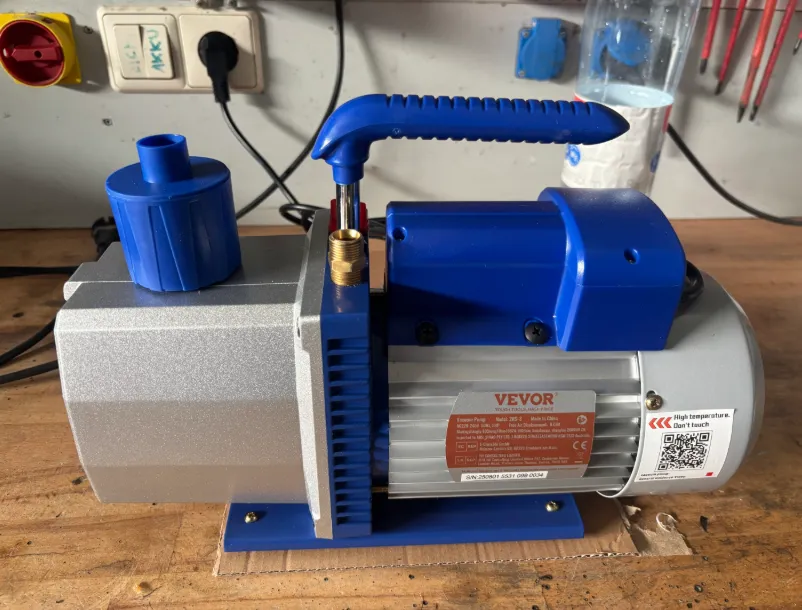
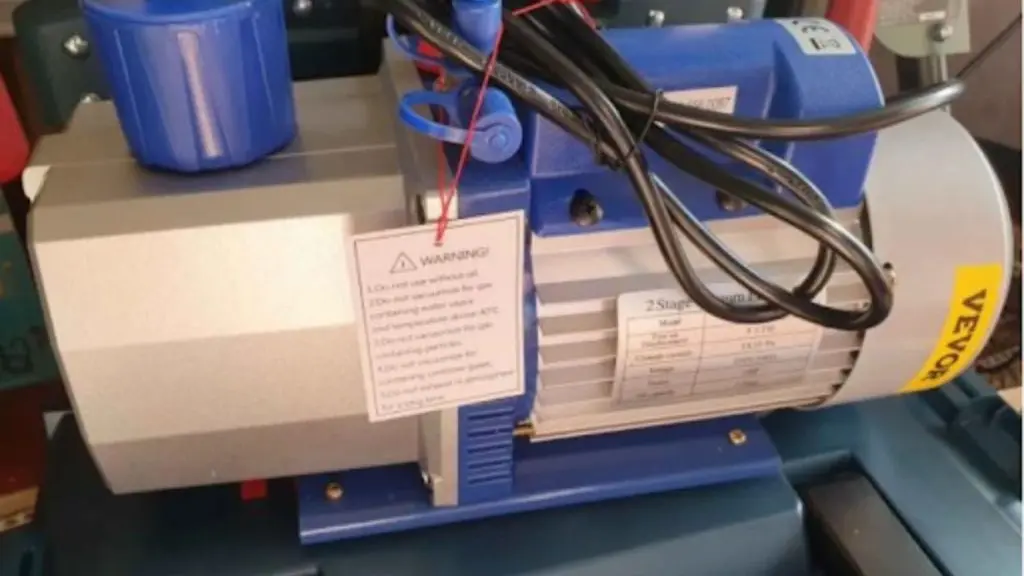
The VEVOR 3.5 CFM single-stage AC vacuum pump and gauge set is an affordable option for minor tasks without breaking the bank. Go two-stage for anything you do for a living, though. A basic single-stage can be the best AC vacuum pump for light DIY. An affordable vacuum pump is fine for the occasional repair.
Sizing by CFM: Matching the Vacuum Pump to the System
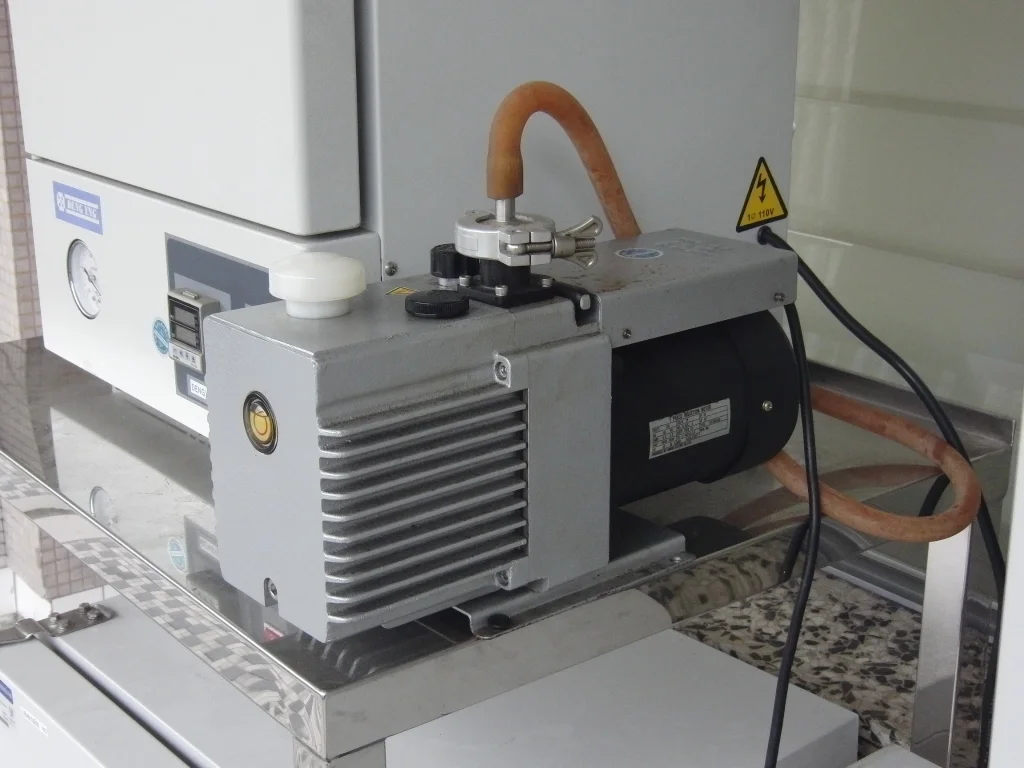
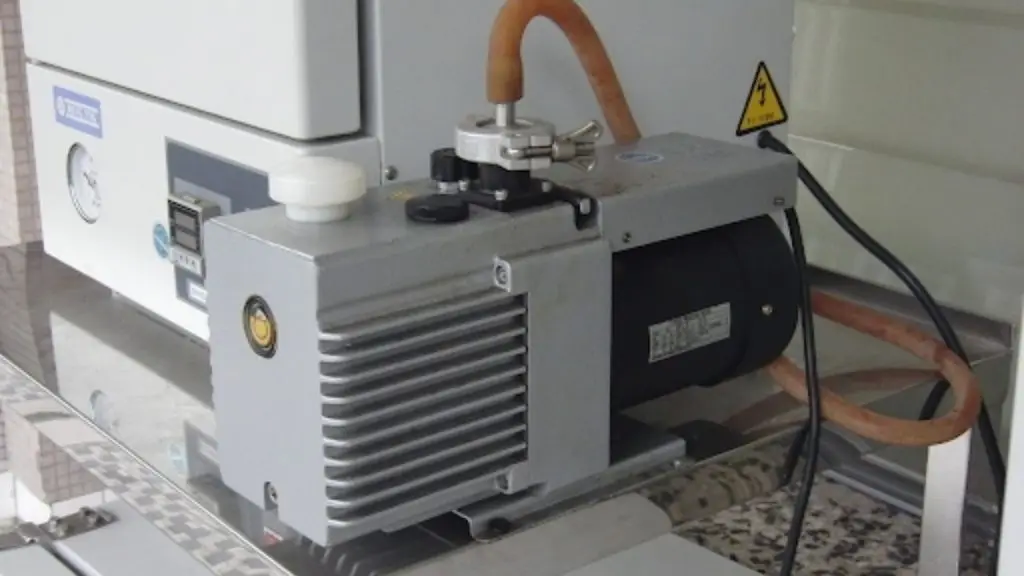
Alt text: Types of vacuum pumps: gray pump with orange hose
Your next dial after setting the stage is CFM. Let’s keep it simple because it’s the easiest specification to overthink. The best vacuum pump for HVAC jobs matches CFM to system size. Both types of vacuum pumps follow the same CFM rules.
What CFM actually controls?
The pump’s air movement speed is measured in cubic feet per minute, or CFM. This is the catch that most charts overlook. CFM doesn’t affect the final vacuum level; it only affects evacuation speed. A higher CFM clears a larger system faster. It won’t pull a deeper vacuum. So don’t buy extra CFM hoping to get below 500 microns. On big jobs, it simply gets you there more quickly.
How to Match CFM to Your System?
Keep your money where it matters by matching the number to the system. A logical way to approach it:
• 3 to 4.5 CFM: DIY projects, small home splits, and automobile air conditioning.
• 5 to 7 CFM: busier auto shops and typical home HVAC.
• 9 to 12 CFM: commercial or large systems where time is of the essence.
A 3 to 5 CFM vacuum pump can handle most residential splits, while a 6 to 12 CFM vacuum pump suits larger commercial systems. VEVOR’s 6 CFM two-stage rotary vane pump is ideal for a shop performing consistent residential work. The best rotary vane vacuum pump in each size class follows these ranges.
Don’t oversize for small systems
A 12 CFM vacuum pump is unnecessary, heavier to transport, and less accurate on a small car AC line. When you actually need the speed on large lines, save the high-CFM models.
| Flow Rate (CFM) | Best For | Typical Stage | Why |
| 3 to 4.5 CFM | Car AC, small splits, DIY | Single or two | Light loads, portable, cheaper |
| 5 to 7 CFM | Standard residential, busy shops | Two-stage | Faster pull, deep vacuum |
| 9 to 12 CFM | Commercial, large systems | Two-stage | Clears big lines quickly |
Picking by Who You Are: DIYer, New Contractor, or Pro
The best vacuum pump really depends on your level of expertise. Instead of looking for a single winner, let’s match the tool to the user.
Best Vacuum Pumps for a tight budget and light use
Are you on a starter budget or are you new to this? Instead of a flagship, you want a dependable entry vacuum pump. This is the section that most novices find confusing, so here’s the direct question: what are the top-rated affordable vacuum pump brands for new contractors, and how do they compare?
Value brands selling 3 to 5 CFM single- and two-stage rotary vane pumps compete in the crowded affordable market mainly on motor quality, warranty, and included accessories rather than vacuum depth.
A 4.5 CFM single-stage vacuum pump with a gauge set gives a new contractor the pump, hoses, and gauges in one box, and VEVOR fits this category with reasonable prices and complete kits. For beginners, the best AC vacuum pump is a kit with gauges. Even a good, affordable vacuum pump still needs clean oil.
Best Vacuum Pumps for daily professional work
Purchase for depth and speed if this is your full-time trade. A two-stage vacuum pump in the 6 to 8 CFM range is considered a pro-grade setup. VEVOR’s 7 CFM two-stage AC vacuum pump handles R1234YF and R32 systems and moves quickly between jobs if you’re constantly on the road servicing cars and splits.
A 12 CFM two-stage model significantly reduces your evacuation time for larger commercial lines. That makes it the best vacuum pump for HVAC pros on the road. A two-stage model is the best rotary vane vacuum pump for daily work and the best HVAC vacuum pump for full-time use.
Best Vacuum Pumps for automotive AC
Auto repair has its own requirements. Compared to older refrigerants, modern cars use R1234YF and R32, which are more sensitive to moisture. The best vacuum pump for automotive air conditioning is a two-stage vacuum pump that lists those refrigerants, along with a gauge set with the appropriate couplers.
To read pressures while charging, pair it with an appropriate AC manifold gauge set. An automotive AC vacuum pump should list R1234YF and R32. The best AC vacuum pump for cars is a two-stage with couplers.
| Tight budget / light use | Daily professional work | Automotive AC | |
| Pump type | Single-stage rotary vane with gauge kit | Two-stage rotary vane | Two-stage rotary vane with couplers |
| Stage | Single-stage | Two-stage | Two-stage |
| CFM | 3–5 CFM | 6–8 CFM (12 CFM for commercial) | 6–8 CFM |
| Refrigerants | R134a, R22, R410a | R1234YF, R32, R410a | R1234YF, R32 (modern cars) |
| What to compare | Motor quality, warranty, included kit | Motor life, seal quality, pull-down speed | Refrigerant list, coupler fit, gauge set |
| Best for | Occasional DIY, car top-ups, home repairs | Back-to-back cars and splits, commercial lines | Modern, moisture-sensitive car AC |
| Example to consider | VEVOR 4.5 CFM single-stage + gauge kit | VEVOR 7 CFM two-stage | VEVOR 7 CFM two-stage + manifold gauges |
Comparing the Field: Ratings, Value, and What Pros Avoid
Specs reveal only half the story. The rest comes from what working technicians say about a pump’s durability. The best vacuum pump for HVAC buyers balances price, depth, and durability. Different types of vacuum pumps trade price against depth.
Top-rated pumps and how they stack up on price and performance
Simply put: what are the top-rated vacuum pumps for HVAC work in the US, and how do they compare in price and performance? This question is frequently asked by consumers shopping across the country. The best-reviewed HVAC vacuum pumps are grouped around two-stage 5 to 8 CFM units.
They always trade off in the same way: value brands offer the same 500-micron result for less money with a slightly heavier build, while premium brands cost more and add brushless motors and lighter bodies. The mid-priced two-stage typically wins on value if you match the spec to your workload. Best vacuum pump reviews usually rank two-stage units highest. High-end vacuum pumps cost more but weigh less.
Flagship brands for pros, compared
The question becomes, “What are the top vacuum pump brands for professional contractors and how do their flagship models compare?” for contractors assembling a career kit. Since any high-quality two-stage can meet the goal, professional flagships compete on brushless DC motors, cordless options, and faster deep-vacuum pull-down.
The flagships are cost-effective if you manage a crew and need speed and battery freedom, but a corded two-stage can do the same job for much less if you run a lean shop. Top-rated vacuum pumps in this class share brushless motors. High-end vacuum pumps suit crews that need speed.
Durability ratings over time
It’s not a good deal to have a vacuum pump that dies within a year. Customers care about durability, and for good reason: which vacuum pumps have the best durability ratings, and how do they compare across models?
Common characteristics include a 4-pole or brushless motor, solid cast construction, and an anti-suckback valve. They receive the best durability reviews. They also compare much more on motor life and seal quality than on headline CFM.
You can simply read owner reviews for recurring complaints about oil leaks or overheating rather than consulting a specification sheet. Read best vacuum pump reviews for oil leak complaints. Look for the best HVAC vacuum pump with a durable motor.
Pros of Best Vacuum Pump
Knowing what to omit is equally helpful. Here’s a direct question worth asking: Which vacuum pumps do HVAC pros consider overrated, and which models get poor reviews?
Air-powered venturi pumps and generic single-stage units that can’t hold less than 1000 microns are models experts consider overpriced, and those same inexpensive pumps get the worst reviews because of poor suction and early motor failure. Skilled technicians put a vacuum pump on the shelf if it can’t hold a 500-micron vacuum. Best vacuum pump reviews also expose the weak generic models.
Maintenance of Best Vacuum Pumps
The sticker price doesn’t reflect the total cost. The total cost of oil, seals, and maintenance determines which pump is actually the least expensive to own.
Oil is everything
The best vacuum pump oil handles sealing and moisture control. Think of it as an ongoing expense, not a one-time purchase. The most frequent reason for inadequate evacuation on site is contaminated oil. Because generic oils can foam and weaken the vacuum, replace it frequently and use the oil recommended by the manufacturer.
Simple care that extends vacuum pump life
A few habits can keep any vacuum pump strong for years. Before and after each task, check the oil’s color and level. When storing it, cover the intake port to keep dust out. Clean the body and inspect the fittings and hoses for wear. Before worn seals start to leak air into your pull, replace them as soon as possible.
Figuring out true cost over time
When weighing two vacuum pumps, new contractors often ask the most important question: which vacuum pumps are most cost-effective when factoring purchase price and maintenance, and how do they compare?
Because a low-grade unit that burns oil, overheats, and requires early seal work costs more over its lifetime than a mid-priced two-stage with a durable motor, the most economical vacuum pump is rarely the cheapest one up front.
A good value-brand two-stage typically wins when you factor in the pump cost, a year’s worth of oil, and any necessary repairs. An affordable vacuum pump is not always the cheapest to own. Best vacuum pump reviews often mention oil use and seal wear.
Conclusion
Three straightforward questions determine the best vacuum pump: how fast it pulls, how long it lasts, and how deep it pulls. Size the CFM to your system without going overboard. Once you’ve settled on the stage, choose two-stage for daily and professional work, and single-stage only for light DIY. A dependable value-brand two-stage pump in the 5 to 7 CFM range handles most HVAC and auto AC tasks. Look through the entire selection of air conditioning vacuum pumps and choose one for your upcoming project right now.
| Buyer | Recommended Pump | Stage | What You’re Paying For |
| DIY / light use | 3 to 4.5 CFM | Single-stage | Low cost, simple upkeep |
| New contractor | 4.5 to 6 CFM | Two-stage | Deep pull, full kit, value |
| Daily pro | 6 to 8 CFM | Two-stage | Speed, brushless motor, durability |
| Commercial/large | 9 to 12 CFM | Two-stage | Fast evacuation on big lines |
FAQs
What is the best vacuum pump for refrigeration work?
Choose a 5–8 CFM two-stage rotary vane pump for refrigeration. It removes moisture faster than a single stage and creates the deep vacuum these systems require. Keep the oil fresh, and match the CFM to your line size. The best rotary vane vacuum pump for refrigeration is a two-stage model.
Can one vacuum pump handle both HVAC and automotive AC?
Indeed. Two-stage vacuum pumps suit R134a, R410a, R1234YF, and R32 in both home and automobile air conditioning systems. Simply pair it with a manifold gauge set that includes the couplers your cars require.
How many microns should a good vacuum pump reach?
A high-quality two-stage vacuum pump easily meets the 500-micron job target and pulls well below 50 microns at the inlet. Single-stage pumps typically bottom out between 75 and 150 microns, which is marginal for contemporary refrigerants but acceptable for simple do-it-yourself projects.
Does higher CFM mean a better vacuum pump?
No, CFM doesn’t determine the pump’s depth of pull; it only affects how quickly it evacuates. Don’t overpay for CFM you won’t use because depth comes from the two-stage design and clean oil. Choose an affordable vacuum pump with only the CFM you need.