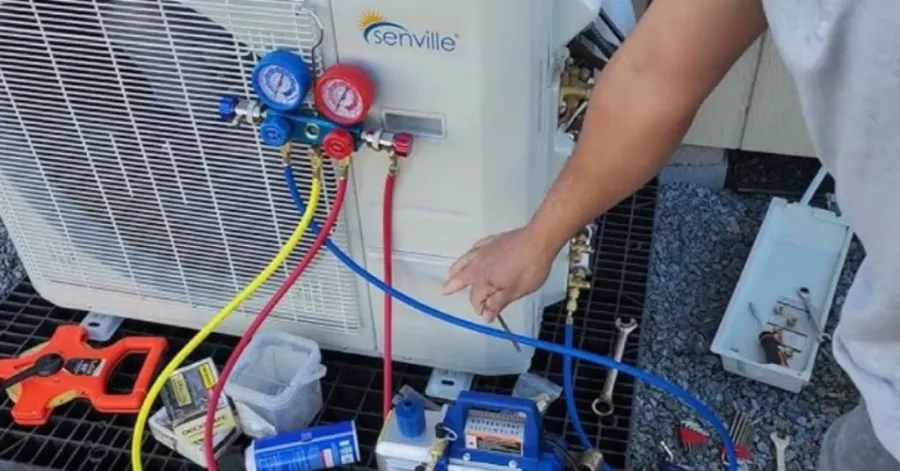
An HVAC vacuum pump kit is a necessary piece of equipment for installing, repairing, and maintaining air conditioning and refrigeration systems. It removes moisture, air, and contaminants from refrigerant lines before the system is charged, enhancing cooling performance and safeguarding the compressor. A ductless mini-split kit can help any homeowner working on a ductless mini-split or a professional technician working on commercial equipment pick the appropriate kit to make every job easier and more precise. The guide describes the parts of an HVAC vacuum pump kit, how to select the most appropriate one, and the proper procedures to operate it to ensure effective and efficient evacuation of refrigerants.
Table of Contents
What Is an HVAC Vacuum Pump Kit?
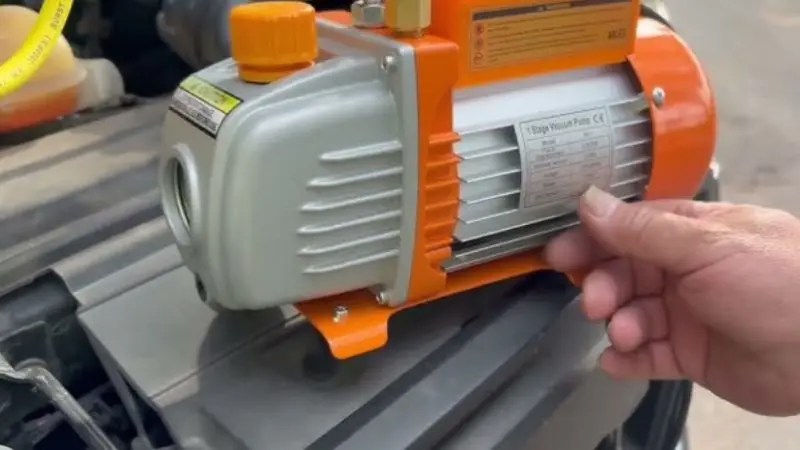
One of the most essential tools for installing, repairing, and maintaining air conditioning and refrigeration systems is an HVAC vacuum pump kit. It integrates multiple key tools into a single unit, making it easier to eliminate air and moisture before adding the refrigerant. Regardless of the nature of the air conditioning systems you are working on, be it residential, commercial, or vehicle, a complete kit can help enhance the efficiency and performance of the system.
The correct gauge kit for a good vacuum pump with an HVAC will enable you to measure the pressure and build a deep vacuum. The process will prevent contamination of the HVAC system, prolong the life of the equipment, and provide reliable cooling.
Recommended For Your Project
What Is Included in a Standard HVAC Vacuum Pump Kit?
The typical HVAC vacuum pump kit is complete and includes all necessary components to evacuate refrigerant lines safely and effectively. The majority of kits include a vacuum pump, a manifold gauge set, vacuum hoses, vacuum pump oil, and other adapters or fittings. More sophisticated kits also provide a micron gauge to further measure the depth of vacuum.
A variety of manufacturers produce kits for particular uses. As an example, a vacuum pump kit for mini-split systems typically includes adapters that fit mini-split service ports. A professional HVAC vacuum pump kit can comprise heavy-duty hoses, a digital gauge, and larger-capacity pumps in cases of frequent commercial usage. With all these tools in a single package, the time saved enhances accuracy, and you are guaranteed to have everything needed to properly evacuate refrigerant.
How Does an HVAC Vacuum Pump Kit Work?
An HVAC vacuum pump kit is used to clear an HVAC system of air, moisture, and other unwanted gases; then refrigerant is added. Manifold gauges and vacuum hoses are used to connect the vacuum pump with the system. When the pump is on, it lowers internal pressure, causing moisture to evaporate and removing contaminants from the refrigerant lines.
The manifold gauges are used to monitor system pressure during the evacuation process, and a micron gauge ensures the required vacuum level is achieved. A refrigerant evacuation HVAC vacuum pump kit will keep the system clean and dry prior to charging. This minimizes the risk of corrosion, inefficient cooling, and compression damage caused by entrained moisture or air.
Why Do HVAC Technicians Need a Complete Kit?
A full HVAC vacuum pump set provides HVAC technicians with all the necessary equipment to perform correct and efficient service. Technicians will be able to buy a complete set of components that will function as a set. This enhances ease, lessens the time taken in setting up, and limits incompatibility among equipment.
An entire kit also helps maintain industry standards during refrigerant evacuation. Technicians can be more confident in servicing a residential air conditioner, a heat pump, or an HVAC vacuum pump kit used to service automotive AC. An HVAC vacuum pump kit for home use may be essential even for homeowners who only perform some HVAC maintenance, as it provides the equipment needed to handle basic tasks without compromising performance.
Main Components of an HVAC Vacuum Pump Kit
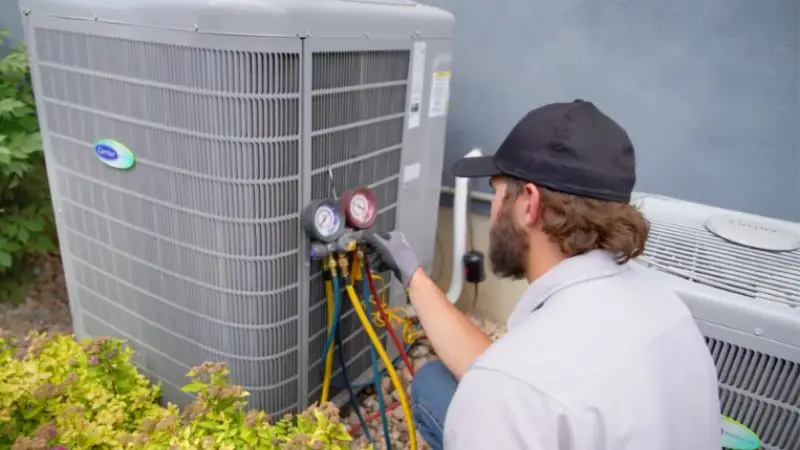
Each HVAC vacuum pump kit consists of several key elements that work together to prepare an HVAC system for refrigerant charging. All the parts have their purpose in the evacuation process and contribute to safe, accurate, and efficient operation.
Learning about these parts will help you select the kit that best matches your requirements, whether you are a homeowner, an apprentice technician, or an experienced HVAC professional.
Vacuum Pump
The most important part of any HVAC vacuum pump kit is the vacuum pump. Its main task is to eliminate air, moisture, and non-condensable gases in the HVAC system. Having a strong vacuum will eliminate contamination that can reduce cooling efficiency or cause internal damage.
Vacuum pumps come in various sizes, usually in CFM (cubic feet per minute). Smaller pumps are used in residential and mini-split systems, whereas larger pumps are used in commercial systems. A professional HVAC vacuum pump kit typically includes a high-capacity, two-stage pump that achieves higher vacuum levels faster; thus, it is well-suited for installing and repairing more demanding HVAC systems.
Manifold Gauge Set
The manifold gauge set controls and monitors refrigerant pressure during servicing. It links both the vacuum pump and the HVAC system with service hoses and enables technicians to monitor both high-side and low-side pressures during the evacuation process.
Most HVAC vacuum pump kits with gauges feature color-coded gauges that are easy to use. Correct pressures will assist technicians in ensuring that the system is evacuated correctly prior to filling the system with refrigerant. The quality manifold gauge set also enhances safety by assisting in identifying unusual pressure conditions, and all stages of the service process are followed properly.
Vacuum Hoses
The Vacuum hoses form the connection between the vacuum pump, the manifold gauge set,t and the HVAC system. Their structure should be tough enough so that they do not collapse; the structure should not leak under the conditions of deep vacuum. Good quality hoses are capable of keeping the air flowing, and moisture and trapped gases are easily removed.
Most kits feature reinforced hoses and robust fittings that minimize the risk of leaks during use. Reliable hoses are important when an HVAC vacuum pump kit is used to evacuate refrigerant; they help to ensure that the vacuum is not lost and that the evacuation time is minimized. Selection of good hoses also enhances durability and reliability of service in the long term.
Vacuum Gauge or Micron Gauge
A vacuum gauge, also known as a micron gauge,auge is used to determine the actual level of vacuum within the HVAC system. Compared with standard manifold gauges, a micron gauge provides accurate readings that confirm the removal of sufficient moisture and air before the refrigerant charging process begins.
Several professional HVAC vacuum pump kit models have a digital micron gauge for greater accuracy. Achieving the desired micron level will assist in verifying a fully evacuated system,m which will be prepared to work. The micron gauge will minimize the risk of unseen moisture remaining in the refrigerant lines, which may impact HVAC performance over time.
Adapters and Fittings
The HVAC vacuum pump kit can be adapted and fitted to various HVAC systems and service ports with adapters and fittings. As equipment is manufacturer and application specific, these accessories enhance compatibility and ease the installation.
A variety of HVAC vacuum pump kits for mini split systems has specially designed adapters for smaller service valves, es which are often present on ductless air conditioners. Other fittings can also be used to support refrigeration units, heat pumps, and automotive air conditioning systems. The right adapters guarantee a safe connection, minimize the amount of refrigerant leaks, and simplify the process of servicing,d making it more efficient.
Vacuum Pump Oil
Oil in the vacuum pump is needed to ensure the pump operates properly and to protect its internal parts. Clean oil forms an appropriate seal around the pump, enabling it to reach deeper vacuum levels and wear out the moving components less.
Most HVAC vacuum pump kits have a bottle of vacuum pump oil, which is typically included but must be replaced after heavy use or when it becomes contaminated. New oil is also beneficial because it helps the pump dehumidify more effectively and increases its lifespan. Frequent oil changes also enhance performance, but when the kit is used regularly for HVAC maintenance or refrigerant evacuation, the oil will be changed very often.
How to Choose the Right HVAC Vacuum Pump Kit
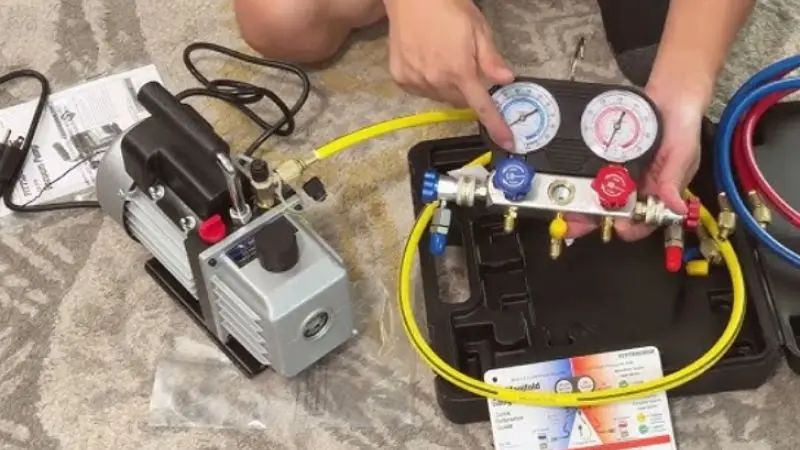
The selection of an appropriate HVAC vacuum pump kit can help to get the HVAC maintenance, repair, and installation done right. A designed kit aids in the effective removal of air and moisture, enabling the system to operate optimally after refrigerant filling. The correct decision also saves time and reduces the likelihood of service errors.
Various kits are used in a range of applications, from small home air conditioners to large commercial cooling systems. Knowing the key features to compare, you could choose the kit that fits your work, budget, and level of experience.
Choose Between a Single-Stage and Two-Stage Vacuum Pump
The first thing to consider is whether you require a 1-stage or 2-stage vacuum pump. A single-stage pump is appropriate for simple maintenance, minor air conditioning systems, and rare home projects. It is easy to operate and is generally cheaper, so it is an option that novices or homeowners can afford.
Two-stage pumps produce a deeper vacuum and can eliminate moisture faster, which is why they are the best choice for regular HVAC work. The technicians mostly use a professional HVAC vacuum pump kit due to its fast evacuation and more reliable operation. Provided you have modern air conditioning systems that are serviced regularly, a two-stage pump is more reliable and provides greater protection of the system in the long term.
Pick the Right CFM for Your HVAC System
The CFM rating is a factor of the amount of air the vacuum pump is able to pull off per minute. The selection of the right CFM is hinged on the size of the HVAC system you would like to service. Smaller residential systems tend to operate effectively at lower CFM ratings, whereas larger commercial systems require higher-capacity pumps to accomplish evacuation effectively.
When you primarily install ductless systems, an HVAC vacuum pump kit with a mini split and a moderate CFM rating is usually the optimal option. The choice of the right pump size will reduce the evacuation time without compromising on the performance. Ensuring that the capacity of the pump is equal to that of the HVAC system also helps in saving unnecessary wear on the equipment and enhances the efficiency of the overall service.
Check Hose Quality and Compatibility
The vacuum hoses help in establishing a safe connection between the vacuum pump, manifold gauge set, and the HVAC system. Powerful, non-leakage hoses are used to ensure that the evacuation process is kept in a deep vacuum. Poor-quality hoses can cause air leakage into the system, prolonging evacuation time and reducing accuracy.
An effective HVAC vacuum pump kit with gauges must have high-quality hoses that are durable with secure fittings. You should also ensure that the hoses and adapters are aligned with the HVAC equipment you are servicing. Correct compatibility guarantees proper functioning, better vacuum performance, and compatibility with various air conditioning and refrigeration systems.
Why a Micron Gauge Is Important
A micron gauge is much more precise than a standard manifold gauge at measuring the actual vacuum level in the HVAC system. It verifies that moisture and air are fully removed before the refrigerant is added. Without this measurement, it may be difficult to determine whether the evacuation process has been completed.
A micron gauge is recommended by many technicians when using an HVAC vacuum pump kit to evacuate refrigerant, as it provides accurate readings and helps detect latent leaks. Achieving the desired micron level will prevent damage to the compressor, enhance cooling, and make the overall HVAC system more reliable after maintenance.
Look for Strong Build Quality and Easy Portability
A long-lasting HVAC vacuum pump system delivers improved long-term performance and can operate normally without constant repairs. Choose high-quality metal-built pumps with reliable motors and seals that can handle the demanding HVAC job. Good components are also used to ensure that vacuum performance remains consistent over time.
Another feature of great importance is portability, particularly for technicians who move between service points. Lightweight home vacuum pump kit of the HVAC vacuum pump is easy to transport and store, and larger professional models may have durable handles that allow them to be transported easily. It is more comfortable and efficient to choose a durable, portable kit to make HVAC servicing easier.
How to Use an HVAC Vacuum Pump Kit
Proper use of an HVAC vacuum pump kit helps extract air, moisture, and contaminants from an HVAC system prior to adding refrigerant. The correct procedures enhance cooling efficiency, safeguard internal components, and minimize the risk of subsequent system breakdowns. The preparation and proper vacuum testing of every installation or repair are crucial.
Regardless of whether you are using an HVAC vacuum pump kit in the home or when maintaining commercial equipment, proper procedure will help ensure a reliable evacuation of the refrigerant and guarantee the efficient operation of the HVAC system.
Prepare Your HVAC System Before Vacuuming
The first step is to switch off the HVAC system and ensure that any required repairs or installations are done. Check all refrigerant lines, fittings, and service ports to ensure they are securely attached. Inspect for any apparent leakage or broken parts that may not allow the system to retain a vacuum.
The system should be properly prepared to create an effective seal prior to the commencement of evacuation. When you are dealing with a ductless air conditioner, an HVAC vacuum pump kit that is used with a mini-split usually has the correct adapters for smaller service ports. A few minutes of checking the system would ensure there are no interruptions in the evacuation process and yield better results.
Connect the Manifold Gauge Set and Vacuum Hoses
Connect the manifold gauge set to the high- and low-pressure service ports of the HVAC system. Attach the center hose to the vacuum pump with each fitting firmly screwed. The correct connections ensure that no outside air enters the system, and they help to maintain a constant vacuum.
This can be made easy with a complete HVAC vacuum pump kit, which includes matching hoses, gauges, and adapters to fit. Prior to starting the vacuum pump, check all connections to ensure they are secure and free of loose fittings or broken hoses that could interfere with the evacuation.
Start and Run the Vacuum Pump
After all connections are correctly made, open the manifold valves and switch on the vacuum pump. The pump will work to dehumidify the HVAC system by removing air, moisture, and other contaminants. Let it run until the recommended vacuum level is reached, as the time required will vary with the system size and the pump capacity.
This process can be done with a professional HVAC vacuum pump kit, which takes less time than doing it by hand because most kits have a high-capacity two-stage vacuum pump. Disconnection of hoses or opening of valves during pump operation should be avoided, as this can introduce air into the system and slow the evacuation process.
Measure the Vacuum Level with a Micron Gauge
Once the vacuum pump has been operating for a sufficient period, the vacuum level should be measured using the micron gauge. This reading will check whether the required level of the vacuum depth of the system has been achieved and the moisture has been eliminated. A steady micron reading would also be used to detect potential leaks prior to refrigerant charging.
Fridge evacuation with an HVAC vacuum pump kit and a micron gauge enhances the accuracy of the service performed and minimizes the chances of future issues in the system. Checking the vacuum level of the refrigeration circuit is known to be clean, dry, and operational safely.
Disconnect the Kit and Recharge the System
After the desired vacuum level is reached, close the manifold valves and shut off the vacuum pump. Disconnection of the hoses must be done carefully without allowing external air to get into the refrigerant lines. In this step, it is important to maintain the vacuum to maintain the quality of the evacuation.
Once the equipment is disconnected, recharge the HVAC system with the appropriate type and quantity of refrigerant as per the manufacturer. When you are using an HVAC vacuum pump kit to do your automotive AC or are servicing an air conditioner at home, a proper charging procedure will contribute to proper cooling, good performance, and extend the life of the equipment.
Wrap-Up
The right HVAC vacuum pump kit assists in cleaning, drying, and preparing your HVAC system to charge it with refrigerant. Servicing is also made easier with a complete kit comprising quality gauges, hose, and a quality vacuum pump that enhances system efficiency and performance over time. The ability to select the appropriate equipment and adhere to the correct evacuation procedure could save you a lot of money in repairs and prolong your air conditioning or refrigeration system. Regardless of whether you are going to use an HVAC vacuum pump kit at home or a professional HVAC vacuum pump kit, you will be able to find better quality tools and achieve more precise results and reliable HVAC performance.
FAQ
What is an HVAC vacuum pump kit used for?
HVAC vacuum pump kit. This kit is used to remove air and moisture from refrigerant lines prior to charging. This prevents contamination, enhances cooling performance, and assists in safeguarding the compressor against long-term damage.
Is it possible to use a single HVAC vacuum pump kit on mini-split systems?
Yes. Numerous kits have ductless system adapters. A mini-split HVAC vacuum pump system is effective when it has compatible hoses, fittings, and manifold gauges.
Do I require a micron gauge to vacuum HVAC?
Yes. A micron gauge is used to measure the depth of the vacuum accurately and ensure moisture has been eliminated. It is more accurate than conventional manifold gauges when evacuating a refrigerant.
What is the appropriate CFM for a vacuum pump?
Select the CFM depending on the size of your HVAC system. The required CFM ratings are lower in small residential systems and higher in large commercial systems, since larger-capacity pumps are needed to evacuate faster.
Does it fit an HVAC vacuum pump kit on automotive AC systems?
Yes. Numerous kits assist in automobile air conditioning service. A car automotive AC HVAC vacuum pump kit has compatible evacuation hoses and fittings to evacuate the refrigerant prior to recharging.