You need stable ground before building anything. A mechanical soil compactor provides that stability by pushing soil particles closer together. This machine applies downward force while shaking, which moves loose grains into a tight, locked pattern. The result is a strong base that does not sink under weight. Compaction removes air pockets from the soil. Without it, your structure could shift or crack over time. You will see these machines on road projects, building sites, and landscaping jobs. They handle everything from small trenches to wide highway bases. Knowing how this equipment works helps you pick the right tool for your job and avoid costly mistakes.
How to choose a mechanical soil compactor? Different compactors are designed for different soil types, project sizes, and working conditions. Using the wrong equipment or compacting soil at the wrong moisture level can lead to weak ground and future settling. This guide explains how mechanical soil compactors work, the types available, the soil conditions they suit, and common mistakes to avoid.
Table of Contents
What Is a Mechanical Soil Compactor and Why Is It Important?
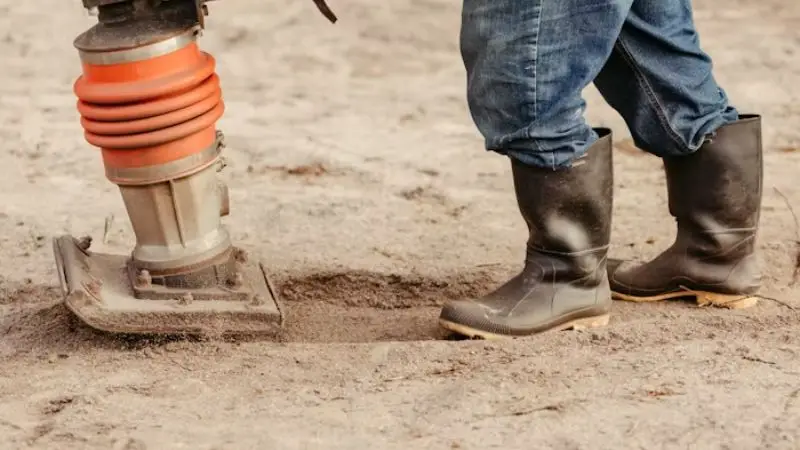
A mechanical soil compactor is a heavy machine used to compact soil. It is used to compact loose soil into solid, stable ground. This is achieved through weight, impact, or vibration. Various models are suitable for different soil types and job sizes. A small walk-behind may be used for a trench. A large roller may be required for a highway job. The main purpose of each machine is to lay a solid foundation.
Recommended For Your Project
What Does a Soil Compactor Do?
A soil compactor removes air gaps from the soil. The machine is driven over the loose material, and the resulting compaction is due to the applied force. This process produces a dense texture from individual grains. The surface can support large weights without any movement. Which machine is best for compacting soil? These machines are used on various jobs throughout. They are used to prepare subgrades for road construction operations. Construction companies fill in the foundation’s space with fill dirt. Smaller units are used in landscaping patios, walkways, etc., to level them. The machine performs a single task: it compacts soil particles into a close-packed mass. This change eliminates soft spots and prevents further settling. The compaction equipment that you choose should be appropriate for your project. A light plate compactor is suitable for light (small area)applications. A heavy roller is used for large sites. Soil conditions should also be taken into account. Clay and sand do not behave in the same way in the presence of water. Proper technique and the right machine are key to achieving consistent results on both wet and dry soil.
Why Is Soil Compaction Important?
Structural failure is prevented with soil compaction. It is impossible to build safely on loose ground! In un compacted soil, air spaces collapse under pressure. These failures cause the cracking of foundations, the dipping of pavements, and the movement of walls. Those spaces are compacted out before construction. Compaction also ensures long-term stability. Dense soil is less permeable to water than loose soil. Water deteriorates foundations by eroding the fine particles. How to mechanically compact soil? A well-compacted base drains well and will not shift with the weather. This benefits you because you will save money on future repairs.
Consider a basic driveway system. You spread gravel on the ground but do not compact it. During the first heavy rainfall, the fines wash away into the gaps. The surface flattens unevenly. In no time at all, you find yourself in ruts and potholes. Now think of squeezing the layers down as you put them together. The gravel is clumping together. Water does not stick on the surface. Your driveway is smooth for years. That distinction explains why all serious construction projects have a compaction step. This can’t be skipped, as you run a risk of losing your structure.
How Does a Mechanical Soil Compactor Work?
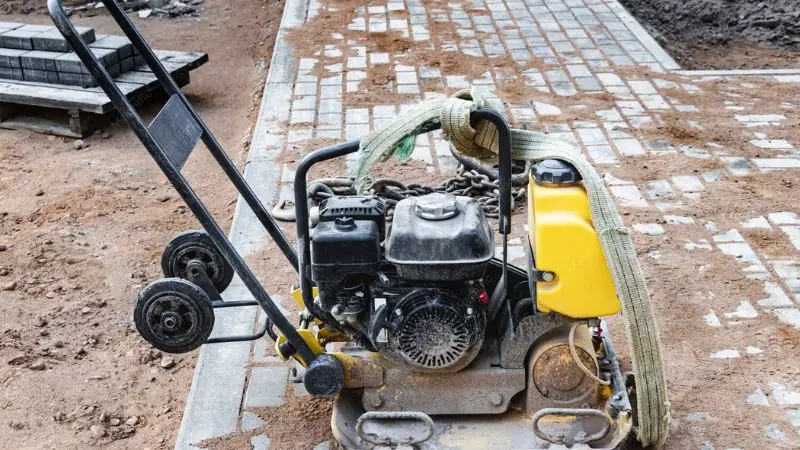
There are two basic types of mechanical soil compactors: vibration and static pressure. Both are suitable for various soil conditions and project requirements. It can be useful to be familiar with both methods so that you can select the most appropriate machine for your ground conditions. Proper soil density, strength, and long-term stability are achieved by using the right compaction method.
How Does a Vibratory Soil Compactor Work?
A vibratory compactor is a compactor that vibrates rapidly to compact soil. How deep will a soil compactor compact? A spinning shaft with an eccentric weight creates high-frequency vibrations. These vibrations penetrate the soil beneath the drum/plate. The shaking does the main work. Makes particles in the soil move. Loose grains tend to move to smaller areas. Particles become closer and closer, causing air pockets to collapse. This compaction is very deep, several feet below the surface. Vibratory models are most appropriate for granular soils. Shaking is an effective method for sand, gravel, and crushed stone—the vibrations cause friction between particles. Grains are then transferred to a denser configuration. This approach results in a more compact structure than static pressure would achieve in the same amount of time.
Thick lifts are also ideal for vibratory compactors. It is possible to lay deeper layers of material and still achieve adequate density. Shaking energy is more than merely weight. Vibrating rollers are commonly used for parking lots, roads, and other heavy-duty projects.
How Does a Static Soil Compactor Work?
A static compactor is based on the principle of weight and pressure. The machine, in its own mass, presses down on the soil—no vibration or impact in the working process. The drum or plate simply rolls or presses on the ground. This is because the best mechanical soil compactor for construction applies to cohesive soils. Moisture and chemical forces cause clay and silt particles to clump. These materials should be pressed and not shaken. Cohesive soils can become less stable and lose cohesion when vibrated. A static compactor is operated by making multiple passes over the area. With each pass, the machine’s weight is applied to the surface. The pressure pushes water out of the spaces between soil particles. The particles are then densified into a more solid mass. It is a gradual process that increases strength from one layer to the next.
If vibration is likely to cause damage to nearby structures, static rollers are an appropriate choice for the project. These could be placed downwind of buildings or pipelines, or near sensitive utilities. The consistent and steady pressure is less hazardous to the surrounding areas. This machinery is also suitable for any finishing passes on a granular soil following the main compaction by a vibratory unit.
Two Common Types of Mechanical Soil Compactors
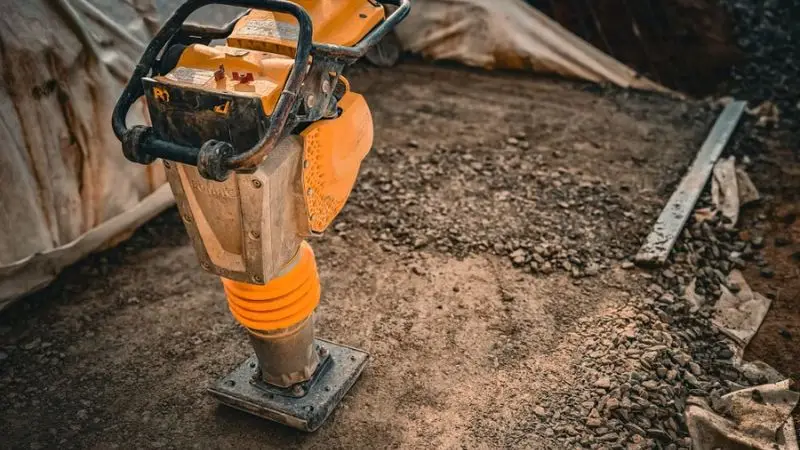
There are several compaction machine choices to consider. These are used for different purposes. There are two types of rollers: smooth drum rollers and vibratory rollers. Knowing what they offer and what they don’t will help you pick the appropriate unit for your project. The selection of the proper roller depends on the soil type and project requirements, resulting in good, compact, and smooth finishes.
Smooth Drum Rollers
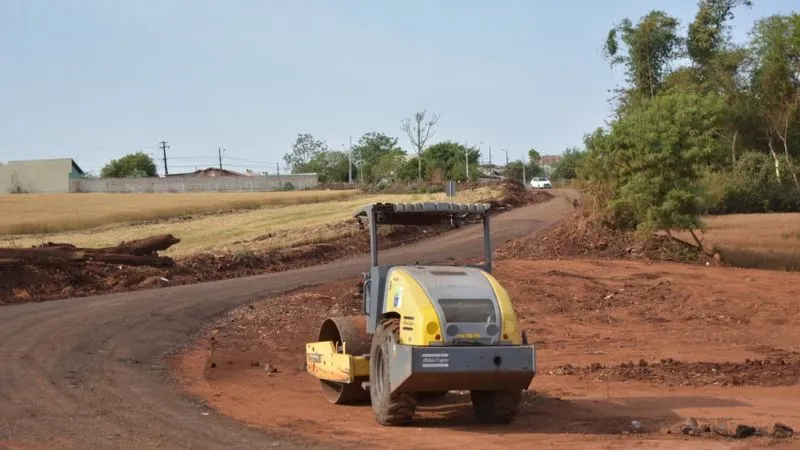
A smooth drum roller is a large, smoothed steel cylinder that is pressed down on the ground. A flat, even drum surface is maintained. This mechanical soil compaction machine is moved forward and backward on the soil. It is heavy enough to generate static stress, resulting in compression of the material beneath it. Smooth drum rollers are primarily used for finishing operations. They compact the already compacted layers to create a smooth, level surface. They are often the last step on the asphalt or gravel road surface by road crews. The flat drum produces a professional, clean result and works well. These rollers are used for cohesive soils such as clay. Water is ejected between particles under constant pressure. This will help to create density without damaging soil structure. A smooth drum roller can be used in buildings or utilities, too. Does not cause vibration, which might affect adjacent structures.
Vibratory Rollers
A vibratory roller combines weight and high-frequency vibration. An eccentric weight is placed in the drum and spins at a high rate. This spinning produces vibrations that are transmitted far underground. The compaction comes from the weight of the best soil compactor machine as well as via its shaking. Vibration is the force used to perform the heavy work on granular soil. Shaking of sand, gravel, and crushed stone can be highly effective. The motion decreases the friction between particles. Grains then move into closer positions. This method is not only based on static pressure. On large construction sites, you will find vibratory rollers. They are also used by highway construction companies when preparing subgrades. Parking lot contractors use these to compact base layers. The vibration can work thick lifts efficiently. Such deep layers can be placed and still be adequately dense.
The decision between these two types will depend on the soil and project needs. Several contractors have both machines. They use their vibratory roller for deep base work. Then, they use a smooth drum roller for the last surface pass. A combo of this kind provides you with not just deep compaction but also a clean finish. When choosing the right compaction equipment, you’ll save time and ensure there’s no rework on any job site.
What Types of Soil Can a Mechanical Soil Compactor Compact?
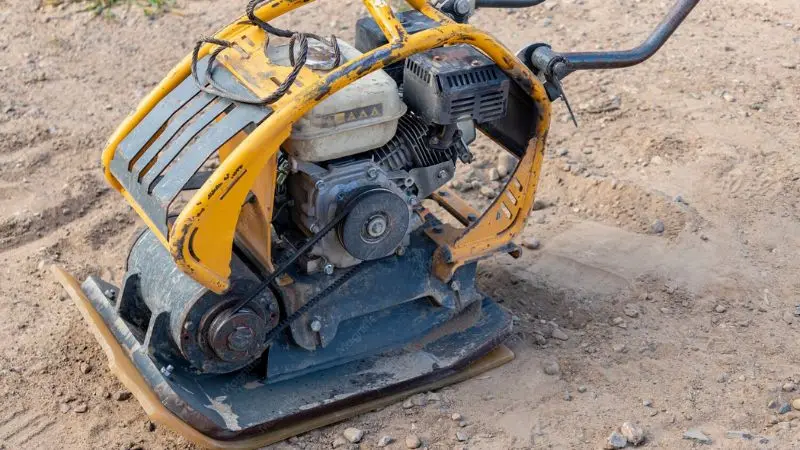
Compacting Granular Soil
Granular soil is composed of sand, gravel, and crushed stone. The particles in these materials are large and can be seen, and there are gaps between them. Single grains are visible in a sample. There is no attraction between the particles. They are held in place by friction and interlocking. How to choose a mechanical soil compactor? A vibratory compactor is ideal for granular soils. As particles vibrate, they reduce their friction. Grains are subsequently moved into closer formation. During this action, the air gaps between grains are filled. It provides deep tillage, going deep into the ground. For large projects such as highways and parking lots, this is crucial for stability. High compaction levels can be achieved quickly with the right equipment. Thick layers can be applied in one application. The vibration is transmitted throughout the depth. This method is a time-saver on the job site for large building projects. Good compaction also plays a role in the preparation of subgrade for pavements. A high-quality subgrade will not settle or crack in the future.
Compacting Cohesive Soil
Clay and silt are part of cohesive soil. These materials are composed of small particles. Individual grains cannot be seen without a microscope. Moisture and chemical bonds hold the particles together. This poses a different compaction problem. Which machine is the best for compacting soil? Static compactors are more efficient than vibratory compactors for cohesive soils. In fact, vibration may cause clay particles to separate. The shaking process breaks the chemical bonds. This will decrease the density rather than add to it. Rather than pressure, you will need constant pressure. A static roller or rammer compacts clay with its weight. Water is squeezed between the particles. This process gradually increases density. Several passes should be made to achieve good compaction. As the particles get bound together in the soil, they strengthen with each pass.
If the soil is cohesive, moisture management is important. Heavy moisture makes the soil soft. If the water supply is inadequate, particles don’t bond. To ensure the mix is ready to go, test its moisture content before starting. This provides a foundation that will not be ruined by water damage.
Common Mistakes When Using a Soil Compactor
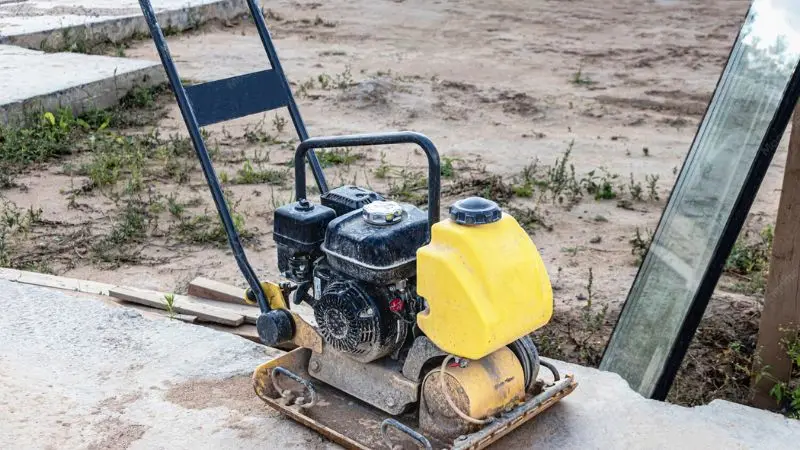
Some of the more common soil compactor errors are operating the machine at the wrong moisture content, using an undersized machine, or using the wrong machine. Vibratory compactors are most suitable for granular soils, whereas static machines and rammers are better suited to cohesive soils such as clays. Moisture helps soil particles move and compact effectively, in the absence of excess moisture or dryness. Correct selection of compaction equipment to match soil type, soil moisture, and project size will avoid weak spots, settlement, and rework costs.
Using the Wrong Type of Compactor
This is a common error you’ll encounter on a job site. A vibratory model is being used to compact a clay soil. The vibration doesn’t come in handy. In fact, it disrupts the natural forces between clay particles. The soil becomes looser, not firm. You’re left with a weak base that doesn’t hold up. The first step to the right approach is to identify the soil. Vibration can be used on granular soils such as sand, gravel, and crushed stone. The shaking decreases the friction between particles. Grains move to a more compact formation. How much is compacted by a soil compactor? The compaction is deep and will take less time. A different approach is needed for cohesive soils, such as clay. A static machine or rammer is used. The tools apply constant pressure. The weight disturbs the water, which expels it from between particles. Sustains density gradually from pass to pass. This produces a firm foundation that will not shift over time.
Another error is to use a light plate unit for deep lifts. Only the surface layers are compacted. Below that, the soil remains friable, creating a concealed weak spot. When heavy loads are placed on the ground, it settles unevenly. Deep compaction jobs require heavy equipment, such as a large vibratory roller.
Compacting Soil at the Wrong Moisture Level
Moisture content is important in achieving proper soil compaction. Excessive water is an issue. Water occupies the pore space between soil particles. The best mechanical soil compactor for construction is one that pushes water rather than pressing soil. The resulting surface is sticky and is not the desired density. However, low water levels can also cause problems. Particles do not roll or slide when they are dry. They are unable to pass by one another. The packing of the force is not efficient. The particles require the proper quantity of water to lubricate them. It will require some trial and error to reach the right moisture level. A simple field test can be done. Take a handful of soil and squeeze it. It should form a ball that will retain its shape. Throw the ball from waist height. It should snap into a couple of pieces. When water is dripping out, the soil is too wet. When the entire ball crumbles, the soil is very dry. Moisture requirements vary from soil to soil. Sandier soil holds less water than clay soil. Moisture can be increased or decreased by watering or allowing the soil to dry. This is a time-consuming process, but it helps avoid failure. The compaction equipment used is also important.
Choosing the Right Soil Compactor
Correct use of the soil compactor involves selecting the proper compactor for the soil and moisture conditions. You do not have to suffer the costs of expensive rework and are provided with a consistent subgrade to work on. The compactor you select for a specific soil and environment will save you both time and money. How to mechanically compact soil? Any building project requires solid ground, and a mechanical soil compactor provides it. The three primary types, namely plate, rammer, and roller, have different applications. Small areas, like patios, are best covered with a plate compactor. Rammers are suitable for work in narrow trenches. Medium-sized installations such as roads are covered by rollers. The equipment must be matched to your soil type to achieve successful compaction. Vibration is required for granular soils. Cohesive soils must be compacted steadily. The size of the project also influences the choice. Light equipment is required for small jobs. Heavy rollers are required for large projects. The right compactor provides the correct compaction. This provides a good base for the structure. Regardless of the task, selecting the proper compactor can save time and provide a solid foundation.
Wrap Up
A mechanical soil compactor helps make the ground stronger and more stable by eliminating air gaps and compacting the soil. There are three types of compactors—vibration, static pressure, and impact—to meet various soil types and project requirements. Vibratory machines are suitable for granular soils, while static compactors and rammers are suitable for cohesive soils. What is the best equipment for soil compaction? The selection of appropriate equipment also varies with the type of work, the size of the project, and the site conditions. Adequate moisture content is essential for good, uniform compaction. Ensure that each layer of soil is compacted and that adequate passes are performed to avoid weak spots and potential future settlement. The machine maintains the compaction level through regular maintenance, ensuring consistent compaction results and safe operation. A solid foundation can be established with the right tools and methods to ensure the long-term stability of projects.
FAQs
How Many Passes Do You Need for Proper Compaction?
You usually need three to five passes with your compactor. Every pass makes the soil denser. Check the ground after a few passes. A proof roll test shows if the soil stays firm. Stop when the surface no longer sinks under the machine.
Can You Compact Soil That Is Too Wet?
No, wet soil will not compact well. Water fills the gaps between particles. The machine presses water rather than packing soil. You end up with a muddy, weak surface. Let the soil dry first. Test moisture by squeezing a handful. It should form a ball without dripping water.
How Do You Know When Compaction Is Complete?
You can use a nuclear density gauge for exact results. This tool measures soil density and moisture content. Compare your readings to the project specs. Another way is to watch the surface. When the ground no longer shows visible sinking under the machine, you have reached good compaction.
Do You Need to Compact Every Layer of Soil?
Yes, you must compact each lift separately. Placing thick layers without compaction creates weak spots. The bottom stays loose while the top looks firm. Heavy loads then cause sudden settling. Spread soil in thin layers, usually six to twelve inches. Compact each layer before adding more material.
What Maintenance Does a Soil Compactor Require?
Check the engine oil and air filter before each use. Inspect the vibration system for loose parts. Clean the base plate or drum after every job. Remove stuck soil that affects performance. Follow the manufacturer’s service schedule for regular maintenance. Proper care extends the life of your equipment and keeps compaction results consistent.