It can be challenging to paint a stairwell, especially if the steps are narrow, the angles are unusual, or the areas are difficult to access. Choosing the proper ladders for painting stairwells is very important for safety. You don’t want to slip or wobble. The best ladders for painting stairwells help you get the job done faster while keeping you safe. Find ladders that are both safe and comfortable.
Safest Type of Ladder for Painting a Stairwell
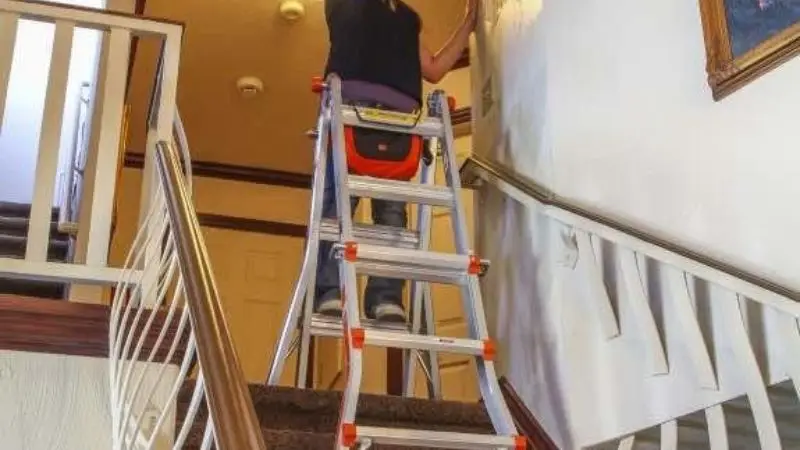
Choosing the safest type of ladder for your stairwell painting project makes a huge difference. You want a ladder that keeps you steady, fits the space, and helps you reach every spot without trouble. Let’s examine the best options for ladders:
Combination Ladders
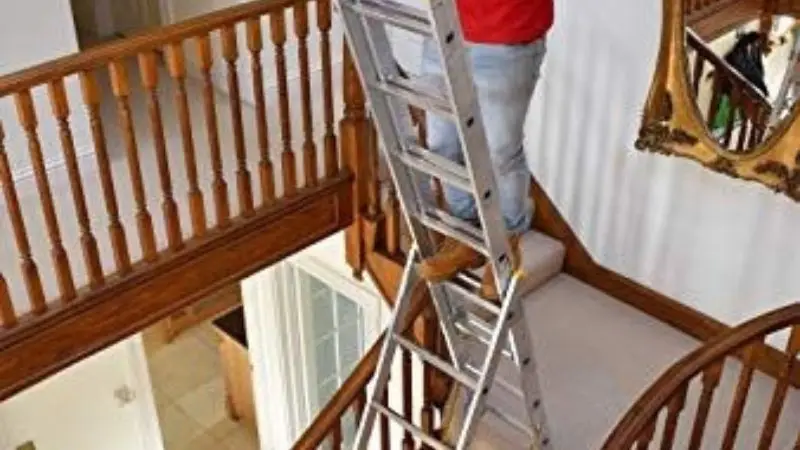
You can do a lot with combination ladders. You can shape them into various forms, such as an A-frame or a straight ladder. Some models even function as a double-sided telescoping ladder, allowing you to adjust the height on each side. This feature helps you keep the ladder steady on steps that aren’t level.
You can use a lot of combination ladders on stairs, flat floors, or even as a scaffold because they have a multi-position design. Look for bases that are wide and feet that don’t slip. These things keep the ladder from moving while you paint. It’s also essential that it is well-built. When you climb, you want a ladder that feels strong.
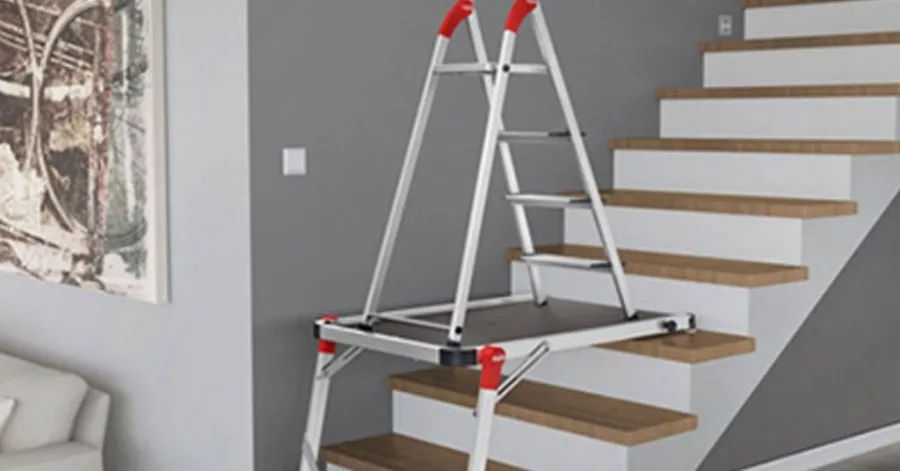
Platform Ladders
You can stand on a platform ladder because it is flat and stable. You can move around and keep your paint and tools close on the platform at the top. This type of ladder is ideal for narrow stairwells, as it can be placed on a landing or a wide step. For extra safety, many platform ladders have guardrails. The ladder won’t slip because it has a broad base and feet that don’t slip. A platform ladder can make it easier to stand for extended periods.
Extension Ladders
Extension ladders help you reach high spots in tall stairwells. You can make them longer or shorter, depending on your needs. When using an extension ladder, always ensure the feet are on a solid surface. Lean the ladder against a wall, not a window or a weak spot. Some extension ladders feature non-slip feet and locking mechanisms for added safety. Select a ladder with sturdy rails and a weight rating that matches your specific needs.
How to safely use a ladder on stairs for painting? Never stand on the top rung. Allow at least three feet of ladder clearance above the area you want to paint. Regardless of which ladder you choose, always verify that it has essential safety features, such as a broad base, non-slip feet, and sturdy construction. The right ladder helps you paint your stairwell safely and with confidence.
Stairwell Painting Challenges
Painting a stairwell presents its own set of challenges. You might think it’s just like painting any other room, but stairwells throw a few curveballs your way. Let’s break down the main challenges you’ll face and how to handle them.
Uneven Steps
There are steps of different heights in stairwells. This makes it hard to set up a ladder safely. It could wobble or lean if you try to use a regular ladder. That’s dangerous. You need a ladder that can change the height of each step. In this case, a telescoping ladder with two sides is the best choice. You can make one side longer than the other, which lets the ladder sit flat even on steps that aren’t level. This keeps you safe and steady while you paint.
Limited Space
Stairwells can feel small. You don’t have a lot of space to move around or set up big tools. You might need to fit your ladder into a small space at times. In these cases, a ladder with multiple positions is helpful. You can adjust the shape to fit the available space. Some ladders for painting stairwells fold up compactly, allowing you to carry and set them up easily in tight spaces.
Quick Checklist for Small Spaces:
- Select a ladder that fits in your stairwell.
- Look for designs that can be folded or changed.
- Keep your workspace clean and clutter-free.
Height and Reach
Stairs can be very high. You should be able to reach high ceilings or corners. Some ladders won’t get you there. Ensure your ladder is long enough to reach the job’s requirements. Some ladders let you safely add more height. Always follow the safety rules, and refrain from standing on the top step. Use a platform or an extension ladder with a stable base if you need to reach farther.
Ladders for Painting Stairwells: Key Features
When selecting ladders for painting stairwells, look for features that keep you safe and make your job easier. Let’s break down what matters most.
Safety Ratings and Duty Rating
You should always check the safety rating before you buy a ladder. The duty rating indicates the maximum weight the ladder can support. Most experts recommend a ladder with a duty rating of at least 250 pounds. This rating covers your weight plus any tools or paint you carry. You can find the duty rating on a sticker or label on the ladder. If you plan to use the ladder for heavy work, pick one with a higher rating.
Height and Length
You need a ladder that can reach every part of your stairs. Before you go shopping, measure the height of your stairs. You can get high ceilings and corners with extension ladders and multi-position ladders. Always check that the ladder reaches at least three feet above the area you want to paint. This extra height provides a secure place to hold on while you work.
Stable and non-slip feet
When working on stairs, the most important thing is to be stable. You want a ladder that doesn’t shake or move. Look for feet that don’t slip and bases that are wide. These things help the ladder hold onto the floor and keep you steady. For extra safety, some ladders have rubber feet or special grips. Before climbing a multi-position ladder, ensure all locks are in place.
Weight Capacity
Always keep in mind how much weight your ladder can hold. This includes the weight of your body, paint cans, and any tools you carry. If you put too much weight on the ladder, it could break or tip over. Refer to the label to determine the maximum weight it can hold, and avoid exceeding that limit. You can feel safer with a ladder that has a higher weight rating. When choosing ladders for painting stairwells, safety, stability, and the correct height should be the top priorities. These features help you get things done faster and keep you from falling.
Setting Up a Ladder for Painting a Stairwell
You need to plan if you want to paint a stairwell. You need to verify that your ladder setup is safe and suitable for the space. Let’s talk about how you can use different ladders and platforms to make your work easier.
Using Combination Ladders
When you need to make up for steps that aren’t even, combination ladders work great. You can put one side on a higher step and the other on a lower step. This helps keep the ladder straight. Before you climb, make sure the locks snap into place. Try adjusting the ladder’s shape if you need to reach a hard-to-reach spot. You can use it as an A-frame or stretch it out to make it straight. Here’s a short list of things to remember when using combination ladders:
- Put each side on a strong step.
- Close all the hinges and joints
- Ensure tools are easily accessible.
Stairwell Platforms
Stairwell platforms provide a flat surface to stand on. You can put a platform across two steps or use a special work platform for the stairwell. With this setup, you can move from side to side without having to climb up and down. Ladders and platforms work well together for painting stairwells because they make them safer and more comfortable.
Where to Put the Extension Ladder
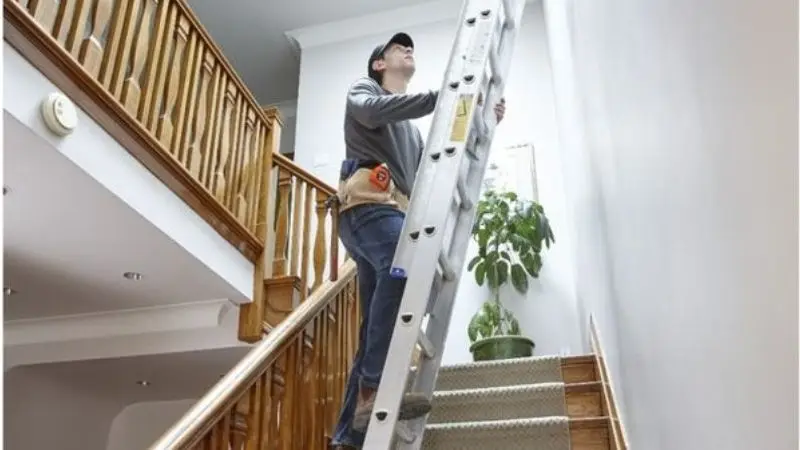
You can get to high places with extension ladders. Place the feet on the lower steps and lean the ladder against the opposite wall. Ensure the angle is correct—approximately 75 degrees. Never lean the ladder against a window or loose surface. If you need more height, extend the ladder, but keep at least three feet above where you plan to paint.
- Place feet on solid, lower steps.
- Lean against a sturdy wall
- Extend only as much as you need
Setting up your ladder correctly makes painting a stairwell safer and faster. Take your time and double-check everything before you start.
Safety Tips for Stairwell Painting
Painting a stairwell can feel risky, but you can stay safe if you follow a few simple steps. Let’s review the most important ladder safety tips for painting in stairwells.
Checking the Ladder
Always check your ladder before you climb it. Check for cracks, loose screws, or bent parts. Do not use the ladder if you see anything that is broken. Verify that all locks and hinges function properly. Remove any paint, oil, or mud from the steps. Steps that are clean help you not slip.
Secure Placement
You should put your ladder on a flat, solid surface. If you place it on a step, make sure it sits level. Use a ladder that can be adjusted for stairs that aren’t level. Never put your ladder on top of boxes or other objects to gain height. That could cause the ladder to fall over. Always ensure that your feet are firmly on the ground and don’t slide.
- Put the ladder’s feet firmly on the step or landing.
- Check that the ladder doesn’t shake.
- Make sure there is nothing in the way of the ladder.
Three Points of Contact
When climbing or painting, maintain three points of contact with the ladder at all times. This means one foot and two hands, or two hands and one foot. This rule helps you keep your balance. Instead of stretching, climb down and move the ladder if necessary.
Avoid Overreaching
You should reach for that last spot, but don’t. You can lose your balance if you go too far. Instead, move the ladder. Put your belt buckle between the rails of the ladder. If you can’t go, get off the ladder and move it.
Last Thoughts
Selecting the right ladder for painting stairwells not only keeps you safe but also makes the job easier. Pay attention to these critical points:
- Choose a ladder with a high duty rating and feet that don’t slip.
- Combination ladders and platforms are the most stable and flexible options.
- Before you climb, always check your ladder.
FAQ
What kind of ladder is best for stairs that aren’t level?
You should use a ladder that can do both. You can change the height of each side. This keeps the ladder from moving on steps that aren’t level. Before you climb, always check the locks.
How can I tell if my ladder is safe to use?
Look for cracks, loose pieces, or bent rails. Ensure the feet are firmly planted on the ground. Find a safety label that shows the duty rating. Choose a different ladder if anything appears to be wrong.
Can I use a standard step ladder in a stairwell?
A regular step ladder can be shaky on stairs. You need a ladder that can handle uneven surfaces, like a platform or combination ladder. These ladders help you stay safe and keep your balance.
What should I do if I can’t get to a high place?
If you need to get closer, move your ladder or use an extension ladder. Don’t ever stand on the top rung. If you still can’t reach, try a platform in the stairwell. It’s better to stay safe than to stretch too far.