We have all been there: The sky becomes gloomy, the wind speeds up, and the road beneath your tires feels more like a greasy bowling alley than a freeway. Safety tips for winter driving are more than simply advice when you’re facing a blizzard; they’re your only hope of making it back to your toasty living room in one piece.
In 2026, technology has made cars smarter, but Mother Nature remains the boss. Before you turn on the ignition, make sure your cabin is a haven with a dependable 5KW diesel air heater to keep the frost at bay. Let’s break down the skills required to conquer the ice.
Start with a winter-ready vehicle.
Preparation is half the battle. If your car isn’t prepared for the freeze, you’re basically battling with one hand tied behind your back. These winter driving tips begin in your own driveway, before the first snowflake strikes the pavement.
Check tire pressure frequently.
Cold air reduces tire pressure faster than a lead weight. Check your PSI every week because under-inflated tires will not grip the road correctly when driving in snow. Maintaining the proper pressure is as important as learning your snow blower’s components before the first major storm hits.
Inspect brakes before the season.
If your brakes are screeching now, they will fail you while you’re driving on ice. Have a professional inspect the pads and rotors before the temperature drops. Stopping distance triples on ice; thus, your braking system must be completely responsive and free of worn-out components.
Keep your fuel tank at least half full.
In the cold, having a full tank is more than simply convenient; it’s also a safety net. It prevents fuel line freeze-ups and adds some weight to improve traction. Furthermore, if a common car problem leaves you stranded, the fuel keeps your heater running while you wait for assistance.
Test defrosters and heating systems
When the windows fog up or freeze up, visibility becomes critical. If your headlights aren’t cutting through the haze, you may need to restore foggy headlights to improve clarity. A clean vision and a warm cabin from a portable diesel heater are essential for safe travel.
Adjust your mindset before you drive.
Most winter accidents occur because drivers are rushing. Following safety tips for winter driving begins with your thinking, not your hands on the steering wheel. You must respect the conditions if you expect others to respect you.
Plan extra travel time.
If it generally takes you twenty minutes to get to work, give yourself forty. Rushing causes forceful braking and fast maneuvers, which are a formula for disaster on slick roads. When you aren’t anxious about the clock, you make better decisions for your own and others’ safety.
Choose the main roads over shortcuts.
These backroad shortcuts may save time in July, but they are the last to be plowed in January. Stick to the major routes for winter driving, where the surface is clearer. If you’re fortunate enough to have a heated driveway, leaving the house is simple, but public highways remain a gamble.
Avoid distractions
When the roads are icy, you must focus completely on the windshield. Put the phone aside and set the radio to a volume that allows you to hear your tires. The ability to hear the crunch of snow rather than the hiss of ice can save your life.
Stay calm in heavy traffic.
Winter traffic is annoying, but road rage on ice is dangerous. Maintain a cool demeanor and allow other drivers plenty of room. Everyone is just trying to go home, and patience is key when visibility is bad.
Drive differently on snow and ice.
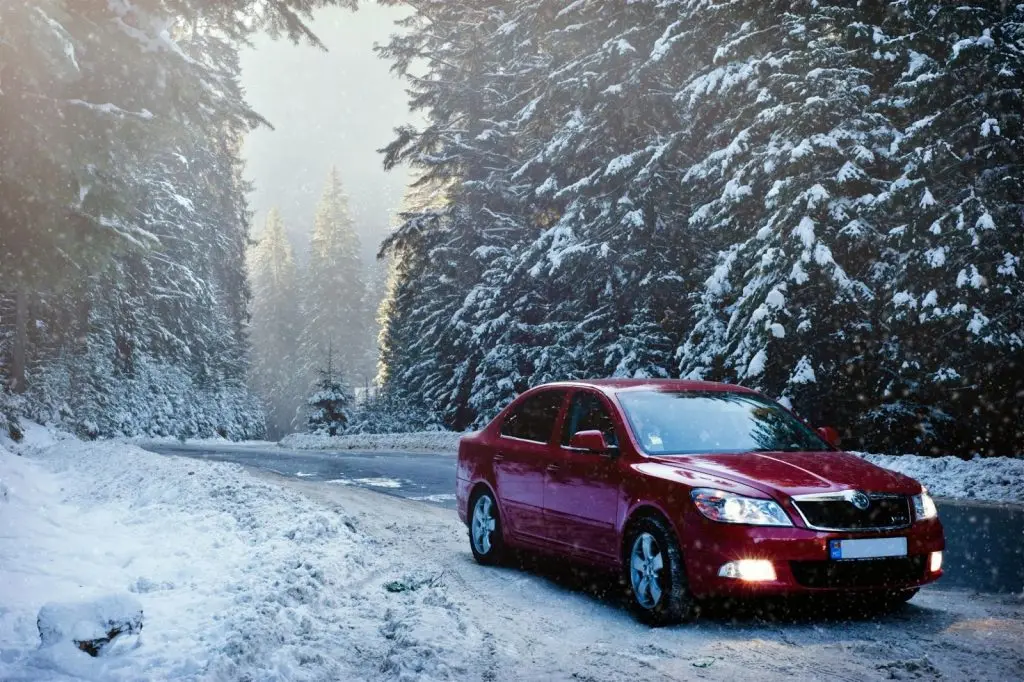
Standard driving practices will get you into problems as the temperature drops. To maintain control during the winter, you must be surgical in your motions. Everything should be done slowly, deliberately, and smoothly.
Use smooth throttle control.
Don’t floor it when the light turns green. Instead, suppose there is an egg beneath your gas pedal that you do not want to smash. the safety tips for winter driving is that slow, consistent pressure allows your tires to gain traction without spinning out and creating a hole in the slush or spinning into the neighbor’s lane.
Brake gently and progressively
Stepping on the brakes is the quickest way to lose steering control. If you have ABS, apply forceful, sustained pressure; otherwise, gently pump them. Begin slowing down far earlier than you believe you need to, so you glide to a stop rather than sliding into the junction.
Steer in the direction of a skid.
If the back of your car begins to slide to the right, gently turn the steering wheel to the right. This helps your tires line up with the direction of travel. This is one of the most important safety tips for winter driving for staying out of the ditch and on the road.
Avoid sudden lane changes.
Changing lanes usually involves crossing over a ridge of slush or snowpack left by the plows. This uneven surface can easily yank your steering wheel out of your hand. If you must change lanes, do it slowly and keep your movements very gradual and controlled.
Handle hills and turns carefully.
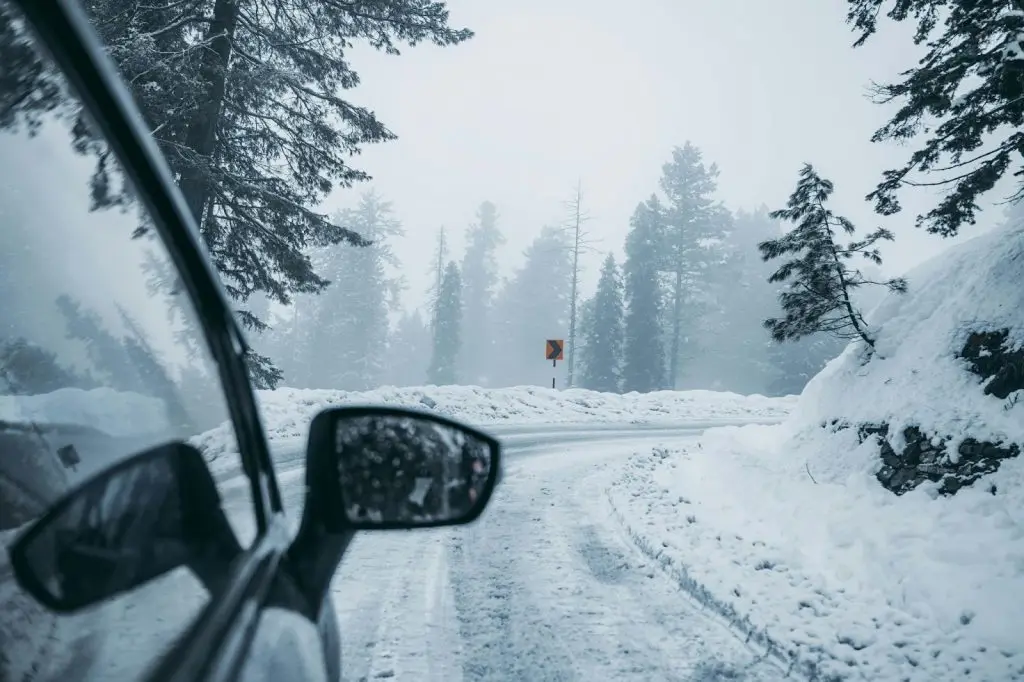
Hills are the ultimate test of your abilities and your vehicle’s setup. Gravity is not your friend when the friction between your tires and the road is almost negligible. You must capitalize on momentum while keeping it under control.
Maintain steady momentum uphill.
The key to getting up a slope while driving in snow is to begin with some speed at the bottom. Once on the incline, don’t hit the throttle too hard or you’ll spin out. Simply keep a steady, slow crawl until you reach the crest safely and without stopping.
Downshift when descending
Do not use your brakes all the way down a steep hill. Instead, put your automobile in a lower gear and let the engine do the heavy work. This keeps your wheels spinning and prevents them from freezing up on ice, allowing you to maneuver considerably more effectively.
Slow down before entering curves.
Never brake in the middle of a turn. All of your slowing down should occur while your wheels are still straight. Safety tips for winter driving is once you’ve entered the curve, focus on steering smoothly through the arc to avoid slipping out.
Avoid stopping mid-hill
If you come to a halt halfway up a snowy hill, you will most likely need a tow to continue. Keep a safe distance from the automobile ahead so you don’t have to tap your brakes. When gravity opposes your tires, momentum is your best friend.
Stay prepared for unexpected situations.
Even the best drivers sometimes become stranded. Being prepared entails carrying a large survival first aid kit and a heavy-duty tow strap in your trunk. It’s better to have it and not need it than to be stranded with no strategy.
Essential Gear for the Trunk
- Recovery Tools: A folding survival shovel is ideal for pulling tires out of heavy snow.
- Medical Supplies: For small crises, always have a compact trauma bag on hand.
- Backup Power: For individuals who live in flood-prone locations throughout the winter, a sump pump battery backup keeps your basement dry while you are away.
Know how to handle black ice.
Black ice is practically invisible, resembling a normal wet patch on the road. If you strike it, keep the steering wheel straight and don’t use the brakes. Allow the automobile to glide across the patch until you get traction on the opposite side. Panic on black ice is the leading cause of multi-car pileups.
Avoid using cruise control.
When driving on ice, cruise control is dangerous. It cannot detect when your wheels begin to slip, and it may attempt to accelerate while you are sliding to maintain its programmed pace. Maintain complete manual control over your pedals at all times to avoid a sudden spin-out.
Pull over safely if visibility decreases.
If the snow becomes so thick that you cannot see the road, it is time to halt. Pull as far off the shoulder as possible and activate your hazards. Do not leave your automobile; instead, stay inside where it is warm and wait for the white-out to pass.
FAQs
Is all-wheel drive safer in winter?
AWD helps you get moving, but it doesn’t assist you in stopping quickly. Many drivers become overconfident and end up skidding because they drive too fast. Every car has all-wheel braking, which is what really matters on ice.
How much distance should I keep in the snow?
You should extend your following distance to 8-10 seconds. In dry weather, 3 seconds is plenty, but on ice, you require an extra runway. This allows you plenty of time to respond if the car in front spins.
What is the safest speed in icy conditions?
The safest speed is typically far lower than the posted limit. If the sign reads 55, you may need to crawl at 30. Listen to your car—if the steering seems light or the tires begin to hum differently, you are most certainly driving on ice at an unsafe speed for the conditions.
What should I do if I start sliding?
Remove your feet from the pedals quickly. Don’t hit the brakes and don’t rev the engine. Consider where you want the automobile to travel and gradually steer in that direction. Once the tires have gained grip, slowly use the brakes.
Conclusion
Mastering these safety tips for winter driving ensures that the greased-up bowling alley roads do not prevail. If you take the time to prepare your vehicle and alter your driving style, you’ll be able to manage the season with ease.
Don’t be intimidated by the snow; instead, slow down, stay vigilant, and keep your gear in good order. Whether you’re commuting or going to the mountains this winter, stay cautious and keep the rubber side down!