

Cyclone Dust Separator Kit
Results for Cyclone Dust Separator Kit
A cyclone dust separator kit is an add-on device that captures dust and debris from an airstream before it reaches a vacuum or dust collector filter. It works by directing incoming air into a cone-shaped chamber, where the air spins rapidly. Centrifugal force throws the heavier particles outward against the wall, and they spiral down into a collection container below. The cleaned air then passes up through the center outlet to the vacuum. By dropping most debris out of the airflow first, the separator keeps the downstream filter clear, protects suction power, and reduces how often that filter must be cleaned.
The range covers a few main formats. Retrofit cyclone separators use a 4 in inlet and an ABS body that bolts onto a dust collector or a tank you supply, while complete bucket kits arrive with a 5-gallon bucket, casters, and a 2 in or dual 2 and 2-1/2 in inlet for shop vacuums. Universal lid kits mount a translucent cyclone head onto standard buckets you already own. Separation efficiency generally runs from 95% to 99% on debris above 5 microns, and most units pair with motors from 1 HP to 5 HP. Typical uses are workshop woodworking, drywall and sanding cleanup, metalworking cleanup, and jobsite or garage dust control.
Five things decide what you need:
- Inlet size: match the cyclone ports to your vacuum or collector hose, commonly 2 in, 2-1/2 in, or 4 in.
- Container: decide whether you want a bin or tank included, or a lid kit that fits a bucket you already own.
- Capacity: size the bin to your session output, from a 5-gallon bucket up to a 13 gallon tank.
- Suction match: keep the cyclone within your host system's power, roughly 1 HP to 5 HP, so airflow stays strong.
- Mobility: choose casters or a compact body if you move the unit between machines or jobsites.
Browse the full cyclone dust separator kit range to compare inlet sizes and bin options side by side, or step up to the wider dust collector accessories selection for hoses, fittings, and related parts.
Cyclone Dust Separator Kit Types at a Glance
The table below sorts the range by format so you can see what each type includes before you match it to your setup.
| Type / Sub-type | Inlet / Port Size | Collection Container | Body Material | Best Suited To |
|---|---|---|---|---|
| Retrofit cyclone with tank | 4 in inlet, 2 in outlet | Metal tank included, up to 13.21 gal | ABS | Central collection where a ready tank saves setup time |
| Retrofit cyclone head | 4 in inlet, 2 in outlet | Fits a 5 to 10 gal tank you supply | ABS | Upgrading an existing higher-power dust collector |
| Complete bucket kit | 2 in, or 2 and 2-1/2 in | 5 gal bucket included, on casters | Translucent PP | A rolling, out-of-the-box setup for shop vacuums |
| Universal lid kit | 2 in, or 2 and 2-1/2 in | Fits standard buckets you own (excluded) | Translucent PP | The most adaptable route when you already have a bucket |
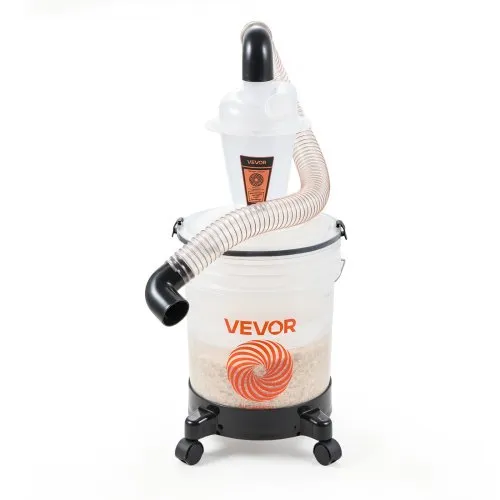


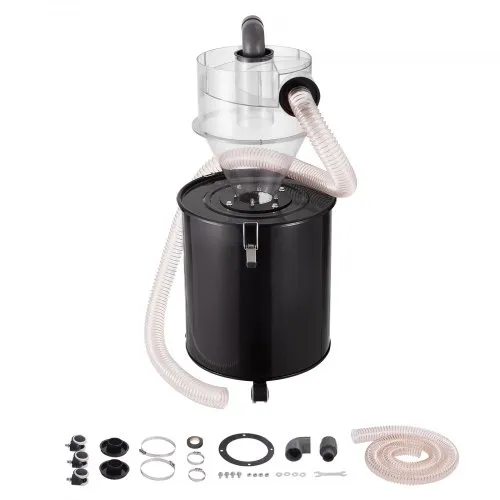


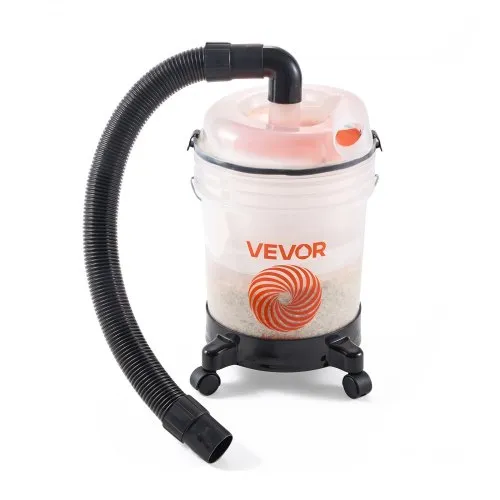


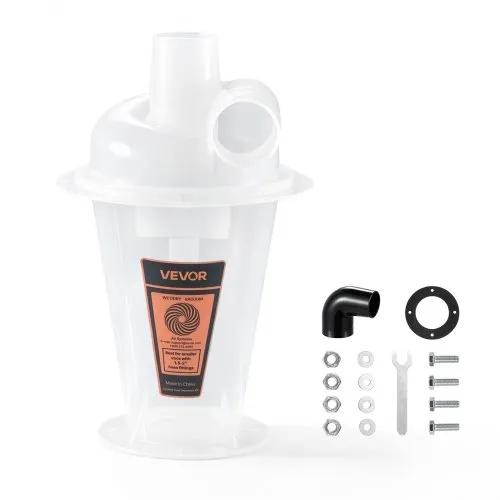


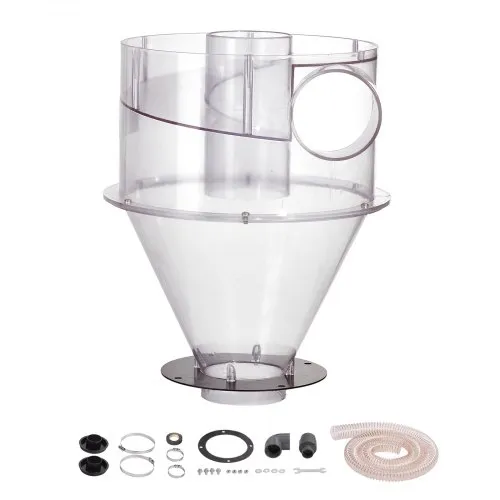


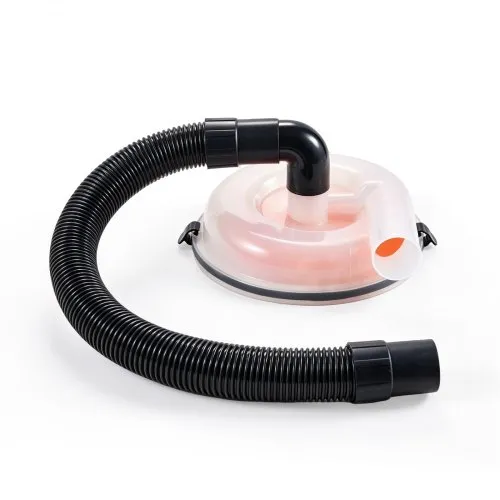


VEVOR Cyclone Dust Separator Kit for High-Efficiency Dust Collection in Any Workshop or Workspace
Do you find yourself frequently cleaning your shop vacuum filter or noticing fine dust recirculating in your workspace? Cyclone dust separator kits catch dust and other particles before they reach the vacuum. They do their job by spinning the particles out of the airflow and dropping them into a collection bin. This keeps the vacuum filter clean and greatly increases its useful life. VEVOR's cyclone separator for dust collector systems is a smarter, more efficient way for woodworkers, builders, and workshop owners to deal with dust. It saves time, reduces filter costs, and maintains air quality.
Compatibility and Separation Efficiency
Before you buy a cyclone dust separation kit, you should ask yourself two basic questions: Will it work with the vacuum or dust collector you already have? And how well will it collect dust before it gets to the filter? VEVOR directly addresses both questions with its cyclone dust separator kit line, offering models designed to work with a wide range of systems and deliver measurable separation performance.
Vacuum and Dust Collector Compatibility Across Brands and Port Sizes
A cyclone dust filter kit is only useful if it works with the other stuff you already have. When VEVOR makes cyclone dust separator kits, they ensure the inlet and exit ports fit the most common vacuum and dust collector hose diameters, which are usually 1.5-inch, 2-inch, 2.5-inch, and 4-inch. Most VEVOR cyclone separator dust collector types come with adapter fittings that let you connect to standard and non-standard port sizes without buying extra parts or having them made to order.
Not only is the hose width compatible, but the system's ability to pull air is as well. Shop vacuums and dust collectors with motor outputs between 1 HP and 5 HP can use VEVOR vortex dust separator kits. It is important to ensure that the cyclone separator matches the host system's suction capacity. A cyclone that is too small for a high-powered collector will block airflow, while a cyclone that is too big for a low-powered vacuum won't create enough rotational force to separate the particles.
Each cyclone dust separator kit from VEVOR comes with a clear listing of its suitable suction ranges. This makes it easy to find the right unit for your existing equipment. Shop-Vac, Ridgid, Festool, and most normal 110V and 220V shop vacuum platforms can usually work with VEVOR cyclone dust collector separators. Due to their wide range of compatibility, VEVOR cyclone dust separator kits are more useful as additions to existing systems than as a complete system.
Separation Efficiency Ratings and How They Impact Filter Life
The main way to judge a dust cyclone separator's performance is how much dust and debris it captures before it reaches the vacuum filter. With separation efficiencies of 95% to 99% for particles larger than 5 microns, VEVOR cyclone dust separator kits capture most sawdust, wood chips, metal filings, and other large debris in the collection bin, preventing clogging of the vacuum filter.
This level of efficiency significantly affects how long a filter lasts in real life. In a busy woodworking shop, a shop vacuum without a separate cyclone dust collector needs its filter cleaned or replaced after every few sessions. If you install a VEVOR cyclone dust separator kit, the filter won't need to be cleaned for weeks or months because at least 95% of the dirt that enters won't reach it. Over the course of a full workshop season, the result means much lower filter replacement costs and fewer breaks in the middle of a job to clean or switch filters.
Any cyclone separator in a dust collector system has a harder time separating fine dust particles smaller than 5 microns. These are the particles that are most harmful to your lungs. VEVOR fixes the problem by improving the cyclone's shape so it uses centrifugal force to its fullest on smaller particles. On premium models, the company increases the particle separation rate to 85% or higher for particles smaller than 10 microns. When you use a VEVOR cyclone dust separator kit with a HEPA-rated vacuum filter, you get the best dust collection for tasks that produce very fine dust, like sanding MDF, cutting drywall, or grinding metal.
Cyclone Design and Airflow Geometry for Maximum Performance
When air flows into a dust cyclone separator, its internal geometry determines how well it spins the air to separate particles. The cyclone dust separator kits VEVOR makes feature precisely molded inlet angles, cone profiles, and outlet tube placements that achieve the fastest particle separation while minimizing pressure drop across the system.
The shape of the intake is especially important. When air comes into the VEVOR cyclone dust separator kits, it enters at an exact angle to the cyclone's body wall. This starts a tight, consistent spiral that pushes particles outward against the cone surface. The tangential entry design works better than the axial inlet designs used in cheaper cyclone separators. This procedure is because turbulence at the inlet reduces separation effectiveness, allowing fine particles to pass through the outlet before the spiral completes its rotation.
The angle and length of the cone also affect the efficiency with which cyclone separators remove particles. Longer, thinner cones apply greater centrifugal force to particles as they fall toward the collection bin exit, making it easier to catch smaller particles. Based on computational fluid dynamics modeling, VEVOR's cyclone dust collector separator models use the best cone proportions to create an airflow geometry that balances maximum separation efficiency with minimal system suction. This keeps the vacuum's cleaning power while dramatically increasing dust capture rates.
Material Construction and Durability in High-Dust Environments
Cyclone dust separator kits work in tough conditions where rough particles, such as wood chips and metal shavings, and fine dust constantly hit interior surfaces at high speed. VEVOR makes its cyclone dust separation kits from heavy-gauge ABS plastic, polypropylene, or metal-reinforced composite materials, depending on the model. These materials are chosen because they can withstand the wear and tear, impacts, and chemical exposure that come with working in a workshop.
As separated particles move toward the collection bin, the inner cone surface of a cyclone separator experiences the most wear. VEVOR uses stronger wall sections at the cone tip and the lower body, where particles interact with the cyclone the most. This makes the body of the cyclone last much longer than cheaper thin-wall options, which break down quickly when used a lot.
Some VEVOR cyclone dust collector separators use partially or fully transparent collection bins. This lets users see how full the bin is without having to stop what they're doing to check it. Bin-to-cyclone connections use twist-lock or clamp-style fittings with gaskets that maintain an airtight seal even when suction is applied for extended periods. This stops bypass leaks that would reduce separation efficiency. These construction details demonstrate VEVOR's focus on producing cyclone dust separator kits designed for long-term durability in real-world workshop environments.
Matching a Cyclone Kit to Your Workshop Task
Use this table to move from the job you do most often to the kit features worth prioritising for it.
| Workshop Task | Typical Dust | Setup to Prioritise | Why It Fits |
|---|---|---|---|
| Fine sanding, MDF or drywall | Very fine airborne dust | A tight-sealing lid plus a HEPA-rated vacuum filter | Fine dust needs sealed joints and a fine downstream filter |
| Table saw, planer or jointer | High-volume chips and shavings | A larger included bin or a 4 in inlet | Bulk chips fill small bins fast during long runs |
| Occasional hobby cutting | Light, intermittent dust | A compact 5-gallon kit on casters | A small rolling kit stores easily and moves between tasks |
| Central collection for several tools | Continuous mixed debris | A retrofit cyclone on a large standing tank | One high-capacity tank serves a branched duct network |
| Metal grinding or filings | Heavy, abrasive particles | A rugged, impact-resistant cyclone body | Abrasive shavings wear thin walls, so tougher bodies last |
Capacity and Installation Features
As important as how well a cyclone dust separator kit separates dust, its usefulness in a real workshop depends on how much it can hold and how easy it is to set up. If a high-efficiency cyclone takes 20 minutes to fill or is difficult to install, it does not perform effectively in a real workshop. The cyclone separator that VEVOR makes is for dust collector systems that can collect a lot of dust and can be set up in ways that work for both fixed and portable workshops.
Collection Bin Capacity: Matching Volume to Your Workshop Output
If you choose the right VEVOR cyclone dust separator kit, the collection bin can hold anywhere from 5 to 20 gallons of dust. This means you can use it for everything from rare hobbyist use to full-day production woodworking or construction. Choosing the right bin size depends on how much and what kind of material you normally make during a work session. For example, a furniture maker who uses a router table and planer for 6 hours will generate significantly more debris than a hobbyist who sands or cuts only occasionally.
A 5-gallon collection bin is good for light to medium-duty workshops with shorter sessions or less material production. These VEVOR cyclone dust separator kits have a smaller volume and are smaller overall, making them easier to place in tight shop spaces or load onto mobile vacuum carts. Smaller cyclone dust collector separator units take up less space, which is a big plus in workshops where machines and workbenches already take up a lot of floor space.
With VEVOR's heavy-duty cyclone dust separator kit models' larger 10- to 20-gallon collection bins, you can work all day without having to empty them mid-session. These large cyclone dust separator designs work especially well with systems that collect dust from multiple tools simultaneously via a branch duct network. For example, dust from a table saw, bandsaw, and sanding station can quickly fill a small bin when they all start producing it. While VEVOR's smaller units are still effective at separating items, the larger models offer more space and can run for longer without stopping.
Installation Configurations: Wall Mount, Floor Stand, and Mobile Options
There are different ways to set up VEVOR cyclone dust separator kits for various workshop setups and work methods. Positioning the cyclone body and collection bin against a wall or on a special bracket keeps the floor clear and keeps the cyclone close to the dust source, reducing hose runs. Compatible VEVOR models come with wall-mounting hardware, including brackets that can support the full weight of the cyclone body and a full collection bin without sagging or movement.
For floor-standing models, a base frame or drum lid adapter places the cyclone directly on top of a standard 5-gallon or larger bucket. This creates a self-contained dust cyclone separator that can be placed anywhere in the shop. Woodworkers who want to move their dust collection point as they move from one machine or work area to another, like this setup. VEVOR's drum-top cyclone dust collector separator models can work with standard metal or plastic drum containers available at your local hardware store.
Contractors and woodworkers who move from job site to job site or change the layout of their shop often will benefit from mobile installation options. Attached handles and a lightweight design keep the VEVOR cordless-compatible cyclone separator for dust collector types under 15 pounds, making it easy to move. The hose connection points are placed so that the routing remains clean regardless of which direction they face. This means that both floor-level and overhead hose-entry setups can be used without creating sharp bends that block airflow and reduce system suction.
Best-Seller Comparison
These five kits line up the specifications that most affect which one suits your shop.
| Product | Inlet / Outlet Ports | Collection Container | Body Material | Mobility | Connection Hose | Best For |
|---|---|---|---|---|---|---|
| Metal Tank 4 in Retrofit, 13.21 Gal | 4 in inlet, 2 in outlet | Metal tank included, 13.21 gal | ABS | Casters included | Included, 2 in O.D. | Highest included capacity here; one-tank central collection |
| 5 Gal Bucket Kit, 2 in O.D. | 2 in O.D. | 5 gal bucket included | Translucent PP | Casters included | Included, 3 ft PU | Only single-port rolling kit; wheels between benches |
| 5 Gal Compact Kit, 2 and 2-1/2 in | 2 and 2-1/2 in | 5 gal bucket included | Translucent PP | Casters included | Included, 3 ft | Dual-port rolling kit; fits more vacuum sizes |
| 4 in Retrofit Head, Fits 5 to 10 Gal | 4 in inlet, 2 in outlet | Fits 5 to 10 gal tank (excluded) | ABS | / | Included, 2 in O.D. | Widest 4 in inlet; built for a stronger collector |
| 2 in Universal Lid, Fits Most Buckets | 2 in O.D. | Fits various buckets (excluded) | Translucent PP | / | Not included | Most adaptable lid; mounts to buckets you own |
Why Choose VEVOR Cyclone Dust Separator Kits?
Many types of cyclone dust separator kits are available from VEVOR, ranging from small 5-gallon units for home workshops to large cyclone dust collector separators for industrial and production woodworking shops. There are different ways to install VEVOR cyclone dust separator kits, and they can separate up to 99% of dust by volume. These kits protect vacuum filters, improve air quality, and keep workplaces cleaner with minimal upkeep. Shop VEVOR cyclone dust separator kits today to eliminate dust from your workspace. They are reasonably priced and come with good post-sale customer service.
FAQs
Will a VEVOR cyclone dust separator kit work with my existing shop vacuum?
Yes, VEVOR cyclone dust separator kits do work with most big shop vacuum brands, such as Shop-Vac, Ridgid, and Festool. They come with adapter fittings for 1.5-inch, 2-inch, 2.5-inch, and 4-inch hose connections. Check the model's power range to make sure it works with the motor output of your vacuum.
What separation efficiency does the VEVOR cyclone dust separator kit achieve?
Before air flows through the vacuum cleaner, VEVOR cyclone dust separator kits catch 95% to 99% of particles bigger than 5 microns. Compared to running a vacuum without a cyclone separator, premium models achieve 85% or higher particle removal efficiency for particles smaller than 10 microns. This improves the air quality in the workshop and extends the filter's lifespan.
How often does the collection bin need to be emptied?
How often you have to empty the collection bin depends on its size and how much you make during work sessions. Someone may only need to empty a 5-gallon bin every few sessions in a shop area that doesn't get much use. High-capacity 10–20-gallon types used in production settings typically need to be emptied after a full workday.
Can VEVOR cyclone dust separator kits be used with both dust collectors and shop vacuums?
VEVOR cyclone separators can be used with both shop vacuums and special dust collectors, with motors ranging from 1 HP to 5 HP. Larger hose diameters are usual in systems that collect dust, and the adapter fittings that come with the kit can fit them.
Do VEVOR cyclone dust separator kits require any tools to install?
In most cases, you don't need to use any tools to install a VEVOR cyclone dust filter kit. Some hose ties use friction-fit or clamp-style fittings, and kits may include wall mounting hardware. Initial assembly and installation typically take 15 to 30 minutes.
What is the difference between a single-stage and a two-stage dust collection system?
A single-stage system draws dust straight into one filtered collector, so fine and coarse debris reach the filter together. A two-stage setup places a cyclone dust separator kit ahead of the filter, dropping most debris into a bin first and holding suction steady for far longer.
What size bucket, barrel, or drum is recommended for a DIY cyclone kit setup?
It depends on the kit. Lid-style kits mount on a standard 5-gallon bucket you already own, while retrofit cyclone heads suit tanks from 5 to 13 gallons. Match the bin to your output, since larger dust collector accessories and bins cut down on mid-job emptying.
Can cyclone dust separator kits be used for wet applications and water extraction?
Yes. These kits are rated for wet/dry shop vacuums, so they handle damp debris and liquid pickup when paired with a wet/dry vacuum. After any wet job, empty and dry the collection bin promptly to stop residue building up and to keep the seals clean.
