Chains & Ropes








Results for Chains & Ropes
VEVOR provides a wide range of chains & ropes designed for both do-it-yourselfers and experts. VEVOR's product line includes wire ropes for hoisting, carabiners for load securing, polyester pull tape for conduit work, and stainless steel cable for maritime use. Every product is designed to be strong, long-lasting, and simple to use, so you always receive the proper tool.
VEVOR Chains & Ropes for Lifting, Rigging, and Heavy-Duty Securing Across All Industries
Do you require sturdy chains & ropes for a home workshop, farm, warehouse, or construction site? VEVOR's product line includes stainless steel cable, polyester rope, multi-strand wire ropes, and grade-rated chains, all designed to withstand heavy loads and challenging conditions. With VEVOR's quality assurance, you can find the required strength rating and length in one place.
Choosing Chains & Ropes by Material Type and Strength Rating
Knowing what each material can withstand is the first step in choosing the appropriate chains & ropes. Making the appropriate choice affects safety, effectiveness, and long-term value, since different materials offer radically different strength profiles, stretch tolerances, and resistance to environmental factors.
Steel Chain Grade Ratings: What the Numbers Mean
The grade rating is the most crucial factor to consider when purchasing steel chains & ropes. The entry-level standard, grade 30 proof coil chain, is suitable for light-duty securing and general-purpose tie-down applications. Grade 43 high-test chain is a dependable option for towing and logging, with approximately 25% higher working load limits. The orange-tinted workhorse, the Grade 70 transport chain, is designed specifically for fastening large freight and cargo on flatbeds. Its operating load limitations normally range from 3,150 lbs for 5/16" chain to 11,300 lbs for 5/8" chain.
The industry standard for important overhead lifting applications is Grade 80 or Grade 100 alloy chains. OSHA standards recognize Grade 80 alloy chain for overhead lifting, with a working load restriction of 7,100 lbs in a 3/8" diameter. Riggers handling industrial loads in tough conditions prefer Grade 100 because it pushes the limits further and is about 25% stronger than Grade 80.
Understanding the grade rating of your chains & ropes is important for regulatory compliance and performance. With VEVOR's chain products, grade ratings are clearly marked, so you can match the appropriate strength class to any activity without guessing or compromising safety.
Wire Rope Construction and Break Strength
The structure of wire ropes directly affects their performance, making them one of the most adaptable options in the chains & ropes category. A 6x19 rope, for instance, has six strands of 19 wires each, providing a balance between flexibility and resistance to crushing. Wire rope is characterized by its strand and wire count. A 7x7 arrangement is perfect for fixed rigging and aircraft cable applications because it uses fewer, thicker wires, which make it stiffer but more abrasion-resistant.
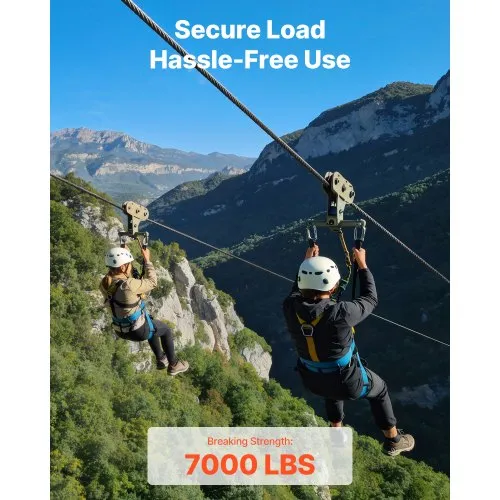
The two important numbers are the working load limit and breaking strength. When a normal 5:1 safety factor is used, a 1/4" diameter 6x19 IWRC (Independent Wire Rope Core) wire rope has a working load limit of around 1,120 pounds and a breaking strength of about 5,600 pounds. The breaking strength can reach roughly 23,000 lbs when the diameter increases to 1/2".
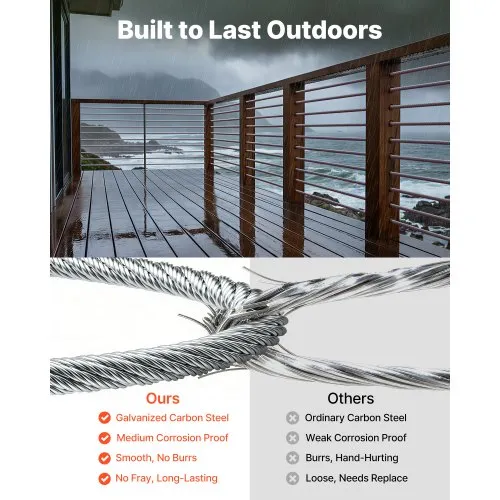
Galvanized and stainless steel cable alternatives are available in VEVOR's wire rope kit. While stainless steel cable offers better corrosion protection for outdoor architectural, maritime, and food-processing applications, galvanized wire rope delivers robust rust resistance at a lower cost. The construction type, diameter, and finish of the wire rope you choose for your collection of chains & ropes must match your actual workspace.
Polyester Rope and Pull Tape Strength Without Stretch
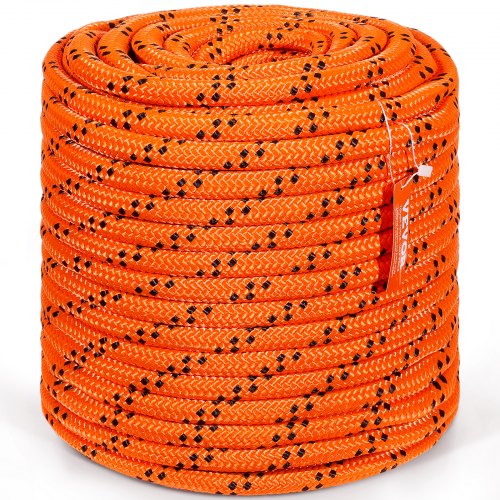
Polyester rope and polyester pull tape are examples of synthetic choices in the chains & ropes category that perform vital functions that steel just cannot. In contrast to nylon rope, which may stretch 15–20% under strain, polyester rope has a very low elongation, usually less than 3% under working load. Polyester rope is the best option for rigging, towing, and other applications where load control is crucial because of its low stretch.
Electrical and low-voltage installations are a specific market for polyester pull tape. To fish wire and cable through conduit runs, electricians and data cabling experts utilize polyester pull tape. The tape, typically rated at 1,750 lbs or more for normal 1/2" width, has high tensile strength that prevents breakage mid-pull even in lengthy or intricate conduit lines, and its flat profile lessens friction against conduit walls.
Consider polyester's UV resistance (better than nylon), non-absorptive nature (it will not bloat or weaken when wet), and consistent performance over a broad temperature range when assessing chains & ropes for light-duty or synthetic applications. With affordable prices, VEVOR's polyester rope and pull tape options provide workshops, construction sites, and utility installations with high-quality synthetic solutions.
Carabiners and Stainless Steel Cable Connecting the System
Without dependable connectors and accessories, no chain-and-ropes system is complete. Carabiners are the vital link that connects the load or anchor point to the rope, cable, or chain. The two main strength ratings to understand are tensile (breaking) strength (the load at which it will fail) and working load limit (the maximum load the carabiner should withstand in regular use). The dynamic and unpredictable nature of real-world loading is reflected in the 10:1 safety factor of a typical screw-lock carabiner rated for rigging duty, which has a 660 lb working load limit and a 6,600 lb breaking strength.
In salty or chemical environments, stainless steel cable offers rust resistance that galvanized wire rope cannot match. Due to its ability to maintain structural integrity and aesthetic appeal even after years of exposure to moisture, stainless steel cable is used for marine rigging, balustrade infill panels, and outdoor trellis systems. Stainless cable, available in 1x19 (strong, structural) and 7x7 (flexible, adaptable) configurations, works well with eye bolts, turnbuckles, and swage fittings to form comprehensive tensioning systems. For your chains & ropes toolkit, choosing appropriate carabiners and stainless steel cable requires considering the application's static or dynamic nature, environmental exposure, and load requirements at the connection point. From simple screw-lock carabiners to sophisticated rigging systems made of stainless steel cable, VEVOR offers a wide selection of accessories.
Matching Chains & Ropes' Length and Configuration to Your Application
Choosing the wrong length results in waste, risk, or operational failure, making it equally as important as choosing the right material and strength. Knowing how length affects your particular application will help you make the right purchase the first time and avoid costly returns or improvisation in the middle of the job.
Length Considerations for Lifting and Rigging
The working length directly affects the lift angle, and, in turn, the actual load each sling leg must support when using chains & ropes for lifting. Compared with a vertical lift, a two-leg chain sling hoisting a load at a 60° angle from horizontal multiplies the leg tension by about 15%. That multiplication factor increases to over 100% at 30°. For this reason, sling angle is always included on rigging charts, and proper chain length is important for equipment longevity and safety.
Standard sling lengths for chain overhead lifting range from two feet to twenty feet or more, and the grip hooks are adjustable to provide some flexibility. Similar rules apply to wire rope slings. Always determine the longest practical sling length your operation needs before buying a chains-and-rope lifting kit. Then, add enough reserve to allow for safe leg angles, which should never be less than 30° from horizontal if at all possible. Building a compliant, useful rigging kit is simple with VEVOR's lifting chain alternatives, available in a variety of standard lengths and clearly marked with grade ratings. You can operate within rated load limitations on every lift by matching the appropriate length with the appropriate grade.
Rope and Cable Length for Tying, Securing, and Installation
Although the length restrictions for chains & ropes are more lenient for tie-down, towing, and general fastening applications, careful planning is still necessary. For flatbed freight, ratchet strap and chain tie-down systems usually need 20–27 feet of useful length to support large loads and common deck-to-hook distances. To keep the chain clear of the ground and provide a safe distance between cars, towing chains typically run 14–20 feet.
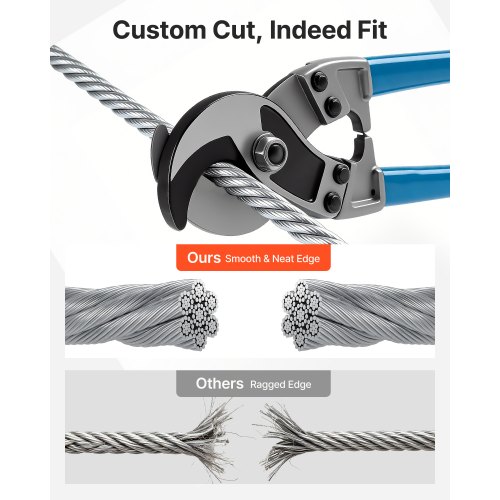
The most common sizes of polyester pull tape for conduit installation are 50, 100, or 500-foot rolls. Always choose a reel length for long conduit runs that is at least 20–30% longer than your run to accommodate obstructions, corners, and the requirement to grab both ends when pulling. Another factor to consider is wire rope cut to specific lengths. VEVOR's wire rope kit options often include swaging tools and fittings, enabling custom cable assemblies that are properly scaled for your cable management installations, gate tensioning systems, or balustrade panels. Whether you are assembling a rigging kit, filling a tool van, or doing a one-time installation, VEVOR's selection of chains & ropes offers the lengths and accessories you need to complete the task safely, neatly, and affordably.
Why Choose VEVOR Chains & Ropes?
From Grade 100 lifting chains to stainless steel cable, polyester rope, wire rope kits, and carabiners, VEVOR's chains & ropes collection has every strength class, material, and length you require. Every product is priced to provide genuine value without sacrificing quality and is constructed to meet rated specifications. VEVOR offers the ideal option for contractors, electricians, riggers, and weekend do-it-yourselfers. Get dependable after-sales service on every order when you shop the entire selection today.
FAQs
What is the difference between Grade 70 and Grade 80 chain?
The purpose of the grade 70 chain is to tie down cargo on flatbeds. Grade 80 alloy chain has a higher operating load limit and is designed for overhead lifting. Grade 70 is ungraded and unauthorized for overhead lifting; it should never be used in its place.
Can I use galvanized wire rope in a marine environment?
For sporadic moisture exposure, galvanized wire rope provides a respectable level of corrosion protection; nevertheless, in saltwater situations, it will eventually erode. Because it keeps its strength and look without rusting or deteriorating, stainless steel cable is the best option for marine applications.
How much polyester pull tape do I need for a conduit run?
Purchase at least 20–30% more tape than the conduit's measured length. Extra length is used for corners and curves, and to hold both ends while pulling. A 150-foot reel offers a safe working margin for a 100-foot run.
What working load limit should my carabiners meet for rigging?
For industrial rigging, a minimum 5:1 safety factor is recommended; always match the carabiner's operating load limit to the highest load in your system. Verify each carabiner's stamped rating, and never use climbing-rated carabiners in place of rated rigging hardware.
Are VEVOR wire rope kits suitable for DIY balustrade installation?
Indeed, VEVOR wire rope kits come with tensioning hardware, swage fittings, and stainless steel cable suited for typical deck and stair balustrade applications. Prior to installation, adhere to local building rules regarding minimum cable diameter and maximum spacing.