







Download VEVOR App 

Get $5.00 Off $99.00+ Orders on Your First 3 App Orders
Scan the QR code to download
SKU: ZDDKTYNB1100SM8GQ001V1
Copy


+12
More


 Ask about this product by AI
What devices or batteries can this solar panel charge, and is it compatible with power stations like Jackery?
What is the operating temperature range for this solar panel, and can it handle extreme weather conditions?
How portable is this solar panel, and what are its dimensions when folded and expanded?
Ask something else
VEVOR 100W Foldable Solar Panel with Frame, 16BB N-Type Portable Monocrystalline Solar Panel Charger 24% Efficiency, IP67 Waterproof with 30A PWM Controller & MC4 Output for Camping, Hiking, RV Trips
4.3 60 Reviews
$ 78 90
Earn at least 2% points on purchases or save up to 15%.
Each when you buy 0+.
Shop
Get -% off for new user
Get $5.00 Off $99.00+ Orders on Your First 3 App Orders.
Download Now


Features & Details
- Foldable & Portable: VEVOR monocrystalline solar panel easily folds down into a compact size, making it easy to store and carry anywhere. Perfect for outdoor camping, RV trips, hiking, and emergency use, letting you enjoy solar power on the go
- Superior Efficiency: Featuring 16BB N-Type high-efficiency monocrystalline solar cells and ≥24% high conversion efficiency, this 100W foldable solar panel captures more sunlight and generates more usable power for faster device charging
- Easy Connection: Equipped with a built-in MC4 cable, a 30A PWM controller, and alligator clips, this high-efficiency folding solar panel easily connects to your batteries, ensuring stable and consistent power output
- Enhanced Durability: With IP67 protection rating and durable frame, this monocrystalline solar panel charger maintains consistent performance and long-lasting durability from 14°F to 149°F, ensuring a steady power supply in various environments
- Portable Power Anywhere: Greatly enhance your convenience with our mono solar panel. Foldable, durable, and reliable — ideal for biking trips, camping, hiking, or fishing. Enjoy reliable, clean energy that keeps your devices powered wherever you go
Product specification
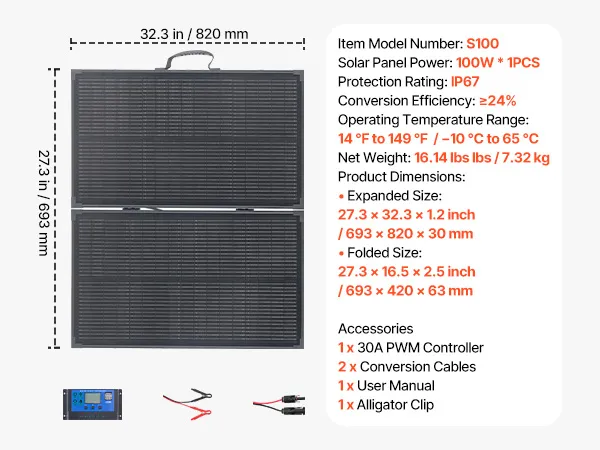
- Item Model Number S100
- Solar Panel Power 100W * 1PCS
- Protection Rating IP67
- Conversion Efficiency ≥24%
- Operating Temperature 14 °F to 149 °F / −10 °C to 65 °C
- Net Weight 16.14 lbs lbs / 7.32 kg
Reviews summary
4.3 60 Reviews
Customers say: The solar panels are praised for their sturdy build, reliable performance, and efficiency even in less ideal conditions, while critiques highlight occasional faulty components, weight, and minor design flaws.
Al-generated from customer reviews
Frequently Bought Together
Reviews
About this item
Questions and Answers
Explore
Reviews
No customer reviews
Be the first to rate this product. your feedback will helps others make informed decisions.
Write a Review
Customers say
The solar panels are praised for their sturdy build, reliable performance, and efficiency even in less ideal conditions, while critiques highlight occasional faulty components, weight, and minor design flaws.
Al-generated from customer reviews
Top Reviews
About this item
Product specification
- Item Model Number
- S100
- Solar Panel Power
- 100W * 1PCS
- Protection Rating
- IP67
- Conversion Efficiency
- ≥24%
- Operating Temperature
- 14 °F to 149 °F / −10 °C to 65 °C
- Net Weight
- 16.14 lbs lbs / 7.32 kg
- Expanded Size
- 27.3 x 32.3 x 1.2 inch / 693 x 820 x 30 mm
- Folded Size
- 27.3 x 16.5 x 2.5 inch / 693 x 420 x 63 mm
Description


Foldable & Portable for Outdoor Journeys
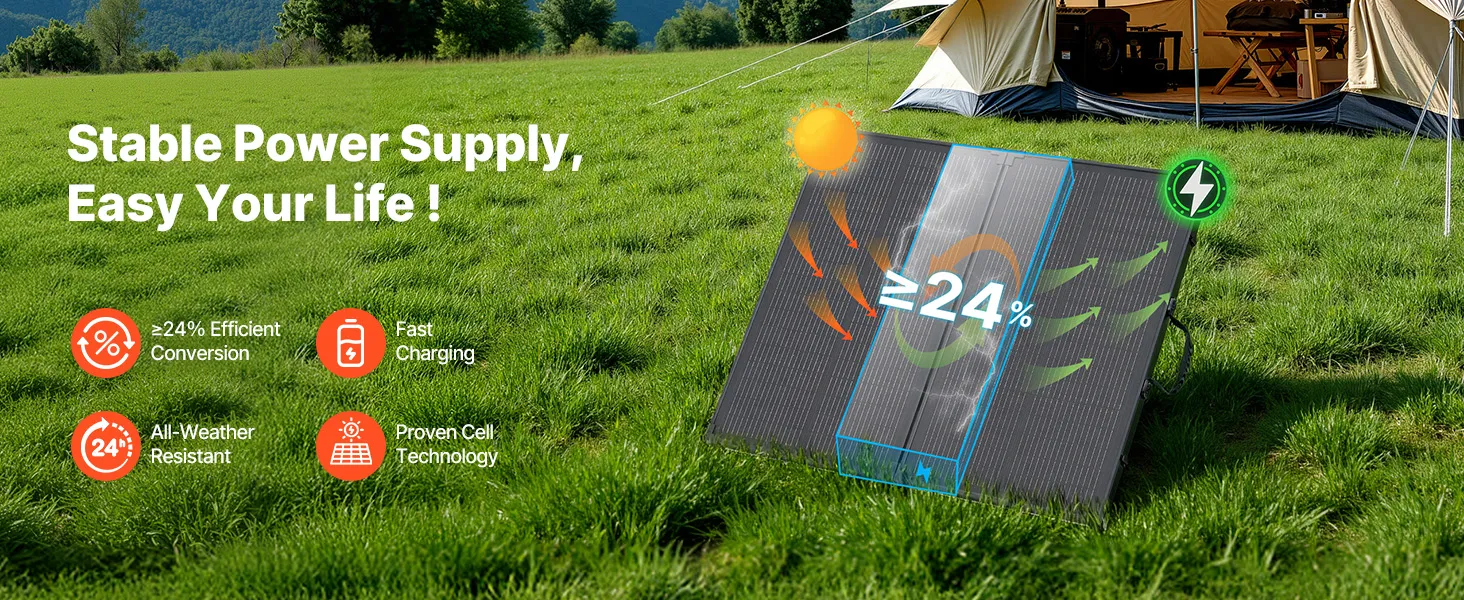
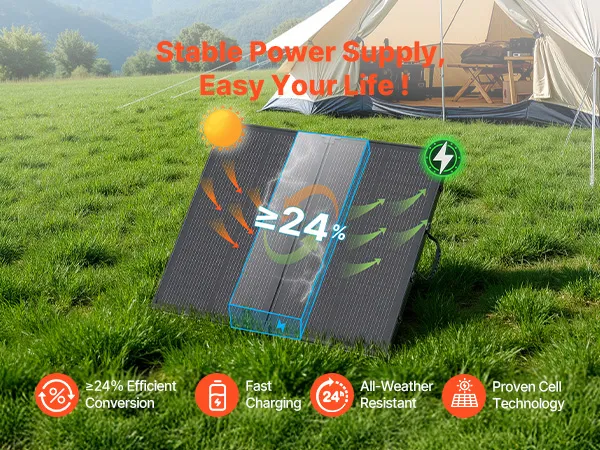
Power your outdoor adventures with our 100W portable foldable solar panel. Built with high-efficiency monocrystalline cells and ≥24% conversion efficiency, it delivers a reliable power supply for fast devices charging — an essential companion for outdoor camping, RV trips and hiking.
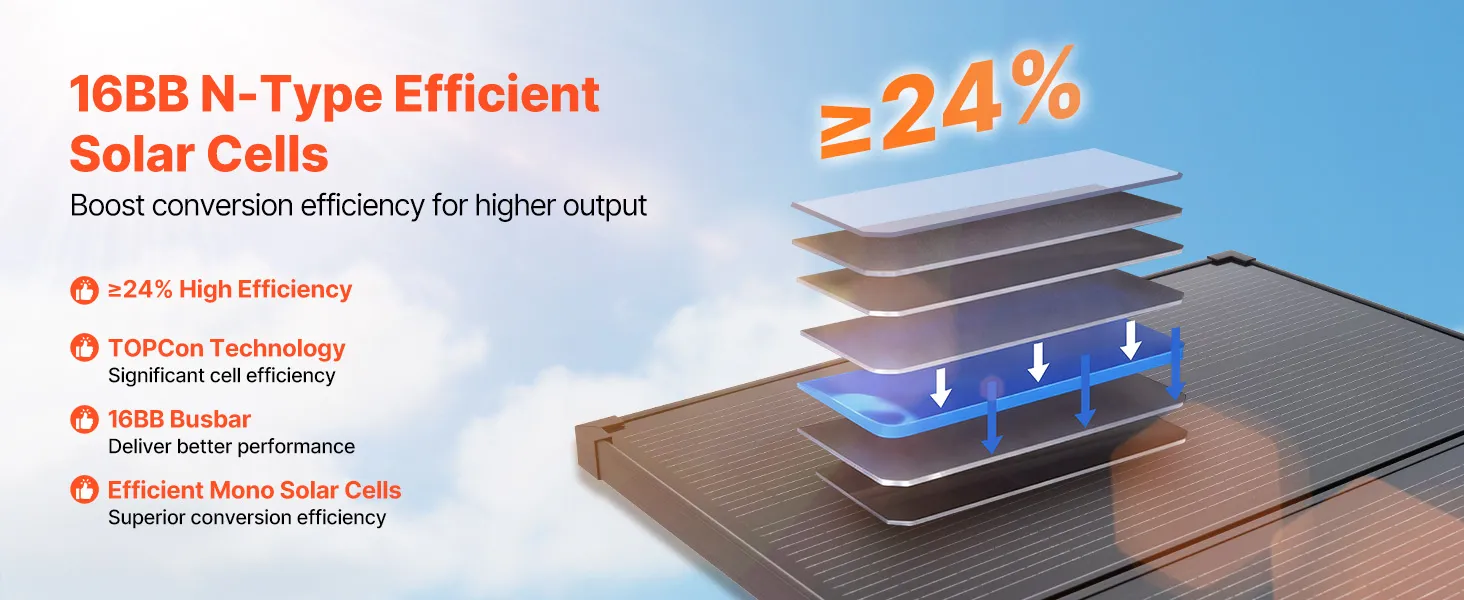
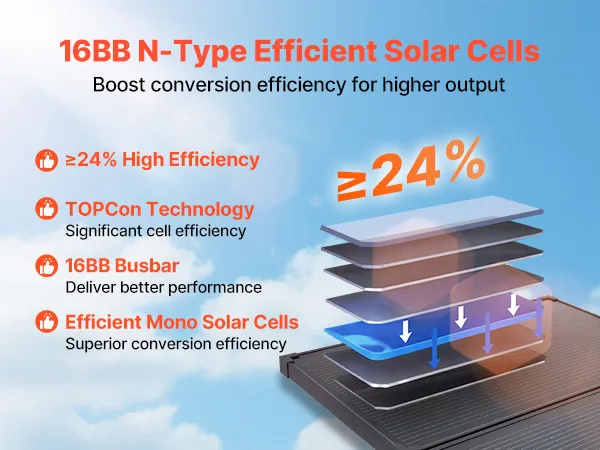
Featuring 16BB N-Type high-efficiency monocrystalline solar cells and ≥24% conversion efficiency, this solar panel captures more sunlight and ensures steady, consistent energy output to keep your devices powered.
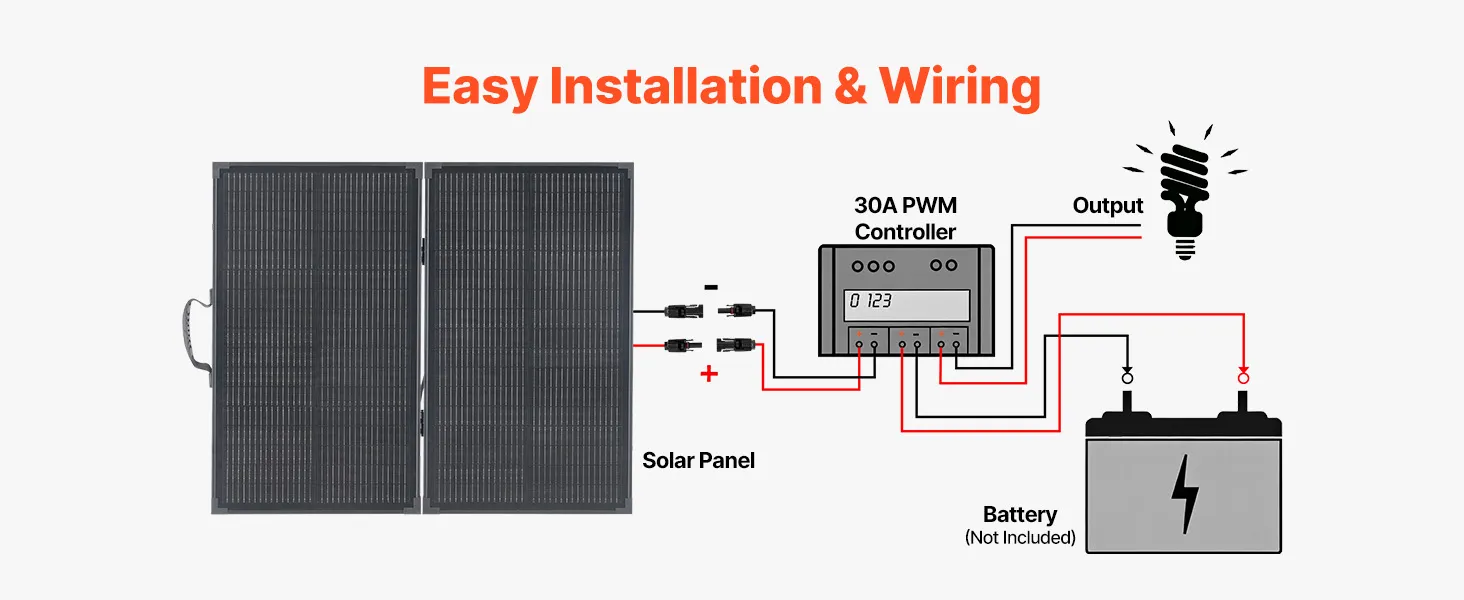
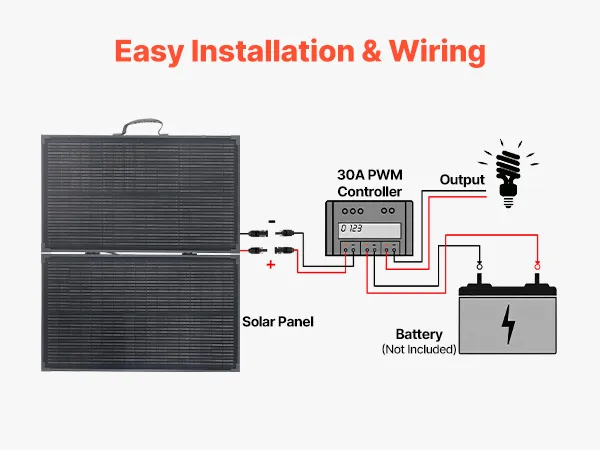
Our monocrystalline solar panel features a stable MC4 output, a 30A PWM controller, and alligator clips, allowing easy connection to your batteries and ensuring stable, consistent power output.
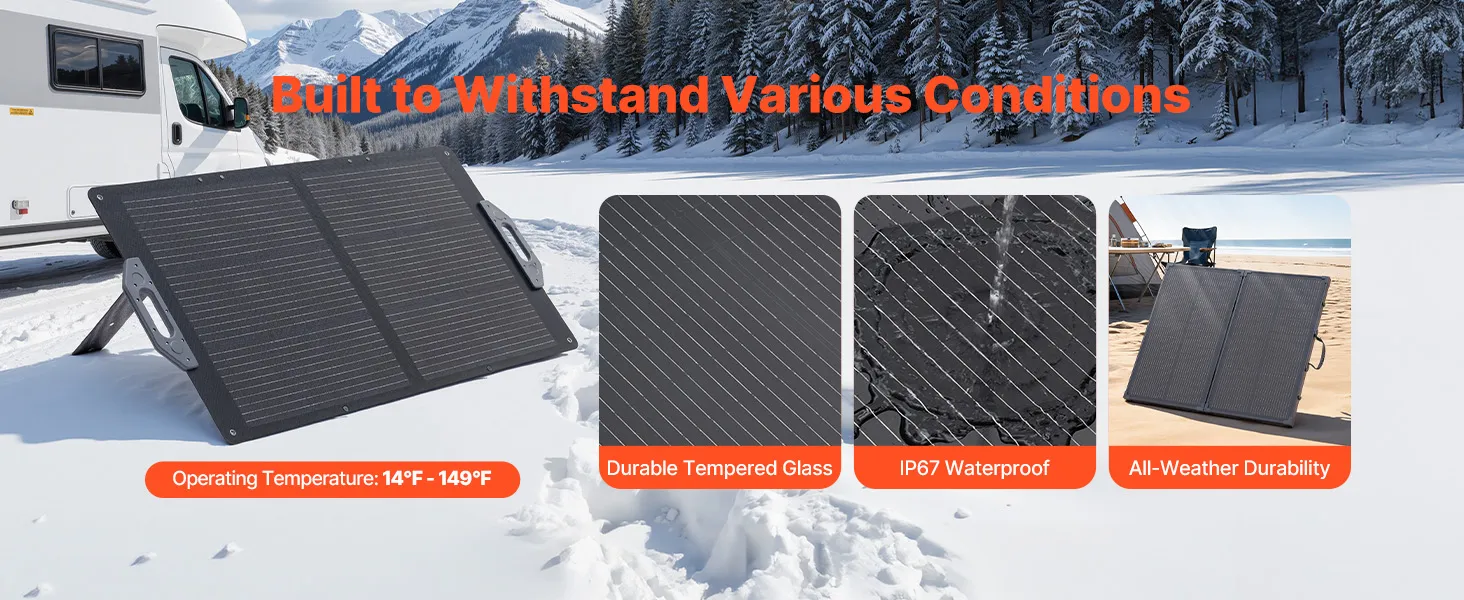
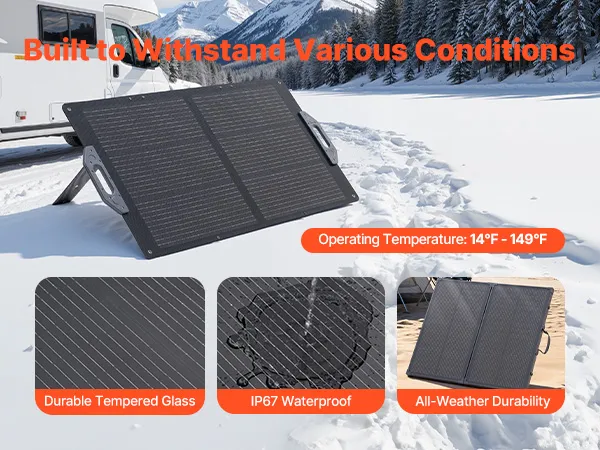
Built with an IP67 protection rating and a durable frame, this solar panel performs reliably from 14°F to 149°F (−10°C to 65°C), ensuring stable and long-lasting performance in various outdoor environments.


Foldable, durable, and reliable, this portable monocrystalline solar panel is the perfect companion for outdoor adventures — camping, hiking, or RV trips, efficiently converting sunlight into usable energy.
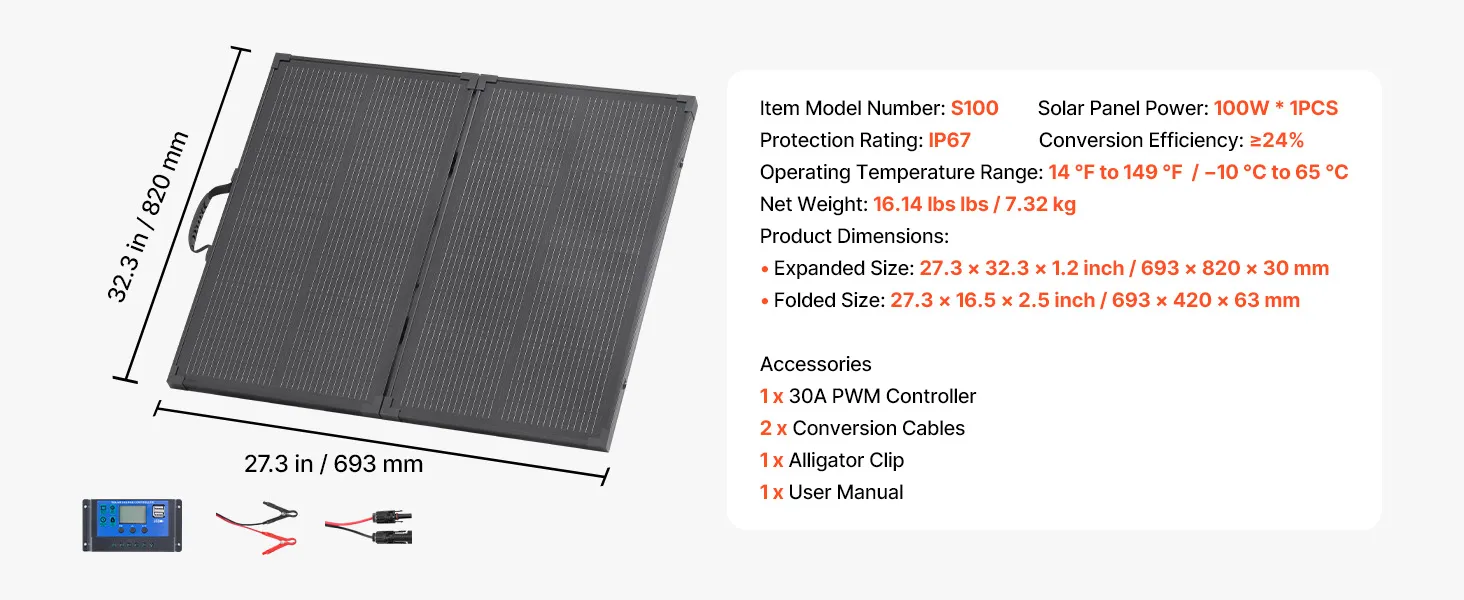
100 Watt Monocrystalline Solar Panel with 16BB N-Type Cells at ≥24% Conversion Efficiency
The 16-busbar (16BB) N-type monocrystalline cells used in this 100 watt monocrystalline solar panel have a conversion efficiency of at least 24%. Because N-type monocrystalline cells have a lower rate of light-induced degradation and more consistently retain their output rating throughout the panel's service life, they offer the potential for improved efficiency over traditional P-type cells. Instead of merely routing current through fewer busbars, the 16-busbar cell architecture improves current collection across the entire active cell area by reducing electrical resistance within each cell.
Compared to panels using previous cell technology, this efficiency level converts a larger percentage of available sunlight into useful electrical power. Practically speaking, this implies that the panel produces more watts per square foot of panel surface, which is important for portable systems where the available footprint is constrained by pack size, vehicle surface area, or campground placement options.
100 Watt Monocrystalline Solar Panel That Folds Flat for Compact Carry and Easy Transport
For transportation between places, the panel folds in half along a central hinge to provide a small footprint that fits into packs, car storage compartments, and RV bays. This folding design enables the user to carry it as hand luggage or store it with camping gear, whereas a 100-watt rigid panel would require roof mounting or bed transport between locations. Because the aluminum frame keeps both parts rigid and aligned when deployed, the fold-flat design does not compromise the panel's structural integrity during charging.
Reviewers who use the panel for camping and RV excursions attest to its speedy folding and deployment, with no need for additional setup. To maximize output throughout the day as the sun moves across the sky, the panel can be tilted toward the sun by adjusting the kickstand. It is self-supporting when unfurled on a level surface.
IP67 Waterproof Rating Ensures Consistent Performance from 14°F to 149°F in Any Weather
This 100 watt monocrystalline solar panel has an IP67 protection classification that attests to its complete resistance to dust intrusion and its ability to tolerate brief submersion in water. This grade means that the panel's electrical components remain unaffected by rain, morning dew, mild splashing, and humid camping conditions when used outdoors. Compared to many rival panels with the IP65 rating, which offers protection against water jets but not submersion, the IP67 grade offers a better level of weather protection.
The panel operates consistently between 14°F and 149°F (-10°C and 65°C). This range encompasses conditions found in alpine locations, seaside use, desert summer vacations, and four-season camping. Regardless of how hot or cold the day is, this temperature range supports consistent operation.
30A PWM Charge Controller Included for Direct Battery Connection and Charge Regulation
The supplied 30A PWM charge controller controls the power flow from the panel to a connected battery bank. In the absence of a charge controller, solar panels can overcharge batteries, potentially permanently damaging them, especially lead-acid and AGM batteries. By controlling the voltage and current supplied to the battery based on its charge level, the 30A PWM controller prevents overcharging.
This 100-watt panel's output is well within the 30A current rating. The arrangement is instantly usable for battery charging without additional purchases when the controller is included with the panel purchase, eliminating the most frequent extra component that first-time solar buyers need to source separately.
MC4 Output with Alligator Clips Connects to Most Portable Power Stations and Battery Banks
Almost all solar generators and portable power stations supplied for off-grid and outdoor use use the industry-standard MC4 output connector. MC4 connections offer weatherproof electrical contacts that retain constant conductivity even in wet outdoor conditions and lock firmly. In most configurations, the panel connects directly to solar generators, charge controllers, and compatible power stations without the need for adapters or special wiring.
Additionally, alligator clip leads for direct connection to normal 12V battery terminals are available. Because of this dual connection strategy, the panel can be used with both conventional automotive-style batteries found in RVs, boats, and off-grid cabin configurations, as well as specialized solar equipment. Outdoor power users can choose from a wide variety of connection methods thanks to the mix of MC4 and alligator clip possibilities.
Durable Aluminum Frame Provides Structural Rigidity for Outdoor Deployment in Field Conditions
The structural integrity of the aluminum frame that supports both panel halves shields the solar cells from flex and vibration damage during operation and transportation. If the panel frame fails to keep the panel flat, the delicate glass-encapsulated solar cells may crack under flex loading. The aluminum architecture keeps both portions straight and also eliminates bowing that could concentrate mechanical stress on certain cells.
Additionally, the deployed panel is more stable in wind when used, thanks to its outdoor frame construction. In moderate wind, a panel with insufficient frame rigidity may bend or overturn, endangering cell damage or disrupting connections. In all but the strongest wind conditions, the aluminum frame maintains the deployed panel's stability on level surfaces and handles incidental wind that arises during regular camping and RV use without the need for tie-downs.
Suits Camping, Hiking, RV Trips, Off-Grid Cabins, and Emergency Power Applications
For a variety of portable and semi-permanent outdoor applications, this 100 watt monocrystalline solar panel provides a dependable power source. During a trip, campers use it to recharge portable power stations that power lights, fans, phones, and small appliances. To increase the time between shore power hookups, RV owners use it as an additional charging source.
The panel's ability to charge a battery bank that provides basic illumination and device charging without a generator is advantageous to owners of off-grid cabins. Users who are prepared for emergencies keep a power supply kit on hand that continues to work even after grid failures. The panel's 100-watt output, 24% efficiency, IP67 durability, and built-in charge controller offer a ready to use power solution in all of these situations.
Product guides and documents
User manual-en (PDF) Review
Questions and Answers (2)
How long is the power cord?
It comes with an integrated MC4 output cable (not a long extension lead).
Cable length is roughly 5–6.5 feet (1.5–2 m).
A short 3-in-1 adapter cable is also included for devices/power stations.
You will likely need an MC4 extension cable for distance use.
So it’s portable-length only, not a long setup cable out of the box.
if this answer does not resolve the current issue, please contact us again for assistance.
By vevor
Helpful
(
0
)
will it work with jackery 1000 v2 ?
The VEVOR 100W panel is compatible with Jackery 1000 v2 input range.
It outputs MC4, but you must use a DC8020 adapter cable for Jackery.
Voltage is safe (about 18–21V typical for 100W panels).
Charging will be slow since it is only a single 100W panel.
So yes — it works, but it’s a low-speed charging setup.
if this answer does not resolve the current issue, please contact us again for assistance.
By vevor
Helpful
(
0
)
Select product protection plan
Accident and warranty protection by Xcotton (partner with AIG)
No thanks
3-Year
2-Year
1-Year
Security & Privacy
FREE Returns
Professional Service
Compare with similar items
Similar Items You Might Like
People Who Bought This Item Also Bought
Best sellers in this category
People Who Viewed This Item Also Viewed
Your Browsing History
Recommended Searches
my solar rv solar motorhome solar panel kit power station with solar panel divider screens plastic box with dividers solar charging controller price storage box with dividers solar panel generators solar charge controller for lithium batteries solar tiles solar panel for shed power green energy solar solar devices rooftop solar power md solar energy solar panel array residential solar systems solar array solar system installation