









Download VEVOR App 

Get $5.00 Off $99.00+ Orders on Your First 3 App Orders
Scan the QR code to download
SKU: SDSHNTGDYTS9EM64P001V0
Copy


+12
More


New
VEVOR Concrete Screed 96 in Length Manual Screed Board Aluminum Alloy Blue, Built-in Bubble Level, Powder-coated Finish, Lightweight Paver Leveling Tool for Patio, Sidewalk, Garage Floor Finishing
New
5 8 Reviews
$ 65 99
Earn at least 2% points on purchases or save up to 15%.
Each when you buy 0+.
Shop
Get -% off for new user
Get $5.00 Off $99.00+ Orders on Your First 3 App Orders.
Download Now


Features & Details
- Integrated Blade Design: This manual concrete float features a one-piece aluminum alloy blade construction that reduces assembly steps and lets you start concrete leveling quickly. Frame Length: 96 in / 2430 mm
- Flat Screed for Leveling: The straight aluminum alloy screed glides smoothly over wet concrete surfaces, helping reduce ripples, bumps, and uneven marks for a more uniform finish
- Thickened Heavy-duty Design: The screed base plate and handle tube are made of 6063-T5 aluminum alloy, combining lightweight handling with stable support for easier carrying, adjustment, and on-site use
- Built-in Handle Design: The built-in handle allows for a two-handed grip and push-pull operation, helping users continuously level and smooth concrete while improving control during manual finishing
- Versatile Applications: This screed board is ideal for patios, garages, sidewalks, walkways, and small slabs, making it a practical tool for residential concrete leveling and finishing
Product specification
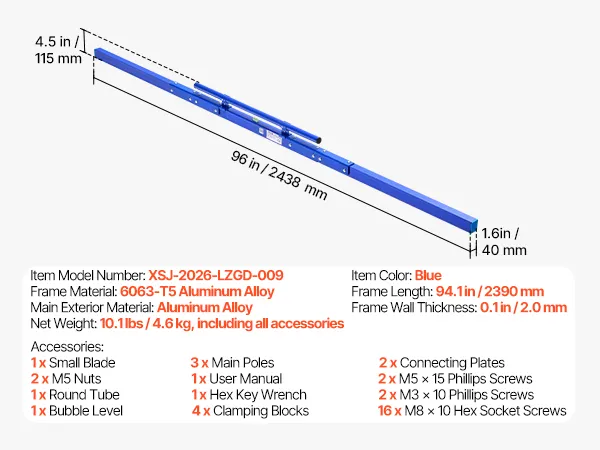
- Item Model Number XSJ-2026-LZGD-009
- Frame Length 96 in / 2430 mm
- Frame Wall Thickness 0.1 in / 2.0 mm
- Frame Material 6063-T5 Aluminum Alloy
- Item Color Blue
- Main Exterior Material Aluminum Alloy
Frequently Bought Together
Reviews
About this item
Questions and Answers
Explore
Reviews
No customer reviews
Be the first to rate this product. your feedback will helps others make informed decisions.
Write a Review
Top Reviews
About this item
Product specification
- Item Model Number
- XSJ-2026-LZGD-009
- Frame Length
- 96 in / 2430 mm
- Frame Wall Thickness
- 0.1 in / 2.0 mm
- Frame Material
- 6063-T5 Aluminum Alloy
- Item Color
- Blue
- Main Exterior Material
- Aluminum Alloy
- Net Weight
- 7.3 lbs / 3.3 kg, including all accessories
- Product Dimensions (Assembled)
- 96 x 1.6 x 4.5 in / 2430 x 40 x 115 mm
Description


Pro-level performance without the pro-level cost
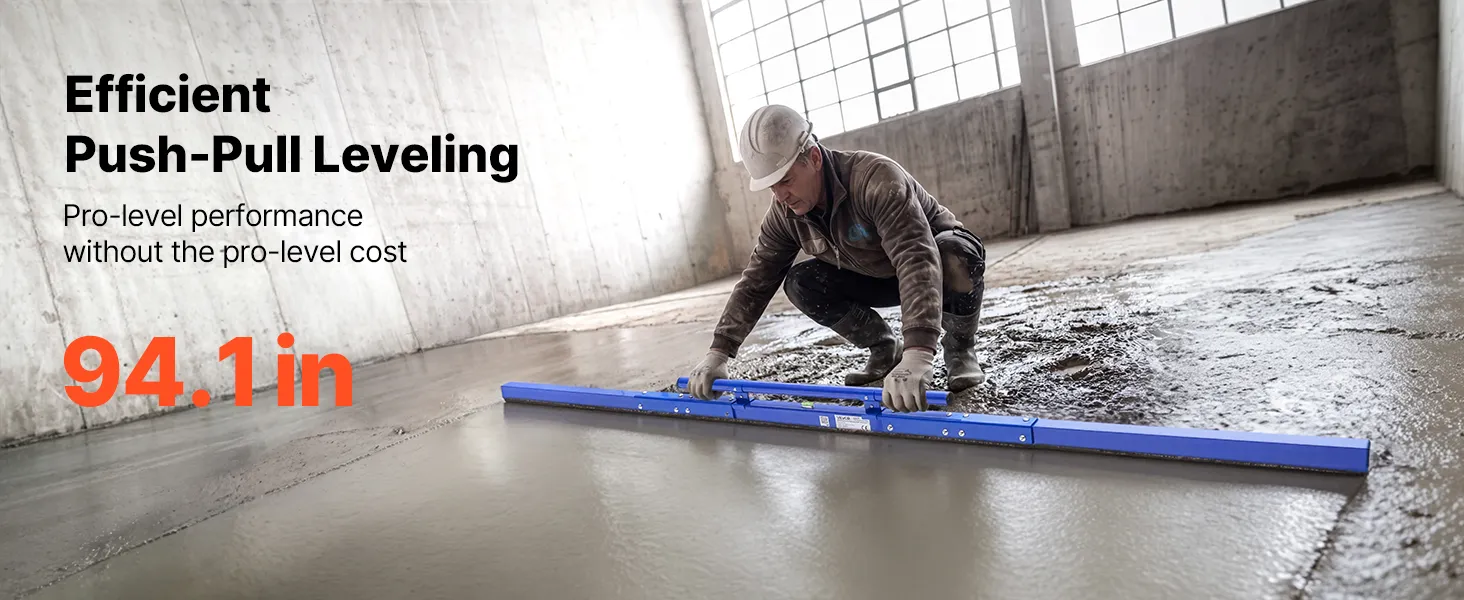
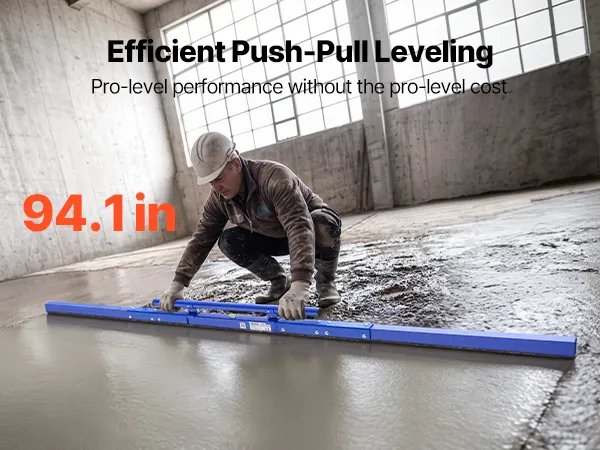
The float covers a wider working area in one pass, making it ideal for concrete leveling, smoothing, and surface finishing to improve daily jobsite efficiency.
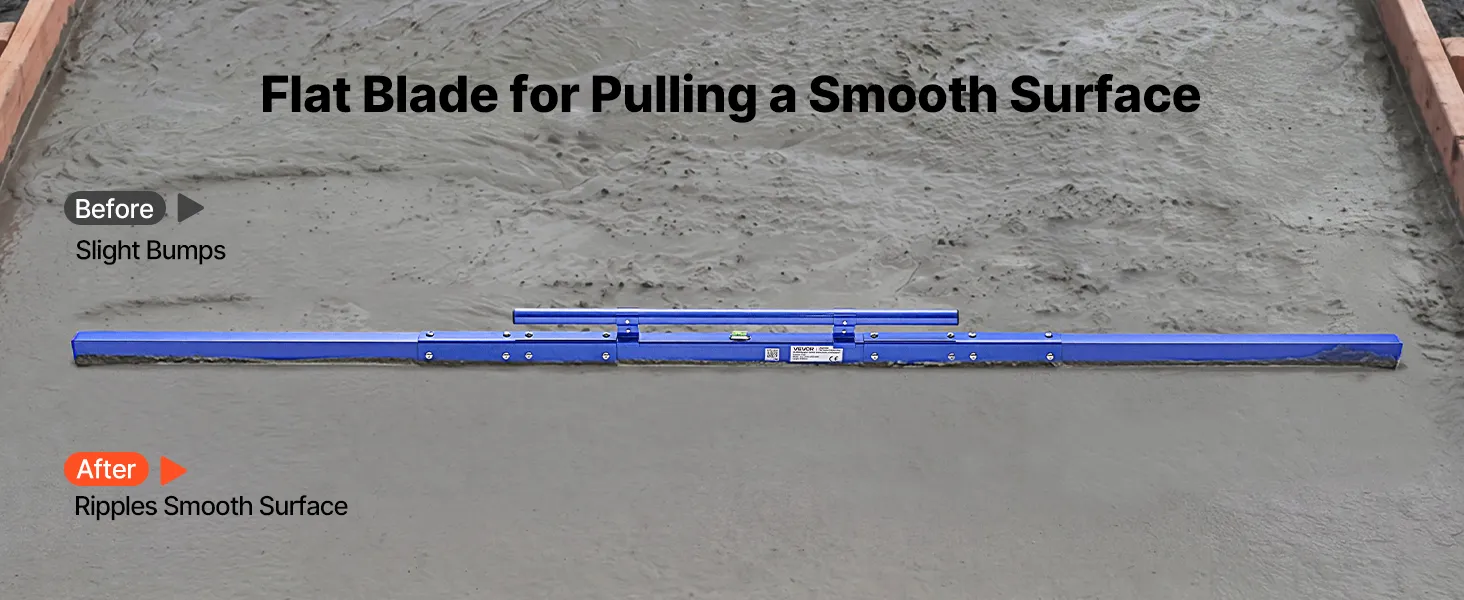
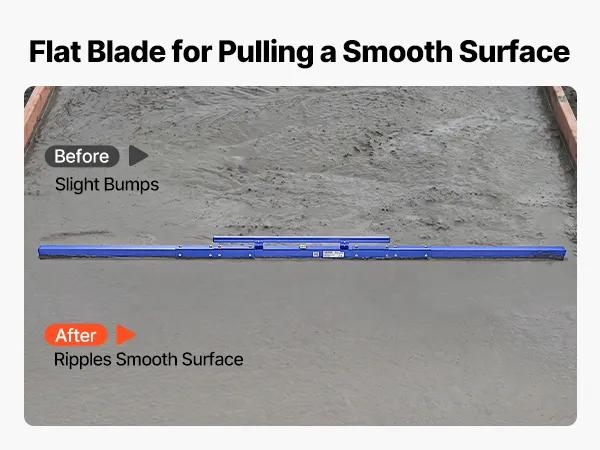
Helps improve surface flatness by evenly leveling the top layer of concrete, leaving a cleaner, smoother finish.
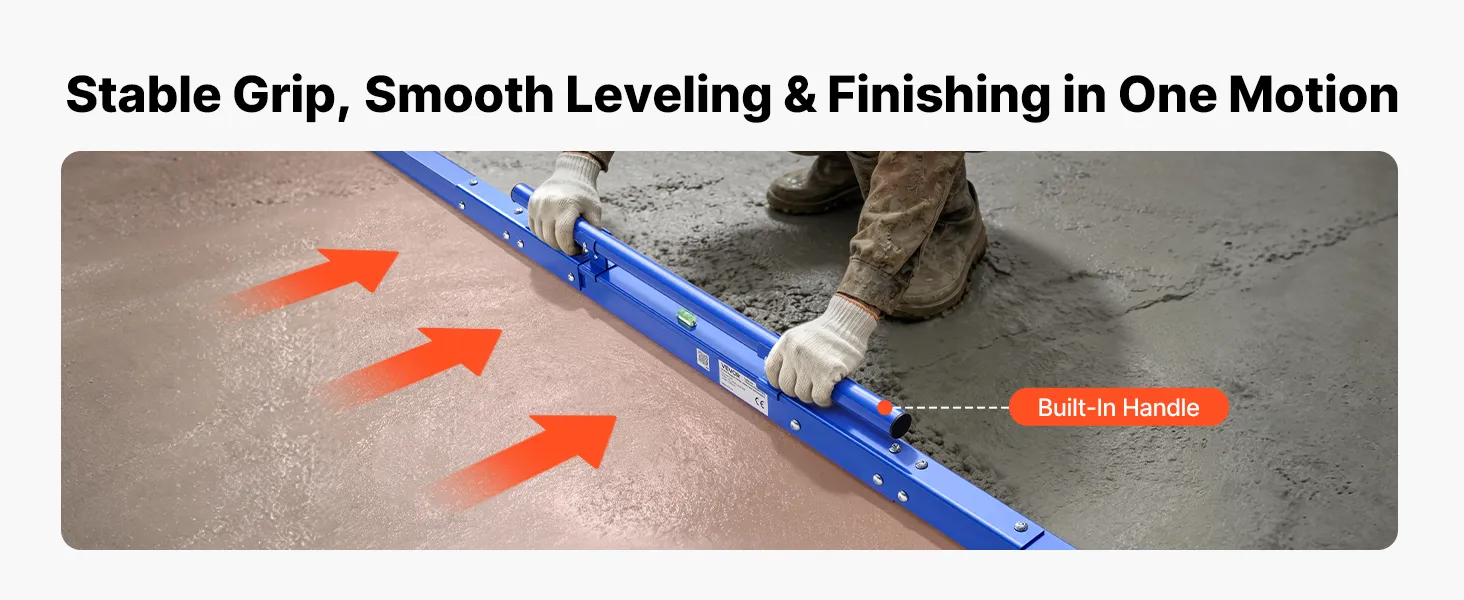
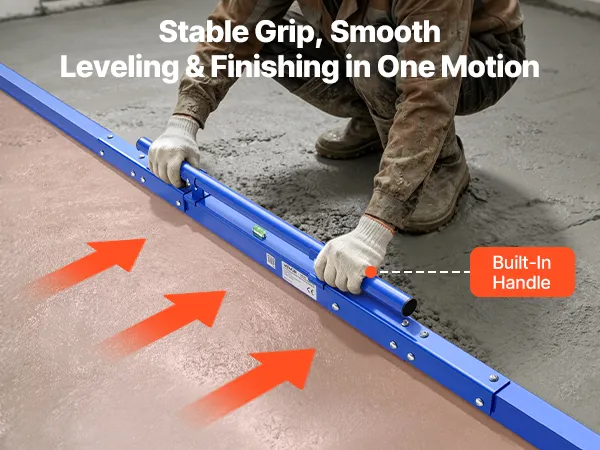
Direct control through the built-in handle allows smooth, continuous movement across wet concrete surfaces, reducing interruptions.
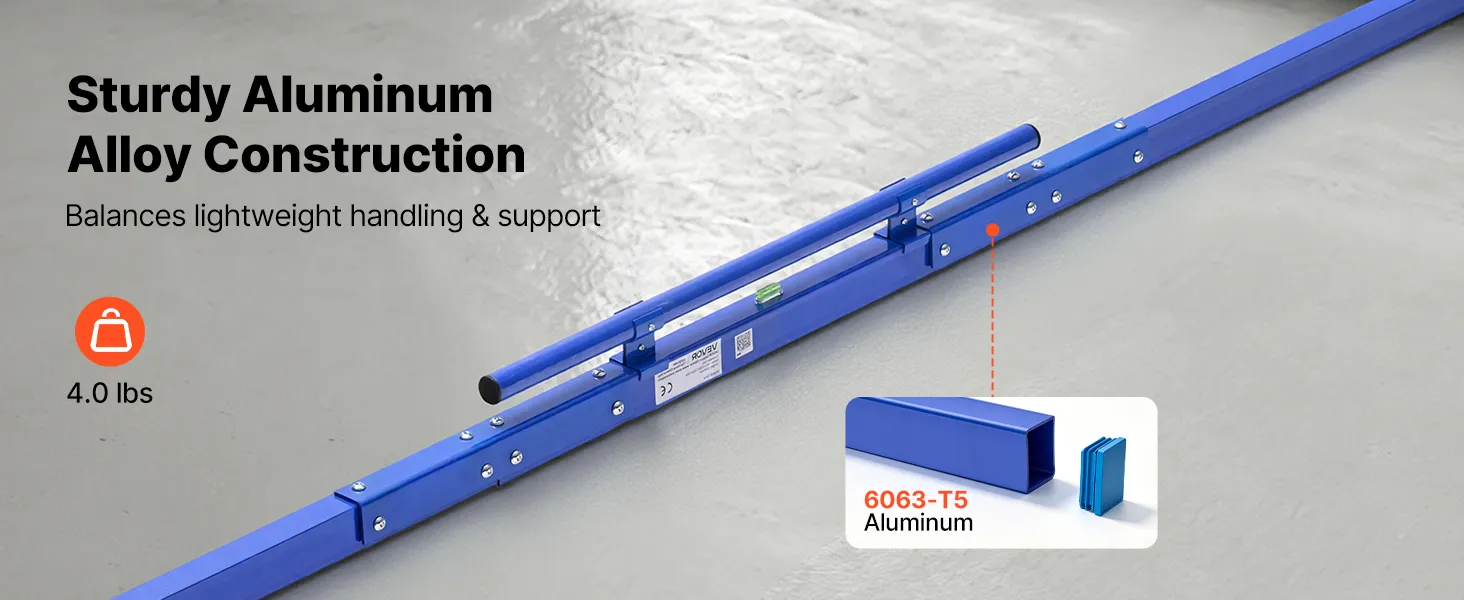
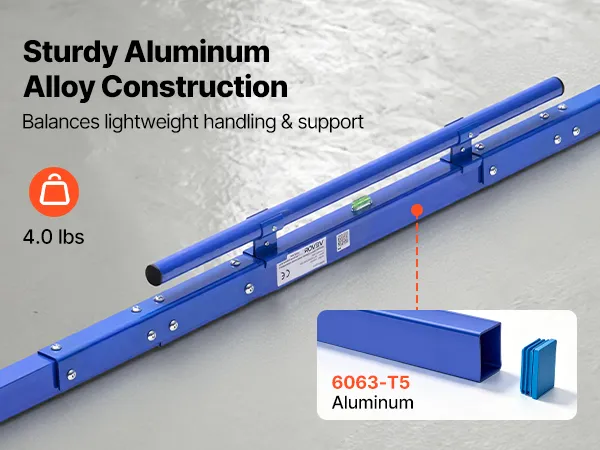
Built with an aluminum alloy structure for lightweight handling and stable support, making transport, adjustment, and daily concrete work easier.
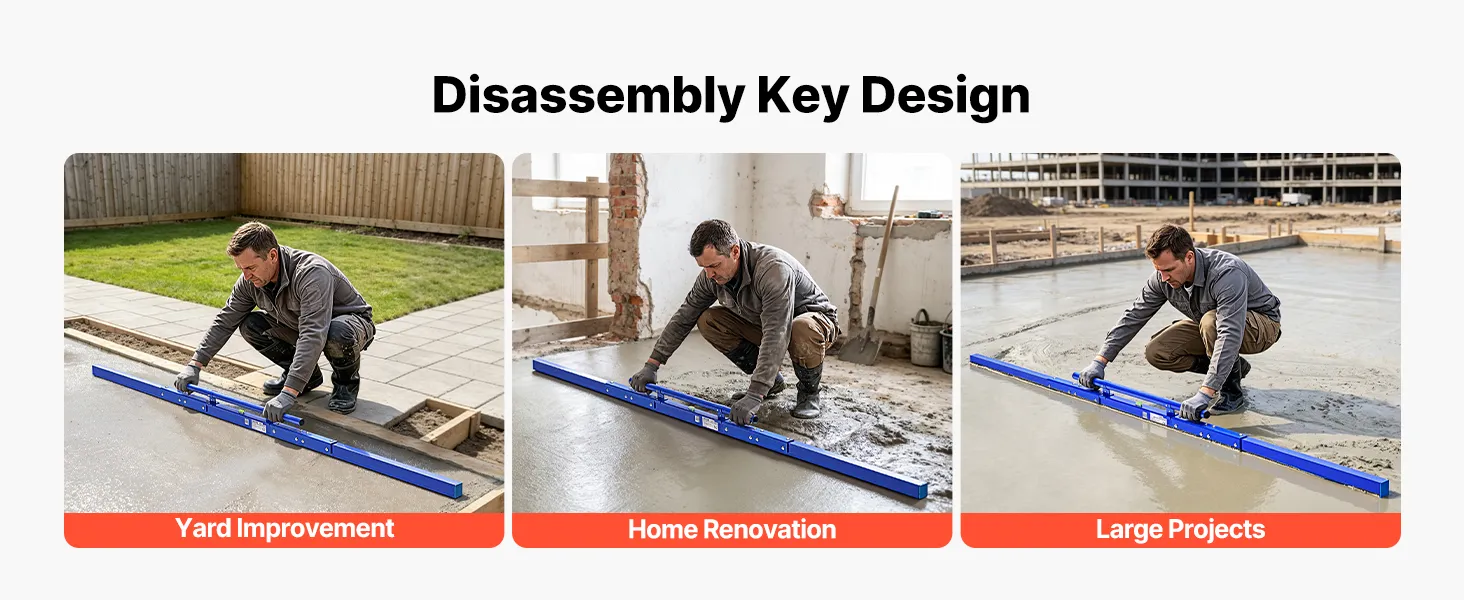
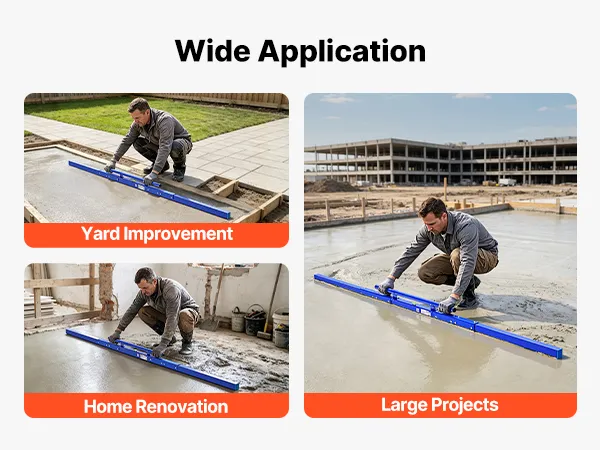
Whether for patio slabs, garage floors, or walkway finishing, it helps handle common concrete surface leveling tasks.
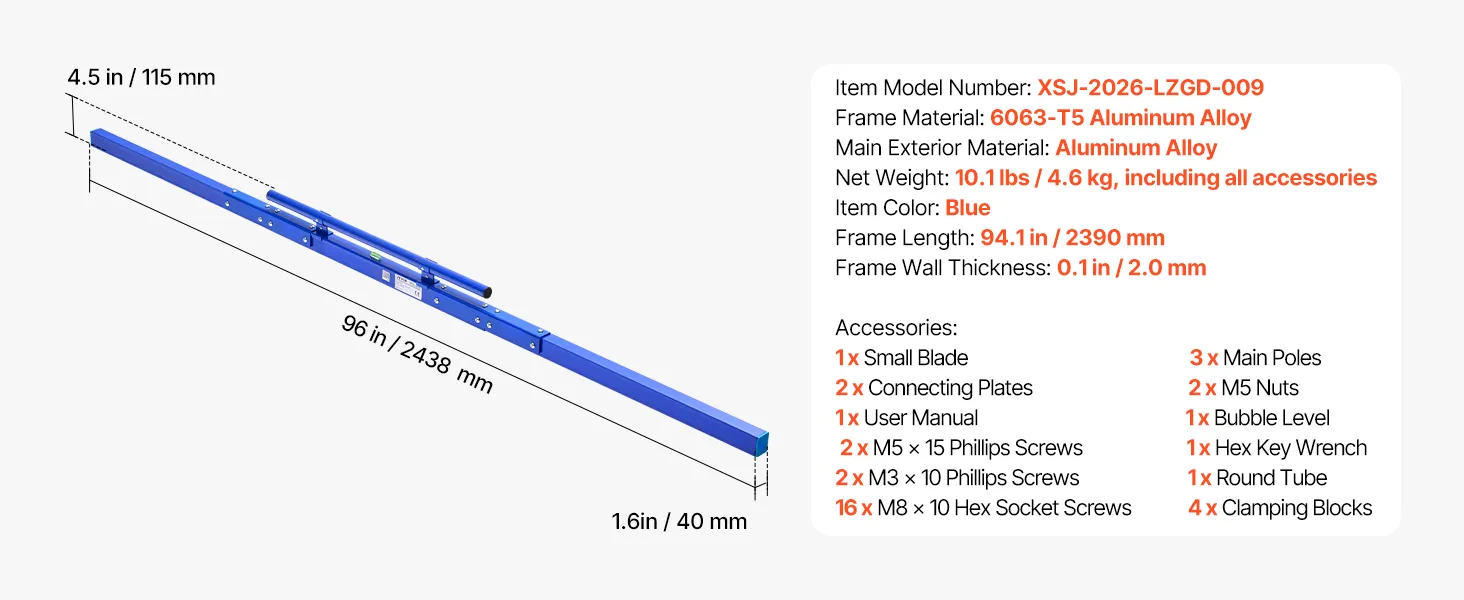
7.3 lb Lightweight Frame in 6063-T5 Aluminum for Fatigue-Free Use
With all accessories, the VEVOR manual concrete screed weighs only 7.3 lbs, which is light enough to reposition between passes single-handedly and comfortable enough to work for hours without tiring. The frame is fully built from 6063-T5 aluminum alloy, an aerospace-grade material that provides true structural stiffness while keeping the overall tool's weight substantially below that of steel equivalents. This combo really shows up on longer pours as you are lifting, dragging, and resetting the board dozens of times before the concrete has a chance to cement up.
All this for a 7.3-lb tool that can be carried to and from the job site with absolutely no effort. Imagine hauling a big steel straightedge across a yard or up a flight of stairs! Because it’s aluminum, the frame also withstands prolonged contact with wet concrete, staying clean and functioning from job to job. A common issue with manual finishing work is that this lightweight screed holds up well for weekend homeowners and working professionals.
96 in Single-Piece Blade for Wide, Consistent Concrete Leveling
The blade is one solid piece, 96 inches tip to tip. It will take 8 feet of slab width per pass, with no joints, bolts, or seams along the bottom edge. That's the continuous contact line that creates a perfectly flat strike off, because there are no connection points to form ridges or catch on the wet surface as you move the board forward. Fewer passes per slab mean faster finishing times, which is important as the concrete hardens and your working window shrinks.
Overall, the constructed dimensions are 96 x 1.6 x 4.5 inches, giving the board a narrow profile that slices through the concrete rather than crashing into it. The 1.6-inch depth allows the blade to be narrow enough to glide with minimal resistance, and the 4.5-inch height provides the structural backbone to prevent twisting during operation. You get a tool that glides effortlessly over the surface and stays straight under load across the entire 2430 mm width.
2.0 mm Wall Thickness for Rigid, Flex-Resistant Performance
The manual concrete screed has a 2.0 mm (0.1 inches) frame wall thickness, which is the most important factor in keeping a 96-inch aluminum board straight under pressure and preventing it from bowing in the center during use. 6063-T5 alloy at this thickness has sufficient cross-sectional area to resist downward force when you push the blade across high regions and draw it back across low spots. Your completed surface is proof that the board remains flat from handle to tip.
Thinner walls would save a few ounces but increase flex, undermining the objective of having a straightedge in the first place. If a board flexes under normal working pressure, it leaves a crowned or dished surface that you only discover after the concrete has set, and it is too late to remedy. This model’s 2.0 mm standard keeps the tool stiff enough to level accurately but not so stiff that it exceeds the 7.3 lb overall weight that makes it practical to wield all day.
Manual Concrete Screed with Integrated Bubble Level for On-the-Spot Accuracy
The frame of this manual concrete screed has a built-in bubble level so you can instantly check if the surface is level without digging up another tool. You can check your progress mid-stroke and see dips or crowns before you pull the board beyond them, avoiding the effort of finding issues after the fact. That kind of real-time input turns a basic strike-off into a more controlled leveling operation.
The level is recessed into the aluminum body, protecting it from drops, bumps, and wet concrete spatter that would knock an externally mounted level out of calibration. Nothing is hanging off the edge of the board; nothing is hooked on as an afterthought; it is part of the instrument. For residential pours, you might not have a transit or laser setup. This built-in reference point offers you confidence that the surface is reading true as you work across it.
Powder-Coated Aluminum Surface for Low-Stick, Easy-Clean Operation
This board has a powder-coated blue finish all around, and that coating does more than make the tool look neat out of the box. Bare aluminum tends to grab and stick to wet concrete, making each pass heavier and leaving a residue that solidifies if you don't wash it off right away, which generates drag. The powder coat provides a slick barrier between the blade and the mix, allowing the screed to slide over the surface with much less resistance and pull.
A coated surface is also easier to clean up after the pour, as dried concrete chips off the smooth finish much more easily than bare metal. Over months and years of operation, the coating protects the underlying metal from oxidation and surface pitting that would eventually roughen an untreated blade. That long-term protection means the board glides the same on your fiftieth pour as it did on your first, without having to sand or resurface to maintain that pristine glide.
Versatile Manual Concrete Screed for Patios, Garages, and Walkways
Residential flatwork comes in all forms and sizes, and this 96-inch board fits comfortably in most cases. An 8-foot screed operated by one person can reach standard patio slabs, single-car garage floors, driveway aprons, and sidewalk sections. The lightweight aluminum frame lets you move between forms and sections rapidly, without wasting time and energy pulling heavy equipment around the job site.
A manual tool has the advantage of being simple for modest home projects where a power screed would be excessive. No engine to fuel, no vibration system to maintain, and no cable to mess with. Just a straight, solid board that does just what it’s designed to do. Whether as a weekend slab project for DIYers or a series of walkway panels for professionals, this manual concrete screed produces a clean, level product with a small equipment footprint.
Product guides and documents
User manual-en (PDF) Review
Questions and Answers (0)
Typical questions asked about products: Is the product durable? ...
Select product protection plan
Accident and warranty protection by Xcotton (partner with AIG)
No thanks
3-Year
2-Year
1-Year
In Stock
Security & Privacy
FREE Returns
Professional Service
Compare with similar items
Similar Items You Might Like
People Who Bought This Item Also Bought
Best sellers in this category
People Who Viewed This Item Also Viewed
Your Browsing History
Recommended Searches
inflatable boat near me inflatable boat large jet ski shops near me motor boat inflatable pathfinder boats for sale rubber inflatable boat inflatable boat with motor inflatable motor boats for sale inflatable boat and motor inflatable rubber boat with motor small boat inflatable metal blade strimmer fan blade led bulb cutter for vinyl plank flooring inflatable flying boat lino floor cutter skid loader box blade drywall skimming blade skimming tools jet ski cost