







Download VEVOR App 

Get $5.00 Off $99.00+ Orders on Your First 3 App Orders
Scan the QR code to download
SKU: CQSPQFYGJF30P2OU9001V1
Copy


+13
More


 Ask about this product by AI
Ask something else
VEVOR Inflatable Paint Booth, 30 x 16 x 12 ft, Portable Spray Booth with 750W+950W Blowers, Large Filter Cotton, Changing Area, Arched Roof Painting Tent for Full-Size Pickup, Small Speedboat, Blue
4.6 831 Reviews
$ 752 90
Earn at least 2% points on purchases or save up to 15%.
Each when you buy 0+.
Shop
Get -% off for new user
Get $5.00 Off $99.00+ Orders on Your First 3 App Orders.
Download Now


Features & Details
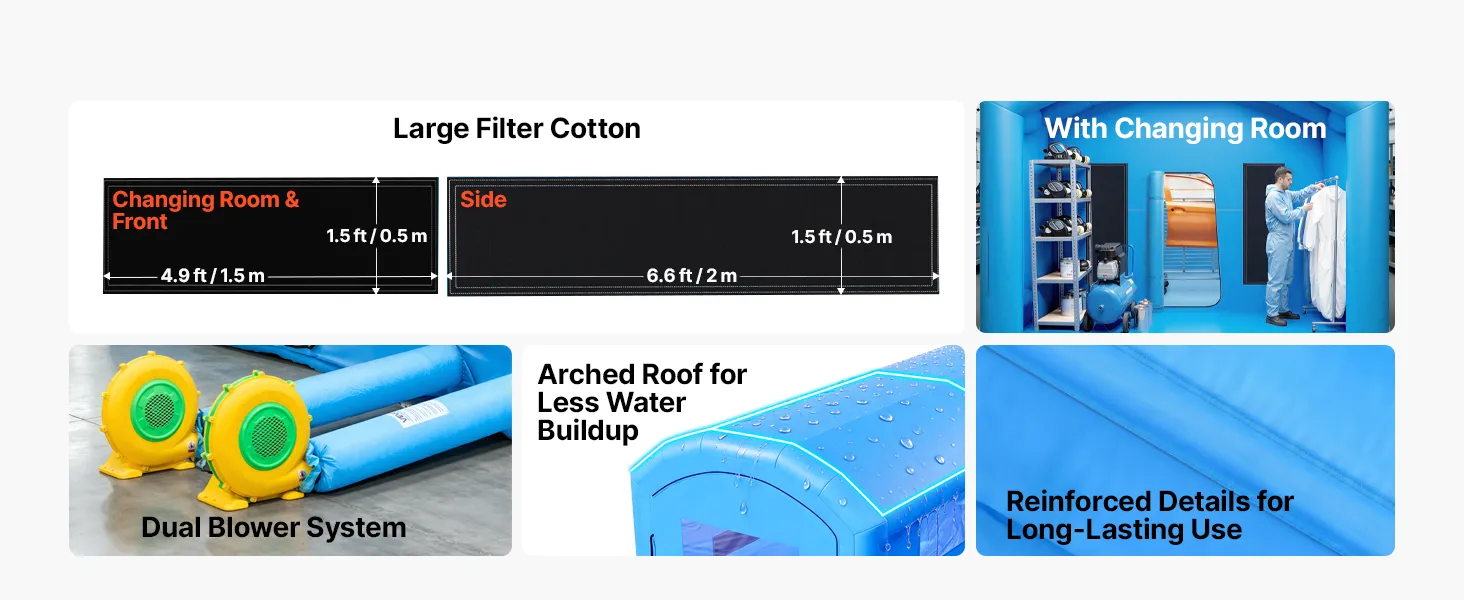
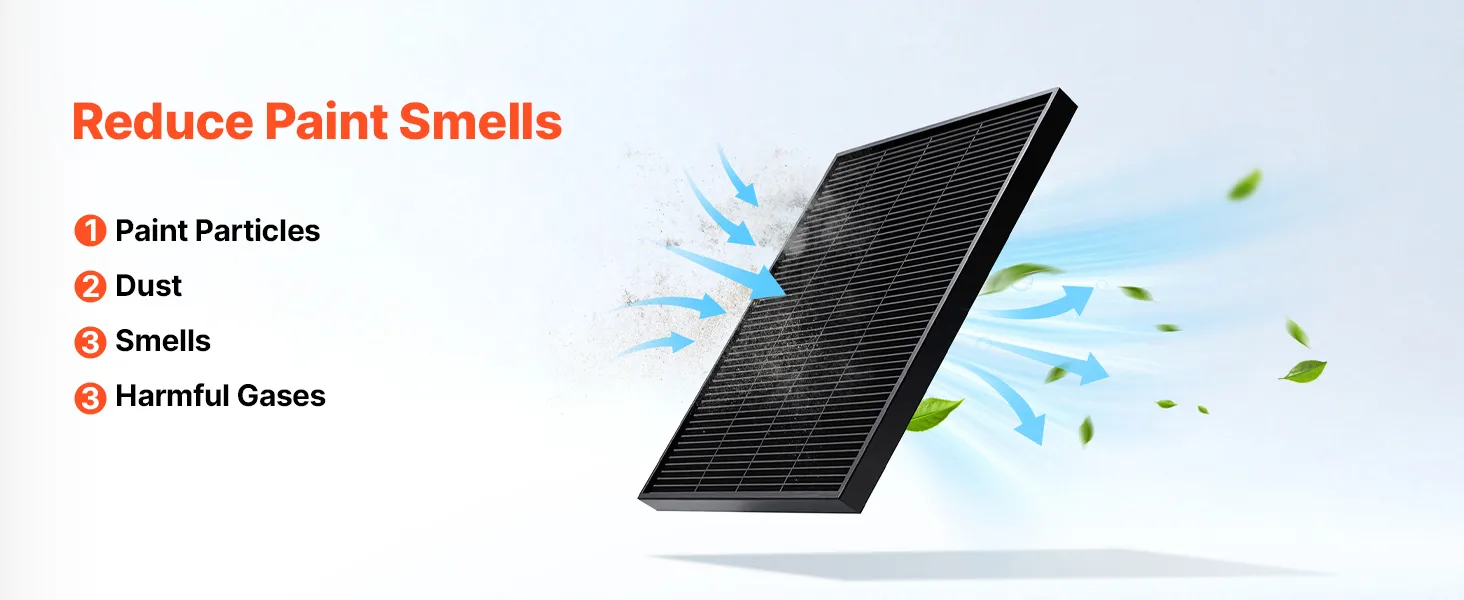
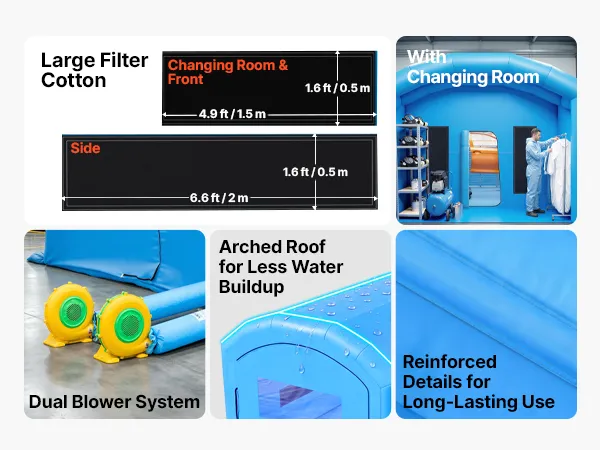
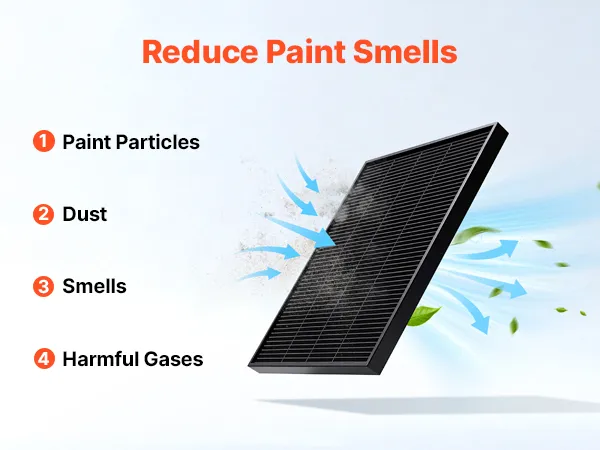
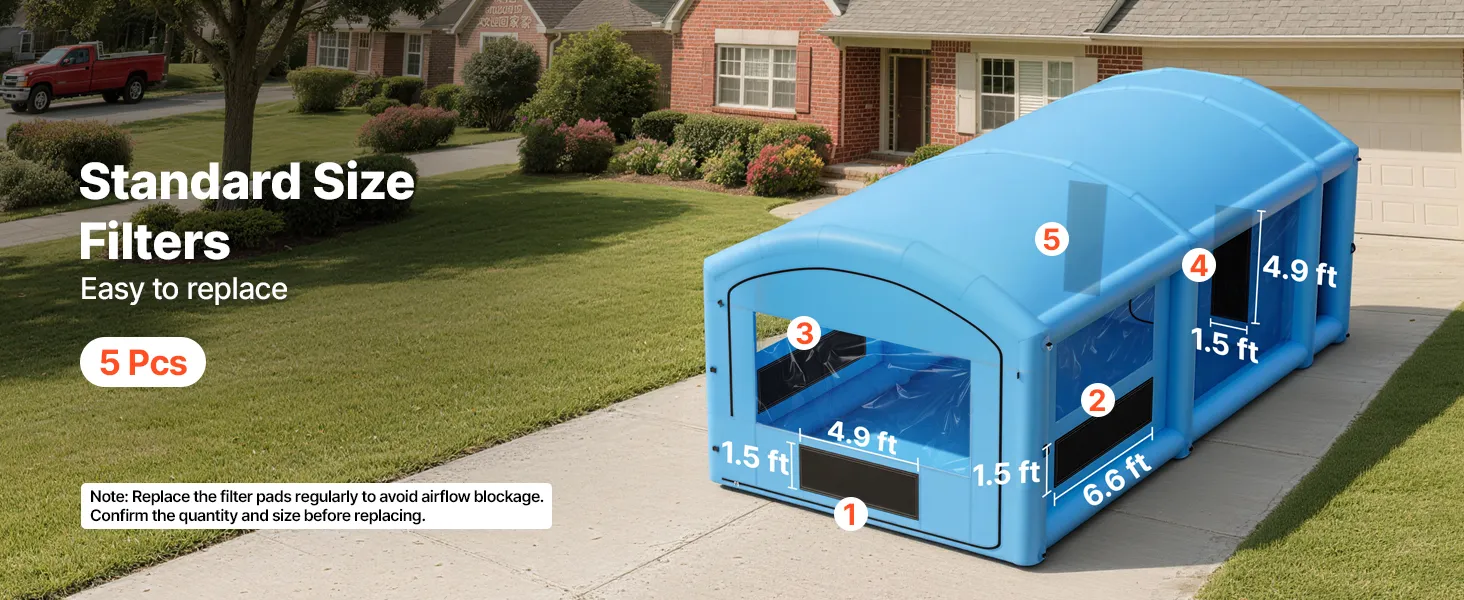
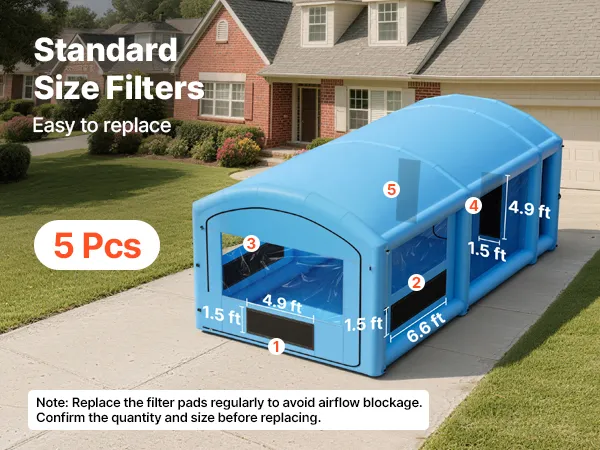
- Larger Activated Carbon Filtration: The inflatable paint booth features 5 enlarged activated carbon filter pads to help reduce smells, particles, and overspray while improving filtration efficiency
- Separate Clean Prep Area: The built-in prep room in this inflatable spray booth gives you space to change clothes and store tools while helping reduce dust before entering the spray area
- Dual Blowers: This blow up paint booth comes with a 950W inflation blower and a 750W ventilation blower for fast inflation, strong airflow, and effective ventilation
- Stable Arch Frame: The upgraded balanced structure of this inflatable paint spray booth helps distribute pressure evenly, while the arched roof reduces water droplets buildup and keeps it clean. Note: Do not use in rainy weather
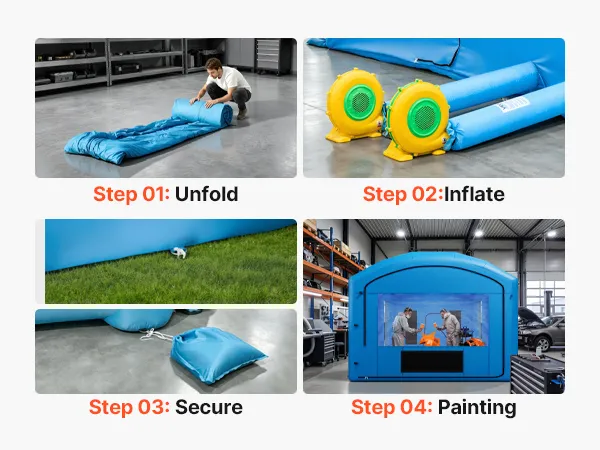
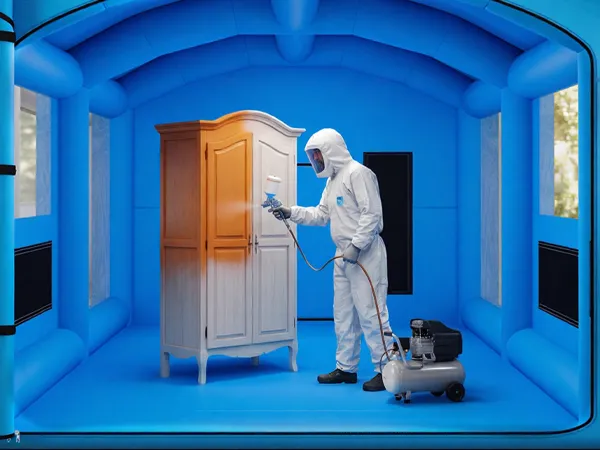
- Complete Painting Kit: This portable inflatable paint booth is suitable for painting projects such as pickup trucks and furniture. It includes 2 blowers, a repair kit, 6 sandbags, 6 ground stakes, 6 wind ropes, a storage bag, and a user manual
Product specification
- Item Model Number YJCQYDPQFBK09L-Y
- Overall Dimensions (Exterior) 30 x 16 x 12 ft / 9 x 4.8 x 3.6 m
- Work Area Dimensions (Interior) 25 x 13 x 10 ft / 7.62 x 3.88 x 3.15 m
- Changing Room Dimensions 5 x 13 x 10 ft / 1.38 x 3.88 x 3.15 m
- Blower Power 750W+950W
- Main Material Oxford Fabric + Clear Material + Filter Cotton
Reviews summary
4.6 831 Reviews
Customers say: The paint booth is praised for being easy to set up, spacious, durable, and effective at controlling dust and overspray, though some users report issues with zippers, ventilation, and filter replacements.
Al-generated from customer reviews
Frequently Bought Together
Reviews
About this item
Questions and Answers
Explore
Reviews
No customer reviews
Be the first to rate this product. your feedback will helps others make informed decisions.
Write a Review
Customers say
The paint booth is praised for being easy to set up, spacious, durable, and effective at controlling dust and overspray, though some users report issues with zippers, ventilation, and filter replacements.
Al-generated from customer reviews
Top Reviews
About this item
Product specification
- Item Model Number
- YJCQYDPQFBK09L-Y
- Overall Dimensions (Exterior)
- 30 x 16 x 12 ft / 9 x 4.8 x 3.6 m
- Work Area Dimensions (Interior)
- 25 x 13 x 10 ft / 7.62 x 3.88 x 3.15 m
- Changing Room Dimensions
- 5 x 13 x 10 ft / 1.38 x 3.88 x 3.15 m
- Blower Power
- 750W+950W
- Main Material
- Oxford Fabric + Clear Material + Filter Cotton
- Color
- Blue
Description
Pro-level performance without the pro-level cost
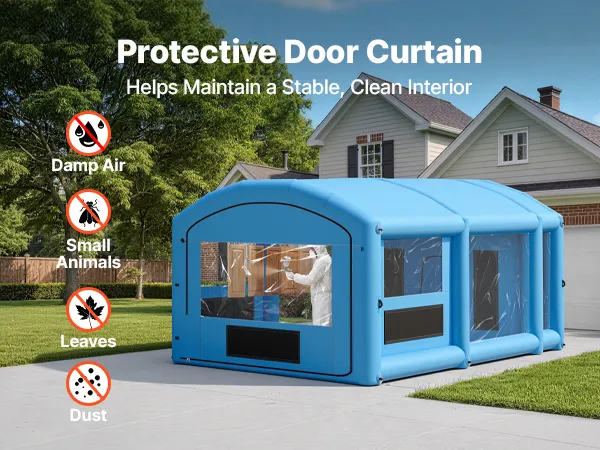
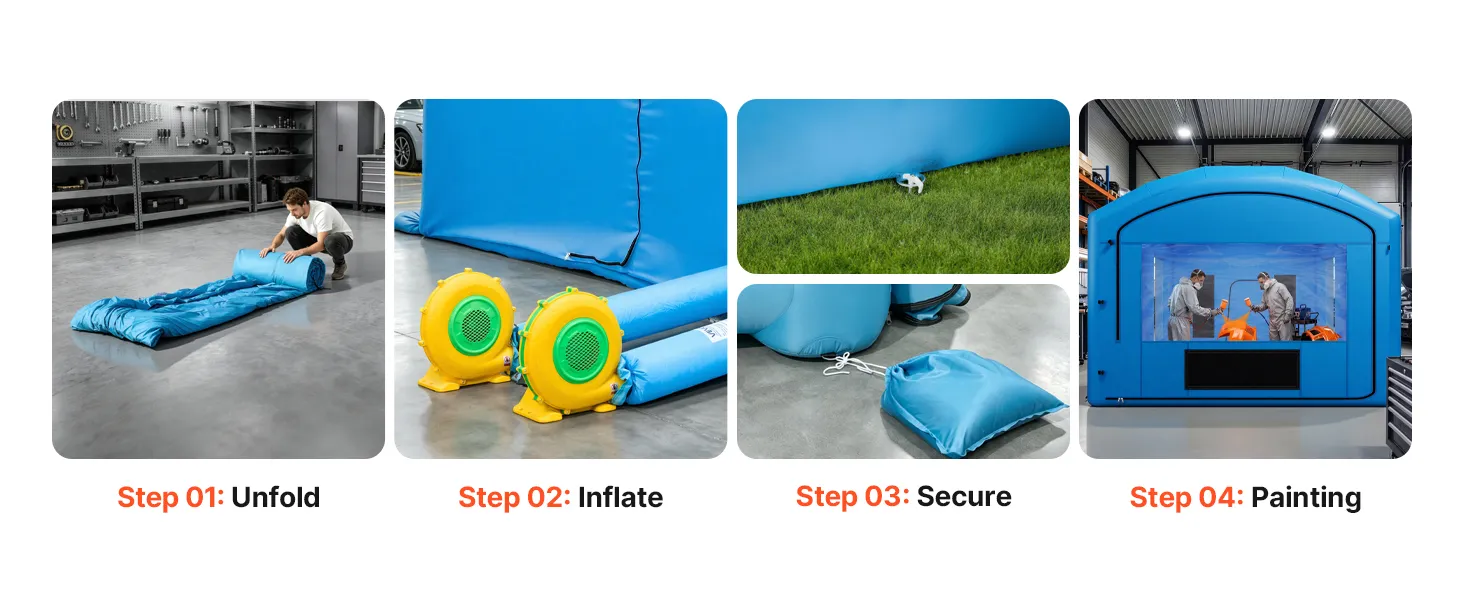
Our inflatable spray booth features an efficient filtration system to help create a cleaner workspace. Made of Oxford fabric with double-stitched seams, it is built for long-term use. Easy setup and a portable design allow flexible use, while the arched top helps reduce water buildup and seepage.
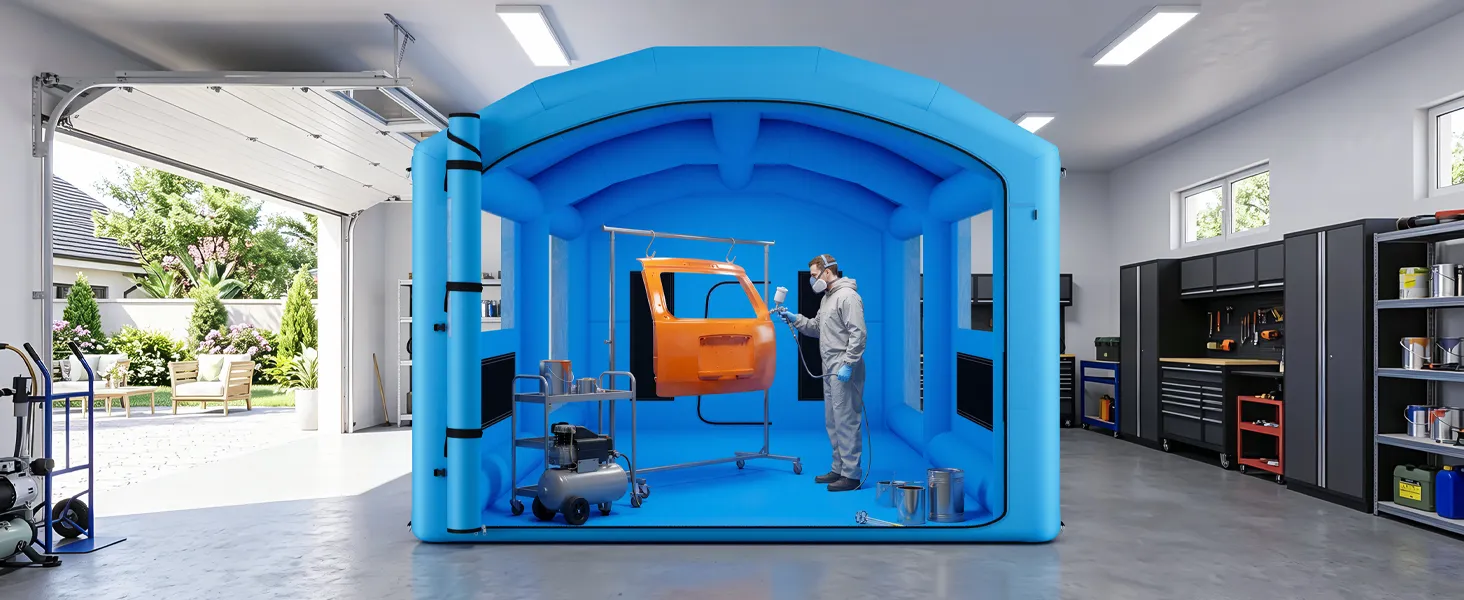
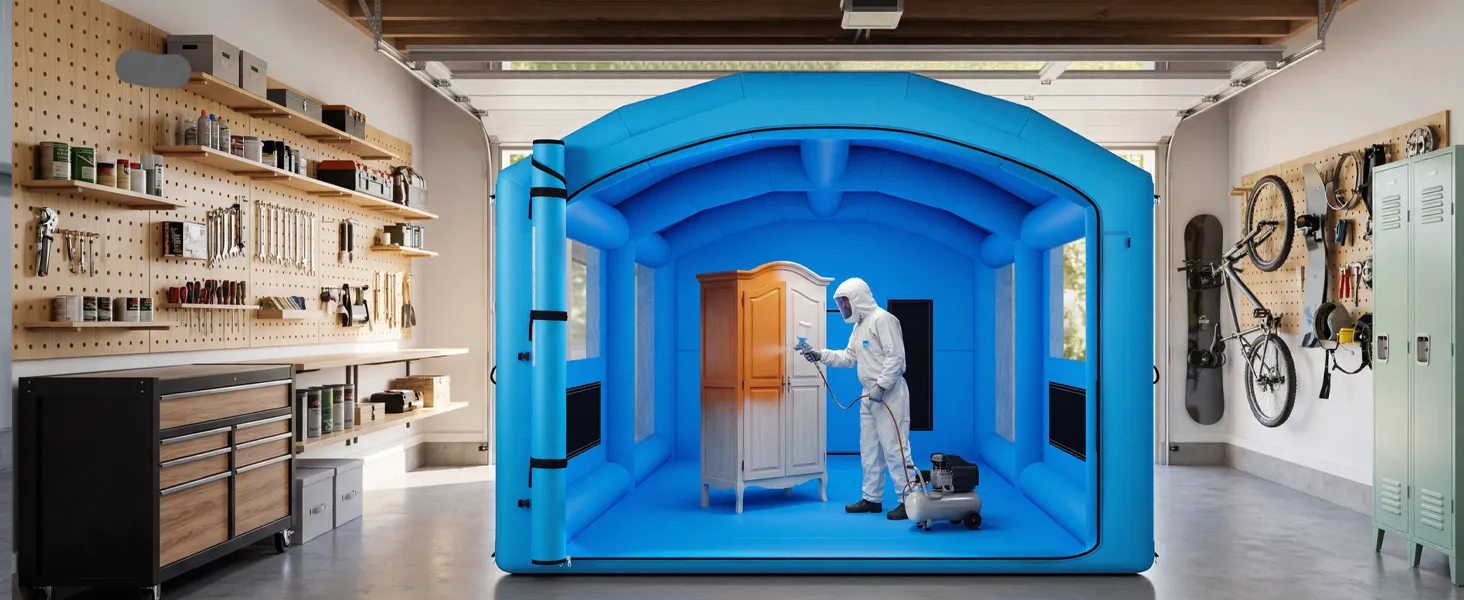
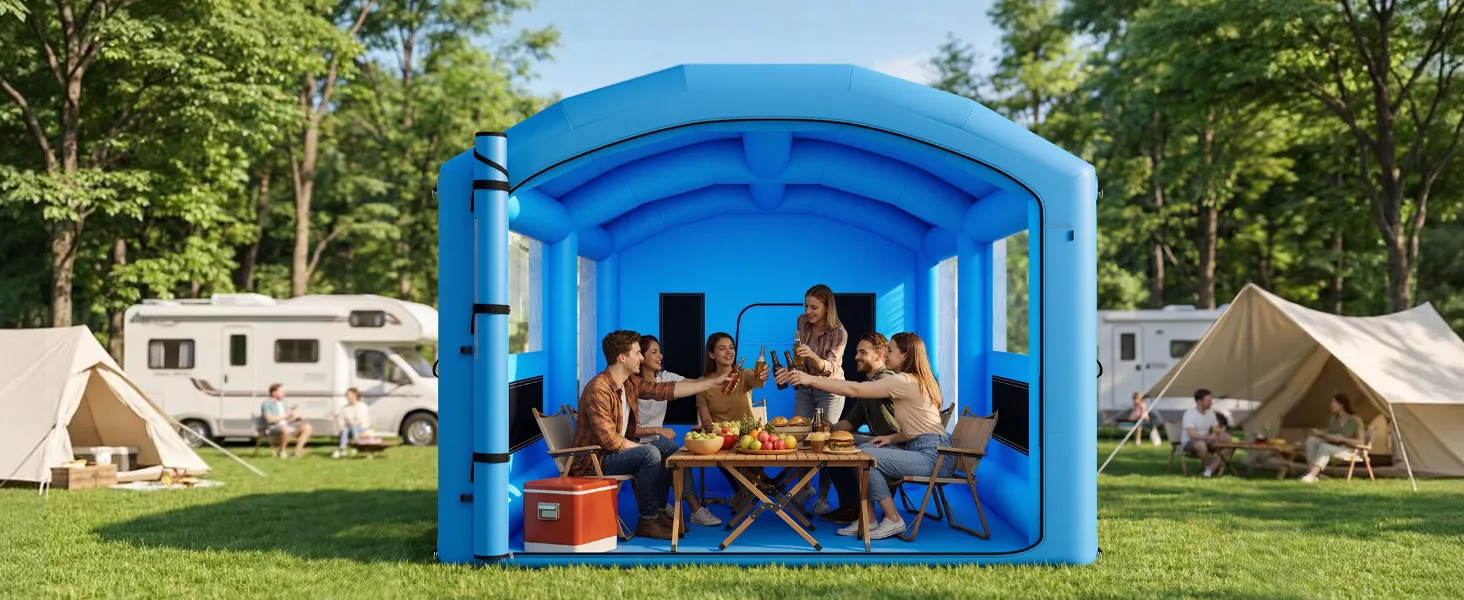

Key Features
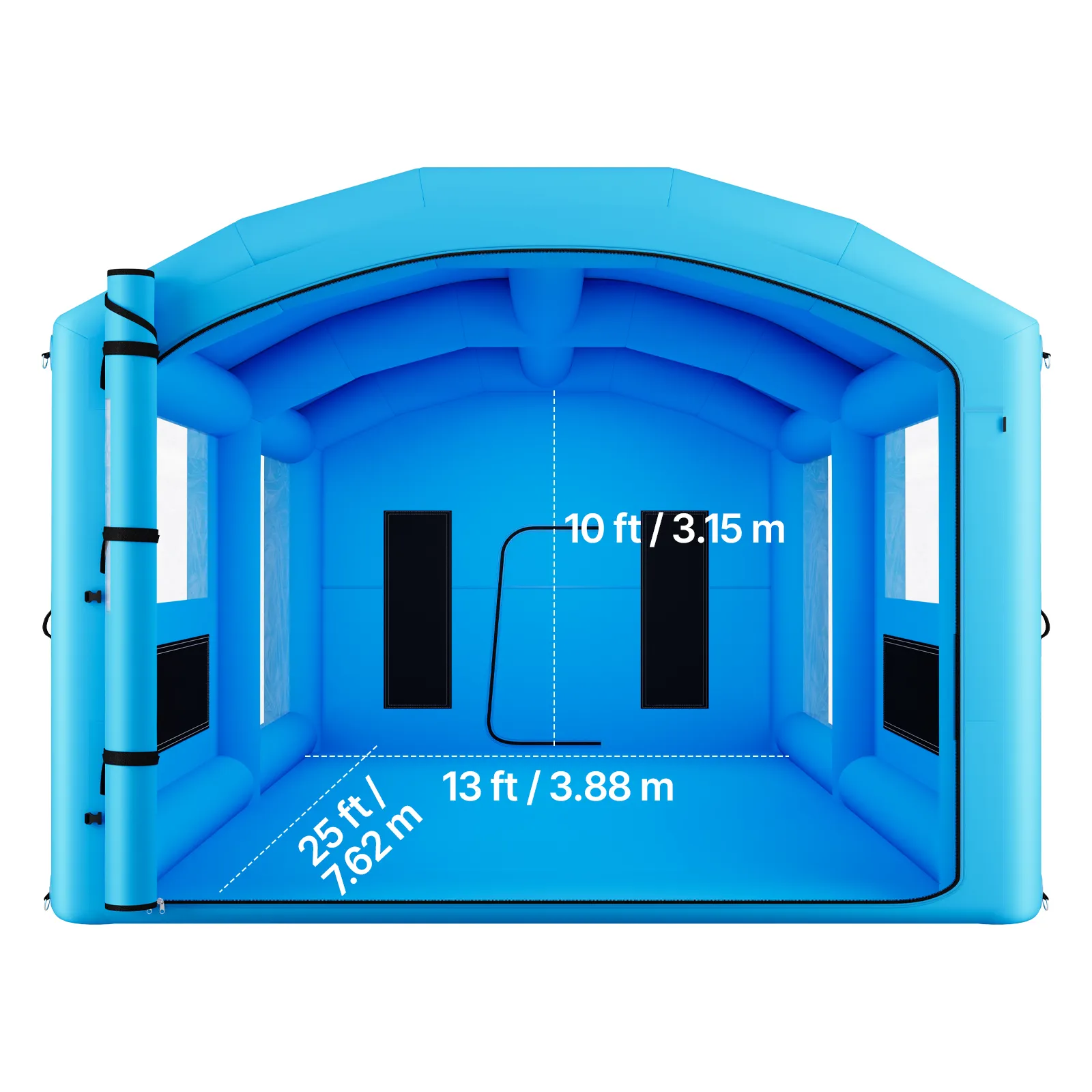
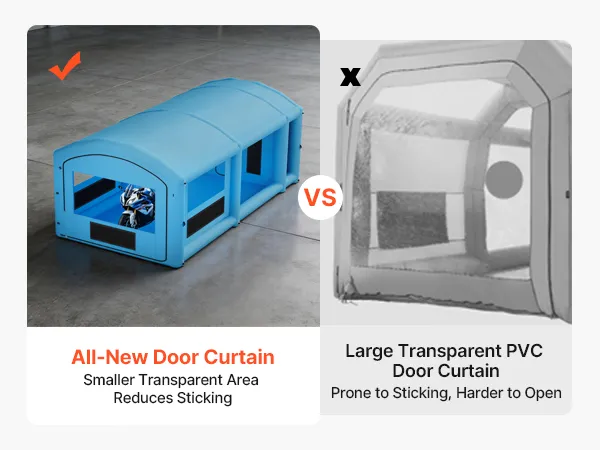
Front & Rear Doors
This inflatable spray booth features independent front and rear doors for easier entry and exit during painting projects.
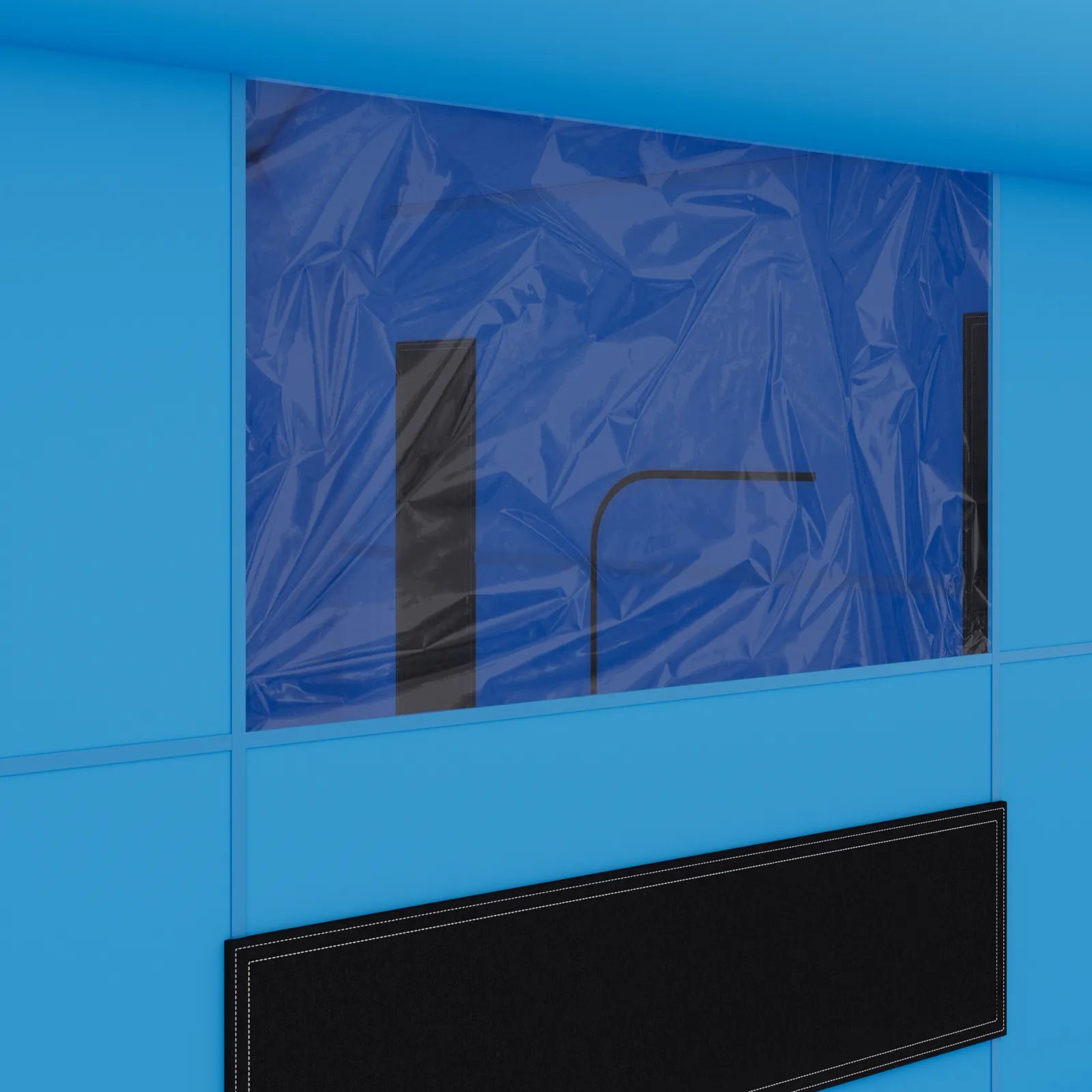
Clear Side Windows
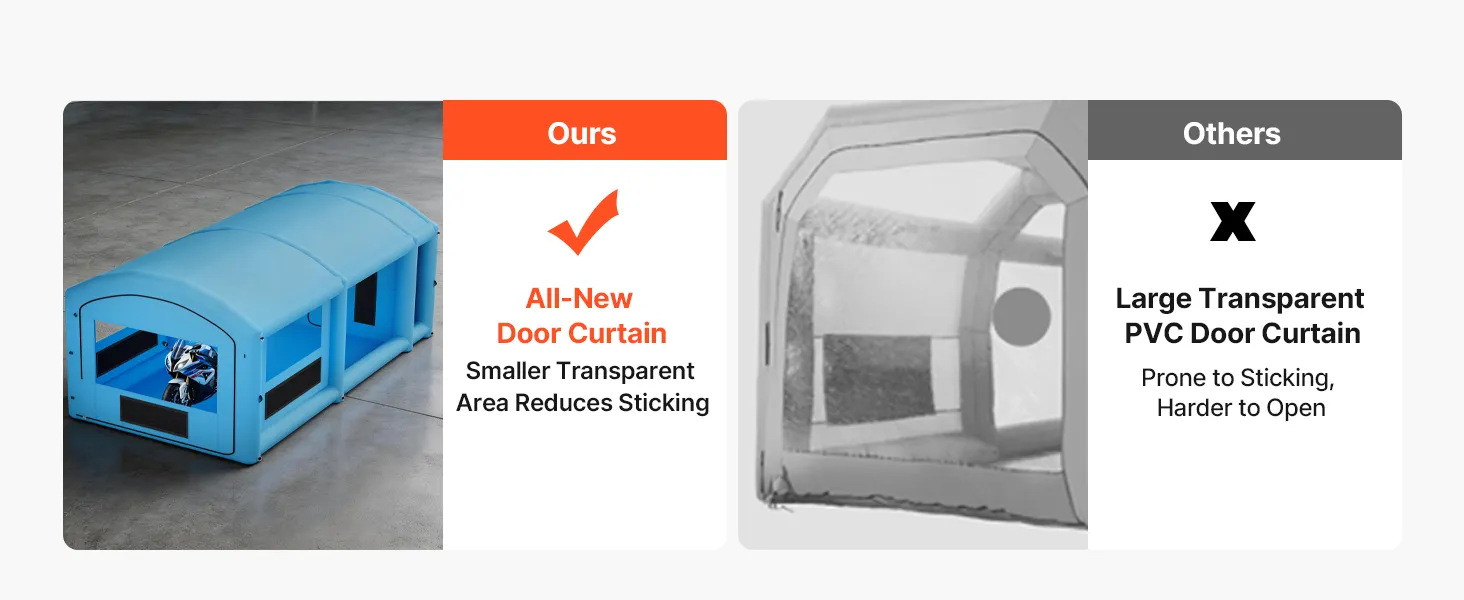
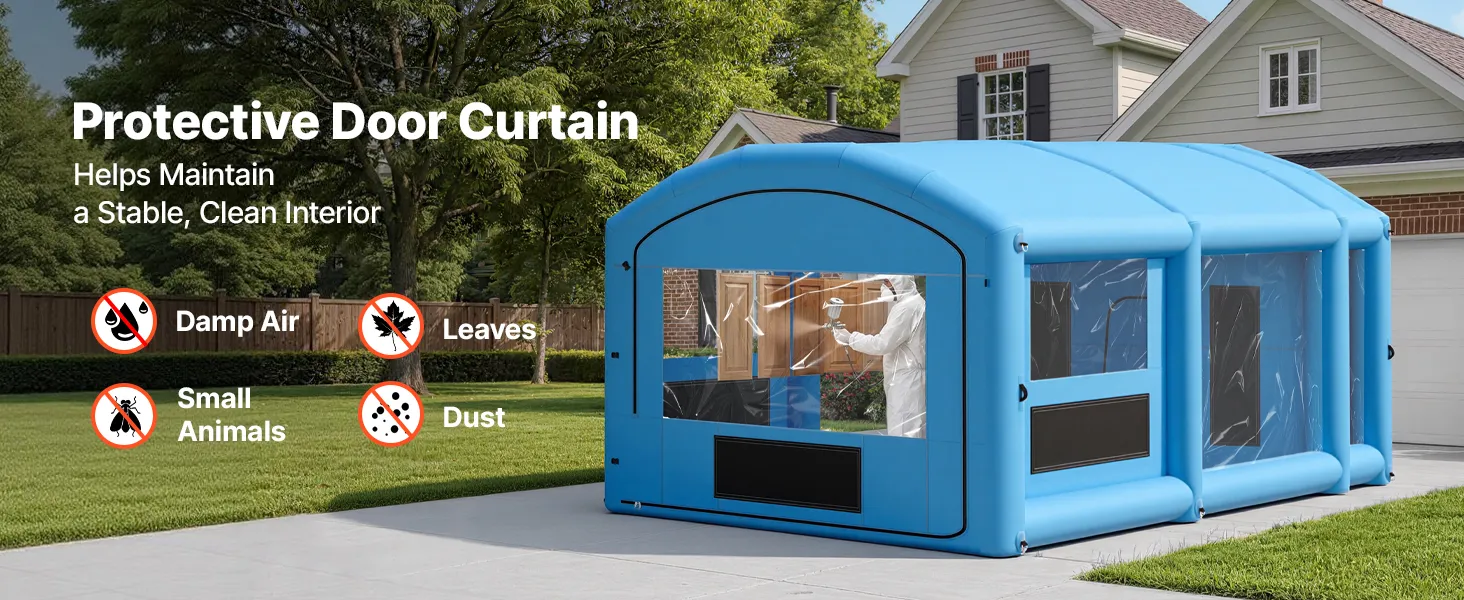
This inflatable spray booth has clear side windows that improve visibility and make it easier to check the inside.
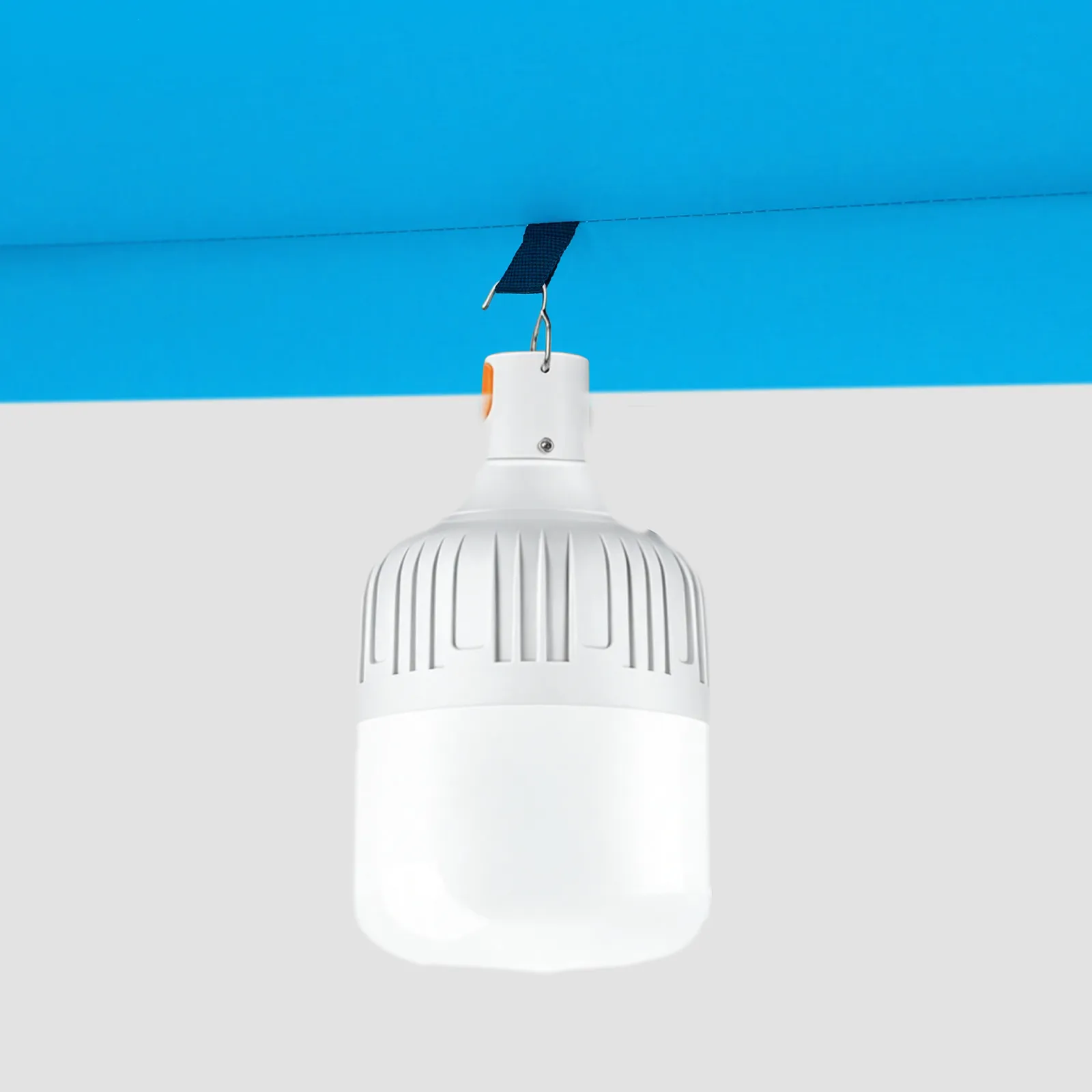
Light Hook
This inflatable spray booth with light hook makes nighttime and low-light projects easier to handle.
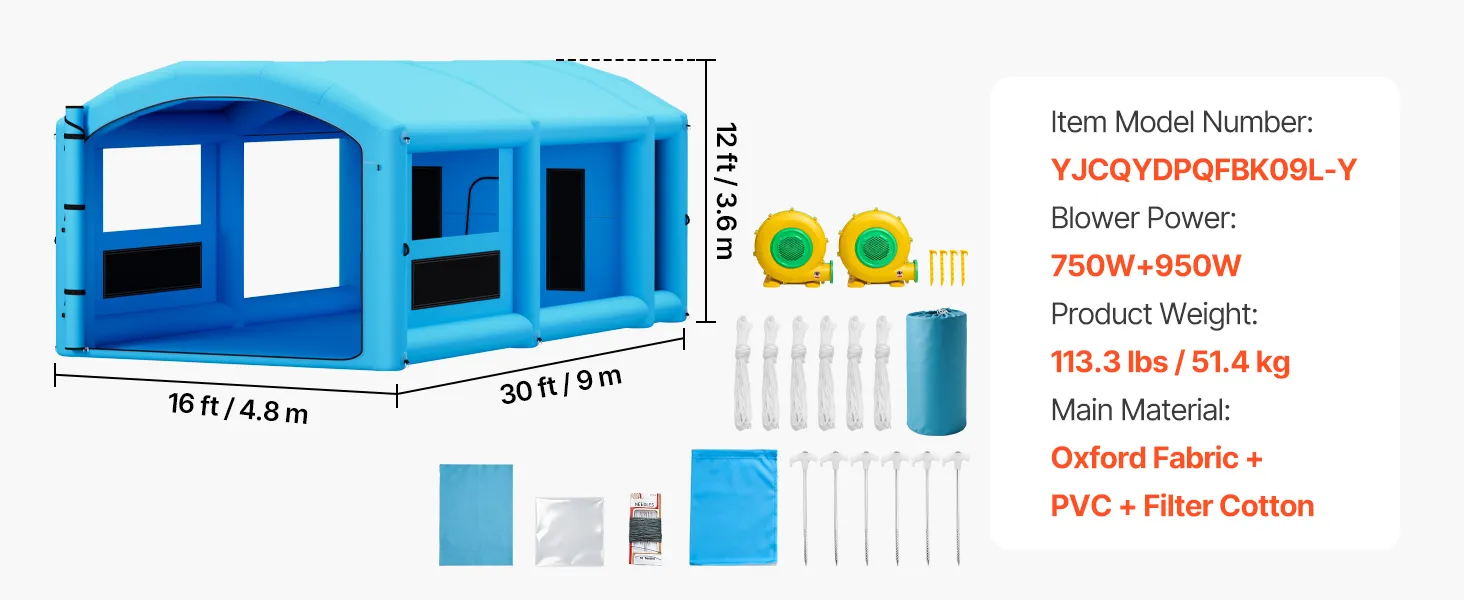
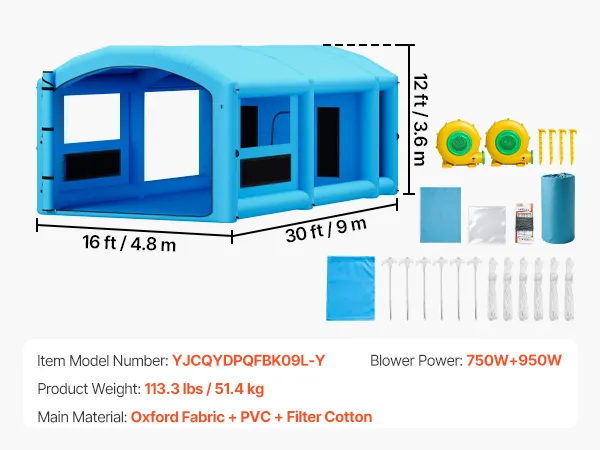
30 x 16 x 12 ft Inflatable Automotive Paint Booth for Full-Size Trucks and Speedboats
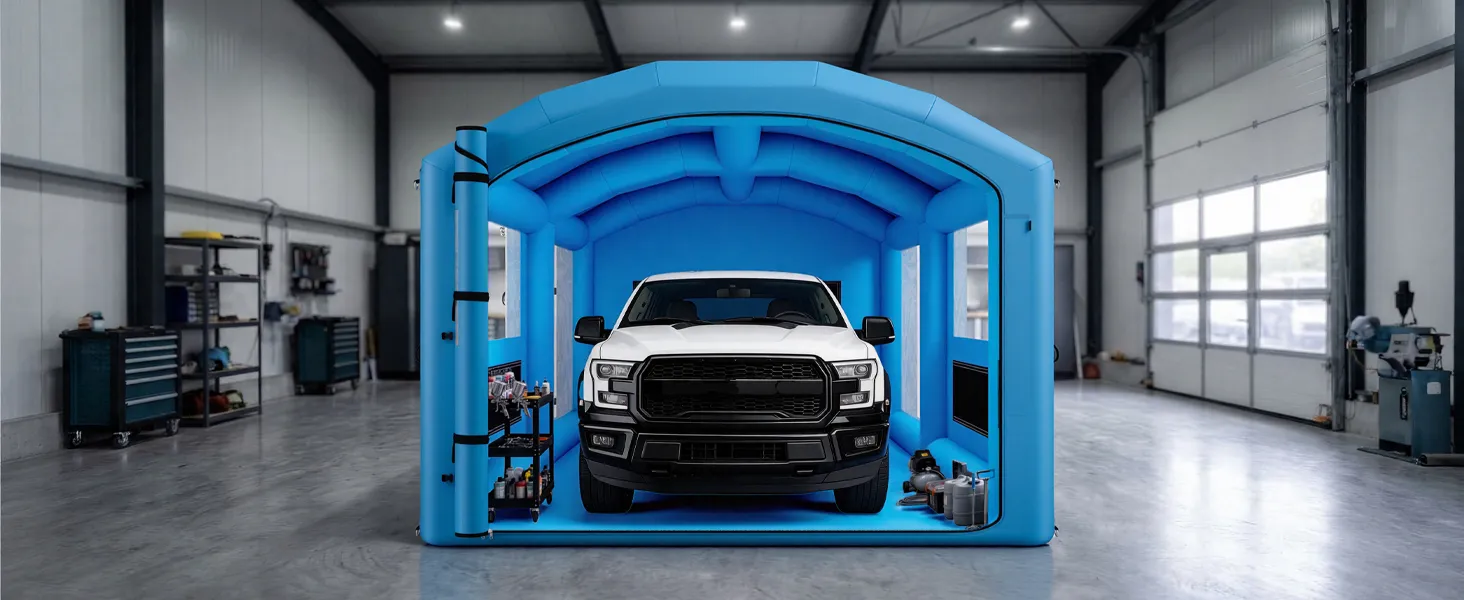
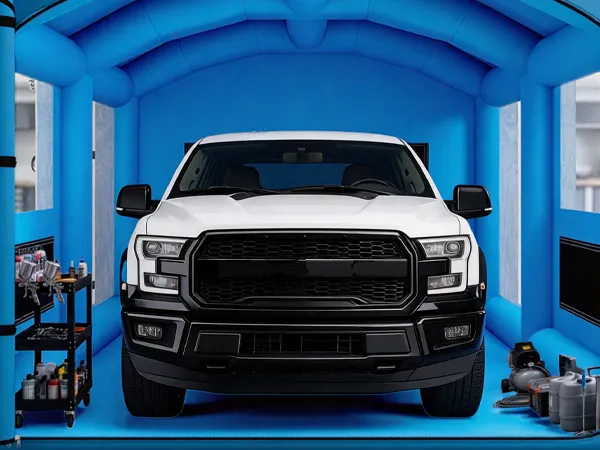
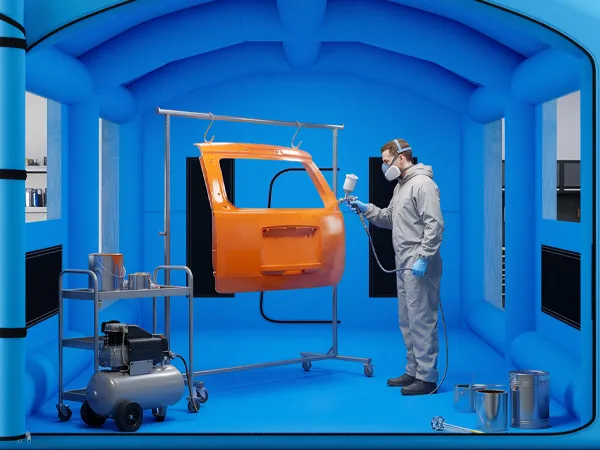
When the project is a full-size long-bed pickup or a tiny speedboat hull, the spray enclosure must match the vehicle’s real footprint, not a manufacturer’s optimistic guesstimate. The VEVOR inflatable automotive paint booth is 30 x 16 x 12 ft overall, with adequate side clearance for a full-size truck and enough ceiling height to accommodate tall cab profiles, roll bars, and roof rack systems without having to remove them before painting.
The hull design of speedboats imposes specific space requirements for boat painting applications that traditional portable enclosures cannot meet. A tiny speedboat on its trailer generally reaches a height of 10 to 11 feet, and the hull beam width requires lateral space for the spray cannon to move in uniform arcs over curved surfaces. This enclosure measures 16 feet wide by 12 feet high. It covers most small speedboat sizes without moving the hull during installation or disassembling trailer hardware to lower the vehicle height before setup.
25 x 13 x 10 ft Work Interior Engineered Around Full-Size Automotive Panel Clearance
The exterior booth dimensions are structural; the inner 25 x 13 x 10 ft work area is what actually determines if a painting project fits and functions properly. The 25-foot length allows for a full-size extended-cab or crew-cab pickup with usable space at both ends, so the painter may walk the entire perimeter of the vehicle without restricting movement near the tent wall.
The booth interior has a 10-foot ceiling height to clear most modern truck rooflines, expanded cab window portions, and bed rail assemblies without uncomfortable upward spray-gun angles. Uniform nozzle-to-surface distance is one of the most crucial variables in vehicle panel restoration. With a 25 x 13 ft floor plan, this inflatable automotive paint booth is large enough to maintain an optimal spray distance along the entire length of the door, fender, and quarter-panel sections without stopping to move the vehicle between passes.
5 Activated Carbon Filter Pads to Neutralize VOCs, Overspray, and Finish Contaminants
Automotive coatings, primers, base coats, clear coats, and specialty finishes emit volatile organic compounds (VOCs) as solvents evaporate during spray application. When the vented air exits the enclosure, the five expanded activated carbon filter pads in the VEVOR booth absorb solvent vapor, thereby reducing its concentration in the spray zone during active coating application.
Overspray particle collection is also important for finish quality. Coating droplets that become airborne and escape filtration can circulate back through the booth and settle on newly painted, wet surfaces, causing contamination defects known in automotive refinishing as dirt nibs, raised surface irregularities that must be color-sanded, compounded, and often reapplied to correct. The recirculated particles on metallic and pearl automobile finishes also disrupt the uniformity of the oriented metallic flake.
Inflatable Automotive Paint Booth with 5 x 13 ft Prep Room for Clean Entry Protocol
A contamination control practice adapted from professional body shop facility design is the integrated prep room, which measures 5 x 13 x 10 ft. This room is where painters change into lint-free coveralls, load and test spray guns, and wipe down parts and tools before entering the spray zone. The 5-foot room depth allows full suiting up without touching the walls, and the 13-foot width allows two workers to work side by side on team projects using body panels or boat hull parts.
Single-chamber portable enclosures expose the spray zone to every contamination source the painter brings in on arrival: clothes lint, skin oils, footwear particulates, and tool waste all enter without filtration. This inflatable automotive paint booth has a dedicated prep room. This dedicated prep room offers a physical contamination barrier at the point of entrance. Rather than relying on enclosure filtering to catch issues once they reach the painting environment, the dedicated prep room addresses the risk of defects at the source.
750W + 950W Dual Blowers Sustain Airflow Consistency for Professional Spray Results
For professional automobile finishing, you want a continuous flow of clean air throughout the application window, not the occasional airing out between coats. The 950W inflation blower maintains structural pressure on the Oxford fabric walls and roof during operation. The 750W ventilation blower runs a directional air exchange cycle that sweeps overspray and solvent vapor into the carbon filter pads. The 1,700W total-power dual-blower system delivers the throughput needed to ensure reliable solvent evaporation rates in multi-stage coating applications.
The chief source of solvent pop and pinhole flaws in automotive clear coats is variable or interrupted airflow, conditions that arise when entrapped solvent vapor under a skinned-over surface film bursts through the coating as it tries to escape. The simultaneous flow of air during and after application controls the evaporation rate across the panel surface and prevents localized solvent trapping.
Oxford Fabric Body and Arched Roof Structure Maintain Structural Rigidity Under Continuous Blower Pressure
The interlocking thread of Oxford fabric is more resistant to prolonged tensile stress than the lighter woven fabrics used in general-purpose inflatable enclosures. The 950W blower maintains positive internal pressure in the booth throughout each painting session, and this constant load places repetitive stress on the material, seams, and air tube connections over the life of the booth. The Oxford fabric’s density and tight weave prevent stretch-induced deformation during this pressure cycle, keeping the wall geometry consistent across deployments.
The side walls include integral clear panels to allow daylight into the workspace. The arched form of the roof transfers internal blower pressure into compressive loading along the curve rather than an outward force on a flat horizontal surface, which would require substantially higher internal pressure to maintain shape. This shape also allows incidental surface moisture to run down the slope rather than collecting in standing pools that would load the roof surface unevenly and distort the interior ceiling height.
Product guides and documents
User manual-en (PDF) Review
Questions and Answers (0)
Typical questions asked about products: Is the product durable? ...
Select product protection plan
Accident and warranty protection by Xcotton (partner with AIG)
No thanks
3-Year
2-Year
1-Year
In Stock
Security & Privacy
FREE Returns
Professional Service
Compare with similar items
Similar Items You Might Like
People Who Bought This Item Also Bought
Best sellers in this category
People Who Viewed This Item Also Viewed
Your Browsing History
Recommended Searches
paint gun paint paint boot paint gun hire automotive paint matching near me car paint fix car paint shop car body paint cheap car paint car wheel paint car rim paint paint car wheels black blue car paint red car paint cheap automotive paint buy car paint car dashboard paint plastic paint for cars glitter car paint garage epoxy paint car paint matching