Bird Houses








Results for Bird Houses
When it comes to bird houses, VEVOR has a wide range of cage types, hanging arrangements, and sizes. With VEVOR bird houses, you can safely house a parrot or large hookbill bird in a large standing bird cage. It will have an open-top play area that lets them enjoy time outside the cage without a separate play stand. For floor housing, there are standing bird houses on wheeled or fixed base stands or hanging bird cages for the ceiling. Every bird house is made with safe bar spacing that is matched to the species being housed.
VEVOR Bird Houses – For Small, Medium, and Large Pet Bird Housing in Residential and Aviary Environments
Are you choosing a hanging bird cage for a small bird species in the living room or as a decorative indoor bird housing option? VEVOR bird houses do not have the safety and welfare issues that come with poorly chosen bird cages. If you choose the wrong bird house, the living space will not meet the space, safety, and enrichment needs of the bird species you are keeping. VEVOR bird houses are a strong choice for many pet bird housing needs because they have the right cage type, bar spacing, interior dimensions, and mounting setup.
Choosing Bird Houses by Cage Type and Mounting Method
When choosing a bird house for a specific bird species, the cage type and hanging method are the two key factors to consider. The type of cage determines its structure, the types of toys and enrichment it can hold, and the sizes and species of birds it can safely hold. The mounting method, on the other hand, determines where the cage goes in the living space and how it fits in with the room's environment and the daily tasks of bird management.
Standing Bird Houses for Floor-Positioned Pet Bird Housing With Stable Base Support
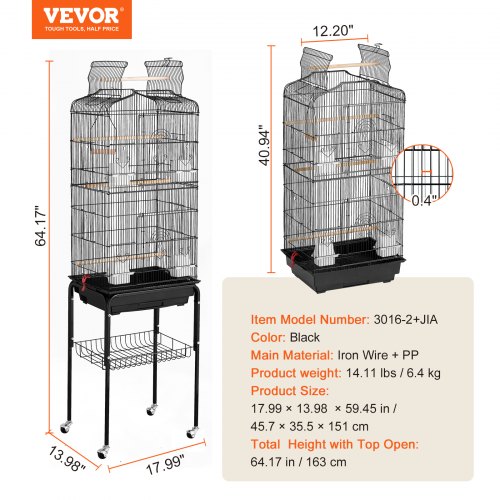
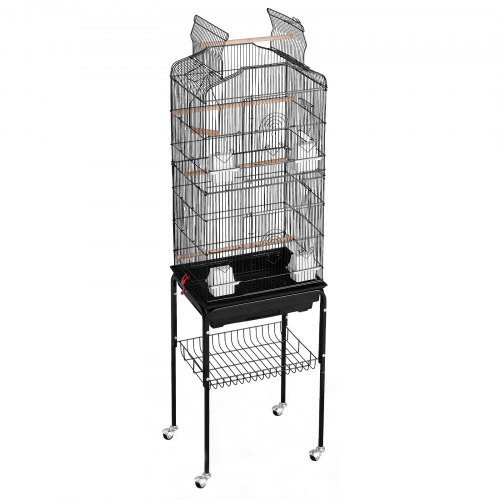
Most pet birds need a lot of space inside their cages so they can move around, climb, forage, and do other fun things. Standing bird houses are a common type of housing for these species. A standing bird cage has a built-in base stand, which can be a fixed four-legged stand or a wheeled rolling base. It sets the height of the cage body so that the lower perch levels and the cage floor are at a comfortable level. You can easily observe, interact with, and perform daily tasks like feeding, changing the water, and cleaning the cage without stooping or bending awkwardly.
A rolling standing bird house lets you move the entire cage and stand assembly to another room without taking the cage apart from its stand. It is possible because the cage's base is on wheels. Standing bird houses come with base stand heights and cage body sizes that are matched to the interior space needs of different bird species. The stand is made of the same powder-coated or stainless steel as the cage body. Hence, the cage and stand do not differ in corrosion or material safety properties, as the stand meets the cage.
Hanging Bird Houses for Ceiling-Suspended and Hook-Mounted Decorative and Functional Bird Housing
Hanging bird cages have a chain, cable, or hook ring on top that hangs from a ceiling hook or a stand made just for hanging cages. It lets you place the cage at the right height in the room without taking up floor space like a standing base stand would. Smaller birds, like finches, lovebirds, and small conures, do well in smaller cages and do not need the floor-level access and wheels.
Hanging bird houses with decorative round or pagoda-shaped profiles looks nice and keeps birds safe in living rooms, sunrooms, and greenhouses. The hardware that supports the hanging bird house must be strong enough to hold the weight of the bird, the cage, and all its accessories. It should withstand the dynamic loading created by an active bird moving, climbing, and flapping within the cage during its normal daily activities.
Hanging bird houses come in cage profiles, bar spacing specifications, and suspension hardware load ratings that are best suited for small and medium-sized bird species. The door placement and opening dimensions perfectly suit daily feeding, water changes, and managing bird access.
Open Top Parrot Bird Houses for Out-of-Cage Enrichment Time and Integrated Play Surface Use
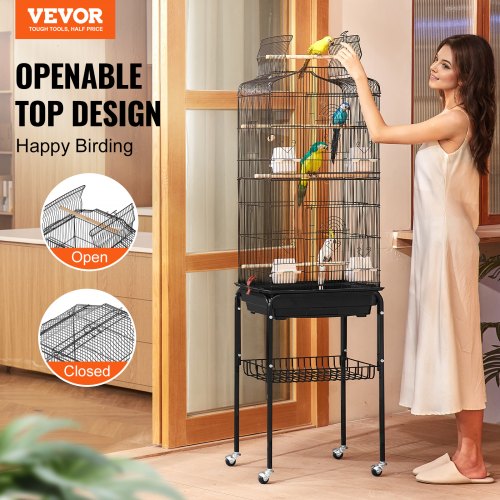
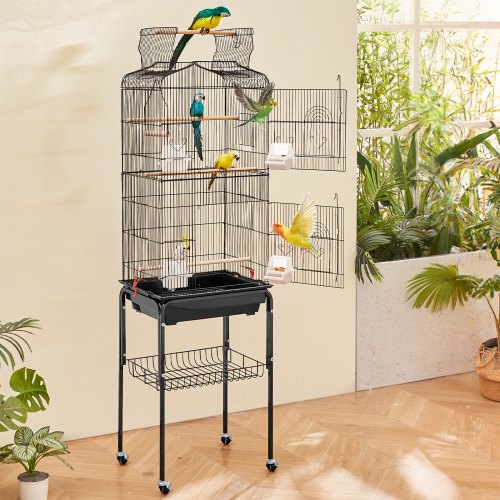
Open top parrot cages have a fold-out or removable top section that creates an open play surface above the cage body. It allows the bird to move freely to the top of the cage for out-of-cage enrichment activities, such as climbing, foraging, toy interaction, and social time. For medium- and large-sized parrot species, the open-top design is ideal for supervised time outside the cage for exercise and social interaction. The built-in top play surface provides a familiar perching and activity zone that is immediately accessible when the top is opened. Hence, the bird does not have to be carried to a different play area in another part of the room.
An open-top parrot bird house usually has at least one horizontal perch above the top opening and feeding cup holders. Hence, the bird can get food and treats when it is time to play, and the attachment points for the toy hook let it hang toys. You can buy open-top parrot bird houses with cage bodies that are the right size for the parrot species you’re housing.
Evaluating Bird Houses by Size and Top Configuration
The cage size and top configuration determine whether the bird house has enough space inside for the bird's movement, enrichment, and behavioral needs. The top design also determines whether it aligns with the owner's preferences for management and enrichment, as well as the bird's activity needs.
Cage Size — 15 Inch, 18 Inch, and 24 Inch Bird Houses for Different Bird Species Size and Interior Space Requirements
Finding the right cage size is a major factor to consider when choosing a bird house for welfare reasons. That is because the cage's interior dimensions determine whether the bird can move, stretch, climb, and engage in other natural behaviors. A 15 inch bird cage is the right size for small birds like budgerigars, lovebirds, small finches, and canaries. It is suitable for birds whose wings need to fully extend from a perch and move freely between different perch positions. They also need enough floor space for foraging without their wing tips touching the cage bars while they are doing normal things inside the cage.
If you want to house medium- to small-sized parrot species that need more interior space, an 18 inch bird cage is the next size up. A too-small cage makes it hard for the bird to climb, stretch its wings, and move around.
For medium-sized parrots like African greys, Amazon parrots, caiques, and larger conures, a 24 inch bird cage offers a larger interior space. The cage space allows for more movement, the placement of enrichment items, and the natural climbing and foraging behaviors. Bird houses come with interior width, depth, and height measurements for each size category. It helps you choose an appropriate cage size for your bird by comparing its wingspan and body length to the cage's internal dimensions.
Open Top Play Surfaces, Domed Tops, and Flat Top Designs for Enrichment Access and Cage Stacking
The right top configuration is chosen based on whether the bird needs to be supervised while playing on the cage top or outside of the cage. The best enrichment and interaction for parrot species that need supervised time outside the cage on a familiar perching surface is provided by an open-top configuration. During daily out-of-cage time, the cage top becomes an accessible play area instead of a barrier. It can reduce the need for a separate play stand in the room.
Domed top cages feature an arched top-bar structure, making the upper cage space larger than in a flat-top cage. It gives hanging birds more room for perches and swings on top of the cage, which they tend to use most in the upper part of the interior. Flat-top cages have a stable, level surface above the cage body that can hold small storage items and lightweight decorations. You can also place a second stacking cage unit above the first in multi-bird housing setups, where vertical stacking takes up less space than placing two separate cage units next to each other on the floor or stand.
Shop VEVOR Bird Houses for Every Cage Type and Pet Bird Housing Application
VEVOR offers all the bird house types, mounting options, size requirements, and top designs you need. The bird houses include standing bird cages, hanging bird cages, and open top parrot bird houses in 15-inch, 18-inch, and 24-inch sizes. Each one is made with bar spacing selected for the species, non-toxic materials, secure door latch systems, and removable trays and grate designs. Look through our range of bird houses to find the right type, size, and shape of cage for your bird species and its home.
FAQs
How do I choose the right cage size for my bird species?
When choosing a cage size, you should compare the bird's wingspan and body length to the cage's interior dimensions. The cage's interior width should allow the bird to fully extend both wings from a central perch without the wingtips touching the bars. The cage's height should also allow the bird to move between different perch levels without its head touching the top of the cage.
What is the advantage of an open-top parrot bird cage over a standard enclosed top cage?
An open-top parrot cage has an out-of-cage enrichment surface built into its body. The bird can use this surface during daily controlled time outside the cage without needing a separate play stand in the room. If you open the top part of the cage, the bird can instantly access the familiar, territory-associated perching and activity zone on the open-top play surface.
What bar spacing is safe for different bird species in a bird cage?
Bar spacing must be small enough that the bird cannot get its head through the bars. A gap big enough for the head to fit through causes a risk of entrapment and strangulation during normal cage climbing.