







Download VEVOR App 

Get $5.00 Off $99.00+ Orders on Your First 3 App Orders
Scan the QR code to download
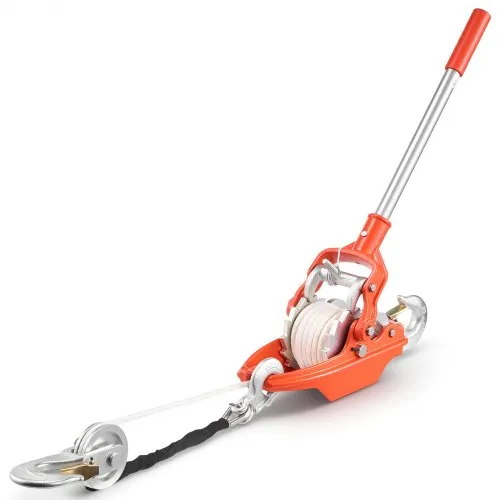
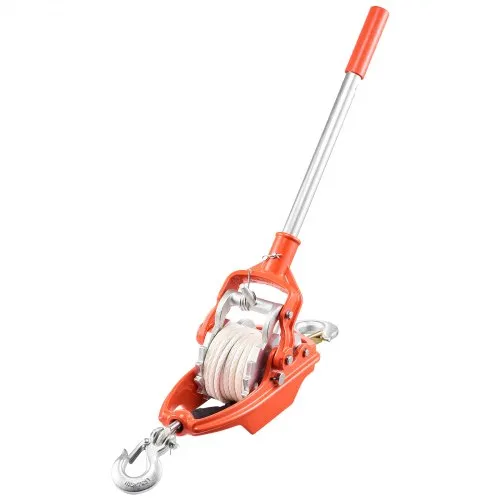
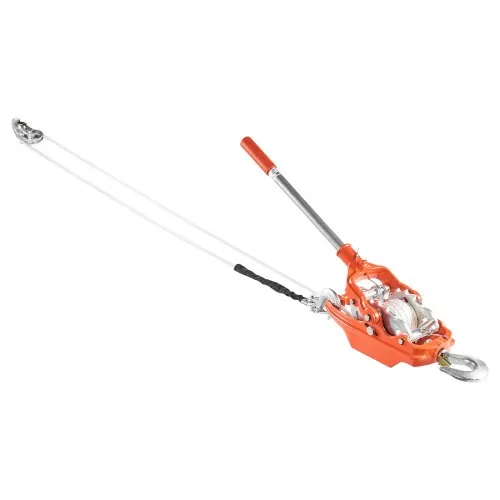
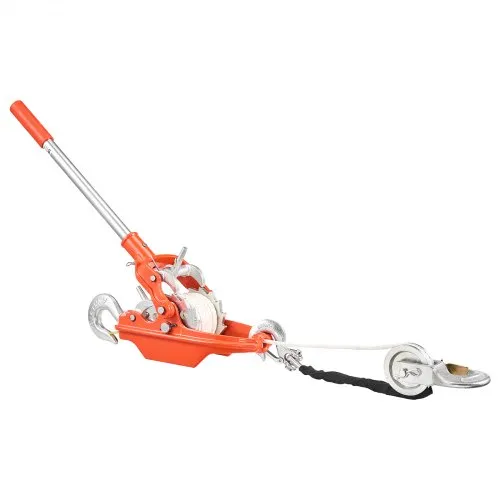
For industrial applications, construction sites, farm equipment, and vehicle maintenance, VEVOR ratchet pullers deliver dependable lifting and pulling power. Our extensive selection of 2 ton come along winch and 4 ton come along winch models is designed to perform difficult jobs with accuracy and safety. Whether you're lifting heavy loads, straightening frames, or removing engines, VEVOR offers reliable ratchet puller solutions that blend sturdy design with ease of use. VEVOR gives experts and do-it-yourselfers the pulling power they need at affordable prices, backed by reliable after-sales support.
Do you need a trustworthy pulling tool for heavy equipment positioning, car recovery, or engine removal? For everyone who requires a controlled pulling power, such as farmers, construction workers, or auto technicians, ratchet pullers are indispensable equipment. A comprehensive range of ratcheting power pullers, designed for dependability, safety, and reliable performance in challenging work conditions, is available from VEVOR.
Knowing your unique load needs and spatial limitations is the first step in choosing the best ratchet pullers. While cable length influences your operational range and versatility, the capacity rating establishes the maximum safe working load your instrument can support.
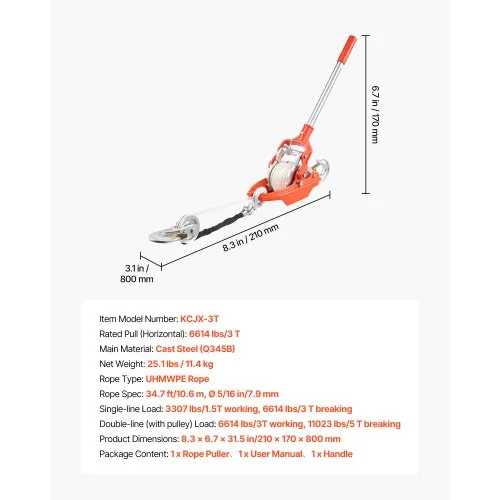
With its 4,000 pounds of pulling force, the 2 ton come along winch is the industry standard for light to medium-duty applications. This capacity includes removing engines from sedans and compact trucks, repairing minor frame damage, and maneuvering machines in confined spaces, and can tackle the majority of automotive operations.
Its lightweight construction reduces operator fatigue during prolonged use, and its compact shape makes it ideal for home garages with limited storage space. The 2-ton type is ideal for farm applications because it can move gate posts, stretch fences, and adjust lightweight equipment without additional help.
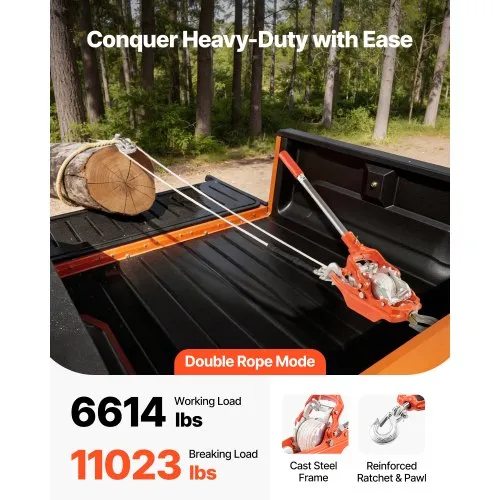
For heavy-duty tasks, the 4 ton come along winch is the professional's pick because it doubles the pulling capacity to 8,000 pounds. When dealing with diesel engines, commercial vehicle chassis, or industrial apparatus that exceed typical weight restrictions, this increased capacity becomes crucial. For tasks where accuracy is just as important as power, such as aligning concrete forms, positioning steel beams, and moving equipment, construction experts depend on 4-ton models. Because a 4-ton puller for a 3,000-pound load runs well within safe bounds, lowering cable stress and prolonging tool lifespan, the greater capacity also offers a critical safety margin. This additional capacity is especially useful for marine applications, such as securing vessels during docking operations or moving boats onto trailers.
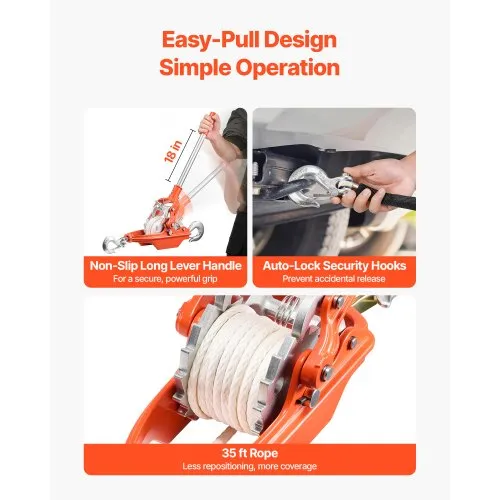
Cable length directly affects your application's flexibility and working radius. The cables used in standard ratchet pullers are 6 to 10 feet long and have distinct functions. The 6-foot cable configuration works well in tight areas where short, controlled pulls are required, and flexibility is limited, such as engine bays. This length preserves exact control over draw direction and force application while minimizing cable slack and the risk of tangling. Shorter cables help keep the workspace neat and minimize trip hazards in workshop settings with permanent anchor points.
Your ratchet pullers become a multipurpose outdoor tool when you use extended 10-foot cables, as anchor points may be far from the load. Pulling fence lines over uneven ground or retrieving equipment from ditches where safe anchoring locations are far from the stranded vehicle are two common agricultural tasks that call for this extended reach. In difficult situations, the longer cable also encourages innovative problem-solving.
You can work from safer positions away from potentially unstable loads, change pull angles mid-operation, or route the cable around obstacles. But to avoid kinking, which weakens the cable's integrity and lowers its safe working load, longer cables need to be more carefully inspected for wear and stored more carefully.
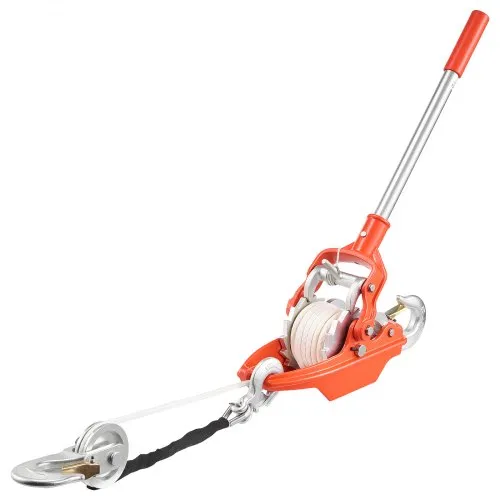
The ratcheting mechanism, which transforms human handle operation into a controlled pulling force, is the central component of every ratchet pullers. For infrequent users, single-pawl ratchet pullers are easy to use since they operate simply and produce audible clicks for each incremental draw. To help workers keep rhythm and identify any mechanical resistance that may indicate overload, the clicking sound serves as feedback.
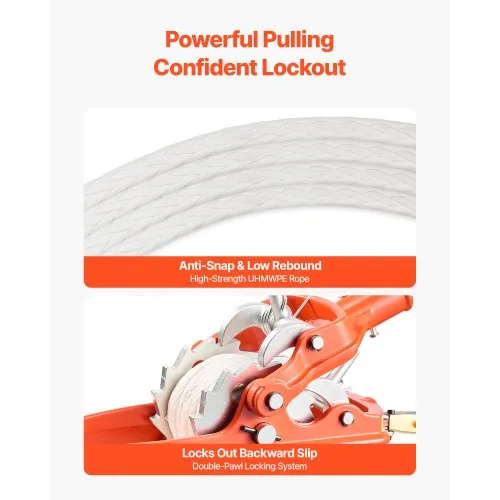
These mechanisms, which usually advance 1 to 2 inches per stroke, require more handle cycles but provide greater control over load movement, which is essential for aligning precise components or situating sensitive equipment. Premium VEVOR versions feature dual-pawl ratchet pullers that provide increased durability by engaging redundantly. The second pawl keeps the weight secure and stops the risky cable release if the first one doesn't catch. When operating alone without a spotter or in overhead lifting situations, this safety feature is quite helpful.
Additionally, by distributing mechanical stress among more elements, the dual-pawl arrangement prolongs service life and lessens wear on individual parts. Operators can rest without erecting temporary supports thanks to the advanced versions' automated load-holding devices, which lock the cable position when handle pressure decreases. By preventing unintentional load release, this function enhances overall job-site safety and significantly reduces fatigue during prolonged pulling operations.
In terms of overall system strength and load security, the hook-to-cable connection is crucial. When pulling pressures exceed several tons, forged steel hooks with safety locks are essential to prevent unintentional cable disconnection during use. The latch mechanism should close smoothly and remain closed, not open due to vibration. The spring-loaded latches on VEVOR ratchet pullers snap firmly into place and are easy to use with gloved hands. Wider throat holes allow for thicker anchor chains, vehicle frame members, and equipment lifting points without the need for adapters, which could cause additional failure points in your rigging system. Hook opening size is also important.
Professional-grade ratchet pullers feature several safety features and a robust design to safeguard users and ensure long term reliability in demanding situations.
Modern VEVOR ratchet pullers feature overload protection that prevents them from exceeding their rated capacity. This mechanism usually has a slip clutch or shear pin that disengages when excessive force is applied, protecting both the tool and the operator and preventing catastrophic failure. As the system approaches its full capacity, tactile and auditory feedback provide operators with a clear warning before they reach hazardous load levels. Cable guide rollers limit heat buildup that could jeopardize the cable's structure and ensure smooth, friction-free cable movement by reducing friction during operation.
Heat-treated pawl mechanisms maintain their positive engagement under full load even after thousands of running cycles. The pawls should show some wear patterns after extended use. Examples of quality indicators include the use of hardened steel structures and precise machining that ensures full contact with the ratchet teeth. Anti-reverse systems instantly lock when the handle pressure is released, preventing load backsliding that could cause property damage or injury. Because these systems operate without user input, they provide a fail-safe even if operators forget to activate manual locks during pauses in operation.
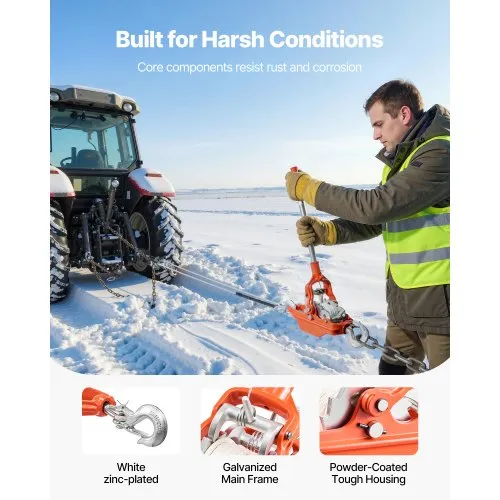
Professional ratchet pullers' tools endure extreme environments, from sweltering summer building sites to sub-freezing winter recovery operations. Corrosion resistant cables, often made of stainless steel or galvanized steel, are less likely to rust, which can weaken them and cause sharp burrs that cut the operator's hands. The cable's surface shouldn't have any damaged wire strands or rough spots. It is necessary to replace the cable immediately before proceeding, as these defects indicate degradation.
Common in auto shops and industrial environments, zinc plating or powder coating helps housing components resist chemical exposure and moisture intrusion. Impact resistant handles maintain structural integrity when tools are dropped or clash with other equipment, while textured grip surfaces provide positive control even in wet or oil-contaminated environments. VEVOR assesses durability by simulating years of professional use through repetitive load cycling, ensuring mechanisms continue to operate as intended throughout the tool's service life.
Because sealed bearing assemblies keep dirt and debris out and minimize premature wear, they are ideal for equipment used in muddy recovery situations or dusty agricultural settings where contamination is unavoidable.
VEVOR ratchet pullers' professional-grade construction and reasonable costs allow them to provide the required pulling force and safety features without breaking the bank. Suitable for both residential and commercial use, our extensive selection of 2 ton and 4 ton come along winch models is available. Each device features clear capacity indications, thorough operating instructions, and fast customer service to ensure your success. To equip your workshop with pulling tools that deliver dependability, safety, and reliable performance across a range of demanding applications, browse our complete assortment right now.
Two-ton models can pull up to about 4,000 pounds, whereas 4-ton models can pull up to about 8,000 pounds. This is the primary difference. Select a larger-capacity choice with higher safety margins for labor-intensive jobs based on your typical load weights.
Check for frayed wires before using the cable, clean and lubricate it after each use, and keep it in a dry place. Oil ratchet mechanisms monthly and check hook latches for smooth, secure operation.
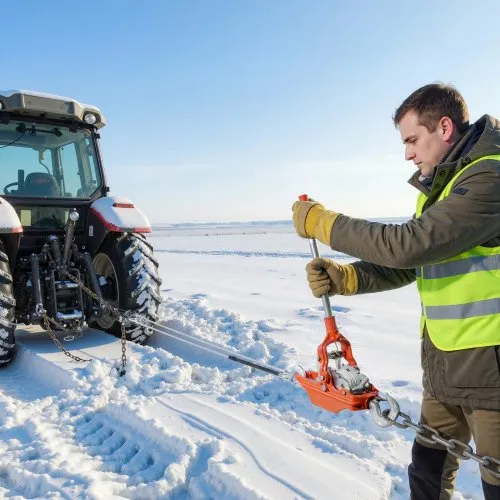
The main function of ratchet pullers is horizontal pulling, though they can also be used for vertical pulling. When lifting overhead, be sure the product has dual-pawl safety mechanisms and that it never exceeds its rated capacity. Always use the proper rigging techniques and safety equipment.
Replace the cables immediately if you observe kinks, corrosion, severe wear, or broken wire strands. Under normal conditions, inspect cables before beginning any activity and replace them every 2 to 3 years for professional applications, or when wear indicators indicate weakened cables.