Tie-Down Hardware & Accessories














Results for Tie-Down Hardware & Accessories
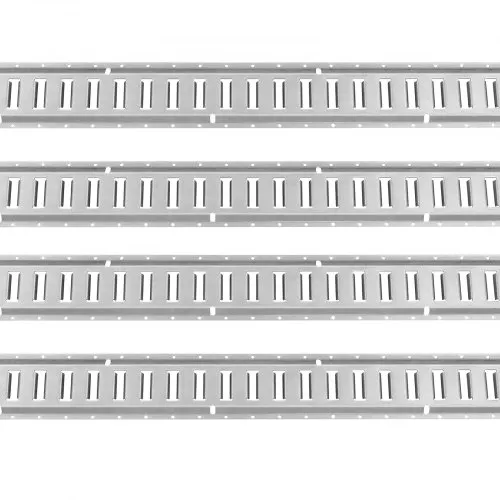
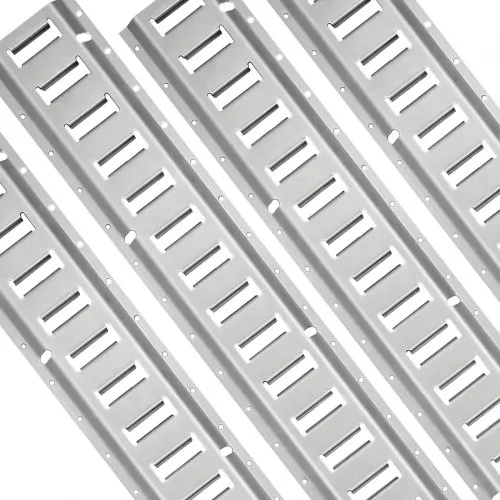
Tie-down hardware and accessories are the anchor points, rails and fittings that give straps, ropes and nets something solid to pull against when cargo has to stay put. The hardware is bolted or screwed to a floor, wall or bed, turning that surface into a set of rated attachment points. On a track system, a steel rail carries a row of evenly spaced slots, and spring-loaded fittings click into any slot so an anchor sits exactly where the load needs it. When a strap is hooked on and tightened, the hardware passes the pulling force into the surrounding structure, which stops cargo from sliding, tipping or bouncing loose in transit.
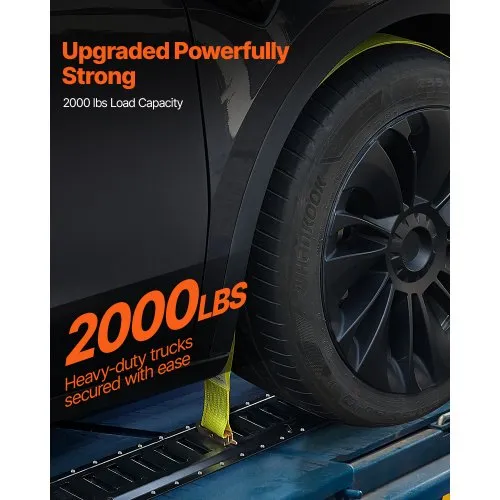
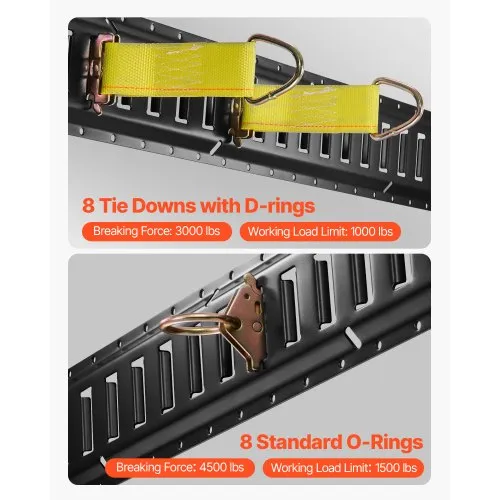
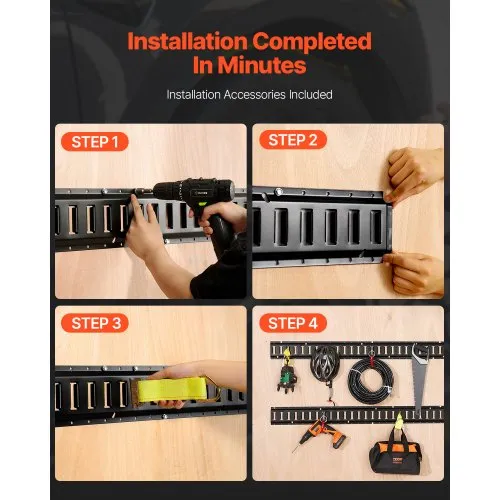
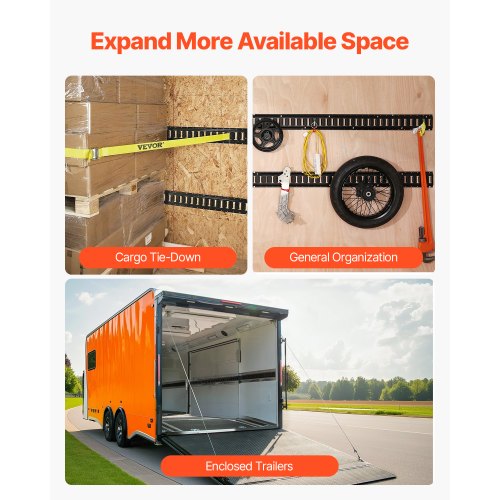
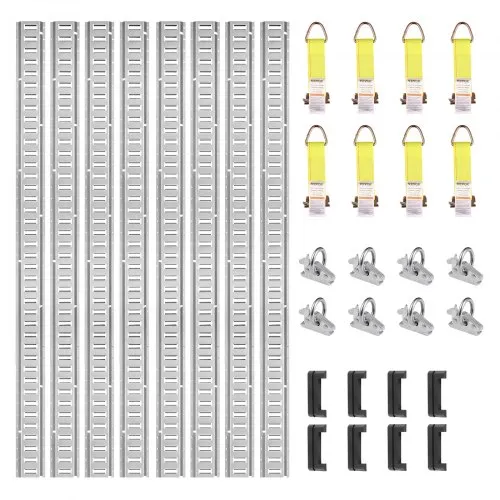
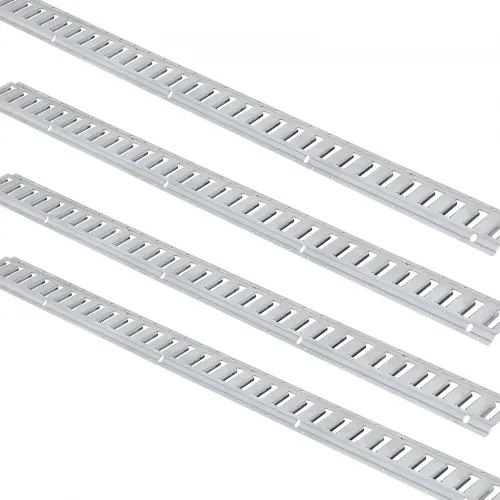
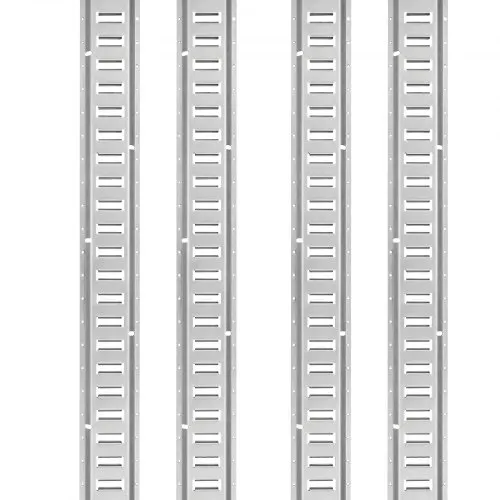
VEVOR stocks four main forms, all steel e-track rails rated from 1,500 to 2,000 lbs. E-track rails come as bare 4-packs in 5 ft or 7.7 ft lengths, with up to 46 slots per rail for fittings you already own. Rail and fitting kits pair 4 to 8 rails of 5 ft with O-rings and D-ring tie-offs, ready for your own straps. Complete tie-down kits add 2 ratchet straps to rails from 1.3 to 7.7 ft long, including a mixed set of 5, 4, 2 and 1 ft rails. A garage storage kit fits 1.3 ft rails with U-hooks, tool holders, shelf brackets, tire holders and cable rings. Typical uses are securing motorcycles and ATVs in enclosed trailers, holding appliances and furniture in cargo vans, anchoring lawn equipment and tool chests, and organizing tools, spare tires and cables on garage walls.
Four things decide what you need:
- Load weight: check the rated load of the rails and every fitting, then plan around the lowest rating in the chain.
- Wall or floor run: measure the space you want to cover, then pick a rail length and count that fills it without awkward gaps.
- Box contents: decide whether you need straps and rings now or already own fittings that clip into standard slots.
- Mounting surface: confirm the wall or floor can hold screws or bolts, and buy fasteners separately where a kit leaves them out.
Compare rail lengths, load ratings and included fittings across the full range of VEVOR tie-down hardware and accessories, or browse more ways to secure a load in our tie-down straps collection.
Tie-Down Hardware Types at a Glance
Use this quick comparison to see how each type differs before you narrow down to individual kits.
| Type | What Is in the Box | Rail Lengths on This Page | Main Job | Trade-offs |
|---|---|---|---|---|
| E-track rails only | Rails only, no fittings | 5 or 7.7 ft | Custom anchor walls | Up to 2,000 lbs; fittings bought separately |
| Rail and fitting kit | Rails, O-rings, D-ring tie-offs | 5 ft | Anchor grid for own straps | Anchor points ready; no straps included |
| Complete kit with ratchet straps | Rails, rings, tie-offs, 2 straps | 1.3 to 7.7 ft | Haul straight from the box | Ready at once; only 2 straps for big loads |
| Garage storage kit | Short rails, hooks, holders, brackets | 1.3 ft | Wall storage for gear | Organizes tools and tires; not for hauling |
VEVOR Tie-Down Hardware & Accessories: E-Track Systems, Ratchet Straps, and Cargo Solutions
Has your cargo moved, slid, or arrived damaged because the method you're using to secure it isn't strong enough? Cargo that isn't properly protected poses a safety risk and causes major avoidable freight damage on public roads. VEVOR's tie-down hardware and accessories include e-track rails, x-track rails, ratchet straps, D-rings, cargo nets, and bungee cords. This means that every driver can get a full, correctly rated system that works with their vehicle type and cargo weight.
VEVOR Tie-Down Hardware Types (E-Track, X-Track, Straps)
To pick the correct tie-down hardware, you must first know which parts fit your vehicle's anchor system, the type of goods you are transporting, and the load limits needed for safe, legal transport. VEVOR's catalog of tie-down hardware and tools includes track systems, strapping solutions, anchor hardware, and containment accessories. It has everything you need for a well-designed cargo security system.
E Track Rail Systems and E Track Tie Down Kits: Modular Anchor Infrastructure for Vans and Trailers
The most flexible and widely used cargo anchor infrastructure in the commercial transport industry is an e-track rail system. It has a continuous row of standard slots that can accept a wide range of compatible fittings, such as bike hooks, shelf brackets, rope rings, and strap anchors, at any point along the rail's length. To fit cargo van sidewalls, trailer floors, and enclosed truck interiors, where set anchor points would make it hard to change a load's configuration, VEVOR's e track tie-downs are made from cold-rolled steel and come in lengths of 5 to 10 feet.
VEVOR's e track tie-down kits include the rails and a matching set of compatible fittings, such as strap-end anchors, O-rings, and spring-loaded positioning clips. This way, operators can get everything they need to set up a fully working anchor grid all at once. When you install E-track systems on both sides of a cargo van or trailer, you can use cross-van strapping to keep your loads in place against movement in all three directions simultaneously.
X Track Rails, High-Strength Anchor Systems for Heavy Cargo and Off-Road Transport
X-track rails work on the same slot-and-fitting principle as e-track systems, but they have a different slot geometry that allows for higher per-fitting load ratings. This makes them the best choice for transporting heavy equipment, hauling motorsport equipment, and off-road recovery situations where each anchor point needs to withstand much more force than a standard van cargo securement system.
Because the x-track system works with high-load fittings like wheel chocks, axle straps, and equipment tie-down rings designed for motorsport and heavy equipment use, it is the best choice for operators whose cargo often exceeds the weight limits of standard e-track hardware. Countersunk bolts are used to mount VEVOR's x-track rails through the trailer floor or wall substrate, just as e-track systems are installed. This means that operators who already know how to install e-track can switch to installing x-track infrastructure for high-load applications without having to learn a new system.
Ratchet Straps and Tie-Down Hooks, Core Strapping Solutions for Every Load Type
Ratchet straps are the most important part of any cargo security system. They work by manually turning into high-tension strap compression that keeps loads firmly against the transport surface, no matter how the road shakes, turns, or stops. Varying in width from 1 inch to 4 inches, VEVOR's ratchet straps can hold up to 833 pounds up to over 5,000 pounds, making them suitable for a wide range of loads, from light van loads to heavy flatbed goods.
VEVOR's range of tie-down hooks includes zinc-plated and stainless steel flat hooks, J-hooks, and snap hooks. Each hook type is best suited to a different anchor point and load setting. It's important to choose the right hook style for your anchor point type, like an e-track fitting, a d-ring, a trailer rail slot, or a fixed eyebolt, so that the connection stays strong even when the loads change.
D-Rings, Cargo Nets, and Bungee Cords, Anchor Points, and Containment Accessories
If you want to secure cargo, D-rings are a basic piece of fixed anchor point hardware. They have a rated attachment loop that can take ratchet strap hooks, rope, chain, and wire rope. You can use them on trailer floors, truck bed rails, and van walls, among other places. VEVOR's d-rings come in weld-on, bolt-on, and recessed floor styles. They can withstand up to 10,000 pounds, depending on the ring's diameter and the grade of steel used. This ranges from light utility installations to commercial vehicle floor anchor grids where multiple D-rings share cargo loads across several anchor points.
Cargo nets and bungee cords are useful for keeping loose, uneven, and light cargo in place when ratchet straps and D-rings can't do the job on their own. VEVOR's cargo nets are made of knotted or woven polyester and have hooks on the edges that attach to existing anchor points. This creates a flexible layer that covers stacked boxes, bags, and loose items, helping keep them from moving or spilling without having to run straps around each item individually.
Planning an E-Track Layout by Load
Hardware type sets the baseline, but the load you are moving decides where the rails go and which fittings to clip in.
| Load or Job | Rail Placement | Fittings to Use | Why It Works |
|---|---|---|---|
| Motorcycle or dirt bike | Floor rails at the front wheel | Ratchet straps, O-rings | Pulls the bike forward and down |
| ATV or riding mower | Floor rails beside the wheels | Ratchet straps, single slots | Anchors each corner separately |
| Appliance or tall furniture | Wall rails at two heights | Straps run across the van | Holds tall items upright on bumps |
| Stacked boxes or mixed loads | Long rails along both walls | Straps at any slot | Strap sits where the stack ends |
| Tools, spare tires, cables | Short rails at arm height | U-hooks, tire holders, cable rings | Gear stays off the floor, in reach |
Selecting VEVOR Tie-Down Hardware & Accessories by Weight Capacity & Features
The engineering specifications and material composition of your tie-down hardware, along with the type of components used, determine whether the system maintains its rated performance after years of tough transport use or whether it breaks down too soon from UV exposure, moisture, and mechanical stress that cargo securing equipment has to deal with in real life.
Material Standards That Maintain Load Ratings Through Demanding Service Cycles
The load-bearing strength of tie-down gear and accessories is completely determined by the quality of the materials used in each link of the chain, from the track rail and fitting to the strap webbing and anchor point. VEVOR's e track tie-down rails and x track rails are made of cold-rolled steel with tensile strength standards that maintain the slots' shape and the fittings' retention force even after being loaded and unloaded many times, while thinner-gauge alternatives lose their slots' shape.
Webbing for ratchet straps across VEVOR's range uses high-tenacity polyester with a break strength typically at least three times the stated working load limit. This safety margin is the industry standard that ensures straps remain within their elastic range under the most stress. We make D-rings and tie-down hooks from alloy or stainless steel, and during quality control, we batch test them at proof load to ensure they meet their stated load rating before sending them out.
Matching Tie-Down Hardware Specifications to Your Cargo Weight and Transport Frequency
Ensuring that all of your tie-down hardware and accessories meet the required standards is what ensures you follow safety rules and that your hardware lasts a long time under the conditions you use for transport. If you connect a high-rated ratchet strap to an undersized d-ring or an e-track fitting that doesn't work with it, the system will fail at its weakest point, no matter how strong the other parts are.
When commercial transport operations happen frequently, investing in higher-grade hardware for the entire system, including e-track tie-down kits with rated fittings, load-marked ratchet straps, and proof-tested d-rings, reduces the total cost of ownership by extending the time between replacements and removing the liability risk associated with using subpar equipment for securing cargo on roads.
Best-Seller Comparison
Here is how five of the most popular kits on this page compare on the specs that set them apart.
| Product | Rails | Rail Length | Rated Load | Steel Thickness | Slots per Rail | Included Fittings | Best For |
|---|---|---|---|---|---|---|---|
| 5 ft E-Track Kit, 8 Rails, 32 Pcs | 8 | 5 ft | 1,500 lbs | 2.3 mm | 30 | 8 O-rings, 8 tie-offs | Most track in one box; full trailer walls |
| 5 ft E-Track Kit, 6 Rails, 2 Straps | 6 | 5 ft | 1,500 lbs | 1.8 mm | 30 | 2 straps, 6 O-rings, 6 tie-offs | Only equal-length kit with straps; van walls |
| Mixed-Length E-Track Kit, 8 Rails | 8 | 5, 4, 2, 1 ft | 1,500 lbs | 1.8 mm | 6 to 30 | 2 straps, 8 O-rings, 8 tie-offs, 2 single slots | Only mixed lengths; walls cut by wheel wells |
| 7.7 ft E-Track Rails, 4 Pack | 4 | 7.7 ft | 2,000 lbs | 2.3 mm | 46 | None | Highest load, longest rails; custom setups |
| 1.3 ft E-Track Storage Kit | 4 | 1.3 ft | 1,500 lbs | 1.8 mm | 8 | Hooks, tool holders, shelf brackets, tire holders, cable rings | Only storage kit; garage tool and tire walls |
Shop VEVOR Tie-Down Hardware & Accessories for Safe, Compliant Cargo
VEVOR's tie-down gear and accessories collection includes e-track rail systems, x-track rails, ratchet straps, tie-down hooks, d-rings, cargo nets, and bungee cords with a wide range of load ratings. All of these items are available at reasonable prices with reliable after-sales assistance. VEVOR has everything you need for a properly rated securing setup, whether you're setting up a cargo van, securing heavy equipment on a flatbed, or moving a mix of loads on a trailer. Look through the whole selection right now and feel safe about every load.
FAQs
What is the difference between e-track rails and X-track rails?
E track rails use a standard elongated slot geometry widely compatible with van, trailer, and enclosed truck applications across a broad range of fittings. X track rails use a different slot profile with higher per-fitting load ratings, suited to heavy equipment, motorsport, and ATV transport, where individual anchor points must withstand greater forces than standard e-track supports.
How do I calculate how many ratchet straps I need to secure my cargo?
Divide your total cargo weight by the working load limit of your chosen ratchet strap, then round up to the nearest whole number. Always use at least 4 straps on large or irregularly shaped loads to control movement in all directions. Consult the DOT cargo securement regulations for the specific commercial transport compliance requirements for your cargo type.
Can VEVOR e-track tie-down kits be installed in any cargo van?
Yes. VEVOR e track tie-down rails use standard countersunk bolt mounting that suits most cargo van sidewalls and floor substrates, including steel, aluminum, and plywood-lined interiors. Always verify your van's wall or floor material thickness and structural backing before installation to ensure anchor points achieve their full rated load capacity.
What working load limit should I look for in tie-down hooks and d-rings?
Match your hook and d-ring working load limit to the highest-rated strap in your system or higher. The complete securing assembly is only as strong as its weakest component. For standard 2-inch ratchet straps with a 3,333 lb working load limit, use hooks and d-rings rated at a minimum of 3,333 lbs to maintain full system integrity.
Are cargo nets and bungee cords suitable for highway transport?
Cargo nets are suitable for containing loose, lightweight loads on highway trips when used alongside primary ratchet straps for securing heavier items. Bungee cords are appropriate for low-speed supplementary securing of tarps and covers. Still, they are generally not rated for primary cargo restraint at highway speeds and should not replace ratchet straps as the main securing method.
How do adjustable tie down straps improve cargo safety?
They let you dial in the exact tension a load needs, so cargo stays pressed against the floor without being crushed. Once set, the buckle or ratchet holds that tension through vibration, braking and turns. Check each strap's working load limit, and compare widths and lengths in our ratchet straps range.
What are the different types of tie down systems available for securing cargo?
The main options are track rails with clip-in fittings, fixed anchors such as D-rings, tensioned straps such as ratchet and cam buckle straps, and containment gear such as cargo nets and bungee cords. Track rails give the most flexible layout, while fixed anchors suit loads that sit in one spot.
What are the different types of tie-down hooks?
Common styles are S-hooks, J-hooks, flat hooks, snap hooks with a safety latch and spring fittings for track slots. Match the hook to the anchor: flat hooks fit flatbed rails, J-hooks wrap bars and rails, and spring fittings click into e-track. Our double J-hook ratchet straps suit rail anchors.
Is rope or strap better for tie-downs?
For most cargo, straps are the better choice. Flat polyester webbing spreads pressure over a wider area, stretches less and holds a set tension through a ratchet or buckle, while knotted rope can loosen. Rope still works for odd shapes and light loads. See our full strap collection for heavier hauling.
What is the difference between a ratchet strap and a lashing strap?
A ratchet strap tightens through a lever that multiplies your pull and locks the tension, so it suits heavy loads. A lashing strap usually closes with a cam buckle pulled by hand, giving lighter tension for items that could be crushed. Some regions use both names for ratchet straps.