Garden Fork




Results for Garden Fork
For intricate soldering tasks, circuit board assembly, and electronics repair, VEVOR soldering iron stations offer reliable performance and precise temperature control. Our extensive selection of digitally displayed 60W to 80W models guarantees that you have the appropriate power output for heavy-duty applications or sensitive components. With dependable equipment, comprehensive accessory kits, and exceptional value for your money, VEVOR supports every soldering scenario, from hobby projects to professional workbench settings.
VEVOR Garden Forks: Professional-Quality Tools for Efficient Soil Work and Garden Maintenance
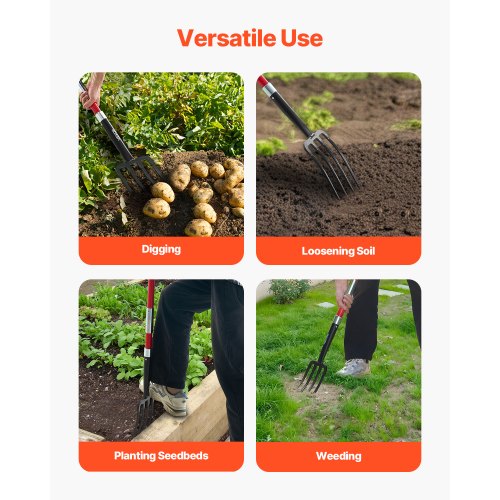
Do you have hard-packed dirt that won't break up with a spade? VEVOR garden forks are much more efficient than other tools for preparing the soil, adding amendments, and gathering root crops. They provide the leverage, penetration, and lifting power that make these tasks much easier. We build our tools to endure years of rigorous use and withstand challenging soil conditions. Vegetable gardeners use them to prepare growing beds, composters to keep the decomposition process going, and landscapers to get planting areas ready.
Choose Garden Forks by Tine Configuration & Handle Length
Knowing about tine design and handle size will help you choose a garden fork that works best for your height. It should also be the ideal type for the soil you're working in and the main tasks you’ll be performing.
Tine Count and Spacing for Different Soil Types
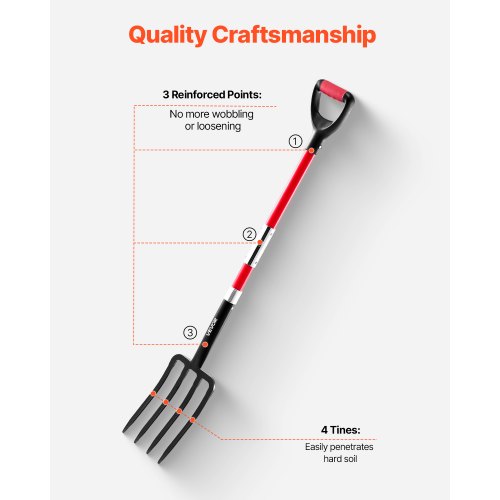
How garden forks work with different types of soil depends on the number of tines and the spacing between them. Four-tine garden forks are the most common shape because they are effective at both digging into the ground and moving things. The tines are usually spaced about 2.5 to 3 inches apart. The gaps let dirt flow between the tines while they're digging and hold enough material during lifting to keep work cycles smooth. Most all-purpose garden digging forks have four tines, which are enough for 80% of common gardening jobs without specialized features.
The 3-inch spacing keeps the soil from sticking together too much, which would make lifting harder. Wider gaps let more soil fall through during lifting strokes, which lowers the weight of each forkful. The feature helps gardeners working in heavy clay soils where weight builds up quickly. It is also ideal for people who don't have much upper-body strength and can't safely lift 20–30-pound forkfuls of dense material. But the same space allows small particles, like fine compost or mulch, to fall through the gaps, making it less efficient.
Five-tine garden fork designs close the space between tines to about 2 inches. They make denser arrays that hold more material during lifting and are more stable in sandy or loose soils. Smaller garden forks are less likely to twist or bend sideways when they hit resistance because the tines are closer together. They spread the stress over more times and lower the pressure on each one.
Tine Length and Depth Penetration Capability
Long-handled garden forks, 40 to 48 inches long, let you work while standing up. It keeps your back from straining during long digging, turning, or gathering sessions. For people who are 5'8" or taller, extended handles are better because they put the grips at a comfortable height. The upright position keeps your spine neutral, unlike bending forward, which happens when short handles are used.
Standard-length handles, which are about 30 to 36 inches, work well in small areas and for shorter people (around 5'6" and under). These sizes are good for border forks that are used between plants in established beds or for maintenance work in containers. You can use them when working on your knees, and the perks of standing up don't apply. The shorter length also works well for people who can't store their tools at full height.
Different garden fork tasks are affected by the placement of your hands and the amount of force you use. D-grips make enclosed handles that can be held with two hands for maximum force during penetration strokes. The closed loop keeps hands from falling off during strong downward thrusts. T-grips or straight handles without closed tops let you move your hands in different ways while lifting, turning, and moving things around. However, they don't give you as good a grip when you need to apply the most downward force during entry strokes.
Specialized Fork Types for Specific Tasks
In addition to general-purpose garden digging forks, we offer specialized designs for specific gardening tasks. Compost garden forks have long tines (12–14 inches) and are spread 4–5 inches apart. They are designed to turn compost piles and move loose organic materials. The large space between them lets air flow through the lifted material, which is important for aerobic decomposition. At the same time, they keep the material from sticking together too much, which would make lifting partly decomposed compost exhausting.
Manure garden forks with 5 to 8 bent tines, 1.5 to 2 inches apart, are best for moving straw, old manure, or loose bedding. The dense tine design and curved profile make tools that look like scoops and hold lightweight materials well. The curved profile also keeps materials from sliding off while they're being moved. These forks are not at all suitable for working with soil.
Forks for potatoes have wider, flatter tines with blunt or rounded tips instead of sharp ones. It allows them to gather root vegetables without cutting or damaging the tubers. When you lift potatoes, carrots, or other root veggies, the blunt tines slide past them instead of spearing them. It is much better for the harvest than regular pointed forks.
Select Garden Forks Based on Material & Durability
The materials used determine whether garden forks last for years of heavy use or break early. Quality differences have a big effect on long-term value, even if the forks look the same at first glance.
Tine Material and Heat Treatment Processes
Forged steel tines are the best way to make a heavy duty garden fork. They are made by heating steel billets and shaping them under high pressure, which lines up the grain structure along the tine profiles. It means that the metal won't bend in the direction of primary stress during use. Forged tines bend slightly under heavy loads instead of breaking or permanently bending. They return to their original shapes when the stress is taken away.
Stainless steel tines don't rust, unlike carbon steel tools stored incorrectly or in wet places, which can weaken over time. Stainless metals, on the other hand, don't get as tough as properly heat-treated carbon steel. It means stainless steel tines are more likely to bend when the same amount of weight is applied.
Cast or stamped steel tines are cheaper to produce. Hence, the tools are adequate for light-duty tasks but not good enough for real gardening. Cast tines have an irregular grain structure and holes, which make their strength uneven and prone to breaking. Stamped tines made from flat steel sheets lack the directional grain structure of forged tines, so they bend more easily when they meet resistance. These cheap garden digging forks are good for light use once in a while, but they fall short for serious gardening.
Handle Material Selection and Connection Methods
How the handle is built affects comfort, durability, and the transfer of force from the user to the tines. The material choice and socket connection have a big effect on how long the tool lasts and how well it works. Ash, hickory, or oak hardwood handles have traditional looks, good shock absorption, and nice grip textures that don't need extra padding. The wood grain pattern reduces vibrations from hitting rocks or roots, helping your hands and arms from getting tired after long use.
Handles made of fiberglass wrapped in plastic or rubber grips last a long time. The composite construction doesn't absorb water, rot, or split, and its dimensions stay stable forever without any treatment. Fiberglass has a fantastic strength-to-weight ratio; it is lighter than wood grips of the same size and shape while having the same or higher strength. The weight loss is especially helpful for people who use long-handled garden forks.
Steel handles are the strongest and last the longest in rough situations. The handle won't break because it's made of metal. Steel bends under high overload instead of breaking like wood or fiberglass. But steel's rigidity makes harsh feedback, sending the full shock of every hit straight to users' hands. It makes tools with steel handles tiring to use for extended periods.
Shop VEVOR Garden Forks for Professional Garden Performance
VEVOR garden forks are strong, comfortable, and long-lasting, which is what serious gardeners need for working the dirt. Our range includes long handled garden forks that are good for your back and sturdy ones that can handle tough clay and rocky soil. You can choose the tine shape, handle length, and material quality that work best for your garden needs. VEVOR garden forks are the best choice for vegetable farmers and landscapers because they are made of forged steel and have hardwood handles. You can browse our entire collection right now and get tools that will last for years.
FAQs
What's the difference between garden forks and pitchforks?
Garden forks have shorter, harder tines (10–12 inches) with sharp tips that dig into the ground. Pitchforks have longer, thinner tines (12–16 inches) with rounded tips for moving hay, straw, or other loose materials. They are not strong enough to dig into the ground.
How long should garden fork handles be?
Long handled garden forks with handles that are 40 to 48 inches are best for people who are 5'8" or taller and want to stand up straight. Shorter people (under 5'6") or people who are working in tight places, like 30 to 36-inch handles. Such handles are easier to control and move around.
Can garden forks be used in rocky soil?
Yes, but pick heavy duty garden forks with proper heat treatment and cast-steel tines. Four-tine designs are better at getting through rocky dirt than five-tine designs. Expect some bending when heavy rocks hit something, no matter the quality.
What maintenance do garden forks need?
Every time you use a garden fork, clean it off the dirt. Use files once a year to sharpen the tine tips. Keep the steel tines in a dry place to prevent rusting. Use plastic or stainless steel handles, as they require little upkeep.
How many tines should a garden fork have?
It's best to grow in loamy or composted soil with four tines. Five tines make the tool more stable in sandy, loose dirt and help it lift more material. Three tines make it easier to break through very heavy clay or root-rich soil.