

Stock Pots






Results for Stock Pots
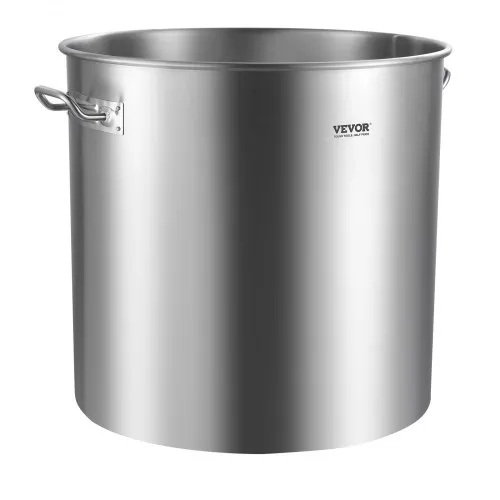
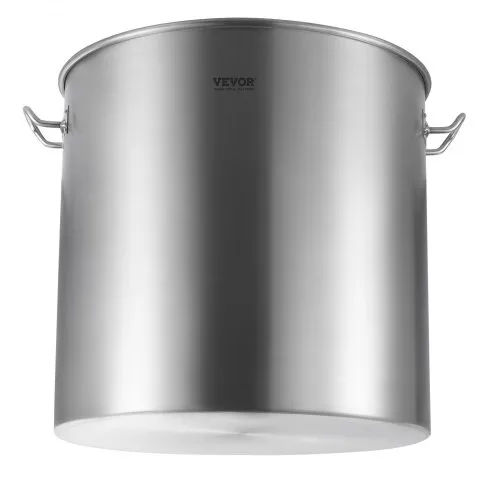
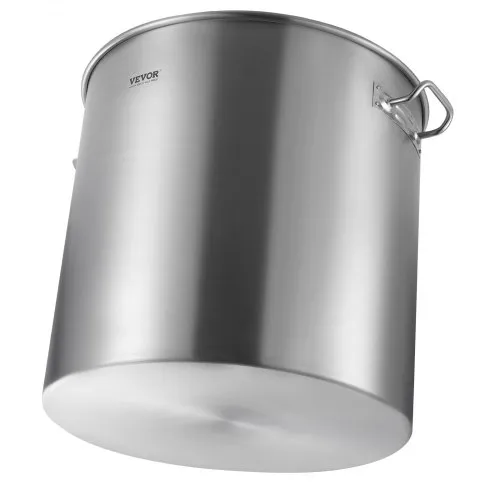
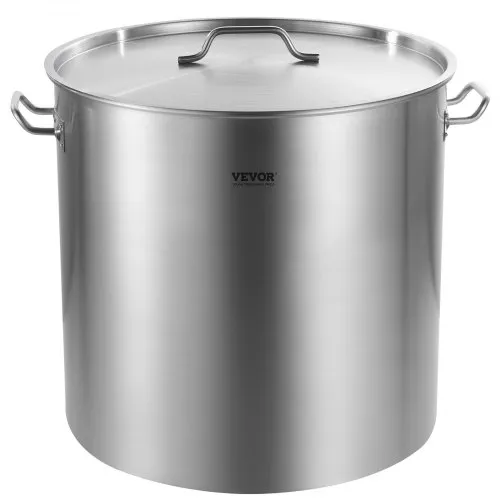
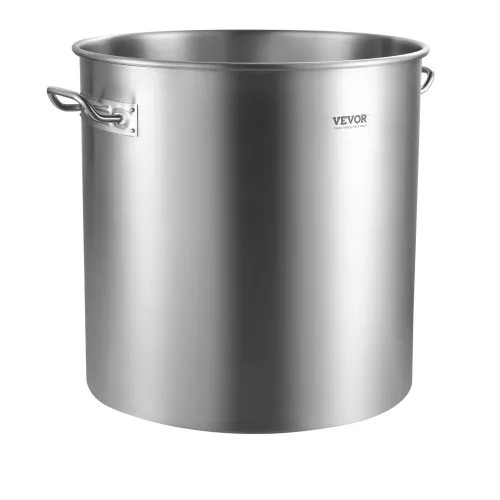
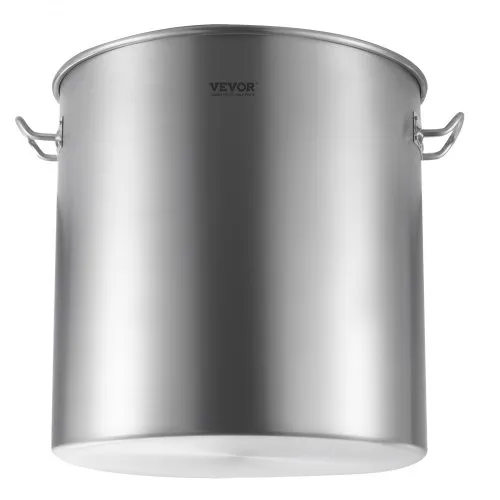
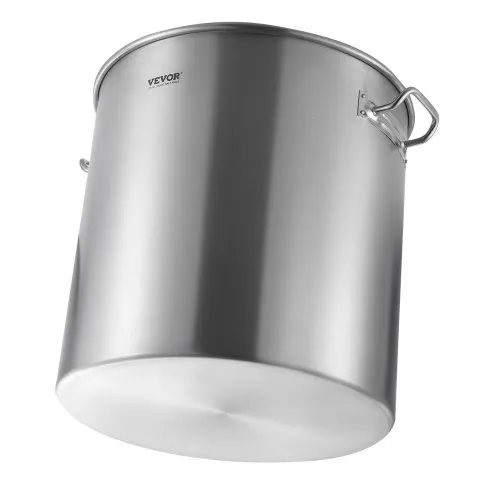
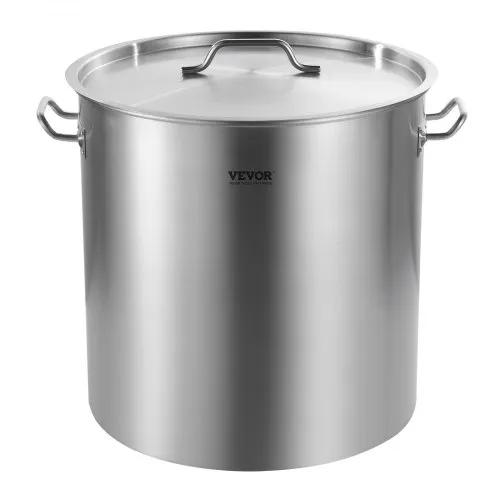
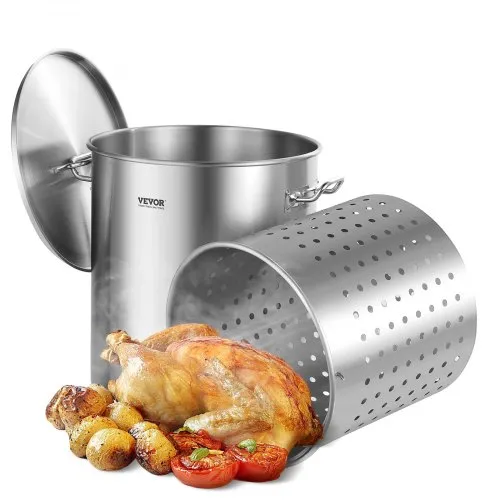
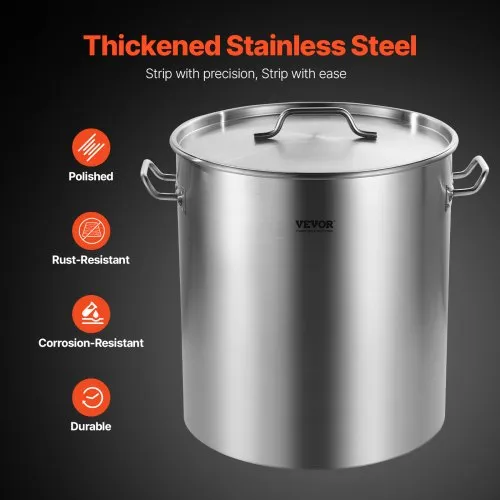
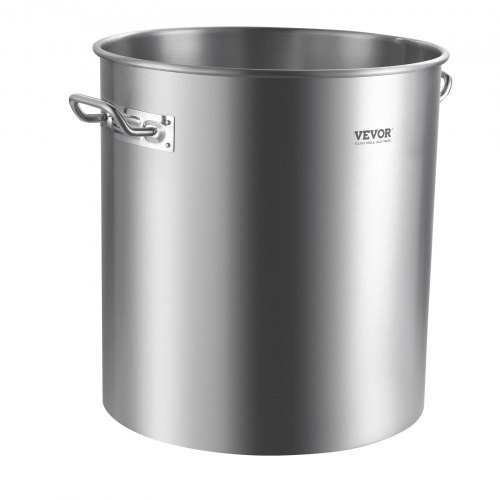
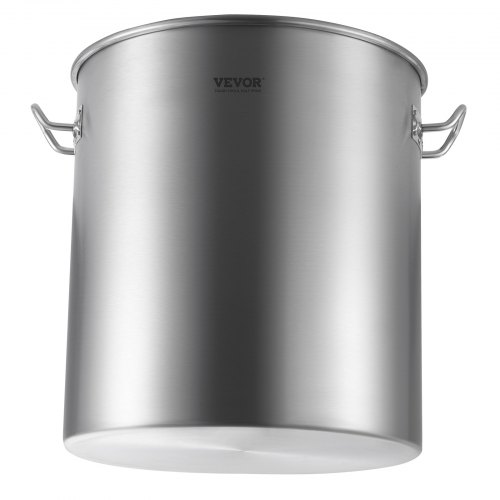
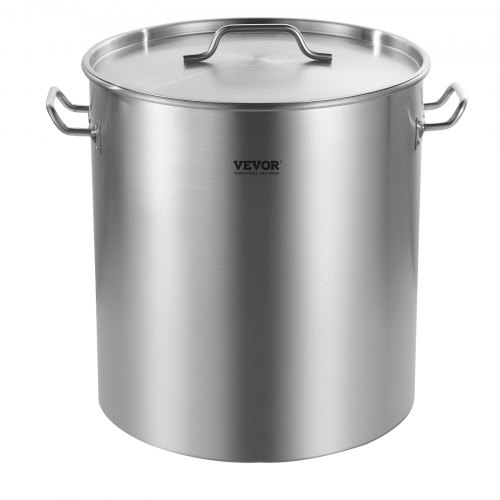
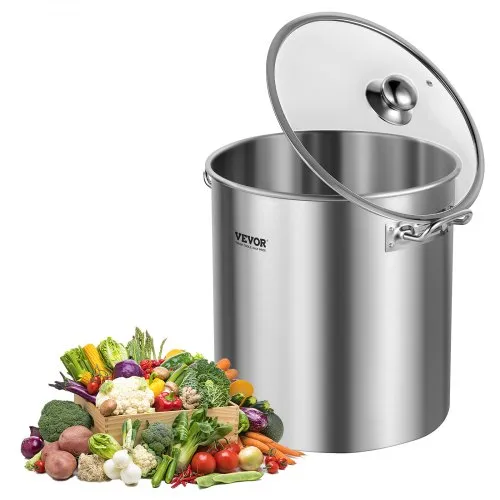
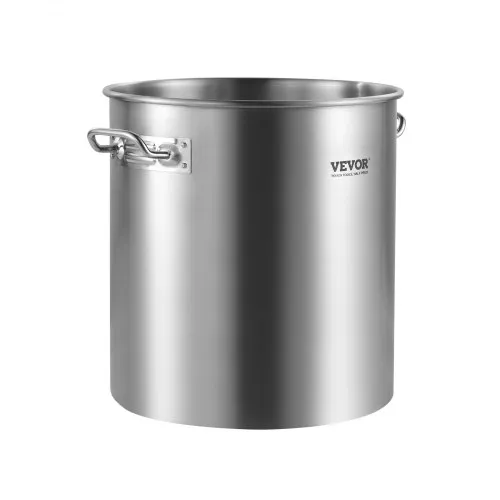
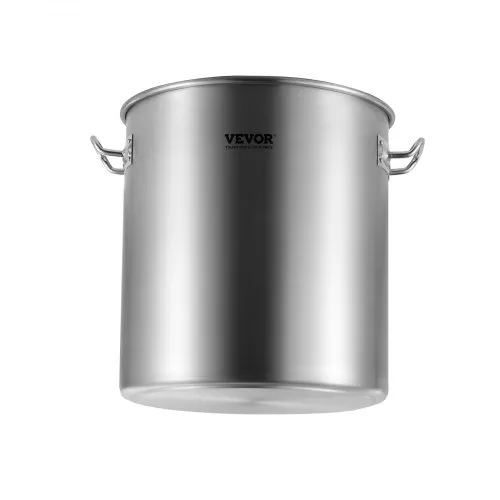
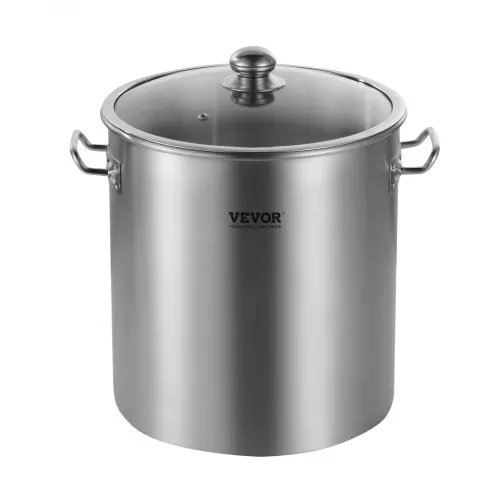
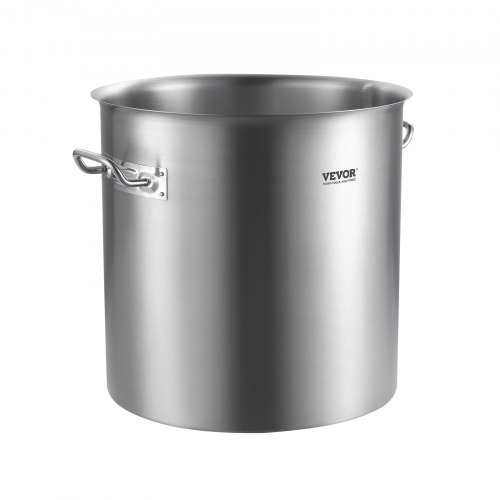
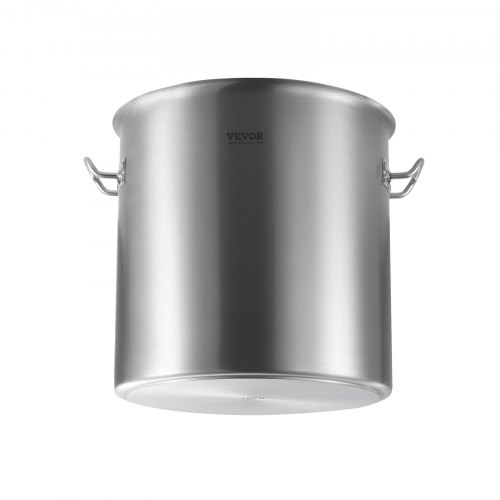
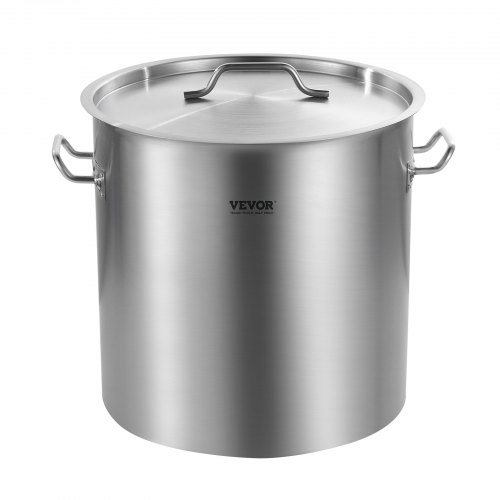
A stainless steel stock pot is a tall, straight-sided cooking vessel built to hold a large volume of liquid over a single heat source. Its height is greater than its width, which limits the surface area exposed to heat and slows evaporation, so liquids reduce gently during long cooking. The heavy body and fitted lid trap heat and steam, holding a steady temperature while the contents simmer or boil for extended periods. Two sturdy handles let the filled pot be lifted and carried safely. The smooth, non-reactive metal interior resists staining and does not pass metallic flavor to the food inside.
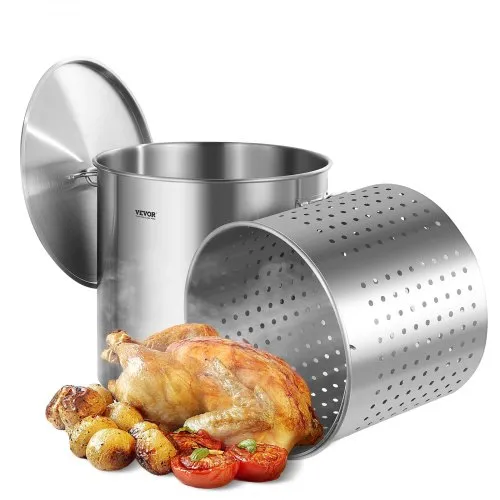
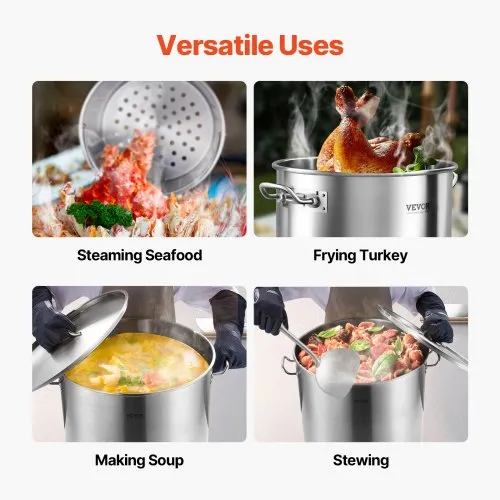
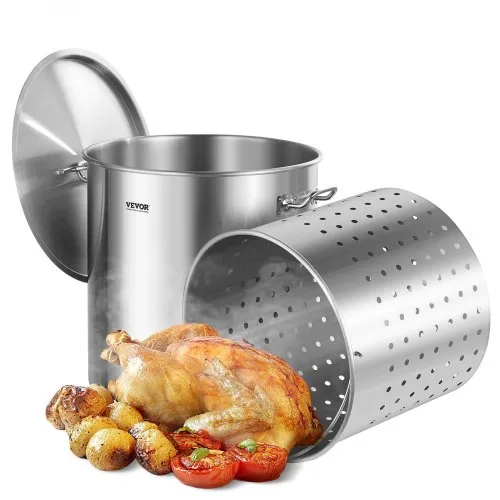
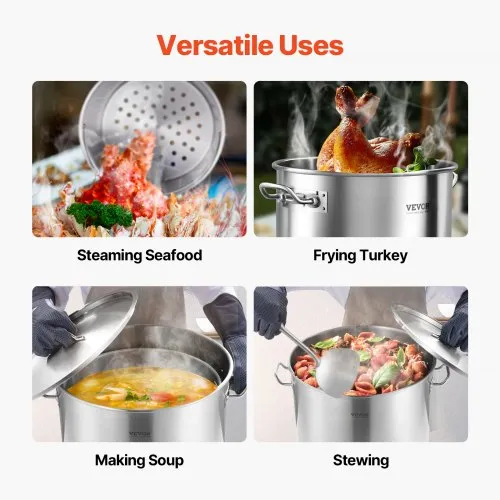
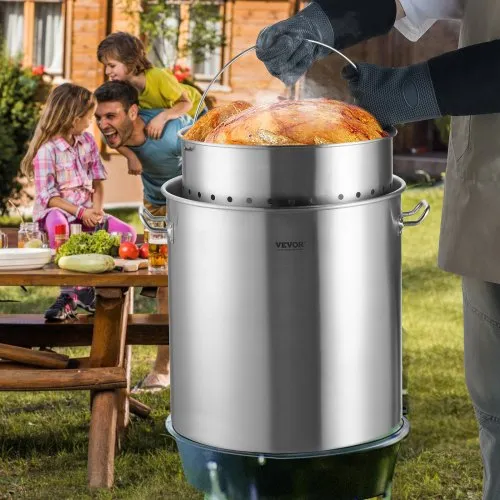
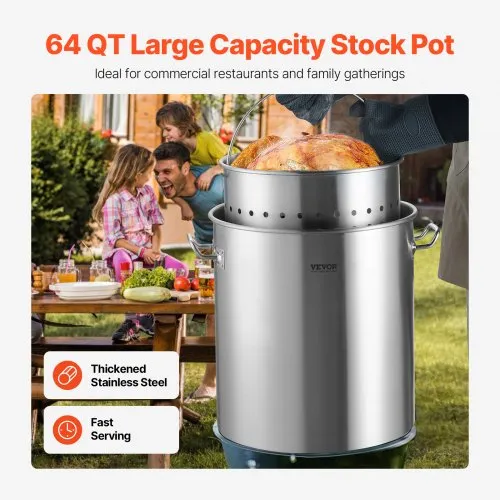
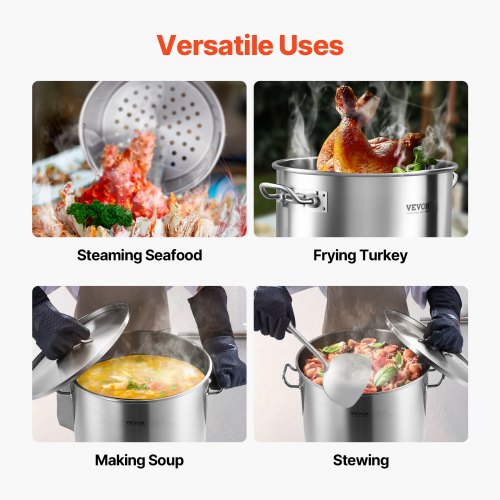
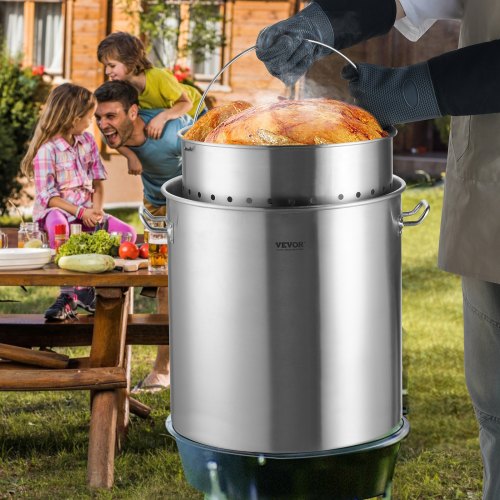
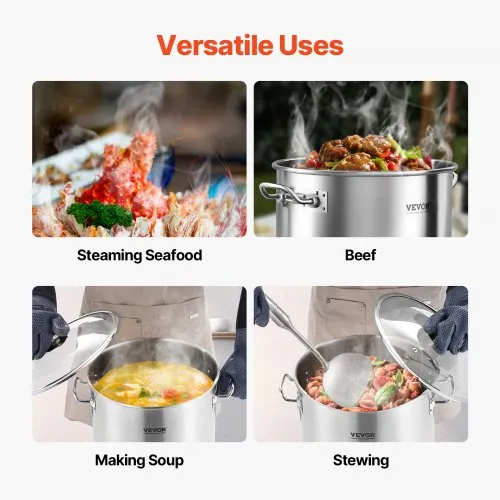
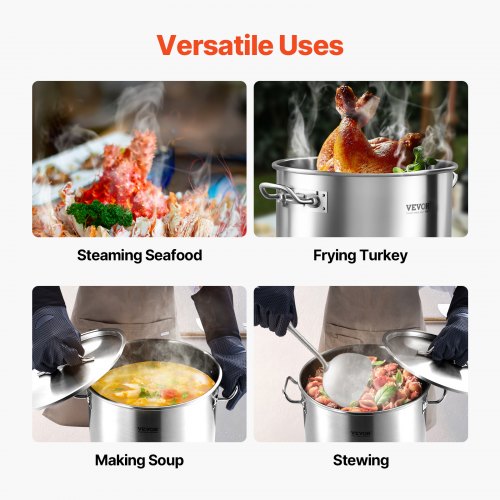
The range falls into four main groups. Large commercial stockpots from 36 to 100 quarts arrive with a lift-out strainer basket for draining big batches, while multipurpose pots from 24 to 53 quarts keep a deep body and riveted handles without the basket. Compact everyday pots from 8 to 21 quarts pair a stainless body with a vented glass lid, and nonstick ceramic-coated aluminum pots from 6 to 12 quarts add an easy-release surface for starchy or dairy-based dishes. Typical uses are stocks and broths, seafood and crawfish boils, home brewing, soups and pasta, and large-batch catering.
Five things decide what you need:
- Capacity: size to your largest regular batch, then go up a step, since a pot should never run past three-quarters full while it boils.
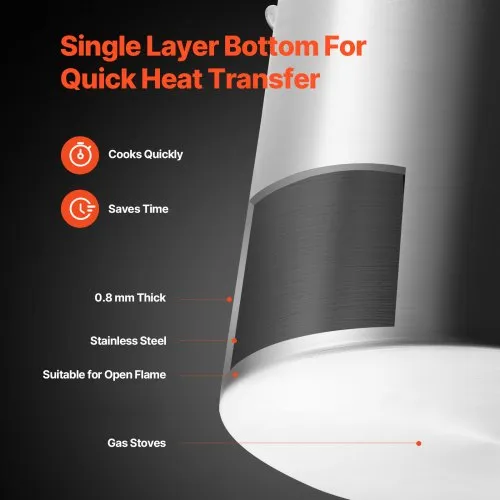
- Base construction: a composite or encapsulated bottom spreads heat and resists scorching for delicate simmers, while a single layer is fine for hard boiling.
- Cooking surface: bare stainless steel is non-reactive and hard-wearing, and a nonstick ceramic coating releases starchy or dairy foods more easily.
- Lid and handles: a vented glass lid lets you watch the pot, and riveted helper handles make a heavy, full pot safe to lift.
- Heat source: match the pot to your burner, because the largest sizes need a commercial range or outdoor propane rather than a home stovetop.
Browse the full lineup of stainless steel stock pots to compare capacities side by side, or jump straight to the commercial-capacity pots built for high-volume kitchens and events.
Stainless Steel Stock Pot Types at a Glance
The four core types separate most clearly by capacity, cooking surface, and whether a strainer basket is included.
| Type | Typical Capacity Range | Cooking Surface | Lift-out Strainer Basket | Key Advantage |
|---|---|---|---|---|
| Commercial stockpot with basket | 36 to 100 quarts | Food-grade stainless steel | Yes | Drains a whole boil without a separate colander |
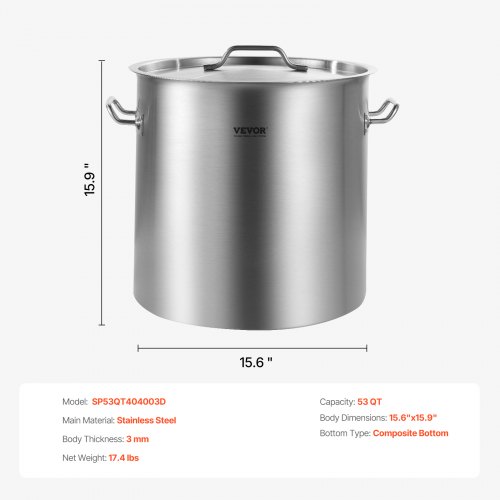
| Multipurpose deep stockpot | 24 to 53 quarts | Food-grade stainless steel | No | Large-batch depth that still lifts with two handles |
| Everyday stockpot, glass lid | 8 to 21 quarts | Food-grade stainless steel | No | Watch the simmer and fit a standard home burner |
| Ceramic-coated aluminum stockpot | 6 to 12 quarts | Aluminum with nonstick ceramic | No | Lightest to handle with the easiest food release |
VEVOR Heavy-Duty Stainless Steel Stock Pots for Every Kitchen Demand
Are you searching for dependable, large-capacity cookware that resists warping and discoloration and promotes even heating for anything from professional catering events to family soup nights? For home cooks and professional chefs who want sturdy, versatile pots for large-volume cooking, stainless steel stock pots are an excellent choice. VEVOR offers an extensive selection of stainless steel stock pots. Our stock pots solve the fundamental problem of achieving even, controlled cooking in large quantities without compromising durability or ease of daily maintenance.
Capacity & Material Grade: Choosing the Right Pot for Your Needs
Understanding capacity needs, steel grades, and construction quality is essential when choosing stainless steel stock pots to help ensure good cooking results, food safety, and long-term durability in a variety of cooking applications.
Capacity Options and Volume Planning
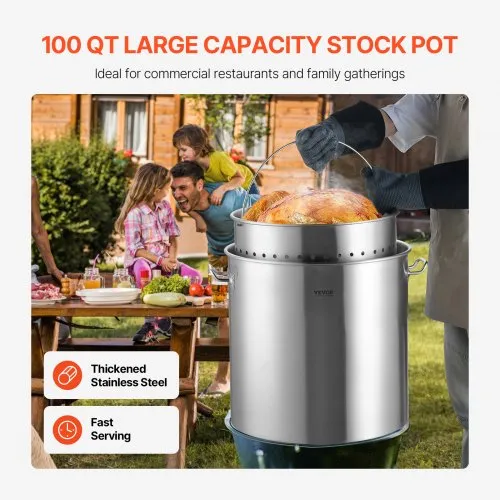
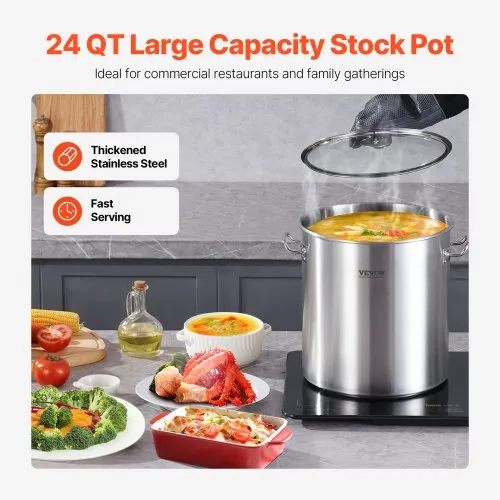
The choice of capacity dictates whether your stock pot can effectively handle the desired cooking volumes without requiring multiple batches or risking hazardous overfilling. From small 8-quart models for regular home cooking to enormous 100 qt stainless steel stock pot configurations for commercial kitchens and large-scale catering enterprises, VEVOR's stainless steel stock pots cover a wide range of sizes. The well-liked 24 quart stainless steel stock pot is the perfect compromise between size and functionality. It is big enough for whole chickens, lobster boils, or stock batches for families and small catering jobs, but still manageable on home stovetops without the need for commercial-grade burner infrastructure.
Mid-range 42 qt stainless steel stock pot models are ideal for food trucks, serious home brewers, and restaurant prep cooks who frequently handle volumes higher than that of typical home cookware but do not need the full capacity of commercial steam kettles. When choosing capacity, always consider fill levels. To avoid hazardous overflow and ensure safe handling when moving hot liquids, pots should never be filled to more than 75% of their capacity during active boiling. While the 100 qt model has about 75 quarts of actual cooking capacity, a 24 qt stainless steel stock pot can hold about 18 quarts of working volume. Because huge pots are cumbersome when used daily and inefficient on standard burners, it is better to match capacity to your most frequent large-batch situations rather than to maximum occasional needs.
Stainless Steel Grades and Food Safety
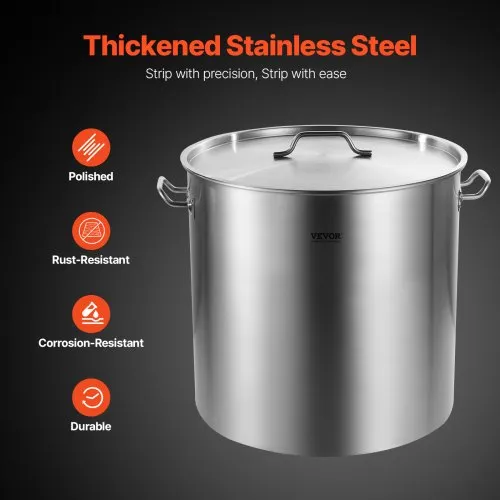
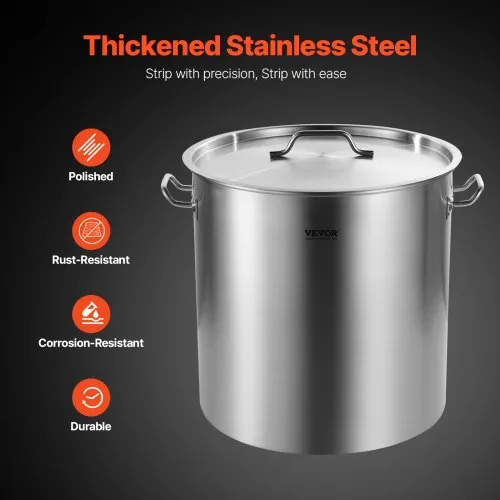
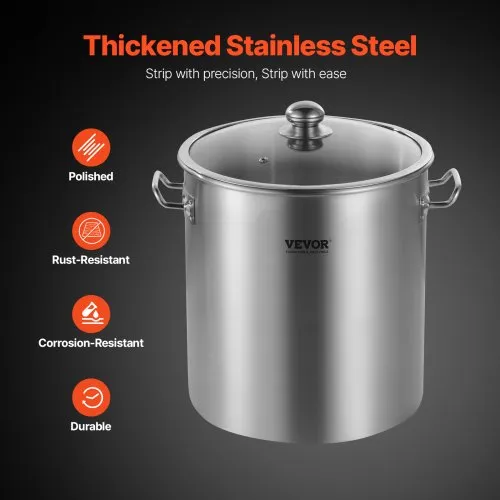
Corrosion resistance, food safety, and long-term appearance are all significantly impacted by steel grade. The food-grade 18/8 (304) or 18/10 stainless steel used in VEVOR stainless steel stock pots refers to the percentages of chromium and nickel that govern corrosion resistance and surface durability. Since acidic foods like tomatoes, citrus-based broths, and vinegar preparations erode weaker metals over time, the “18” denotes an 18% chromium concentration, which helps form a passive oxide layer that inhibits rust formation. In addition to helping the mirror-like polished finish retain its appealing appearance despite thousands of dishwasher cycles and metal utensil contacts, nickel content (8% or 10%) further improves corrosion resistance.
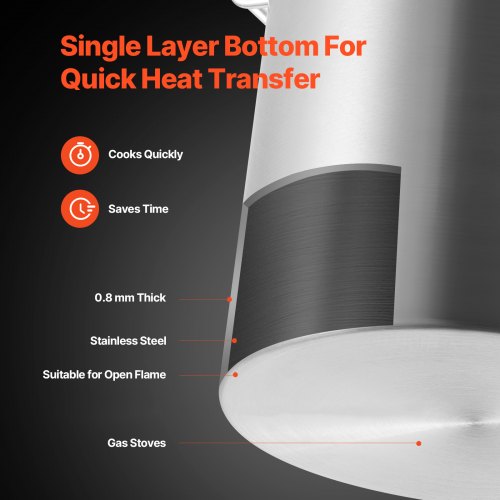
Food-grade stainless steel does not react with ingredients, so it does not impart metallic flavors that can damage delicate stocks, brines, and dairy-based soups. Commercial kitchens are subject to food safety requirements, and health-conscious cooks choose stainless steel because it does not leach metals into acidic cooking liquids like aluminum or cast iron counterparts do. Because thickness and gauge ratings are inversely correlated, thicker, more durable construction is indicated by lower gauge values. The 0.8–1.2 mm sidewall thickness of VEVOR stock pots offers exceptional durability without being overly heavy, which can make large-capacity pots difficult and potentially hazardous to handle when filled with hot liquids.
Base Construction and Heat Distribution
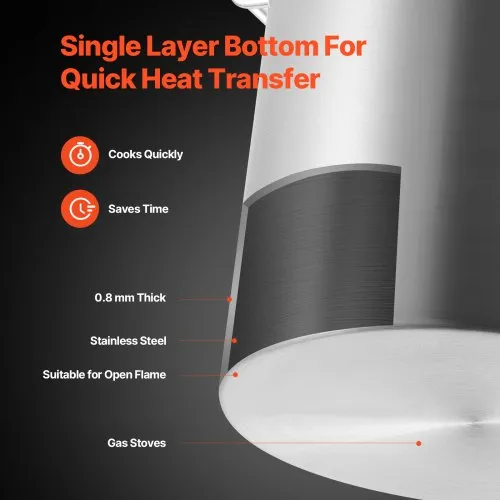
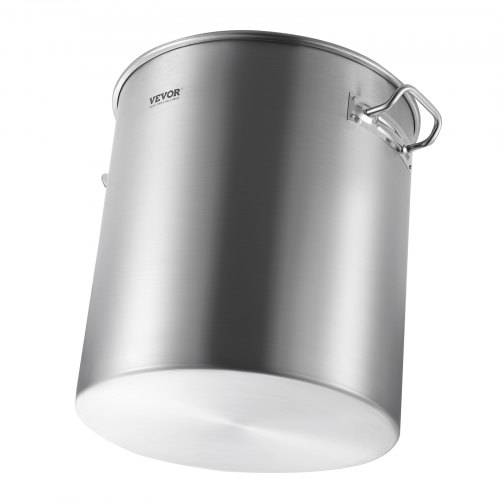
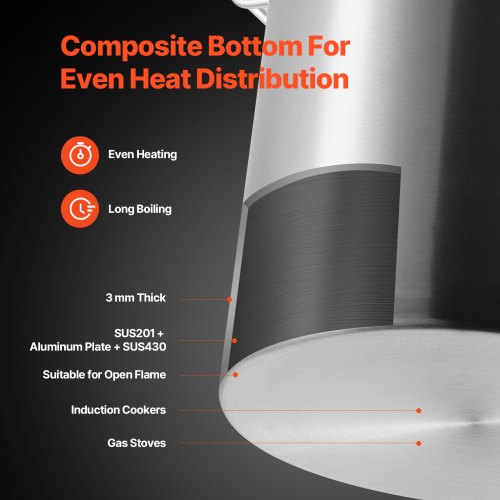
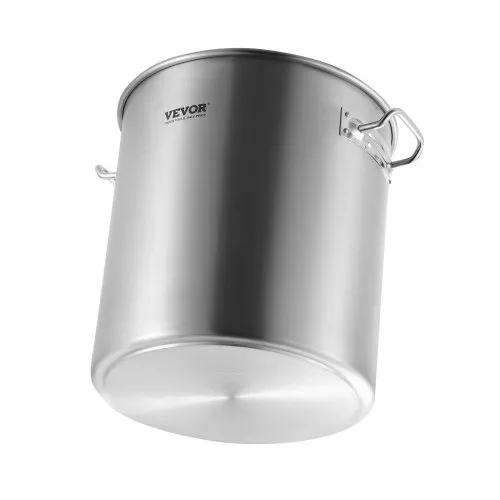
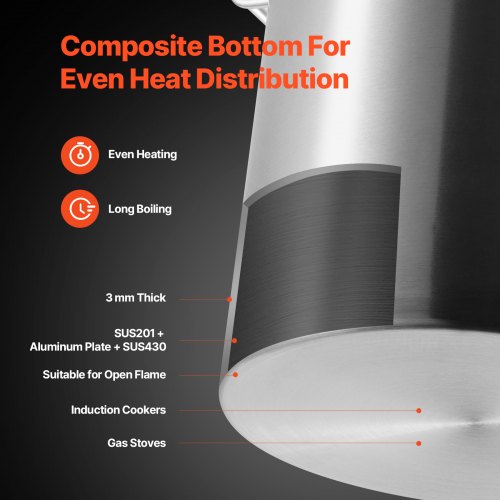
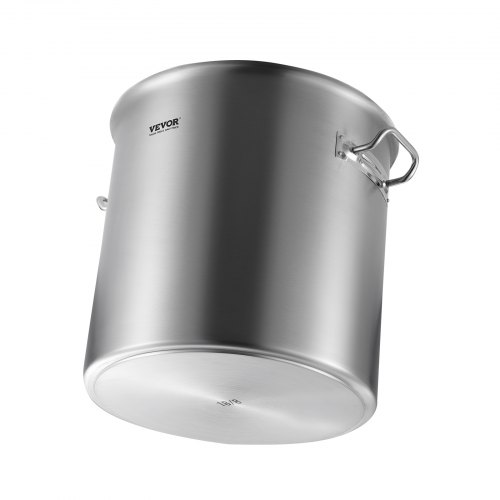
The base's construction affects the pot's cooking efficiency and the uniformity of heat distribution over its cooking surface. Single-layer stainless steel bottoms produce hot spots that burn delicate stocks and sauces that need to be simmered at low temperatures for extended periods. Still, they conduct heat well enough for boiling applications. Premium VEVOR stainless steel stock pots have multi-layer encapsulated bases that sandwich copper or aluminum cores between layers of stainless steel. By distributing heat evenly and quickly throughout the base, aluminum's thermal conductivity, which is roughly four times that of stainless steel, greatly reduces hot spots that can scorch.
High-quality stock pots with encapsulated designs have bases that are 3–7 mm thick; thicker bases retain heat better and maintain simmering temperatures more steadily when burner output varies. Impact-bonded bottoms resist repeated thermal cycling between cold storage and high-heat cooking, which would otherwise ruin inferior designs, in commercial operations utilizing the 42 qt stainless steel stock pot or larger variants. For industrial kitchens that optimize fuel expenditures across high-volume daily cooking operations that require consistent outcomes, a flat, warp-resistant base that maintains full contact with induction cooktops promotes efficient energy transfer.
Capacity Markings and Measurement Features
Internal measuring indications turn stainless steel stock pots from straightforward cooking pots into precise culinary instruments that facilitate reliable batch manufacturing and precise recipe scaling. Interior walls with etched or embossed quart and liter markings eliminate confusion when adding liquids, stocks, and water while preparing recipes. This feature is especially useful for transferring recipes from conventional home proportions to large commercial batches, where measurement errors can compound considerably. The internal markings on the 24 quart stainless steel stock pot models typically appear in 2-quart increments from 4 quarts up to near the maximum capacity, which is precise enough for the majority of culinary applications.
Accurate volume tracking is useful for commercial culinary applications and brew kettles. Home brewers who use VEVOR stock pots to brew beer depend on precise markings to ensure consistent batch volumes, which in turn affect the final alcohol content and flavor profiles. Reliable measures are necessary for precise food cost estimates and recipe consistency across multiple large-batch productions in commercial catering businesses that use 100 qt stainless steel stockpot models. Throughout the pot's lengthy service life, the permanently marked interiors of VEVOR remain readable despite frequent exposure to high temperatures and commercial dishwashers.
Matching a Stock Pot to the Cooking Job
Capacity and grade set the size, but the right lid and heat source decide how well the pot suits a given job.
| Cooking Job | Lid to Prioritize | Heat Source to Plan For | What to Watch For |
|---|---|---|---|
| Delicate stocks and dairy soups | Vented glass lid | Standard gas, electric, or induction | Low, even simmer prevents scorching; capacity is secondary |
| Seafood boils and big batches | Tight-sealing lid | Outdoor propane or commercial range | Full large pots top 50 lb; plan a two-handed lift |
| Oven braising to finish | Oven-safe lid | Stovetop plus oven up to 500°F | Confirm the lid is rated for oven heat first |
| Home brewing | Vented lid for boil-off | High-output burner, 100,000-plus BTU | Tall body aids a rolling boil; guard against boil-over |
| Everyday soups and pasta | Glass lid to monitor | Home stovetop or induction | Compact body fits standard burners without special gear |
Features & Compatibility: Maximizing Performance and Versatility
Knowing the key features and compatibility requirements ensures your stainless steel stock pots perform at their best across various cooking methods, heat sources, and kitchen conditions, providing the greatest long-term value.
Lid Design and Handle Construction
In high-volume cooking sessions, the handle design and lid quality directly impact user convenience, safety, and cooking efficiency. By keeping interior temperatures constant, tight-fitting stainless steel lids efficiently capture steam, reducing cooking times for tough meats, dried beans, and whole grains while also saving energy. Certain VEVOR models feature tempered glass lids that allow visual monitoring with minimal heat loss. This feature is especially helpful for delicate stocks that require careful temperature control to avoid vigorous boiling that can cloud finished broths. Lid handles should be cool enough to hold safely while cooking; silicone insulation or hollowed stainless steel handles stop heat transfer that could result in painful burns during hectic cooking periods.
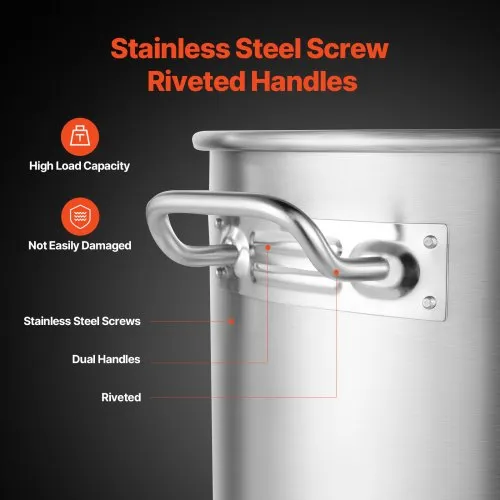
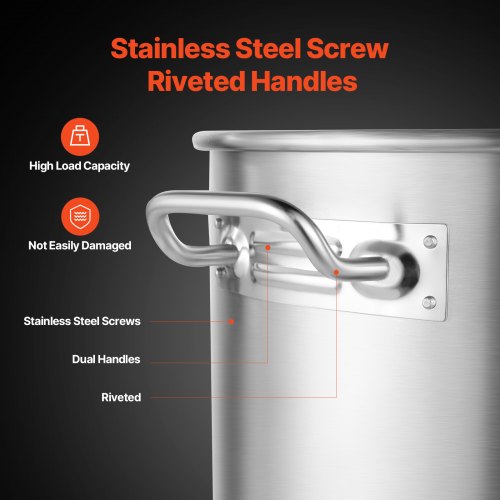
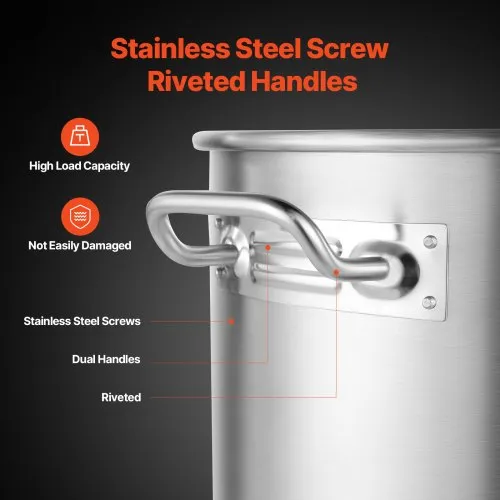
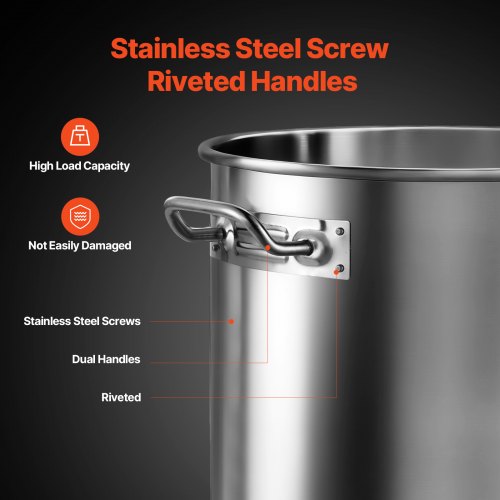
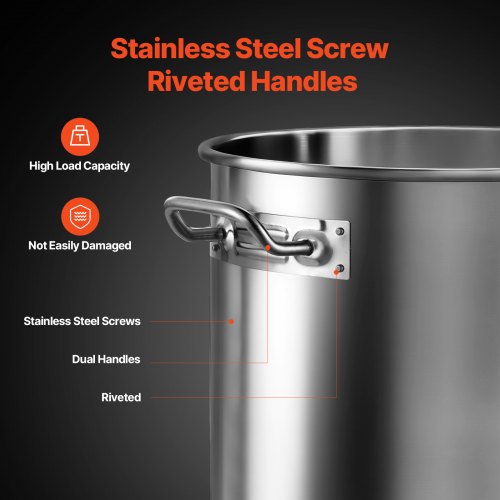
A 24 quart stainless steel stock pot filled with liquid weighs about 55 pounds, necessitating securely riveted handles rated for safe lifting rather than welded alternatives, which can develop stress fractures under repeated heavy loads. Large-capacity models with substantially filled weights require special attention when it comes to the pot handles. Commercial-grade handle attachments from VEVOR avoid hazardous handle failures associated with subpar single-rivet designs by using multiple rivets and strengthened contact plates that distribute weight across larger surface areas. The ability to hold large-capacity models with both hands thanks to helper handles on either side of the main grip significantly increases safety when moving hot liquids between cooking stations.
Heat Source Compatibility and Versatility
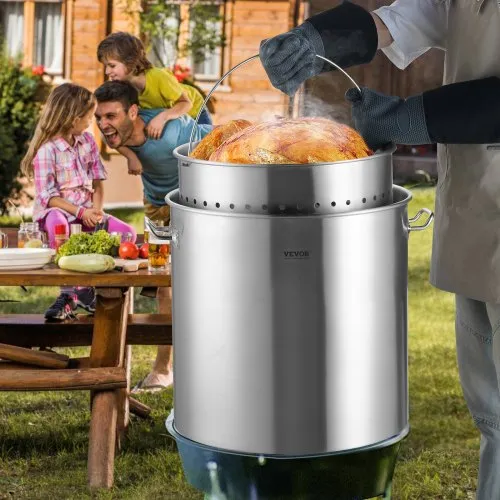
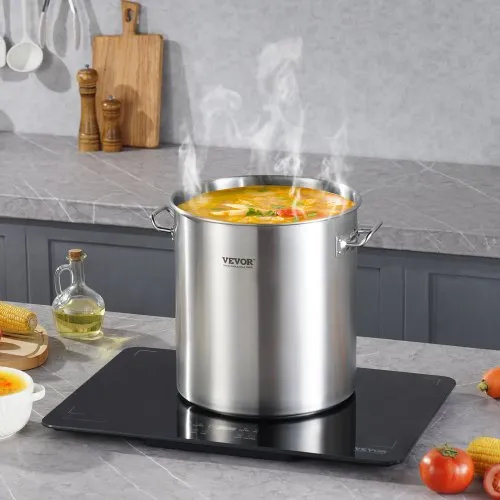
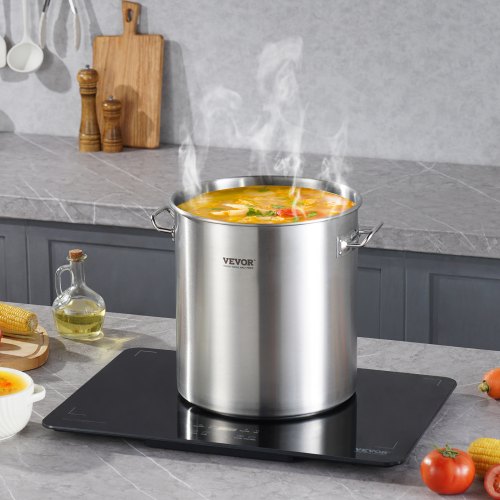
Where and how to use stainless steel stock pots in various kitchen configurations and cooking settings depends on their universal heat-source compatibility. VEVOR models are compatible with gas burners, electric coil cooktops, glass ceramic surfaces, and induction ranges. By optimizing the contact surface area, the flat magnetic stainless steel base, required for induction compatibility, also enhances performance with all other heat sources. Stock pots compatible with high-output propane burners that deliver 100,000+ BTU are beneficial for outdoor cooking, which is becoming increasingly popular for large-batch preparations, seafood boils, and homebrewing. These burners are significantly more powerful than those on a typical indoor range.
Being compatible with ovens lets you cook in more ways than just on a stove. It is possible to use VEVOR stainless steel stock pots in ovens up to 500°F, which means you can start braising methods on the stove and then move them to an even oven heat for long periods of low-temperature cooking. The 42-quart stainless steel stock pot is useful for businesses that need to switch between heat reduction and oven finishing without having to move the food between pots. Dishwasher compatibility makes cleanup easier after long cooking sessions because VEVOR's polished stainless interiors do not stain and maintain their clean surfaces through many industrial washing cycles without surface degradation, loss of food safety, or appearance.
Best-Seller Comparison
These five pots appear first on the page and are separated mainly by capacity, body size, base type, and whether they include a strainer basket.
| Product | Capacity | Inner Body Size | Base Construction | Steam Basket | Usable Volume (about 75%) | Best For |
|---|---|---|---|---|---|---|
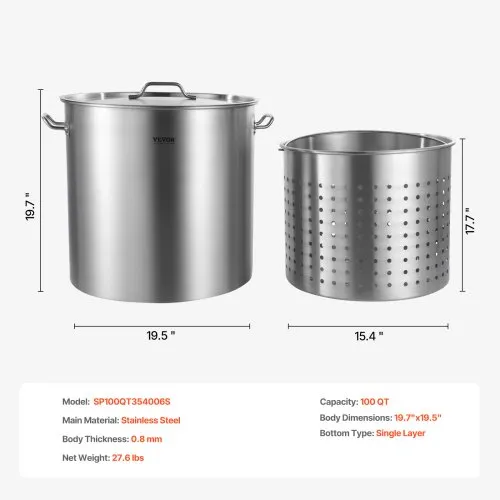
| 100 Qt Stockpot with Steam Basket | 100 qt / 94.6 L | 19.7 x 19.5 in (500 x 495 mm) | Single layer | Yes | About 75 qt | Largest on the page; crawfish boils and festival-scale catering |
| 36 Qt Stockpot with Steam Basket | 36 qt / 34 L | 12.4 x 16.5 in (315 x 420 mm) | Single layer | Yes | About 27 qt | Smallest basket model; food trucks and serious home brewing |
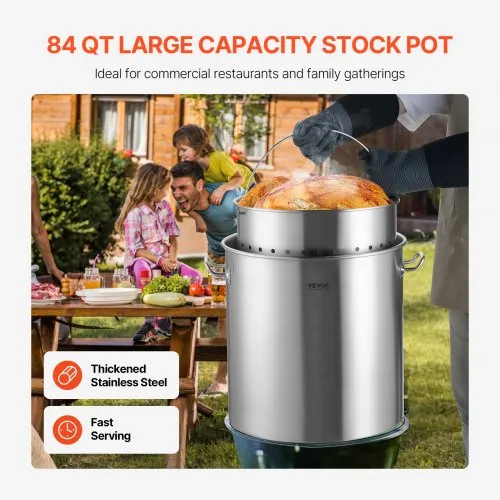
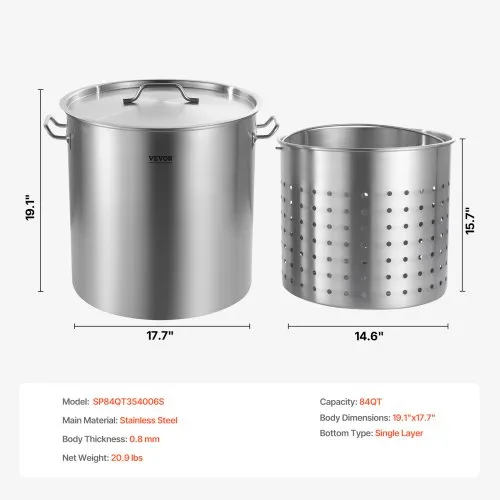
| 84 Qt Stockpot with Steam Basket | 84 qt / 79.5 L | 17.7 x 19.1 in (450 x 485 mm) | Single layer | Yes | About 63 qt | Second-largest; sustained high-volume seafood service |
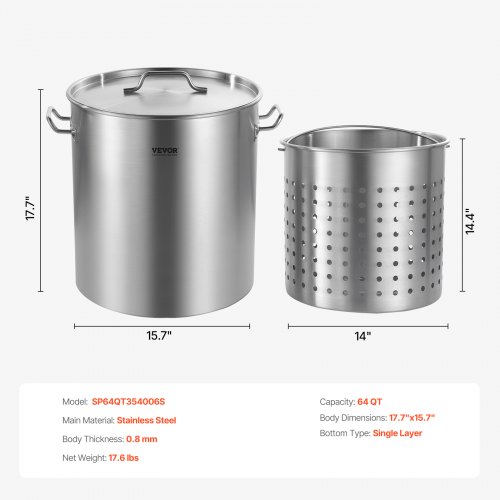
| 64 Qt / 54 L Stockpot with Basket | 64 qt / 54 L | 15.7 x 17.7 in (400 x 450 mm) | Single layer | Yes | About 48 qt | Mid-size basket pot; boil volume that still stores easily |
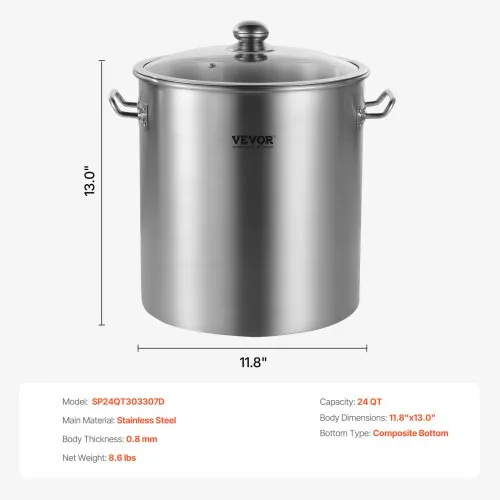
| 24 Qt Stockpot, Composite Bottom | 24 qt / 22.7 L | 11.8 x 13.0 in (300 x 330 mm) | Composite bottom | No | About 18 qt | Only composite base here; scorch-free simmering at home |
Why Choose VEVOR Stainless Steel Stock Pots?
For both home and commercial cooking, VEVOR offers an extensive selection of stainless steel stock pots that offer strong performance and excellent value. Our selection includes heavy-duty 100 qt stainless steel stock pot configurations for commercial operations, sturdy 42 qt stainless steel stock pot models for catering and food service, and adaptable 24 quart stainless steel stock pot options for daily large-batch cooking. Every kitchen can afford professional-grade cookware thanks to VEVOR's affordable prices and multi-layer base design. Explore our entire selection now to improve your cooking. Discover the VEVOR difference: better build quality, enduring durability, and customer satisfaction as our top priority. Buy today!
FAQs
What size stainless steel stock pot do I need for home cooking?
A 24 quart stock pot stainless steel is suitable for small gatherings, pasta, soups, and stocks, among other home-cooking needs. The 42 qt model offers extra capacity without requiring professional burner infrastructure, making it a good choice for entertaining 20+ people or regularly preparing large batches of food.
Are VEVOR stainless steel stock pots safe for induction cooktops?
Indeed, the magnetic stainless steel bases of VEVOR stainless steel stock pots are completely compatible with induction cooktops. For effective energy transmission and reliable heating performance across all cooking temperatures, the flat, impact-bonded base ensures maximum contact with the induction surface.
How do I prevent food from sticking in stainless steel stock pots?
Heat the oil before adding the ingredients, and preheat the stock pot first. Steer clear of crowding and wait for the proteins to naturally release before stirring. Because stainless steel works best at medium heat, where ingredients sear neatly without burning, proper temperature control helps avoid sticking.
Can a 100 qt stainless steel stock pot be used on standard home stoves?
Large commercial-capacity pots usually need high-output outdoor propane burners or commercial ranges. The BTU output of standard residential burners is insufficient to effectively heat 100 qt models. With the right burner capacity, these pots are suitable for outdoor cooking sets, catering businesses, and industrial kitchens.
How should I clean and maintain stainless steel stock pots?
After each use, wash with warm, soapy water. Bring water and baking soda to a simmer to remove stubborn residue. Instead of using steel wool, which can scratch and damage surfaces, use nylon scrubbers. To avoid water stains, completely dry after washing. Maintaining the original mirror shine requires periodic polishing with stainless steel cleaner.
Is aluminum or stainless steel better for a stock pot?
Both work well, for different jobs. Stainless steel is non-reactive, durable, and safe with acidic broths, which makes it the stronger all-round pick for stocks and boils. A nonstick ceramic-coated aluminum pot heats quickly and releases starchy or dairy foods more easily, so choose it when easy cleanup matters most.
What grade of stainless steel is best for a stock pot?
Food-grade 18/8 (304) or 18/10 stainless steel is the preferred choice. The two numbers show chromium and nickel content: chromium forms a passive layer that resists rust, and nickel adds corrosion resistance plus a lasting polished finish. These grades stay non-reactive with acidic ingredients, protecting the flavor of delicate stocks.
Can stainless steel stock pots be used in the oven?
Yes. VEVOR stainless steel stock pots can be used in ovens up to 500°F, so you can start a braise on the stovetop and finish it at a steady oven temperature. Before transferring, check that the lid and handles are oven-rated, since tempered glass lids may have a lower limit.
