Pulley Hoists








Results for Pulley Hoists
Do you need pulley hoists that can withstand significant pulling forces for heavy rigging and vehicle recovery? With capacities ranging from 2 to 30 tons, VEVOR's lineup offers rigging workers, offroad recovery accessories, and towing operators a complete selection of snatch blocks and double-pulley systems for a range of applications. To safely multiply pulling force and reroute the winch line, each pulley hoist features robust mounting hardware and strong steel sheaves. VEVOR's pulley hoists provide the strength and dependability recovery work requires, whether you're rigging a flatbed tow, recovering a stuck ATV, or recovering a full-size truck.
VEVOR Pulley Hoists for Off-Road Recovery, Towing, and Heavy-Duty Rigging
Are you stuck in sand, mud, or off-camber terrain and your winch isn't pulling straight? By rerouting the winch line at an angle or increasing pulling capacity with a snatch block setup, pulley hoists provide the force needed to recover vehicles safely. VEVOR offers a variety of pulley hoists, from big 30-ton models designed for rollback wrecker rigging, flatbed tow trucks, and full-size truck and tractor recovery, to lighter 2-ton variants for ATV and UTV winching.
Weight Capacity and Pulley Configuration: Sizing Your Pulley Hoists
A pulley hoist's ability to safely perform your recovery task depends on two factors: the weight it is rated for and the pulley's configuration.
Weight Capacity Explained: Matching Tonnage to the Job
Pulley hoists are rated over a broad tonnage range rather than a single universal capacity because every recovery job places distinct stress on your gear. For lighter recovery tasks, such as ATVs, UTVs, small trailers, or situations where you're mostly reversing line angle rather than double-pulling force on a huge vehicle, a 2 ton snatch block is usually the right size.
For mid-size trucks, SUVs, and regular off-road recovery situations where the vehicle is actually stuck rather than merely requiring a directed pull, upgrade to a 10 ton winch snatch block. The block is designed to withstand the combined stresses of winch line tension and the mechanical advantage that results when the line is looped back through the pulley at this capacity.
The maximum safe working load is always referred to as rated capacity; it is not a goal to always strive for. Even if a block doesn't completely break during a single pull, using it frequently close to its specified limit accelerates wear on the sheave, pin, and housing, reducing the equipment's useful life. Before buying, choose a capacity with significant headroom above the heaviest vehicle or load you're likely to recover, rather than cutting it too close.
Higher-Capacity Options: 11, 14.5, and 30 Ton Snatch Blocks
The upper end of VEVOR's range is useful because commercial and heavy-duty recovery operations often exceed what lighter pulley hoists can safely handle. An 11 ton snatch block, appropriate for larger pickups, small commercial trucks, and heavier trailers, bridges the gap between routine off-road recovery and significant commercial applications.
A 14.5 ton snatch block offers significantly greater working load margin for flatbed and rollback operations to recover full-size trucks, vans, or equipment trailers. This matters when the vehicle being recovered is partially submerged, on an incline, or otherwise creating a load beyond its static weight. To match the additional load, these heavier blocks usually have larger-diameter pins and thicker steel housings.
For the most difficult recovery situations, such as big trucks, tractors, buses, or multi-vehicle pileups, when a single winch line requires significant mechanical advantage to move the load at all, a 30-ton snatch block is designed for the top of the range. For large rescue and professional wrecker operations, these units are standard equipment. Matching capacity to your real fleet or service area avoids both under-equipping for the most difficult tasks and overspending on tonnage you won't use often.
Single vs Double Pulley Configurations
The number of sheaves in a block affects a setup's mechanical advantage and weight rating. A single sheave block helps with challenging recovery angles but doesn't reduce the load on your winch motor; it just reroutes the winch line at an angle without adding pulling effort. By passing the winch line through two sheaves, a twin-pulley system doubles the pulling power on the trapped vehicle while halving line speed.
This configuration lets a smaller winch securely manage a larger recovery, which is especially useful when recovering a load close to or above your winch's rated single-line capacity. Some professional installations use a twin sheave block-and-tackle combination connected between the winch, an anchor point, and the vehicle being recovered, especially for its doubling effect.
Understanding line routing is necessary to rig a twin-pulley system effectively, because an improperly threaded design may reduce pulling force rather than increase it. Depending on whether you require directional freedom, double pulling force, or both for your typical recovery circumstances, you can choose between single and double pulley configurations for your pulley hoists.
Snatch Block Design and Mechanical Advantage
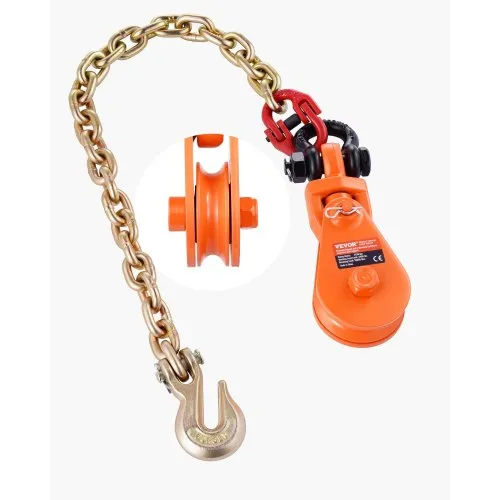
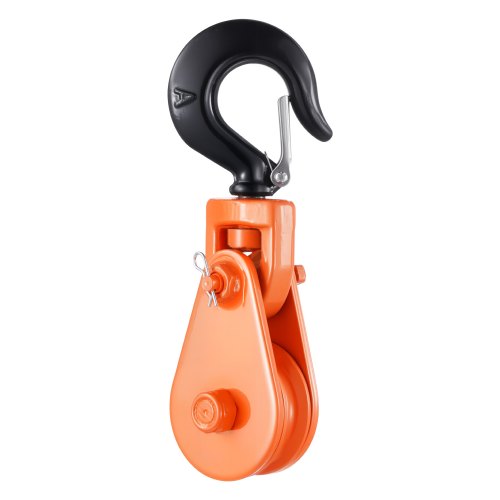
A snatch block pulley is essentially a heavy-duty wheel housed in a protective shell that multiplies and reroutes the force applied via a winch cable or rope. It is easier to understand why pulley hoists are regarded as necessary off-road recovery devices rather than optional extras for serious off-roaders once you understand how this mechanical advantage operates.
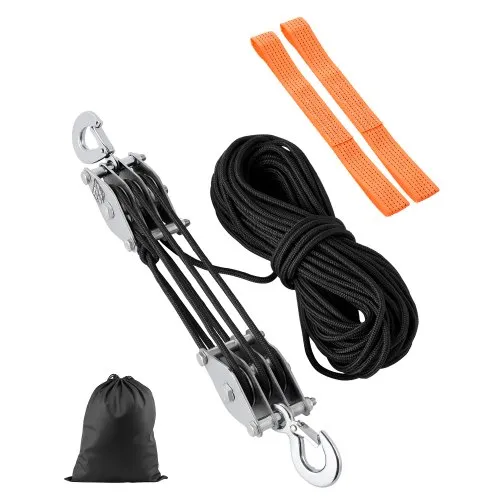
Some installations include the hardware, rated shackles, and synthetic rope needed to rig a doubled-pulling system as a complete double-pulley block-and-rope kit, eliminating the need to buy each part separately. For infrequent users who want dependable equipment without having to investigate the specific compatibility of blocks, shackles, and rope diameters, this is handy.
Unlike conventional pulley blocks, a specialist winch recovery snatch block is rated for the dynamic loads and shock forces of vehicle recovery, not just static lifting. Recovery-rated hardware has safety margins that generic pulleys usually don't because recovery loads can climb significantly over the vehicle's static weight during a shock or abrupt release. Look for corrosion-resistant coatings and sealed bearings to keep the mechanism turning smoothly, pull after pull, because pulley hoists are frequently exposed to mud, water, and UV light.
Application and Recovery Features of VEVOR Pulley Hoists
Real-world examples show when different capacities and configurations matter most, beyond paper specs.
Off-Road and Winch Recovery Applications
One of the most popular applications for pulley hoists is off-road winch recovery, whether you're hauling a stalled car straight out or rerouting the line around a tree or rock to get a safer pulling angle. A dual-pulley rigging system frequently makes the difference between a winch that stalls and one that completes the retrieve in deep mud or sand.
Since ATVs and UTVs are much lighter than trucks or SUVs, winching them usually requires lower-capacity blocks; nonetheless, when the terrain is very challenging, the same principles of line redirection and double-pulling force still apply. For these lighter-duty recoveries, trail riders who regularly travel to remote locations frequently carry a small snatch block.
On the heavier end, truck and tractor vehicle recovery on farms, construction sites, or rural roads requires higher-capacity blocks that can handle the significant static weight of commercial and agricultural vehicles, particularly when they are stuck in soft ground, where suction greatly increases the required effective pulling load. In all these situations, recovery operations stay safe and efficient by matching block capacity and configuration to the vehicle and terrain.
Flatbed Towing, Rollback Wrecker, and Vehicle Carrier Uses
Pulley hoists are just as important to professional towing operations as they are to off-road enthusiasts, although they are typically used more frequently and in larger capacities. Flatbed tow truck operations often use snatch blocks to reposition injured automobiles that cannot be driven onto the bed, rerouting the winch line to pull from odd angles in parking garages, ditches, or accident scenes.
Doubled-pulley setups are commonly used in rollback wrecker gear to safely winch heavier vehicles, such as vans, box trucks, or loaded trailers, up the bed's incline without exceeding the winch's rated single-line capacity. This illustrates why configuration and capacity matter together, not as separate requirements.
Rather than relying on sporadic weekend recovery, car carrier towing operations that move several vehicles throughout a shift benefit from robust, quick-to-rig blocks that withstand frequent daily use. Higher-tonnage pulley hoists that can be relied upon under unpredictable, high-stress loading situations are essential for heavy-duty vehicle rescue teams handling the most difficult calls, such as rollovers, collisions, or multi-vehicle events. Reliable pulley and snatch block hardware is a daily necessity in the towing business and directly impacts work efficiency and safety.
Why Choose VEVOR Pulley Hoists?
With 2- to 30-ton capacities, single- and double-pulley configurations, and hardware rated for actual recovery loads rather than just static lifting, VEVOR offers one of the largest assortments of pulley hoists on the market. Each block is priced to deliver professional-grade strength without the markup of specialty towing equipment manufacturers, offering dependable equipment at a reasonable price for towing experts and off-road enthusiasts. VEVOR has a pulley hoist designed and rated for the task, whether you're rigging an ATV recovery or a complete rollback wrecker pull. Get the entire selection now to rig your next recovery safely.
With significant headroom above that weight, match the block's rating to the heaviest car you're likely to recover. Commercial rescue operations typically require 14.5- to 30-ton blocks, while light-duty ATV recovery may require 2 tons.
What's the difference between a single and double pulley setup?
A twin-sheave system routes the line through two sheaves, roughly doubling the pulling force and letting a smaller winch safely handle higher recovery loads. In contrast, a single sheave block redirects the line angle.
Can a snatch block be used for off-road and towing work?
Indeed. Although lighter blocks are usually enough for occasional off-road recovery, towing and wrecker activities normally demand higher-capacity, more frequently used gear. Nevertheless, the same pulley concepts apply to both.
How does rated capacity relate to actual pulling force?
Rated capacity is not a goal to regularly meet; rather, it represents the hardware's maximum safe operating load. Regularly working close to the limit causes the sheave, pin, and housing to wear out faster.
Do pulley hoists work with synthetic rope as well as steel cable?
Yes, as long as the sheave diameter and groove design match the line type, most snatch blocks are compatible with both. To prevent excessive wear or line damage during recovery, always verify compatibility.