Spreaders






Results for Spreaders
Lawn spreaders are applicators that distribute seed, fertilizer, and other loose material across turf and soil at a controlled, repeatable rate. Material is loaded into a container on the frame and leaves through a metered opening as the unit rolls forward, so output follows ground speed instead of how much is thrown by hand. A rate adjustment sets how much passes through, and the moving parts spread it in an even layer over each strip covered. The result is consistent coverage with fewer bare streaks, burned patches, and wasted product than hand spreading usually delivers.
VEVOR groups its range into two families. Cart spreaders cover walk-behind broadcast models with 15 to 130 lb hoppers and spread widths reaching 9.8 to 12 ft, 18 in drop spreaders for edging along beds and paths, and a 130 lb tow/push unit for larger ground. Compost spreaders are powder-coated steel mesh rollers from 16.5 to 44 in wide that lay down peat moss, compost, and topsoil. Typical uses are overseeding, seasonal fertilizing, winter salting of walks and driveways, and topdressing after aeration.
Four things decide what you need:
- Lawn size: measure square footage; small yards suit compact hoppers, while open acreage favors 100 lb plus capacity and the widest throw.
- Material: granular seed, fertilizer, and salt go through a hopper spreader; peat moss, compost, and topsoil need a mesh roller.
- Edges and obstacles: beds, paths, and paving beside the work area call for a drop pattern that keeps product where you aim it.
- Terrain: rough, soft, or snowy ground rolls easier on 13 in pneumatic tires than on small plastic wheels.
Compare hopper sizes, spread widths, and tire options across the models above, or step back to the full lawn care range and the wider garden center for tools that pair with your spreader.
Lawn Spreader Types at a Glance
Use this side by side view to see how each spreader style puts material down before you compare individual models.
| Spreader Type | Spread Pattern | Width per Pass | Materials Handled | Trade-offs |
|---|---|---|---|---|
| Broadcast push | Spinning impeller throws a wide arc | 9.8 to 12 ft | Seed, fertilizer, salt, ice melt | Fast coverage; throw can reach beds |
| Drop | Falls straight down in a band | 18 in | Seed, fertilizer, salt | Clean edges; more passes on open lawns |
| Tow/push broadcast | Wide arc, towed or pushed | 0 to 9.8 ft | Seed, fertilizer, salt, ice melt, sand | Biggest loads; heavy when pushed full |
| Compost roller | Tumbles through a mesh drum | 16.5 to 44 in | Peat moss, compost, topsoil, manure | Even topdressing; pace sets output, no dial |
VEVOR Lawn Spreaders for Efficient Yard Coverage Every Season
Are you looking for a reliable way to seed, fertilize, or spread compost across your yard without leaving bumpy areas or waste? Getting the right lawn spreader can save you time, reduce product waste, and deliver consistent results in any size yard. VEVOR offers a wide range of push seed spreaders, broadcast cart spreaders, and tow-behind lawn spreaders to meet all your landscape needs. Their prices are reasonable, and they offer reliable post-sale support.
Understanding Spreader Type (Push, Drop, Tow-Behind) & Capacity
Choosing the right lawn spreader based on its capacity and application style is the most important thing you'll do, whether you're fertilizing a large business lawn or covering a small garden patch. From lightweight push models to heavy-duty tow-behind units, VEVOR's extensive catalog has a solution for every yard size, terrain type, and spreading job. The company's commitment to quality and affordability makes it easy and enjoyable to improve your lawn care routine.
Push Seed Spreaders for Everyday Lawn Maintenance
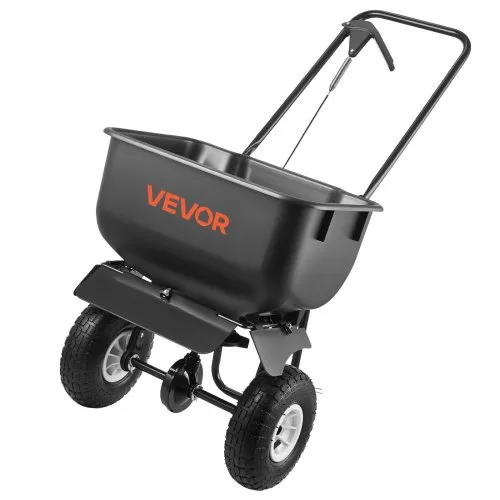
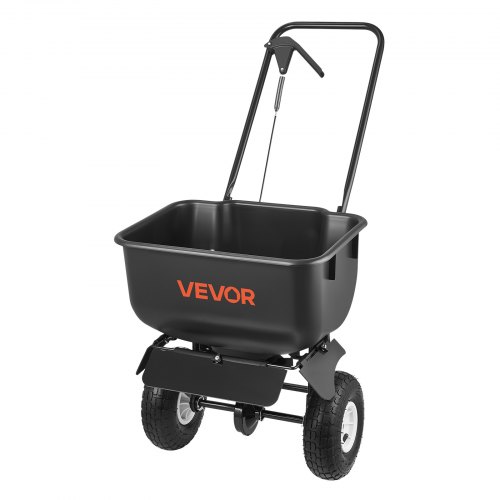
Most homes and people who like to take care of their lawns use a push seed spreader. You can walk behind these spreaders and push them across the lawn by hand. They work best in small to medium-sized yards where control and movement are important. VEVOR's line of push seed spreaders features strong steel or rust-resistant frames, comfortable handles, and adjustable spread settings that let you control the exact amount of material spread on each pass.
With hopper capacities ranging from 25 lbs to 70 lbs, most VEVOR lawn push spreader models can fertilize an entire lawn without refilling. The broadcast-style push spreaders spread the material over a wide arc, allowing them to cover more ground with each pass while remaining compact enough to maneuver along yard edges and landscaped borders.
Drop Lawn Spreaders for Precise, Controlled Application
When accuracy is more important than speed, drop lawn spreaders are the best choice. In contrast to broadcast models, a drop lawn spreader sends material straight down through holes at the bottom of the hopper, where it settles in a controlled band the same width as the spreader. Because of this design, they are perfect for spreading fertilizer next to flower beds, along sidewalks, or in narrow strips where excess material could damage plants or be wasted.
There are calibrated gate settings on VEVOR's drop lawn spreaders that let you fine-tune the application rate. Adjustable hopper holes work with a wide range of granular materials, including grass seed, granular fertilizer, ice melt, and some finely screened compost. Drop lawn spreaders are a great buy for homeowners who value minimizing waste and providing precise coverage.
Tow Behind Lawn Spreaders for Large Properties and Riding Mowers
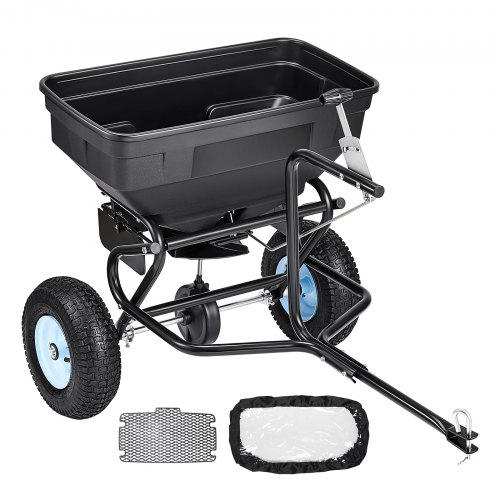
A tow-behind lawn spreader is the best option for larger yards, where walking the entire yard with a push spreader would take too long and be too hard on the body. You can easily cover large areas quickly and evenly with these spreaders because they connect straight to the hitch of a riding lawn mower, ATV, or garden tractor. VEVOR's tow-behind lawn spreaders feature heavy-duty steel frames and large-capacity hoppers that hold more material than standard push units.
Tow-behind models from VEVOR usually have hoppers that can hold 100 pounds or more, making them suitable for large lawns, sports fields, farms, and commercial turf management. With a spread width much wider than that of push models, tow-behind units can finish the job with far fewer runs. Gearbox-driven agitators prevent materials from sticking together and maintain a steady flow rate, even when the materials are heavy, such as soil or lime.
Compost Spreaders for Organic Lawn and Garden Care
When you want to spread organic matter evenly over lawns, flower beds, and larger garden areas, you can use a compost spreader. The frames of compost spreaders are stronger, and their openings are larger than those of fertilizer spreaders. This is so they can handle the rougher, heavier compost material without getting stuck or clogging up in the middle of an application. VEVOR's compost spreaders can handle both small and large pieces of organic matter.
When you use a compost spreader instead of spreading by hand, the application is much more consistent, and you don't have to do as much work. VEVOR's models can work with finished compost, mulch, peat moss, and soil conditioners, among other organic materials. You can control the application density with easy-to-change gate settings, whether you're adding topdressing to an established field or starting from scratch with a new garden bed.
Choosing a Spreader by Material
The material you plan to spread narrows the choice quickly, so match the load to the machine before you look at width or capacity.
| Material | Best Spreader | Key Consideration | Why It Matters |
|---|---|---|---|
| Grass seed | Broadcast push | Light flow setting | Fine seed runs fast; low settings stop waste |
| Granular fertilizer | Drop near beds, broadcast in open turf | Edge control | Stray granules can burn beds and mark paving |
| Rock salt and ice melt | Broadcast with pneumatic tires | Corrosion | Rinse after use; large tires roll over snow |
| Sand | 130 lb tow/push broadcast | Load weight | Rated for sand; heavy loads suit towing |
| Peat moss and compost | Mesh compost roller | Moisture | Damp clumps bridge the drum; screen first |
| Lime | Mesh compost roller | Spreader rating | Roller drum is rated for lime; 100 lb push unit is not |
Matching Coverage Width & Features to Your Lawn Care Needs
Choosing the right coverage width and knowing the key differences between a basic spreader and a higher performing one can make a big difference in how well and how often you take care of your yard. The user-friendly features of VEVOR's lawn spreaders make them easier to use, more accurate, and more durable, whether you're a weekend gardener or a professional groundskeeper who manages multiple properties.
How Coverage Width Affects Efficiency and Application Quality
When picking a lawn spreader, one of the most important factors is the coverage area. It takes fewer passes to cover the same area with a wider-spread design, which saves time and effort, especially on larger properties. VEVOR's broadcast-style lawn push spreaders and cart spreaders can spread material up to 12 feet wide. Tow-behind units, on the other hand, can reach widths of 12 feet or more, based on the setting of the spreader and the type of material you're using.
For precise uses where you need to stay within defined borders or avoid spreading material onto hardscape surfaces, narrower coverage widths, like those created by drop lawn spreaders, are better suited. By ensuring the coverage width matches the shape of your yard, you can avoid waste and achieve even germination or fertilizer uptake across the whole treated area. VEVOR makes it easy to find the right coverage width for your needs by giving clear product specifications and application advice for each model in the line. This lets you choose the spreader configuration that best suits your yard size and spreading goals.
Essential Features to Look for in a Quality Lawn Spreader
A good lawn spreader differs from a simple one in more ways than just capacity and coverage width. Adjustable spread rate controls are crucial as they allow you to fine-tune the amount of material released per pass. This is especially important when working with different materials that need different application rates. VEVOR's lawn spreaders have easy-to-read rate adjustment knobs, so even first-time users can set them up.
Other important features include hoppers that don't rust, pneumatic tires that roll smoothly on rough ground, and designs that are easy to clean so that material doesn't build up between uses. Many VEVOR cart spreaders and push seed spreaders feature an automatic shut-off that stops material flow as soon as you release the handle or stop moving. This simple yet very useful feature prevents over-application and waste at the end of each pass.
Best-Seller Comparison
Here is how five popular models on this page compare on the specs that separate them most.
| Product | Type | Capacity | Spread Width | Wheels or Drum | Rate Control | Operation | Best For |
|---|---|---|---|---|---|---|---|
| Push Spreader, 100 lbs, 13 in Tires | Broadcast | 100 lbs (56 L hopper) | 0 to 9.8 ft | 13 in pneumatic | 30 positions | Push | Lightest broadcast unit here (27.8 lbs); mid-size lawns |
| Tow/Push Spreader, 130 lbs, 9.8 ft | Broadcast | 130 lbs | 0 to 9.8 ft | 13 in pneumatic | 30 positions | Tow or push | Only hopper spreader here that tows; acreage and sand |
| Compost Spreader 24 in, Push/Tow Handle | Mesh roller | 2.66 cu ft | 24 in | 23.6 x 15.7 in drum | Mesh, 12 x 20 mm holes | Push or tow | Most handle settings here (4 heights); larger lawns |
| Push Spreader, 130 lbs, 12 ft Width | Broadcast | 130 lbs | 0 to 12 ft | 13 in pneumatic | 30 settings | Push | Widest throw in this lineup; fewest passes on open turf |
| Compost Spreader 24 in, Side Latches | Mesh basket roller | 60 L | 24 in | 15.7 x 24 in basket | Latched mesh basket | Push | Lightest unit here (22.3 lbs); beds and small lawns |
Why Choose VEVOR Lawn Spreaders for Your Yard?
When it comes to lawn spreaders, VEVOR has everything you need. There are small push seed spreaders, accurate drop lawn spreaders, heavy-duty tow-behind lawn spreaders, and special compost spreaders. VEVOR makes professional-grade yard care available to everyone by making it durable, easy to use, and affordable. Check out the whole collection right now to find the perfect spreader to keep your yard healthy, level, and looking great all year.
FAQs
What is the difference between a push spreader and a drop lawn spreader?
A push seed spreader broadcasts material in a wide arc for faster coverage, while a drop lawn spreader releases material directly downward for precise, controlled application. Drop spreaders are better for narrow areas and borders; push spreaders are ideal for open lawns requiring quick, even coverage.
Can VEVOR tow-behind lawn spreaders be attached to any riding mower?
Most VEVOR tow-behind lawn spreader models are compatible with standard riding mowers, ATVs, and garden tractors via a universal hitch connection. Always check the product's hitch specifications before purchasing to confirm compatibility with your specific vehicle model and towing capacity rating.
What materials can a compost spreader handle?
VEVOR's compost spreader models are designed to handle finished compost, mulch, peat moss, and other organic soil amendments. The wider hopper openings and robust agitators prevent clogging with coarser materials, making them far more effective than standard fertilizer spreaders for organic lawn care applications.
How do I calibrate my lawn spreader for accurate application?
Set the spreader's rate dial to the manufacturer's recommended setting for your specific product. Test by spreading over a measured area and weighing the material used. Adjust the dial up or down accordingly. VEVOR's lawn push spreader models feature clearly marked settings that significantly simplify calibration.
How should I clean and store my lawn spreader after use?
Always empty the hopper after each use and rinse with clean water to remove fertilizer or de-icing residue. Allow the spreader to dry fully before storage to prevent rust. VEVOR's rust-resistant frames and powder-coated finishes make cleaning easy and help extend the spreader's lifespan.
How do I choose the right size spreader for my lawn?
Match hopper capacity and spread width to the area you treat. A compact 15 lb push unit suits small yards, while open lawns go faster with a 130 lb walk-behind spreader and its 12 ft throw. Measure square footage, then check how often you want to refill.
Can lawn spreaders be used in the winter for salt and grit?
Yes, broadcast spreaders rated for salt and ice melt can treat driveways and walks in winter. VEVOR confirms its 100 lb push spreader handles rock salt, and the 130 lb tow/push model is rated for sand. Empty and rinse the hopper after each use to limit corrosion.
What type of lawn spreader do I need?
It depends on your area and material. Walk-behind broadcast models suit open lawns, drop spreaders suit edges near beds, and tow/push units suit large lots; all sit in VEVOR's cart spreader range. For peat moss, compost, or topsoil, choose a mesh compost roller instead.
Are hand-held spreaders good?
Hand-held spreaders are fine for small patches, steps, and narrow beds, but output depends on how fast you crank and walk, so coverage is harder to keep even across a whole lawn. For a full yard, a wheeled unit such as a 15 lb push broadcast spreader gives steadier results.
Are broadcast (rotary) spreaders better than drop spreaders?
Neither is better for every job. Broadcast spreaders throw material up to 12 ft per pass, which suits open turf, while an 18 in drop spreader releases a narrow band with clean edges beside beds and paving. Many owners use broadcast for the main lawn and drop for borders.