E & X-Track Rails









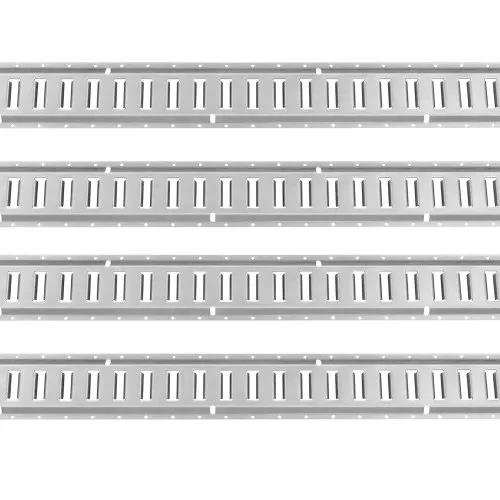
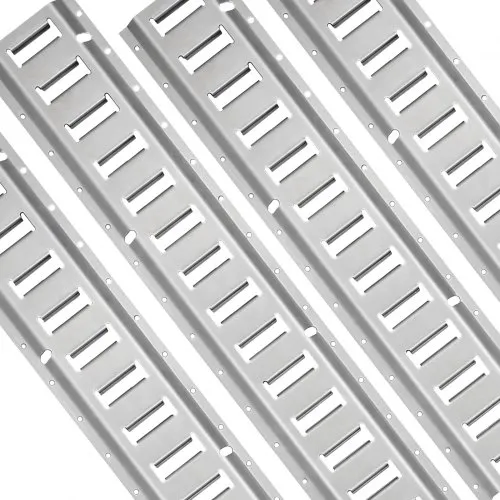








Results for E & X-Track Rails
VEVOR offers high-quality retractable tonneau covers for truck drivers seeking safety, ease of use, and long-lasting protection. We have a wide selection of specialty trucks, full-size and mid-size pickups, and trucks from all the major brands. When it comes to protecting work gear, camping gear, or regular cargo, VEVOR retractable tonneau covers are the best choice. They are weatherproof, easy to retract, and built to last. We make sure that your investment in a truck bed lasts season after season by offering fair prices and reliable service after the sale. Check out all of our options to find the right one for your hauling needs.
VEVOR Delivers a Stronger, More Flexible Way to Secure Cargo on Every Trip
When you load up your car, do you have to improvise with ratchet straps and hold points that you're not sure about every time? Are you never sure that everything will stay put on the road? With VEVOR tie down rails, you don't have to worry about that. They give you a stable, high-capacity anchor system that works with all kinds of fittings and any trailer body shape.
How Weight Capacity & Rail Length Determine the Right Tie Down
The two most important specs that tell you if a tie down rail system is right for your cargo and trailer size are the weight limit and rail length. What separates a system that can safely carry your heaviest loads from one that limits what you can carry and how safely you can carry it is making the right choices in both directions.
Working Load Limits and Breaking Strength: Matching Rail Capacity to Your Heaviest Cargo
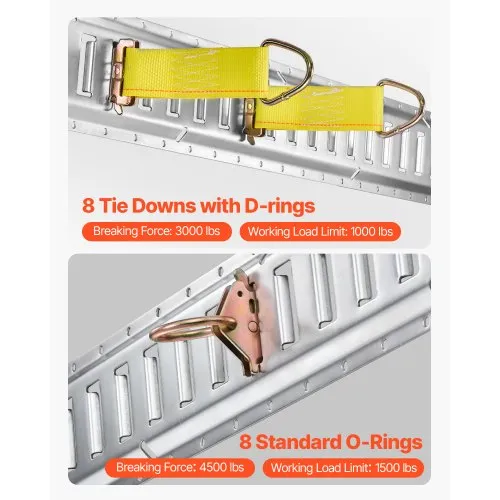
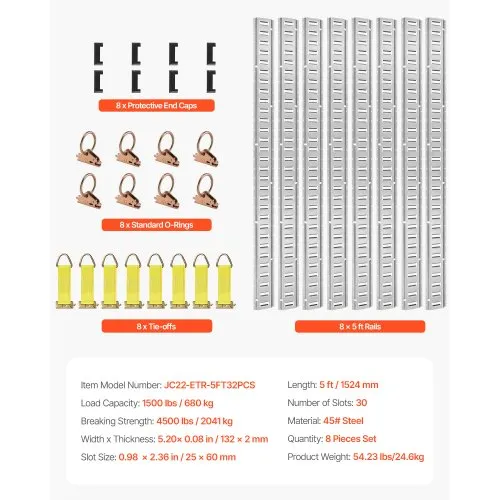
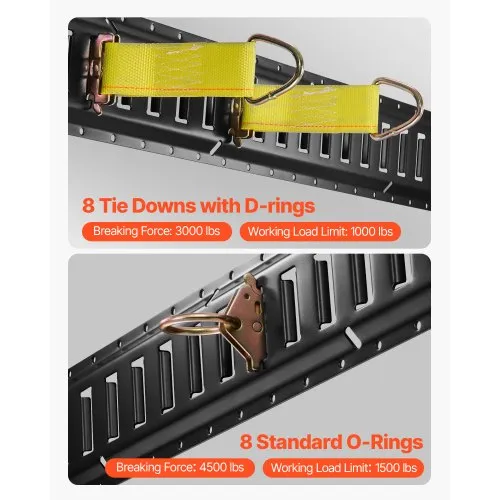
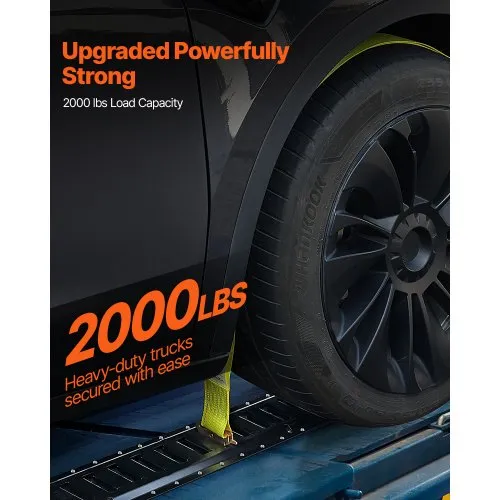
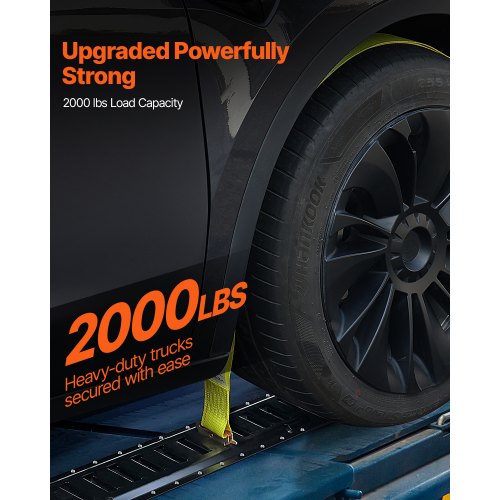
There are two important numbers that show how much weight a tie down rail system can hold: the working load limit (WLL) and the breaking strength. The WLL is the maximum weight a rail or fitting can hold in regular use. A breaking strength is the number that you use to plan your loads. The torque is the force required to break a structure. It's usually three to four times the WLL, and it's there as a safety buffer. The WLL ratings for VEVOR's e rail track and x track rails are the same as or higher than the industry standard. Heavy-duty models can handle working loads of 1,500 to 5,000 pounds per fitting point, based on the rail series and anchor configuration.
The amount of space you need depends on the type of cargo you have. Compared to a pallet of building supplies or a piece of heavy equipment, a motorcycle attached to rails for trailer use has a different load profile. Heavy equipment, loaded pallets, and commercial freight require steel e track rail system configurations rated for higher working loads with wider anchor spacing to distribute force across multiple points. At the same time, motorcycles and light recreational cargo can be handled effectively with standard aluminum e track rails with moderate WLL ratings.
Rail Length Options and Coverage Planning: Getting Full Anchor Point Access Across Your Trailer Floor and Walls
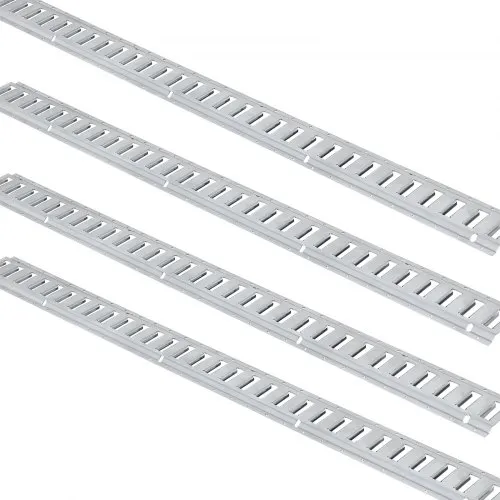
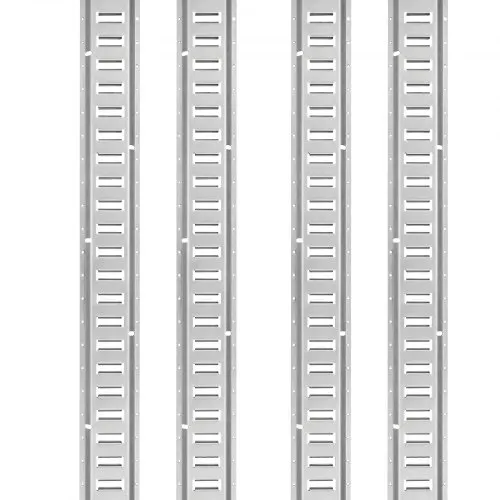
Depending on the length of your rail, your tie down system will have a different number of pin points, evenly spaced across the load area of your trailer. The standard lengths of VEVOR's e rail track range from 2-foot sections for adding anchor points to 8-foot and 10-foot full-wall runs that provide continuous anchor access across a whole trailer side or floor section.
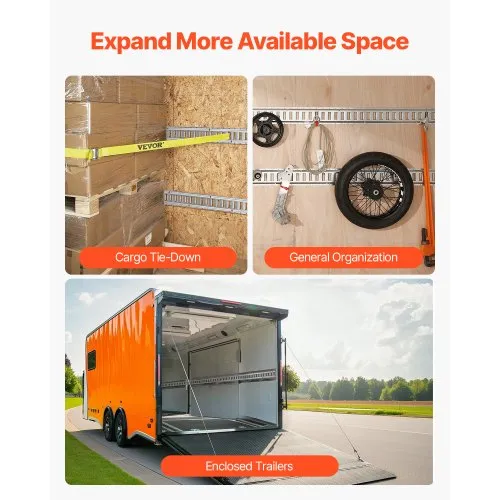
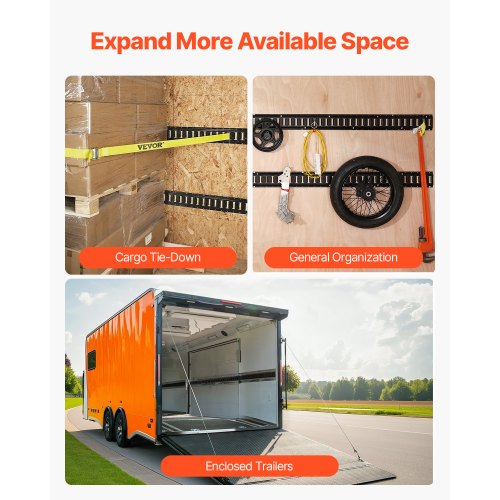
To plan your entire rail coverage, you must first measure the inside of your trailer and mark the load zones where your goods will need to be secured. The most adaptable anchor grid for securing loads of different sizes and weights is a floor-level e track rail system that runs the full length of the trailer on both sides. Installing horizontal X-track rails on the sides at mid-height adds a second level of anchor points for vertical load restraint and for wall-mounted accessories to organize cargo.
Understanding E Track Versus X Track: Choosing the Right Rail Profile for Your System
One of the first things you need to think about when making a tie down system is how to make sure that the fittings, straps, and other accessories will work with both e rail track and x track rails. E track, so named because its cross-section resembles an "E," is the most common type used for business trailers and trucks in North America. Its slotted design lets many standard fittings fit, like ratchet strap anchors, rope rings, cam buckle anchors, and special motorcycle chocks that click in, spin to lock, and quickly release without tools.
X-track rails have a different slot profile, which is an opening in the shape of a cross that can fit a specific set of parts made for X-track. X track rails offer an equal load capacity to E-track. They are frequently used in military logistics equipment and certain types of trailers that require the X-track fitting standard, though they are less common in commercial applications.
Steel Versus Aluminum E Track Rails: Material Trade-Offs for Load Capacity, Weight, and Corrosion Resistance
When choosing between steel and aluminum e track rails, there are trade-offs in three useful areas: the system's weight, its ability to hold weight, and its ability to fight corrosion over time. Steel e track rail system options have the highest raw load capacity per linear foot. This is because steel's tensile strength allows thinner cross-sections to withstand higher working loads than equivalent aluminum profiles. This makes steel the best option for moving heavy freight, construction equipment, and other applications where getting the highest WLL per anchor point is important.
Aluminum e-track rails give up some absolute load capacity in exchange for significant weight savings. Typical aluminum rails weigh 60 to 70 percent less than equivalent steel sections. This versatility is a significant benefit for operators who must manage payload limits or eliminate trailer dead weight to maximize legal cargo capacity. Aluminum and track rails are the better long-term option for trailers that are frequently exposed to wet conditions, salt air, or agricultural chemicals, because they offer inherently superior corrosion protection compared to uncoated steel.
How Compatibility & Installation Make VEVOR Tie Down Rails the Right Choice
How well a tie down rail system works with your trailer and the tools you use every day determines how useful it is. VEVOR makes sure that every tie down rail works with a wide range of products and is easy to install, so anyone can do it, even if they don't have special tools or experience.
Universal Fitting Compatibility and Accessory Ecosystem: Building a Complete Cargo Management System
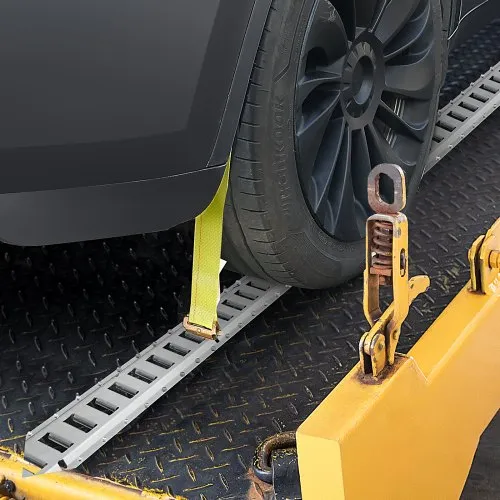
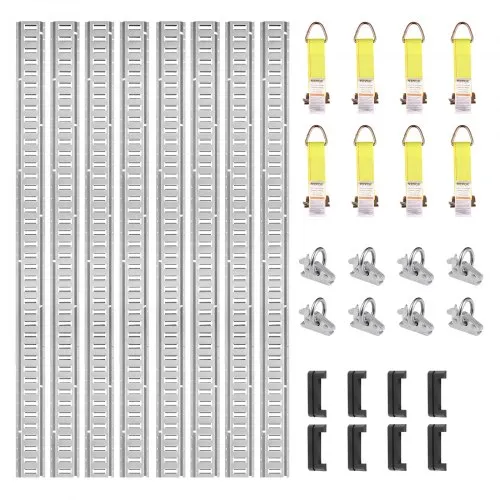
VEVOR's tie down rails are made to work with the full ecosystem of standardized E-track and X-track compatible fittings that are currently on the market. The practical value of any E track rail system comes from the fittings and accessories that connect to it. The standard E-track fitting system makes it easy to attach ratchet strap anchors, cam buckle loops, rope tie-off rings, pallet strap anchors, motorcycle wheel chocks, and shelving brackets to VEVOR's e rail track. There's no need to make any changes or guess if they will work.
It is simple to source a fully integrated cargo system from a single supplier, thanks to the compatibility of VEVOR's rails for trailer use with the brand's own tie-down straps, ratchet sets, and cargo control accessories. When parts are consistent, the system automatically matches strap rates, fits WLL numbers, and adheres to rail capacity specs, so the user doesn't have to figure out how to make different brands work together.
Installation Methods, Mounting Hardware, and Surface Compatibility Across Trailer Types
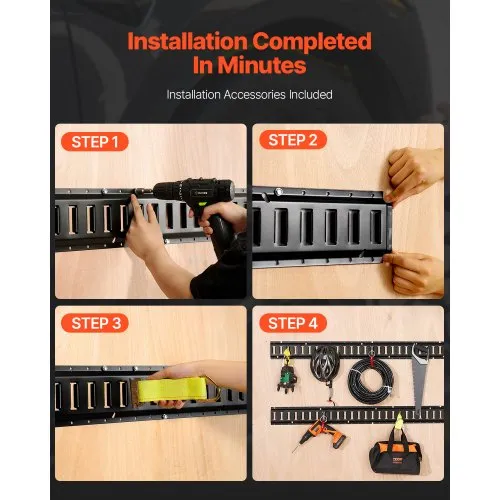
Installing tie down rails properly is what makes the difference between the system working at its full capacity and failing under load because the fasteners aren't strong enough. These three ways to install VEVOR's E rail track and aluminum e track rails are surface mounting to trailer floors and walls using through-bolts and backing plates, direct fastening to trailer frame cross-members using self-tapping screws in the right substrate, and recessed installation in pre-routed floor channels on trailers with track-ready flooring.
When rails will be used to support loads at or close to their rated WLL, through-bolt placement with backing plates is the strongest mounting method for any E track rail system. VEVOR provides installation instructions for each rail series in the lineup, including bolt sizes, torque requirements, and backing plate specs. This feature takes the guesswork out of planning the installation and makes sure that the fastening system is right for the rail's load capacity.
Why Choose VEVOR Tie Down Rails for Safer, More Organized Cargo Hauling?
VEVOR tie down rails offer weight limits, rail lengths, high-quality materials, and compatibility with other fittings, making them ideal for professional haulers who need a cargo control system that always works with every load. From heavy-duty steel E rail track for maximum WLL uses to lightweight aluminum e track rails for payload-sensitive trailer builds, and from standard E track rail system configurations to X track rails for unique installations,
FAQs
What is the difference between E rail track and X track rails?
E rail track and x track rails use different slot profiles that accept different fittings—they are not interchangeable. E-track is the dominant North American commercial standard with the widest fitting ecosystem. X-track is used in specific trailer brands and military applications.
What mounting method gives aluminum E track rails the highest load capacity?
Through-bolt installation with steel backing plates delivers the highest-strength mounting for aluminum E track rails. This method distributes load across the backing plate surface rather than concentrating stress at individual bolt holes, allowing the rail to perform at or near its rated WLL without fastener pull-through risk.
How do I calculate how many rails I need for trailer installation?
Measure your trailer's interior length and identify all load zones requiring anchor points. Plan rails for trailer floor and wall positions that cover every area where cargo will be strapped.
Can I mix E track and X track fittings on the same trailer?
No. E rail track fittings and X track rail fittings are profile-specific and will not engage correctly in the wrong rail type. If your trailer uses both rail types in different zones, use only the correct fittings for each rail section.
Are VEVOR aluminum e track rails suitable for outdoor and wet environment use?
Yes. VEVOR aluminum e track rails offer inherent corrosion resistance that suits regular exposure to rain, humidity, and coastal salt air without surface treatment requirements. For steel and track rail systems in wet environments, select powder-coated or galvanized models that provide equivalent corrosion protection for long-term outdoor trailer use.