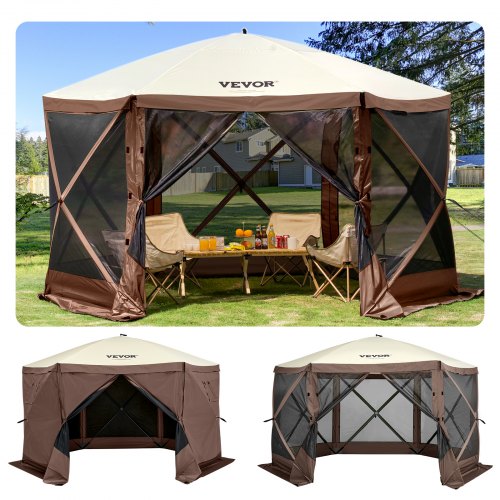

VEVOR offers a wide range of wood burning fire pits, including smokeless models, deep-bowl steel models, and portable models ideal for patios, campgrounds, and other outdoor spaces. These wood burning fire pits are easy to use and well-built. They can be used for cooking, gathering, and heating year-round, so homeowners and travelers can always stay warm.
Are you experiencing cloudy water, excessive algae growth, or sick fish? Using the right biological pond filter system will remove ammonia, nitrites, and organic waste that are harmful to your water environment. It is great for koi ponds, garden ponds, and decorative water features, as VEVOR biological pond filters provide both mechanical and biological filtration in a single, efficient machine. VEVOR's trusted filtration options will give you clear water and a healthy pond environment.
Managing water well starts with picking a biological pond filter that is the right size for your pond. A filter that is too small won't handle the waste, and one that is too big will cost more than necessary. It will save you time, money, and a lot of stress if you get this match right from the start.
Before choosing a biological pond filter, you need a good idea of how much water your pond holds. This number is more important than most pond owners initially think. It's easy to figure out how many gallons a rectangular or square pond holds: multiply the length by the width by the average depth. If you have an irregular or kidney-shaped pond, take the average of its length and width, then multiply that by its depth.
For ponds with fish, especially those that produce a lot of waste, like koi, the actual filtration requirement is much higher than the raw water volume alone suggests. Due to the higher biological load in a koi pond, a pond bio pressure filter designed for a 1,000-gallon garden pond might only work for a 500-gallon pond. There are clear volume ratings and fish-load guidelines in the specifications of VEVOR biological pond filters. This helps you choose an appropriate capacity with less guesswork.
Different types of ponds have different biological filtration needs. One of the most important considerations is the difference between a koi pond and an ornamental garden pond. Koi are big fish that eat a lot of food and make a lot of ammonia and organic waste. When koi are present, the biological filter for a koi pond needs to handle this higher bioload consistently, so you should generally size up to a filter that can handle up to about twice the pond's volume.
Even though ornamental garden ponds with few or no fish are much less picky about filter size, clear water, and healthy plants, they still need regular biological filtration. By removing suspended particles and breaking down organic debris, a good bio pressure pond filter can help prevent algae blooms and oxygen depletion, which can quickly turn a beautiful water feature into a maintenance headache. VEVOR has a variety of filter types with different water volume capacities, so there is a good choice for you, whether your pond is a small 500-gallon garden feature or a large 5,000-gallon koi habitat.
The amount of filtration your pond needs changes with the seasons and the number of fish in it. During the warmer months, fish move around more, eat more, and produce much more waste. The higher water temperature also makes bacteria and algae grow faster, which puts more stress on your biological pond filter system.
Stocking changes have the same effect. Your current pond bio pressure filter can handle too many living things in a pond after adding just a few new koi. When conditions change, VEVOR biological pond filters keep filtering effectively, and the range of sizes makes it easy to switch to a bigger unit when your pond's needs change.
The form and depth of your pond affect where waste collects and how effectively your filtration system captures it. When a pond is deeper than 4 feet, the water tends to stratify, with lower oxygen levels near the bottom. Poorly managed water circulation can reduce the effectiveness of biological filtration. A biological filter pond system with a properly placed pump and return outlet or inlet keeps the water moving throughout the entire column, preventing "dead zones" where organic matter accumulates and breaks down without being filtered.
Irregularly shaped ponds with sharp corners, narrow pathways, or multiple shallow or separated zones all make it hard for water to flow. In these situations, a single pressurized biological pond filter placed in the middle might not adequately cover the entire surface area. An extra flow or a second filter unit might be needed. When installed and plumbed properly, VEVOR's pressurized biological pond filters work well in a wide range of pond shapes. Their flexible inlet and outlet configurations make it easier to find the best spot for your pond's layout.
The flow rate that drives a biological pond filter and the upkeep that supports it are the only things that make it work. If you don't pay attention to either of these two things, the water quality will get worse, no matter how well-matched your filter's capacity is to your pond's size.
You can measure flow rate in gallons per hour (GPH) or liters per hour (LPH). Flow rate tells you how quickly water in your pond passes through the biological filter and returns clean. While most biological pond filters have a recommended flow rate range for their stated pond volume, this range is usually based on the manufacturer's stated pump flow rate.
Because koi fish continuously produce ammonia, maintaining a steady flow is essential for a biological filter in a koi pond. When the flow stops due to a blocked pump, power loss, or a pump that is too small for the pond, ammonia levels rise quickly. According to VEVOR, biological pond filters work best within certain flow ranges.
Maintaining even the best biological pond filter is important to keep it working at its best. It's important to clean the mechanical filtration stage (foam pads, sponge layers, or settlement chambers) regularly to prevent clogging, which can slow flow and put additional stress on the biological media further down the line. Most makers recommend checking and cleaning the mechanical media in a bio pressure filter for ponds every 2 to 4 weeks during the busy season.
If you want to clean biological media such as ceramic rings, bio balls, or other porous materials, use only pond water, not tap water. The good bacteria groups that keep your biological filter functioning will die because tap water contains chlorine and chloramine.
VEVOR biological pond filters are a good value for pond owners and koi fans who need filters that work well across a range of sizes and require minimal upkeep. VEVOR's range has everything you need, from a small bio pressure pond filter for a garden feature to a big system for a koi pond. They are designed for real-life pond conditions, made with high-quality materials, and backed by solid after-sales support. Take a look at our full selection of biological pond filters now and give your pond the filtration it needs.
For koi ponds, choose a biological filter rated for at least twice your pond's actual volume. Koi produce significantly more waste than other fish, so a filter rated for 2,000 gallons is more appropriate for a 1,000-gallon koi pond.
Clean the mechanical media of your bio-pressure pond filter every 2 to 4 weeks during the warmer months. Biological media should be rinsed only in pond water — never tap water — to preserve the beneficial bacteria that drive effective biological filtration.
Yes, most biological pond filters can operate year-round, though filtration demand drops significantly in winter as fish metabolism slows. In freezing climates, ensure your pump and filter are rated for cold-weather operation, or follow the manufacturer's specific winterization guidance.
A pressurized pond bio-pressure filter is sealed, allowing water to be pumped back up to waterfalls or raised features. Non-pressurized filters rely on gravity return. Pressurized models offer more flexible installation and are generally easier to maintain.
A new biological filter pond system typically takes four to six weeks to cycle, allowing beneficial bacterial colonies to establish. Using a bacterial starter product can accelerate this process and reduce the risk of ammonia spikes in new or restocked ponds.