Pool Controls







Results for Pool Controls
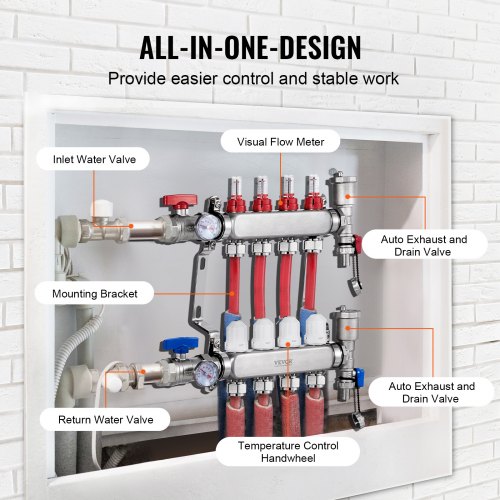
VEVOR heat manifolds let you precisely control radiant heating system temperatures in homes, businesses, and factories. We offer a wide range of options, from 2-loop to 6-loop designs, so that we can handle projects of any size. VEVOR has all the distribution parts you need, whether you’re installing underfloor heating in a small bathroom or controlling the temperature across multiple zones in a large building. Each manifold is built to last and is easy to install. It also comes with responsive customer support and competitive prices, making professional-grade heating available to both contractors and DIYers.
VEVOR Heat Manifolds with Complete Multi-Loop Solutions for Every Radiant System
Are you planning to install radiant heating and are unsure of which distribution system will work best with your layout? The right heat manifold setup will help your system balance heat across different zones while keeping it efficient. Our heat manifolds help keep spaces comfortable and energy-efficient by controlling airflow and heat transfer. They can be used for anything from small home improvements to large commercial buildings.
Loop Configuration & Application Matching Your System to Your Space
To choose the right heat manifolds, you need to know the zone requirements and coverage area for your project. It will make sure that each room gets the right amount of warmth.
2-3 Loop Systems for Compact Installations
The 2 loop radiant heat manifold is great for small spaces like bathrooms, entryways, or dedicated workshop areas where you need to control separate areas. These small units are usually 12 to 16 inches long, making them easy to fit into tight mechanical spaces. Installation is faster than with larger setups, and there are fewer places where connections can leak. The 3 loop radiant heat manifold allows you to control the temperature in separate areas of small homes or apartments, such as the kitchen, bathroom, and living room.
Both setups work great with regular home water heaters, so you don’t need to buy commercial-grade boilers. Because there are fewer circuits, the initial cost of both the radiant floor heat manifold and its connections is lower. Homeowners who do their own projects like the simple layout, fewer loops, and faster system startup. Usually, these heat manifolds have built-in flow meters on each circuit, so you can make precise adjustments without needing special tools.
These smaller heat manifolds are very helpful for renovation projects where access to the ceiling or wall cavity is limited. Their small size makes them a good fit for utility closets or under bathroom vanities where space is tight. The lower weight, which is usually less than 8 pounds when empty, makes it easier to mount on standard wall studs without any extra support. When used with the right insulation under the floor, 2-3 loop systems keep the temperature comfortable while still being as energy efficient as larger systems.
4-6 Loop Configurations for Comprehensive Coverage
The 4 loop radiant heat manifold is ideal for average-sized homes, as it can heat 1,200 to 1,800 square feet across several rooms. This setup lets you set the temperature in each room separately so that you can achieve maximum comfort with the least energy. The 5 loop radiant heat manifold adds another zone. It is great for homes with finished basements, sunrooms, or home offices that need their own climate control.
The 6 loop radiant heat manifold is great for larger homes because it can handle large floor plans or buildings with more than one story without sacrificing performance. These setups are often used in businesses, such as stores, medical offices, and showrooms, to maintain consistent temperatures across all functional areas. Depending on the insulation quality, tube spacing, and desired output temperatures, each loop can serve roughly 200 to 400 square feet. The extra circuits make the system more reliable by allowing it to continue operating while maintenance or repairs are underway.
These larger heat manifolds are 24 to 36 inches long and are typically installed in a mechanical room or on a large wall. Professional installers like that each circuit has its own ball valve, which lets them shut off a zone without affecting the whole system. Flow indicators provide real-time feedback during balancing procedures, speeding up the commissioning process. Larger heat manifolds have more thermal mass, which helps keep system temperatures stable. It means less cycling, longer component life, and lower operating costs.
Zone Management and Temperature Precision
With the right heat manifolds, radiant systems can go from being simple heat sources to advanced tools for controlling the climate. Each loop operates independently, so occupied rooms can stay at a comfortable temperature while unoccupied rooms receive lower output. Smart thermostats work well with the radiant heating manifold setup, allowing you to set temperature changes that fit with your daily routine. The bathroom gets warm in the morning, the living room gets comfortable in the evening, and the bedroom gets cool at night.
The PEX tubing manifold interface ensures that connections don’t leak and can withstand the thermal expansion that occurs during heating cycles. Compression fittings or press-fit adapters make strong connections that can withstand many years of temperature changes without failing. Placing the manifold in the right place, usually in utility areas in the basement or mechanical closets on the main floor, eases maintenance and keeps the distribution points in one place for balanced flow across all zones.
Advanced heat manifolds have mixing valves that blend the supply and return water. This helps keep the floor temperature within the desired range, even as boiler output varies. It prevents surface temperatures from getting too high, which could damage flooring materials or create uncomfortable hot spots. Radiant floor heat manifold systems with built-in air vents automatically remove trapped gases when they are first filled and during regular maintenance. This keeps the water moving and reduces noise problems that can affect how well the system works.
Material Construction & System Compatibility
Durable heat manifolds can handle different heating sources and tubing materials without corroding, making them reliable over time in a range of water conditions.
Brass and Stainless Steel Construction
Premium radiant heat manifolds are made of brass or stainless steel and can withstand continuous immersion in heated water without damage. Brass has high thermal conductivity, helping heat spread evenly. It also doesn’t lose zinc even under harsh water conditions. The material helps limit bacterial growth, supporting good water quality throughout the system. Alternatives to stainless steel are better at resisting corrosion in coastal areas or places with very harsh water chemistry. They can last for more than thirty years.
Manifold headers have ports that are precisely machined and have consistent threading. This means that standard compression fittings can be used without cross-threading or leaking. The internal bore diameter, usually between 1 and 1.5 inches, keeps the flow speed high across all connected loops, preventing circuits far apart from becoming stagnant. Good heat manifolds have replaceable valve cartridges and gaskets, so when they wear out, you can fix them at the component level rather than replace the whole manifold. This makes it easier to fix things, lowering long-term ownership costs and keeping the system from going down.
Nickel plating or powder coating are examples of surface treatments that make things last longer and look better when they are exposed. These finishes don’t scratch during installation and keep moisture out of humid mechanical spaces. Mounting brackets made of galvanized or stainless steel hardware ensure the manifold is securely attached to structural elements. The filled manifold weight can exceed 40 pounds in 6-loop configurations, and the brackets won’t sag or vibrate.
Universal Tubing and Boiler Compatibility
The PEX radiant heat manifold design can accommodate different types of PEX tubing, including PEX-A, PEX-B, and PEX-C, in common sizes ranging from 3/8 to 3/4 inch. Adapter fittings let installers use their preferred connection methods, compression, expansion, or press-fit, without worrying about compatibility. This flexibility is useful when adding to existing systems or when heat manifolds are installed during renovations, where the original tubing types need to be matched.
Radiant floor heating manifolds work well with a wide range of heat sources, such as traditional boilers, tankless water heaters, geothermal systems, and solar thermal collectors. Many temperature rating specifications approach or exceed 200°F, which provides high-output installations with a safety margin. Pressure ratings of 100 to 150 PSI work for both low-pressure home systems and higher-pressure commercial uses without needing different manifold models. The water heater manifold connections feature standard NPT threading, making it easier to connect to existing plumbing.
System versatility also includes glycol-based antifreeze solutions that can protect against freezing in spaces that aren’t heated or cooled. Heat manifolds with the right gasket materials won’t break down when they come into contact with glycol, so the seal stays intact during the antifreeze service interval. Because of this compatibility, radiant systems can be used in garages, workshops, and seasonal buildings where freezing would normally make installation impossible.
Why Choose VEVOR Heat Manifolds for Reliable Climate Control?
VEVOR heat manifolds are the basis for efficient radiant heating in homes and businesses. They combine precise engineering with competitive pricing. We have everything from small 2-loop units to full 6-loop systems, so you can likely find a suitable setup for your project. VEVOR makes professional-grade heating distribution available to builders and homeowners alike. They have responsive technical support and simple warranty coverage. Check out our selection today and see how high-quality heat manifolds can make your home more comfortable while keeping your energy costs down.
FAQs
Can I expand my system by adding more loops later?
Expansion is possible, but it requires replacing the entire manifold with a larger one. Choose a configuration with extra capacity, or install multiple smaller manifolds in different areas to accommodate future zones during the first installation.
What maintenance do heat manifolds require?
Regularly checking flow meters, valve operation, and connection points prevents problems. Every 3 to 5 years, flush the system to remove sediment buildup. Also, check the air vents to ensure they are working properly when the system starts up in spring and fall.
Do heat manifolds work with existing forced-air systems?
Yes, radiant systems operate independently and work well with forced-air heating. Many homeowners use radiant floors to stay comfortable most of the time, but they also keep forced-air systems on hand for quick temperature recovery or for cooling seasons with the right equipment.
How do I balance flow across multiple loops?
Adjust the settings on each ball valve while monitoring the flow meters until all circuits show the same flow rate. Start with all the valves open, then slowly close the faster circuits until the readings match. It will ensure the heat is evenly distributed.
What temperature should I set for floor heating?
For living spaces, floor temperatures are often comfortable between about 75 and 85 degrees Fahrenheit. Tile floors can withstand higher temperatures than hardwood or laminate, which can be damaged above 80°F. Before making any decisions, always check the manufacturer’s specifications for the flooring.