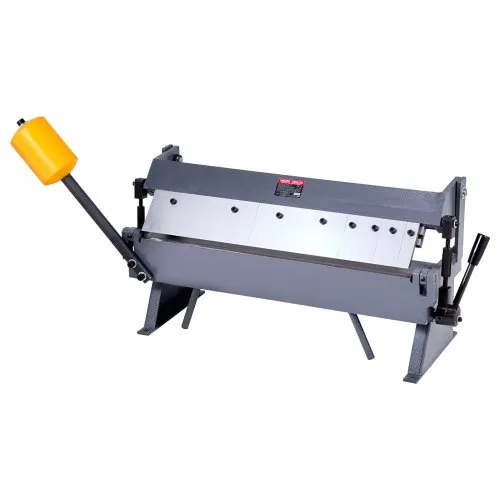

VEVOR's sheet metal bending brakes can handle any sheet metal forming project, from small shop jobs to full-width fabrication work. These machines deliver consistent performance and durability through years of demanding use. Need a small 12 inch metal bending brake for confined workshop spaces or a 50-inch box-and-pan brake for wide panel bending? This series covers several widths in both standard and box-and-pan designs. Every metal bending brake can serve as a reliable sheet metal brake, so you can adapt the material size, bend complexity, and shop layout without guessing.
Searching for clean, accurate bends for ductwork, AC, or custom metal panels? VEVOR metal bending brakes are designed to deliver uniform, repeatable bends on a variety of sheet metal thicknesses. Whether you are a professional fabricator or a DIY enthusiast, you can achieve professional results with these tools. This range features a reliable clamping force, durable steel construction, and finger configurations that meet most conventional fabrication and HVAC bending applications, from compact tabletop to full-width shop variants.
When buying a metal bending break, start with the width and type you need. Your project size and bend complexity will help you choose the best configuration for your company. VEVOR offers a variety of widths, along with conventional box- and pan-style metal bending brake benders so that you can find the right size for your standard material sizes.
This 12-inch metal brake is ideal for small parts, brackets, and narrow sheet metal pieces typically seen in hobby and light fabrication work. The narrow width keeps the device small enough to mount on a benchtop in workshops with limited floor space, while still providing consistent bend angles over the shorter working length. This brake is smaller and easy to move or store when not in use.
A 24-inch metal bending brake provides a broader working width for larger panels, such as small enclosure sides or medium brackets, without the floor-space commitment of a full-width shop brake. With this model, users can tackle more ambitious projects while keeping handling and setup easy. This size is still reasonable for a single operator to load and fine-tune, so it's a sensible upgrade for customers who have outgrown the 12-inch capacity but don't need full-width bending.
Both widths are good portable metal benders for users who move between job sites or workshop locations, as the smaller overall footprint and weight make travel and setup easier than larger, shop-fixed brake variants.
A 36-inch metal bending brake is a popular mid-range width for general fabrication work, such as HVAC ductwork, midsize enclosures, and standard sheet metal panels. This width accommodates many common material sizes without the need to make the bend over multiple passes, which helps keep a straight, consistent fold line along the full length of the panel.
This size fills the void between small benchtop units and full-width shop brakes. It is a popular size for small fabrication firms and serious hobbyists who routinely need to work on modestly large panels. The greater width increases the unit's footprint and weight compared to 12- or 24-inch variants, so users should confirm they have enough bench or floor space before choosing this size.
For most bending needs, metal shops that work with standard sheet sizes find the 36-inch width adequate, using wider brakes only occasionally for very large panels.
A 48-inch box and pan brake or 50-inch box and pan brake provides full-width bending for larger enclosures, box fabrication, and wide-panel work common in HVAC and sheet metal fabrication operations. The box and pan brake bender design features removable or segmented fingers on the clamping bar, enabling operators to create box-shaped bends with sides on multiple edges rather than a single fold.
This box and pan brake setup is required for making products such as electrical enclosures, HVAC transitions, or metal boxes where all four sides must be folded without the fingers getting in the way of previously bent edges. The VEVOR box-and-pan brake uses a segmented finger system you can adjust for each task by changing the finger width and spacing to fit the box dimensions you're making.
The box-and-pan design avoids extra tooling or secondary bending processes to produce box-shaped parts; as a result, it offers substantial advantages over a standard straight-finger brake for shops that regularly manufacture enclosures, transitions, or multi-sided formed parts.
The biggest difference between a regular bending brake machine and a box-and-pan brake is the arrangement of the fingers along the clamping bar. Standard brakes have a single, continuous, or only slightly segmented clamping edge, which suits straight bends across the full width of the material without interruption. This arrangement suits the simple folds, hems, and straight panel bends found in standard sheet metal fabrication.
A box and pan brake has removable or adjustable segmented fingers. With the fingers removed, the gap will match the size of the box sides. This lets you make the next bend on an adjacent side without the clamping bar getting in the way of the already bent side. This flexibility makes the box-and-pan combination much more versatile for fabricating enclosures and boxes. The segmented finger system adds some setup complexity compared to a simple basic brake.
Beyond width and brake type, material thickness capacity and portability determine how well a metal bending brake works in your workflow. Whether you need to move your brake or keep it fixed in place, mobility gives you more flexibility to organize your workspace as needed. VEVOR metal bending brakes are designed to accommodate multiple material gauges and provide mobility features for many industrial settings.
Each metal finger brake is rated for a maximum material thickness, usually indicated in gauge for steel or in inches of thickness for aluminum. Exceeding this specification can damage the brake's gripping mechanism or cause uneven bend angles. VEVOR's metal bending brakes are rated for standard sheet metal gauges used in HVAC, automotive panel work, and general fabrication. Capacity typically decreases as working width increases because a longer clamping bar requires more leverage.
Heavy-duty aluminum folders are designed specifically for aluminum sheet, which reacts differently to bending stress than steel and may typically be bent to tighter bend radii without cracking. When buying a brake, make sure the material type and thickness you work with match the brake's rated capacity. This will prevent mechanical stress on the tool and poor results in the finished product.
If you work with mixed materials (say, switching between a steel job and an aluminum project), select a brake rated for the thicker or more demanding of your typical materials, rather than sizing it for your most common, lighter-gauge work.
HVAC techs and fabricators who may need to bend away from a permanent shop will usually find that a portable sheet metal brake built for transit to the job site has a lighter overall structure and simpler mounting than shop-fixed versions. These portable units are often temporarily mounted to a work table or portable platform, allowing setup and teardown as needed between job sites.
Benchtop models from 12 to 24 inches are naturally portable because of their decreased size and weight, but 36- to 50-inch metal bender brakes are often shop-fixed because of their mass and the stability required for consistent full-width bending pressure. For job-site fabricators who may need wide-panel bending capabilities from time to time, it may be more practical to use a portable metal bending brake for field work and a separate, larger fixed brake for shop-based tasks.
VEVOR offers metal bending brakes in widths from 12 to 50 inches, including specialized box and pan bending brakes for making enclosures and multi-sided fabrication projects. They offer material capacity and portability options for workshops, HVAC technicians, and mobile fabricators, and responsive after-sales support if you have any setup or capacity questions. Check out the full selection today to find a width and arrangement that suits your bending projects.
Match brake width to your average panel size. Small brackets work well with 12- to 24-inch brakes. Full-size ductwork or enclosures normally require 36- to 50-inch box-and-pan brakes for full-width bends.
A box-and-pan brake features segmented, detachable fingers that let you bend on several sides of the box without hindrance. The normal brake has a continuous gripping edge and is only suitable for straight-line work.
Yes, most VEVOR metal bending brakes will work with both materials within their rated thickness capacity. Aluminum is not steel, and heavy-duty aluminum folders are made for aluminum.
Smaller variants, 12 to 24 inches, are good portable sheet metal brakes for taking to the job site. The wider 36" to 50" units are often heavier and better suited to permanent shop installation.
Before use, check the manufacturer's gauge rating for steel or thickness rating for aluminum. Exceeding this rating can damage the clamping mechanism or cause irregular, inaccurate bend angles.