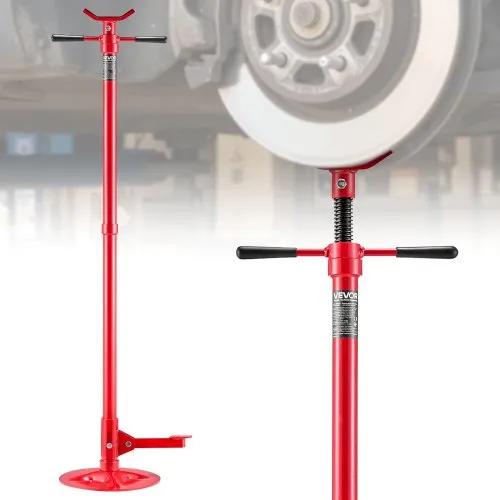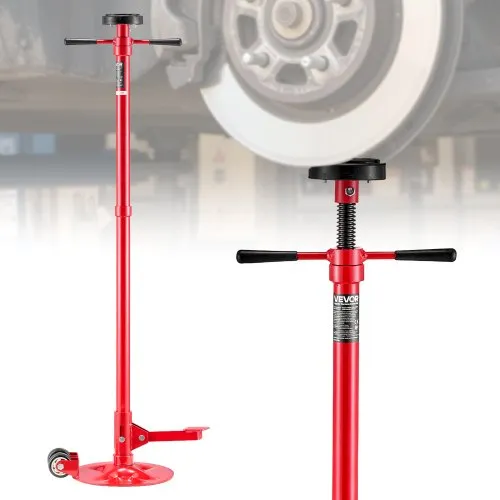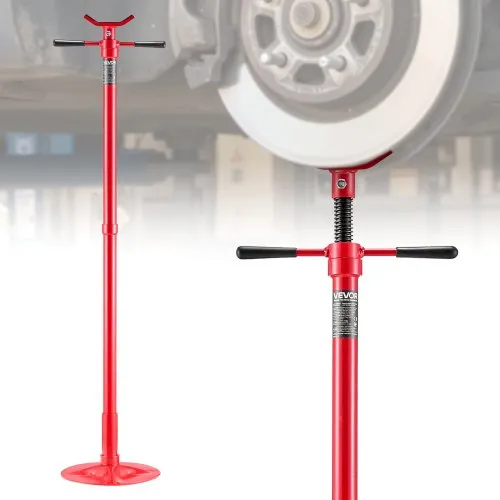

VEVOR provides a reliable range of underhoist stands for mechanics, amateurs, and professional shops that need sturdy, adjustable vehicle support while working on hoists. Whether you operate beneath a lifted car, truck, or SUV, VEVOR underhoist stands provide the load-bearing stability and height flexibility you need to make your work safe and efficient. Each stand is constructed of heavy-strength steel with a wide-base geometry and lock mechanisms that give you confidence every time you go beneath a lifted car.
It's one of the most dangerous jobs in any garage: Putting a car on a hoist and working underneath it. The equipment holding the car up must be absolutely reliable. VEVOR underhoist stands eliminate that uncertainty by offering rock-solid secondary support that keeps the car in place while you operate. VEVOR makes underhoist stands that meet the weight requirements and operating heights of real garage work, from lightweight passenger vehicles to heavy trucks and vans.
First and foremost, the support type and rated weight capacity of an underhoist stand determine whether it's the right tool for your vehicle and lift arrangement. VEVOR covers both factors across its entire product line, so every customer will find a configuration that meets their individual application.
The design of the underhoist stand will determine the distribution of weight on the garage floor and how sturdy the stand feels with a loaded vehicle on it. VEVOR develops its underhoist stands with wide-spread base configurations to enhance stability by extending the footprint outward, lowering the center of gravity, and reducing the likelihood of lateral shift when the stand is loaded.
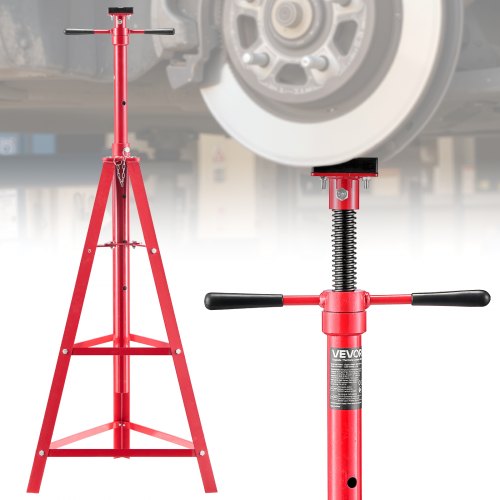
The underhoist support stand is tripod-style for three-point contact with the floor, which is naturally more secure on slightly uneven floors than a four-leg design. VEVOR's underhoist supports are configured as a tripod, so the stress is uniformly distributed across all three contact points, which self-corrects for tiny floor irregularities that would cause a rigid four-leg stand to sway.
The saddle or pad that sits on top of the stand is also important to the vehicle's rest and security. VEVOR's underhoist stands have a contact surface that grips vehicle frame rails, subframes, and designated lift points without slipping or marring them. Secondary support stands are most challenged when the load shifts slightly as you walk around or apply force during repair work.
Each underhoist stand has a maximum weight capacity, and for safety, you must select a stand rated for your vehicle. VEVOR clearly rates its underhoist stands and adds a structural buffer above the specified capacity to account for the dynamic loads that occur when tools are used, components are pulled, or the mechanic leans against the supported structure.
A 2 ton underhoist safety stand fits most passenger cars, crossovers, and lighter trucks. Most sedans, hatchbacks, and standard SUVs fit comfortably within this capacity range, making 2-ton-rated stands the most popular design in home garages and general automotive businesses. Made from cold-rolled steel tube, VEVOR's 2-ton underhoist safety stand won't bend or weaken at the welds during years of frequent use, and it'll hold its rated capacity.
For larger cars like full-size pickup trucks, vans, commercial vehicles, and larger SUVs, it is important to purchase underhoist stands with higher capacity ratings. VEVOR provides models rated above 2 tonnes for these applications, allowing the stand to safely support heavier loads during long work hours. The biggest danger in working under a hoist is the vehicle falling or changing without warning while a person is under it. A properly sized and placed set of underhoist stands eliminates that variable.
Underhoist stands are not standalone tools in isolation – they are a vital safety layer in conjunction with your hoist or lift. Underhoist stands are used to offer redundant support to a vehicle that is hoisted by a two-post or four-post hoist in case of hydraulic pressure loss, lift failure, or an inadvertent release of the hoist. VEVOR makes its underhoist supports for this paired-use application with height ranges that fit the heights of normal residential and commercial hoist lifts.
Proper placement of the underhoist stands under manufacturer-authorized lift points or frame rails completes the safety setup. The VEVOR underhoist stands have clear markings for height increments and saddle adjustments, making it easy to set the support surface directly under the correct contact point on the vehicle without guessing. That perfect arrangement is what allows the stand to take the load neatly and carry it without stressing unwanted body panels and components.
For businesses that run several cars a day through the lift, a set of underhoist stands stored and ready before each job becomes a routine part of a safety regimen, not an afterthought. Thanks to their small size, VEVOR's underhoist stands can be stored neatly on a shelf or wall rack when not in use. They won't take up valuable space in your garage for other equipment.
A good weight rating brings the stand into action. Still, seamless height adjustment and well-thought-out features are what make underhoist stands truly practical to use from job to job.
Different cars are different heights when you lift them on a hoist, and the operating clearance you require underneath depends on what you are doing. The VEVOR underhoist stands offer generous height adjustment, ranging from low-clearance passenger-vehicle work to higher truck applications, all with the same unit. That means you're not buying a different stand for each vehicle type; one VEVOR underhoist stand fits your entire range of vehicles with a simple adjustment.
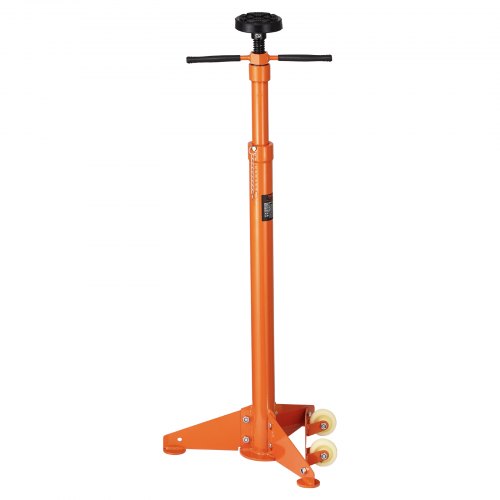
The VEVOR underhoist tripod stand is equipped with a central screw or pin-locking mechanism for accurate height adjustments. The screw-type adjustment allows fine-tuning of the final height. Hence, the saddle securely contacts the vehicle support point without the need for shims or height compensation. Pin-lock systems easily snap into specified height increments, speeding up setting when adjusting several stands under the same vehicle before beginning work.
Height adjustment must be stable once set. VEVOR underhoist stands employ non-creeping locking mechanisms to hold the height you select at the beginning of the job. The stand will remain at that height during the work session. That consistency is critical for protracted repairs, where the car is lifted for extended periods, and the stand must remain in position without periodic rechecks or retightening.
The difference between a functional underhoist stand and one that is truly reliable typically lies in the construction details, which are not readily apparent from a distance. VEVOR constructs its underhoist supports with welded steel tube frames that do not bend or twist when subjected to off-center loads, the real-world scenario when a vehicle is not perfectly centered on the saddle or when lateral force is imparted by tools when working.
The VEVOR tripod under hoist jack stand has reinforced leg joints near the base, the most stressed part, while bearing a load. These reinforced joints use thicker steel gussets or full-penetration welds, which spread the bending force over a greater area of material rather than a single weld spot. This construction method greatly improves the stand's fatigue life under repetitive loading and unloading cycles in an active garage environment.
VEVOR also pays close attention to surface treatment on its underhoist stands. Powder coat or enamel treatments help keep the steel from rusting and corroding, which is important in garages where moisture, condensation, and fluid spills are part of everyday life. Corrosion that eats away at a stand from the inside damages its structure without any visible exterior signs. Corrosion prevention is therefore as important a safety element as an attractive one.
The underhoist safety stand must be simple enough to move and place that mechanics actually use it every time, rather than omitting that step when the task seems quick. VEVOR designed its underhoist stands for single-person use, with weight profiles that make them easy to move across the garage floor and set under an elevated vehicle without requiring two people or a separate handling device.
Compact storage dimensions are important in busy shops and home garages where floor and shelf space is always at a premium. VEVOR underhoist supports can be stored vertically against a wall or on a shelf without the instability of stacking. Some types may be folded or nested, allowing them to be stored more closely together. It might be a benefit for in-house garages that need to serve more than just automotive repair.
The last practical factor is workflow integration. The easier and quicker the underhoist stands are to deploy correctly, the more likely they are to be used regularly in every lift operation. VEVOR designs its underhoist supports with easy-to-use adjustment systems, visible capacity markings, and robust bases that sit securely on the floor without shifting during setup. These design choices remove the friction of safe practice and make the use of underhoist stands the natural default, not the unwilling extra step in a busy business.
VEVOR underhoist stands provide the weight capacity, height range, and structural stability that make safe garage maintenance on any car possible. Each underhoist stand in the VEVOR line is made from quality steel, with precise adjustability and a corrosion-resistant finish. The VEVOR range has a modest 2-tonne configuration for everyday automotive work, as well as a higher-capacity model for heavier vehicles. A fair price and good after-sales assistance come with every purchase. Shop the whole VEVOR underhoist stand collection and add the safety layer your lift setup requires.
Most mechanics utilize 2-4 underhoist stands per car, depending on the job. Multi-point arrangement spreads the load safely for full undercarriage access. It keeps the vehicle stable from multiple directions while you work underneath.
Underhoist stands are designed for use with a vehicle hoist. Use specific jack stands rated for your vehicle's weight for jack-stand arrangements. Use of the stand beyond the design application may jeopardize the stand and your safety.
VEVOR underhoist stands are mostly made to fit the height range of typical two and four-post residential and commercial hoists. Some unique models will have various minimum and maximum heights, so check the product specs to ensure the hoist lift height is compatible before buying.
Look up the curb weight of your vehicle in the owner's manual or the doorjamb label, then divide it by the number of stands you plan to use. Each stand should be rated to carry at least that distributed load. Always select stands rated above the calculated load per stand to ensure a safety margin.