Compressed Air Piping System


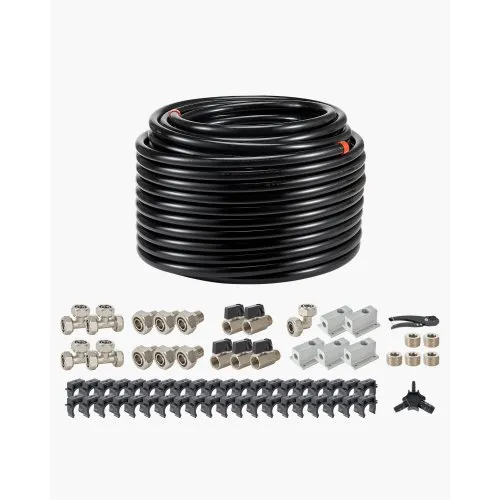


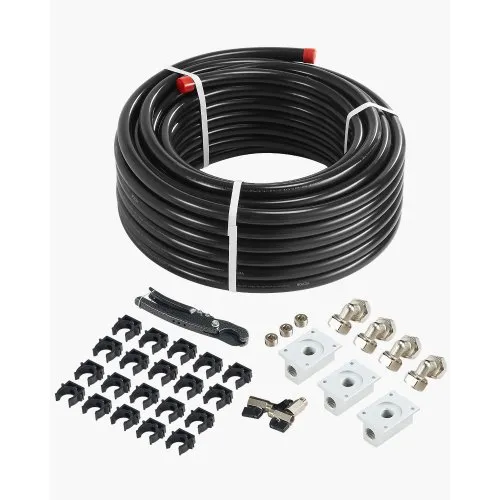


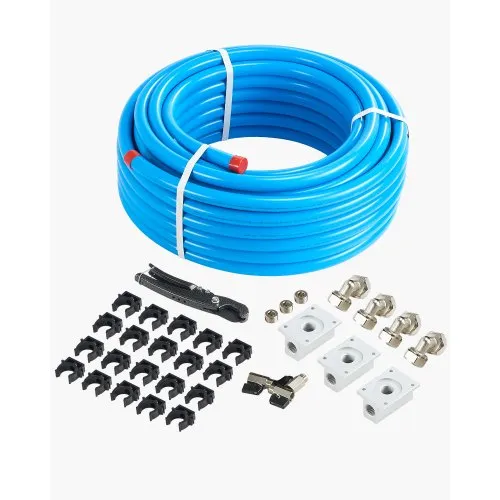


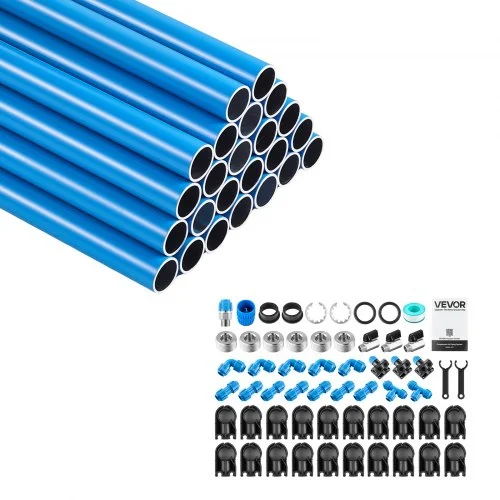






Results for Compressed Air Piping System
An air compressor line kit is a complete set of tubing, fittings, and mounting hardware used to carry compressed air from a compressor to the points where it is needed. Instead of dragging a single hose around a work area, the kit forms a fixed network of pipe that runs along walls and ceilings and feeds a steady supply of air to outlets, also called drops, placed where tools connect. It moves pressurized air with minimal leakage and pressure loss, keeps the supply consistent across the whole space, and replaces the clutter and friction of loose hoses with a permanent, organized distribution system.
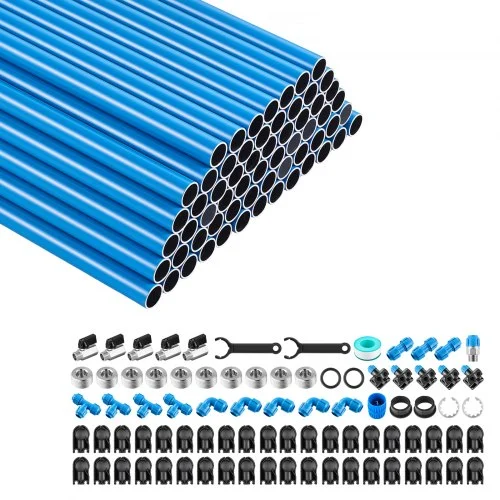
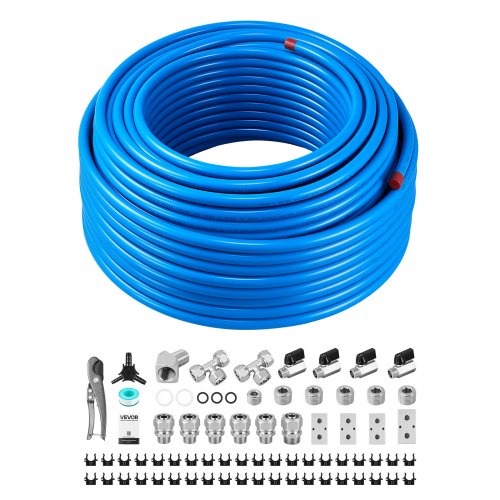
On this page, two main constructions cover most needs. Flexible VEVOR compressed air line kits use a three-layer HDPE-aluminum composite tube that unrolls and bends into place, while rigid aluminum piping kits join pre-cut metal lengths into a fixed backbone. Bores run from about 1/2 inch to 3/4 inch, total lengths from roughly 90 to 300 feet, and working-pressure ratings from 200 to 290 PSI, so the same category scales from a one-bay garage to a busy workshop. Typical uses are powering spray guns, sanders, impact wrenches, tire inflators, and blast cabinets across garages, auto shops, and fabrication floors.
Four things decide which kit fits:
- Bore: the inner diameter sets how much air reaches your tools. A 3/4 inch bore feeds several drops at once, while 1/2 inch suits short runs or a single tool.
- Run length: measure the full path along your walls and ceilings, then add extra for every bend and drop, so you buy enough tubing to reach each outlet with margin.
- Construction: flexible composite tube bends around obstacles and installs fast, while rigid aluminum gives a permanent, higher-pressure backbone.
- Drops and fittings: count the outlets you need, then check the included tees, elbows, blocks, and valves, since kits differ in how many connection points they supply.
Browse the full air compressor line kit range to compare bores, lengths, and constructions in one place, or pair your new lines with matching air compressor tools and accessories to finish the setup.
Air Compressor Line Kit Types at a Glance
The table below sets the core constructions side by side, so you can see which bore, form, and pressure class matches your shop before looking at individual kits.
| Types | Line Bore (inner) | Tube Form & Corner Method | Max Working Pressure | Selection Note |
|---|---|---|---|---|
| Composite line kit, 3/4 in | 3/4 in (19.05 mm) | Flexible roll; 6 to 8 in bend radius or 90-degree elbows | 200 PSI at 73°F, 160 PSI at 140°F | Default for multi-bay shops; the widest bore here feeds several tools at once |
| Composite line kit, 1/2 in | 1/2 in | Flexible roll; bends or 90-degree elbows | 200 PSI at 73°F | Lighter, simpler run for a single bay or short drops where full 3/4 in bore is overkill |
| Rigid aluminum pipe kit | 0.68 in (17.3 mm) | Pre-cut rigid segments joined with elbow fittings | 290 PSI (2 MPa) | A permanent metal backbone with the highest pressure headroom on the page |
VEVOR Air Compressor Line Kit Systems for Garages and Shops
You shouldn't have to guess at pipe sizes or fittings when setting up a solid air system. With a VEVOR Air Compressor Line Kit, you can get tubing, fittings, and brackets that make it easy to connect air lines to each bay, bench, and tool. The kit's length and layout should match the size and configuration of your garage or shop. Then, set up the drops, filters, and hose reels so they work best for you.
Pipe Diameter, Length & System Compatibility for Air Compressor Line Kit
Before installing a single bracket, take time to design a clean and efficient compressed air layout. An Air Compressor Line Kit can give your whole shop steady pressure, less moisture, and fewer leaks, as long as you plan your run length, ensure the pipe width is the right size, and match the parts to your compressor and tools. Plan ahead to reduce compressor cycles, extend tool life, and use less energy.
Choosing Line Diameter for Flow and Pressure
The amount of air that can move through a garage air line depends on its diameter. Choosing the right width is one of the most important design decisions. For hobby pumps that only power one impact wrench, 3/8- or 1/2-inch lines may work. But for garages and body shops with multiple bays, 3/4- or 1-inch mains with smaller drops work best. First, find out how many CFM your compressor can handle at full load. Then, make sure the main pipe can easily handle that flow with room to spare.
It's often cheaper to slightly oversize the main loop now than to deal with tools that can't get enough power and hot fans later. If you plan your Air Compressor Line Kit well, you can keep the main line big and only step it down at drops where short runs feed individual outlets, hose reels, or machines. This way, performance stays high where you work. If you think about adding tools, paint, or a second compressor now, you won't have to re-pipe the whole system later, and the same Air Compressor Line Kit can handle changes.
Planning Run Length, Layout, and Drop Locations
Since every bend, tee, and extra foot of pipe adds resistance, your layout decisions directly affect the usable pressure available at the far end of the system. To find out where air is really needed, start by drawing a map of the work areas, including parking areas, welding stations, detail areas, and bench work.
By putting drops at the edges of bays, you can keep hoses from hanging over walkways and car panels. Adjusting drop placement, adding hose loops, or adding new outlets is easy with an Air Compressor Line Kit that comes with modular fittings and pre-sized lengths. If you plan ahead for a few capped t-shirts and extra hangers, it will be much easier to grow as your shop does.
Matching the Kit to the Compressor, Tools, and Accessories
Not every workspace has the same air demand, so it's important to size the system according to your tools. Fabrication shops that feed sanders, grinders, or blast cabinets for hours at a time have very different needs than light-duty workshops that mostly use tire inflators and blow guns. Make a list of your most-used tools and note the CFM required at full load for each. Then make sure the compressor can handle the normal mix of tools you plan to use simultaneously.
The air compressor tubing you pick should be able to handle that pressure grade, thread type, and temperature range. It should also come with fittings that work well with the filters, regulators, lubricators, and quick-connects you already have. This is also a good time to consider how to control moisture. To keep water out of tools, tilt mains slightly toward drains, add drip legs at low points, and put filters where they are easy to service. When you choose an Air Compressor Line Kit with these factors in mind, the system will operate consistently, require less maintenance, and provide safer performance for both users and tools.
Planning an Air Line Layout by Workspace
Specs tell you what a kit holds; this table turns that into a plan, matching each kind of workspace to where drops go, how to keep water out, and how much room to leave for growth.
| Workspace & Air Demand | Drops to Plan and Where | Moisture Control to Build In | Expansion Headroom | What to Prioritize |
|---|---|---|---|---|
| Single-bay home garage (blow gun, tire inflator, occasional impact wrench) | One or two drops at the bench and near the door | A single filter at the outlet is usually enough | Leave a capped tee for one more tool | A short 100 ft run covers this with room to spare; keep the layout simple |
| Two to three bay auto shop (sanders, spray guns, lifts) | A drop at each bay edge plus one at the main bench | Slope mains toward a drain and add a drip leg per bay | Cap one spare drop per bay | Even drop spacing matters more than raw length; map the bays before buying |
| Fabrication or blast-cabinet shop (grinders, blast cabinet, continuous duty) | Drops at every station, placed for continuous flow | Drip legs at each low point plus a filter and regulator per station | Size the main loop for a second compressor | Continuous-duty tools need the widest bore and the most drip legs; do not under-size |
| Remote or detached building (compressor sited away for noise) | A single main feed to the building, then local drops | Add a drip leg where the long run enters the building | Oversize the feed run before you route or trench it | Pressure drop over distance is the real risk; favor a larger bore and fewer bends |
Material & Installation Method for Air Compressor Line Kit
Which material you use and how you install it will decide how quickly you can get the system up and running once you know its layout and capacity needs. If you buy the right Air Compressor Line Kit, it will last for years and be easy to put together, so you can put in neat, hard lines over the weekend and still trust them years from now. Instead of traditional black iron, modern kits often use aluminum, coated steel, or high-grade composite tube. This is a cleaner option than a basic compressed air piping kit or parts assembled yourself. For these materials, it's easier to use simple hand tools to assemble O-ring-sealed joints that prevent leaks, without the need for threading dies or pipe dope.
The secure mounting hardware keeps the lines straight, prevents joint shaking, and gives the whole system a clean, professional look. This approach works well for garage and shop setups, as well as any workspace that relies on compressed air. Labeled parts, clear directions, and color-coded pipe runs make it easier to see the system at a glance and to fix problems later. If you follow the manufacturer's spacing instructions, label the shutoff valves, and write down the end layout, you can turn an Air Compressor Line Kit into a long-lasting compressed air backbone that will be easier to add to, check, and fix in the future.
Best-Seller Comparison
These are the first five kits listed on the page. The columns pull together the axes that actually separate them, so you can line up construction, reach, and drop count at a glance.
| Product | Construction | Total Length | Line Bore (inner) | Max Working Pressure | Distribution Blocks | Best For |
|---|---|---|---|---|---|---|
| 200FT 3/4" HDPE-Aluminum Kit, Blue | HDPE-aluminum-HDPE composite | 200 ft | 3/4 in (19.05 mm) | 200 PSI at 73°F | 5 four-way blocks | Blue-coded 200 ft run with the full five-block drop count; mid-size multi-bay shops that color-map their lines |
| 235FT 0.68" Aluminum Piping Kit | Rigid aluminum segments (62 x 3.77 ft) | 235 ft | 0.68 in (17.3 mm) | 290 PSI (2 MPa) | 5 wall sockets | Only rigid metal kit here and the highest 290 PSI rating; permanent hard-piped wall runs |
| 300FT 3/4" HDPE-Aluminum Kit, Blue | HDPE-aluminum-HDPE composite | 300 ft | 3/4 in (19.05 mm) | 200 PSI at 73°F | 3 four-way blocks | Longest run on the page; reaching far corners or a detached building from one compressor |
| 100FT 3/4" HDPE-Aluminum Kit, Black | HDPE-aluminum-HDPE composite | 100 ft | 3/4 in (19.05 mm) | 200 PSI at 73°F | 3 four-way blocks | Lightest and shortest kit here; a single-bay garage or a first compressed-air setup |
| 200FT 3/4" HDPE-Aluminum Kit, Black | HDPE-aluminum-HDPE composite | 200 ft | 3/4 in (19.05 mm) | 200 PSI at 73°F | 5 four-way blocks | Same 200 ft, five-block layout in black; shops matching lines to dark walls |
Why Choose the VEVOR Air Compressor Line Kit?
To make layout planning easier and improve older plumbing that leaks heavily, VEVOR offers Air Compressor Line Kits. With long-lasting materials, clear parts, and kits that are the right size for both small garages and large workshops, you can build a better, safer air system without having to have it custom-made. When you combine low prices with quick post-sale support, you can start routing your compressed air with confidence right away.
FAQs
Where is the best place to buy reliable air compressor parts online?
Buy from a supplier that publishes full specifications, real customer reviews, and after-sales support rather than a marketplace listing with thin detail. VEVOR lists compatible tubing, fittings, and air compressor parts and accessories on its own product pages, so you can match each part to your system before ordering.
How can I find compatible accessories for my air compressor?
Start from your compressor's outlet thread size and working pressure, then match fittings and tubing rated at or above that pressure. Browsing VEVOR's air compressor tools by connection type and NPT size helps you confirm a part fits before you add it to a build.
What should I look for when choosing an air compressor starter kit?
Look for tubing long enough to reach every outlet, a bore that matches your tools, and an included set of tees, elbows, valves, and clips so no extra trips are needed. A shorter option like the 100 ft shop kit suits a first single-bay setup.
What is the best line to use for an air compressor?
For fixed shop plumbing, a three-layer HDPE-aluminum composite or rigid aluminum line beats loose rubber hose: it resists corrosion, holds pressure with less leakage, and keeps airflow steady across long runs. Reserve flexible rubber or polyurethane hose for the short lead from a drop to the tool.
Is polyurethane better than PVC for air compressor hoses?
For flexible lead hoses, polyurethane is usually the safer pick: it stays supple, resists kinks and abrasion, and handles compressed air well, while PVC is stiffer and more prone to cracking. PVC is also widely discouraged for permanent air mains because it can shatter under pressure, so a composite or metal line is the better choice there.
What size air compressor line or hose should I use?
Match the bore to your air demand and run length. A 1/2 inch line suits a single tool or a short drop, while 3/4 inch mains carry more air to several outlets with less pressure drop. VEVOR's line kits cover both bores so you can size to the shop.
How do I choose the right compressor for my workshop?
Add up the CFM each tool needs at full load, then pick a compressor that comfortably exceeds the total of the tools you run at once, with tank size covering demand spikes. Size the piping to that output so the lines never bottleneck the compressor.
What is the best pipe material to use for a garage or shop air compressor system?
Aluminum and HDPE-aluminum composite are the top choices: both resist rust and corrosion, hold high pressure, and assemble with leak-free O-ring joints. Avoid PVC for air mains, and skip bare black iron where rust flakes can reach your tools. VEVOR builds its shop kits from these materials.
What size air line piping kit do I need for my shop?
Measure the full pipe path along your walls and ceiling, add length for every bend and drop, then round up so you keep some margin. A one-bay garage often needs around 100 feet, while a multi-bay shop may call for 200 to 300 feet of main line.