Greenhouse Heater








Results for Greenhouse Heater
A greenhouse heater is a device that adds warmth to an enclosed growing space so the air stays above the temperature that damages plants. Most compact models are electric fan heaters: current passes through a heating element, such as a ceramic PTC stone or a metal tube, and a fan pushes air across it and out into the space. A thermostat senses the air temperature and switches the heat on when it falls below a set point, then off once that point is reached. This steady cycle shields seedlings, flowers and vegetables from frost and cold nights while keeping growing conditions stable.
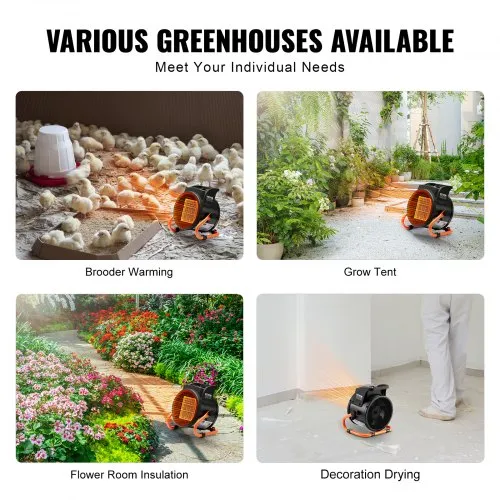
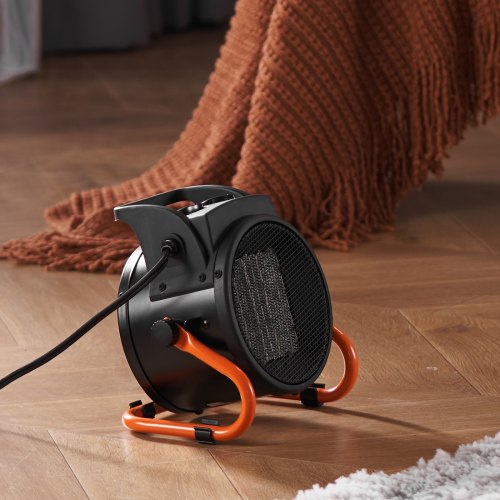
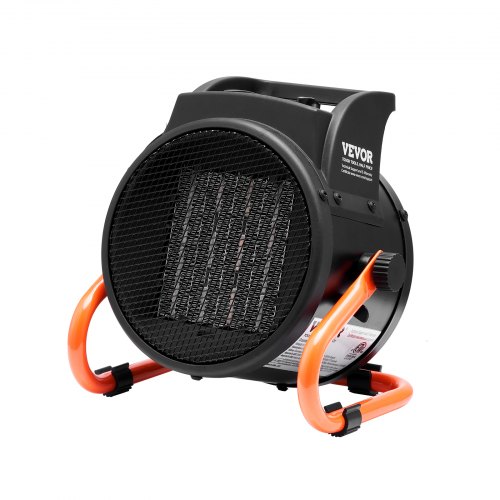
VEVOR stocks four main forms, all rated at 1500W on a standard 120V outlet. PTC heaters with an independent thermostat hold a set temperature, with one model adjustable from 41 to 108°F, and move 198 to 238 m³/h of air. Manual PTC fan heaters run on low and high heat or a 3-speed dial, tilt 15° or 40°, and one adds tip-over shut-off. IPX4 fan heaters use a cold-rolled steel body rated against splashing water, push 259 m³/h (152 CFM) and tilt 25°, with or without a thermostat. A heating tube element heater pairs an independent thermostat with IPX4 protection and a 25° adjustable angle. Most models also offer a fan-only mode for air circulation. Typical uses are frost protection in hobby greenhouses, warming grow tents and seed-starting shelves, heating flower rooms and sunrooms, and keeping brooders warm.
Four things decide what you need:
- Growing space: a single 1500W unit suits small greenhouses, grow tents and sunrooms, while larger or poorly insulated structures may need two.
- Temperature control: an independent thermostat holds a target temperature through the night, while manual models stay at the heat level you pick.
- Moisture exposure: choose an IPX4 model wherever misting, hand watering or condensation can reach the heater.
- Airflow and aim: compare air volume and tilt angle so warm air reaches benches and corners, not just the floor in front.
Compare heating modes, thermostat options and airflow across the full range of VEVOR greenhouse heaters, or browse more options in our space heaters collection.
Greenhouse Heater Types at a Glance
Use this quick comparison to see how each heater type differs before you narrow down to individual models.
| Type | Temperature Control | Splash Rating | Airflow on This Page | Selection Note |
|---|---|---|---|---|
| PTC heater with thermostat | Independent thermostat | / | 198 to 238 m³/h | Holds a set point; keep away from spray |
| Manual PTC fan heater | Low/high or 3-speed dial | / | 169 to 185 m³/h | Most compact; needs manual adjusting |
| IPX4 fan heater | Thermostat or 2 heat levels | IPX4 | 259 m³/h | Most airflow; heavier steel body |
| Heating tube element heater | Independent thermostat | IPX4 | / | Damp-rated with set-point control |
VEVOR Greenhouse Heater Solutions for Reliable Plant Growth
Unless the greenhouse conditions are well regulated, high temperatures may kill the plants within a short time. A lack of solid heating can cause plants to grow slowly or damage vulnerable crops in the event of frost or a sudden drop in temperature. The consistent VEVOR greenhouse heater helps them maintain a proper climate regardless of the weather outside. Our electric, propane, or solar greenhouse heater systems are among the solutions many gardeners use to achieve a balanced environment. Whether the greenhouse is heated by solar power or a modern heating unit, proper heating is the key to a productive greenhouse that stays warm year-round.
Choosing a Greenhouse Heater by Growing Setup
Heater type sets the baseline, but the space you are heating decides what to check before you order.
| Growing Setup | Heater to Prioritize | Check Before Buying | Why It Fits |
|---|---|---|---|
| Grow tent or seed shelf | Manual PTC fan heater | Clearance from tent walls | Small body warms a tight space fast |
| Unheated greenhouse, frost nights | PTC heater with thermostat | Thermostat at plant height | Switches on only when air cools |
| Misted or hand-watered beds | IPX4 fan heater | Spray reach to the unit | Rated for splashes from any direction |
| Solar-warmed greenhouse after dark | Any thermostat model | Set point vs daytime gain | Tops up heat once the sun drops |
| Stuffy greenhouse in summer | Model with fan-only mode | Fan setting on the dial | Moves air without adding heat |
| Brooder or chick pen | Heater with 2 heat levels | Distance from bedding | Low setting avoids overheating chicks |
Benefits & Features of the VEVOR Greenhouse Heater
Uniform Heat Distribution: An effective greenhouse heater is very crucial to ensuring an optimal growing climate for the plants. When winter sets in, plants need constant warmth to keep growing and producing healthy leaves, flowers, and fruits. Contemporary heating systems are designed to distribute heat evenly, preventing the VEVOR heater for greenhouse from becoming cold and creating cold spots that might kill plants.
Electric Heating Convenience: An electric greenhouse heater is one of the most popular methods of controlling the environment. The use of the VEVOR electric heaters is very convenient, as they provide effective heating without fuel storage or complicated installation. Many growers use the VEVOR electric greenhouse heater in small greenhouses or grow tents, where maintaining constant temperatures is important. The heaters provide an effective source of heat and can be used easily and maintained.
High-Power Heating Performance: VEVOR heaters feature high-power heating coils that quickly warm the air. A robust VEVOR greenhouse heater will easily raise the temperature inside a greenhouse, keeping the plants safe when temperatures suddenly drop. The design of airflow systems is also efficient in circulating heat in the air. This circulation ensures that the entire heated greenhouse is regularly heated, allowing the plants to grow in a balanced climate.
Energy-Efficient Heating Options: Another beneficial feature of the VEVOR greenhouse heating systems is energy efficiency. Many gardeners use electric heating alongside renewable energy, such as our solar greenhouse heater. Growers can retain heat in their greenhouse during the day and add heat at night with the VEVOR electric greenhouse heater, stabilizing greenhouse temperatures and lowering electricity bills. Warming a greenhouse using solar energy has become increasingly popular because it allows minimizing operating costs while staying healthy.
Safety Protection: Safety features are also important in greenhouse heating systems. A high-quality VEVOR greenhouse environment heater will usually include overheat protection and temperature control. Such characteristics make the VEVOR greenhouse heater safe even during long heating sessions. The regulation of temperatures in a greenhouse with heat is also intended to prevent frost damage and excess heat.
Propane Heating Capability: Electric heating systems are widespread; however, some growers prefer the VEVOR propane greenhouse heaters in larger buildings. Our propane greenhouse heaters can deliver high heat output and warm large greenhouse areas in the shortest time possible. These systems, however, need to be well ventilated to ensure good air quality in the greenhouse.
Hybrid Heating Flexibility: Multiple heating systems used in a greenhouse are the most effective in most cases. For example, the grower can use our solar greenhouse heater as a daytime heating system and an electric greenhouse heater as a nighttime heating system when temperatures are lower. This is an intermediate solution for heating a greenhouse using solar energy, enabling gardeners to control temperature levels and use less energy.
Reliable Climate Control: In general, a reliable VEVOR greenhouse heater ensures that plants are not exposed to temperature changes. Modern heating systems can provide uniform heat coverage, energy efficiency, and safety features, enabling growers to maintain an ideal environment for plants year-round.
Choosing the Right VEVOR Greenhouse Heater for Your Growing Space
Choosing the right greenhouse heater depends on the greenhouse's size, climate, and heating needs. Considerations of the right VEVOR greenhouse heater are discussed afterwards.
Greener greenhouses might need more effective heating. Growers in such cases may opt to use the VEVOR propane greenhouse heater due to its high heat intensity and ability to heat a larger space quickly. A propane gas greenhouse heater comes in handy, especially in colder areas where a heated greenhouse must be sustained, and a constant supply of heat is needed.
Another thing that affects the choice of the heater is its energy efficiency. Several cultivators seek sustainable ways, such as installing a solar greenhouse heating system. Solar power is used to heat the greenhouse interior on sunny days. In case of low nighttime temperatures, the climate can be stabilized by using electricity to heat an electric greenhouse. This is an alternative to heating a greenhouse with energy, in which growers use less energy while still keeping their plants safe.
Durability is also an issue when selecting a heater for greenhouse settings. Greenhouses are usually very humid and are regularly watered; thus, the VEVOR heater used in the greenhouse should be able to withstand moisture and temperature fluctuations without compromising performance.
Best-Seller Comparison
Here is how the five most popular greenhouse heaters on this page compare on the specs that set them apart.
| Product | Heating Element | Temperature Control | Tilt Angle | Splash Rating | Air Volume | Net Weight | Best For |
|---|---|---|---|---|---|---|---|
| 1500W IPX4 Heater with Thermostat | / | Independent thermostat | 25° | IPX4 | 259 m³/h (152 CFM) | 7.1 lbs | Top airflow with thermostat; misted greenhouses |
| 1500W PTC Heater with Thermostat, 3-Speed | PTC | Independent thermostat, 3 speeds | 25° | IP20 | 198 m³/h | 4.54 lbs | Only 3-speed unit; fine output in grow tents |
| 1500W Tube Element Heater with Thermostat | Heating tube | Independent thermostat | 25° | IPX4 | 259 m³/h | 7.1 lbs | Only tube element; damp spaces, set-point control |
| 1500W PTC Heater, Thermostat, 15° Tilt | PTC | Thermostat, 41 to 108°F | 15° | / | 238 m³/h (140 CFM) | 4.4 lbs | Lightest; only published thermostat range |
| 1500W IPX4 Heater, Fan and Heat Modes | / | 2 heat levels, no thermostat | 25° | IPX4 | 259 m³/h (152 CFM) | 6.4 lbs | Top airflow, no thermostat; watered benches |
Ensure Year-Round Plant Growth with VEVOR Greenhouse Heaters
VEVOR offers a reliable selection of greenhouse heaters to meet the needs of contemporary growers. Since small electrical greenhouse heaters model the effective heating devices in larger greenhouses, VEVOR products can create a productive greenhouse environment with a warm atmosphere all year round.
VEVOR heater for greenhouse also offers viable solutions for keeping plants healthy during the cold seasons, with effective heating technology, a sturdy structure, and affordable prices.
FAQs
What types of greenhouse heaters are best for small setups?
Compact 1500W electric fan heaters suit most small greenhouses and grow tents, because they plug into a standard outlet and need no fuel or venting. A PTC heater with an independent thermostat holds a set temperature, while manual PTC units suit spaces you check daily.
What maintenance is required for solar-powered greenhouse heating systems?
Keep solar panels clean and free of shade, and check wiring and connections for corrosion each season. Inspect any storage battery before winter, top up and check water barrels used as thermal mass, and clear dust from fans and vents so warm air keeps moving.
What size heater do I need for my greenhouse?
It depends on floor area, glazing, insulation and how far night temperatures fall below your target. A 1500W electric heater gives about 5,100 BTU/h, which suits small greenhouses, grow tents and sunrooms. Larger or single-glazed structures may need a second unit or added insulation.
What is the best heater for a greenhouse?
For most hobby greenhouses, an electric fan heater with a thermostat and splash protection is the most practical choice, since it needs no fuel or ventilation. The 1500W IPX4 heater with thermostat combines an independent thermostat, an IPX4 rating and 259 m³/h of airflow.
How do I choose a greenhouse heater?
Start with the size of the space and the coldest night you need to beat, then decide between thermostat control and manual heat levels. Pick an IPX4 fan heater where watering or misting reaches the unit, and compare tilt angle and airflow for even coverage.
Why does my greenhouse heater keep running too hot?
Usually the set point is too high, the thermostat sits in a cold draft or far from the plants, or the heater has no thermostat and runs at a fixed level. Move the sensor to plant height, lower the setting or switch to the low heat mode.
Are paraffin greenhouse heaters safe and effective?
They can protect a small greenhouse from frost where there is no power, but they burn fuel, so they release moisture and combustion gases and need ventilation, steady wick care and attention to fire risk. Electric heaters avoid open flames and add overheat protection.
Are tube heaters safe to use in a damp greenhouse?
They can be, provided the heater carries a splash rating such as IPX4 and plugs into a GFCI-protected outlet. Keep it off wet floors and out of direct spray. The heating tube element heater on this page is IPX4 rated and includes overheat protection.