Manual Trailer Jack Without Wheels








Results for Manual Trailer Jack Without Wheels
VEVOR's manual trailer jack collection provides dependable lifting solutions for RV, utility, boat, and travel trailers of all sizes. Every manual trailer jack is made to last and be easy to control. They have heavy-duty steel frames, smooth cranking systems, and reinforced footpads. We offer a variety of trailer jacks, including A frame, pipe-mount swivel, and manual tongue jacks, that can handle everything from weekend towing to heavy-duty commercial use. VEVOR offers strong, easy-to-use tools for leveling a trailer or preparing to hitch it up.
High-Strength Manual Trailer Jacks for RVs, Utility Trailers, Boats, and Travel Trailer Leveling
Are you preparing your trailer for storage, towing, or leveling at a campsite, and need a manual trailer jack that can reliably lift your load without slipping or wobbling? VEVOR makes strong, easy-to-use products that will quickly and safely stabilize your trailer. These manual trailer jacks can handle a wide range of weights and sizes, from light travel trailers to heavy utility trailers. They come with different lift ranges, footpad options, and capacities. VEVOR offers strong performance and reliable stability for all setups, whether you use an A frame trailer jack or a side-mount jack to tow every day.
Optimizing Performance: Capacity and Lift Height
Matching Weight Capacity to Trailer Size and Daily Towing
Picking the right Manual Trailer Jack begins with understanding the weight capacity. It is because all types of trailers, from small cargo haulers to big RVs, need stable lifting that matches their tongue weight. If a jack doesn't have enough capacity, it will strain when cranking, be less safe, and wear out faster. A small Manual Trailer Jack with moderate capacity is great for lifting lighter loads, such as utility trailers or small landscaping rigs. However, larger setups require ratings that can withstand thousands of pounds without bending or slipping.
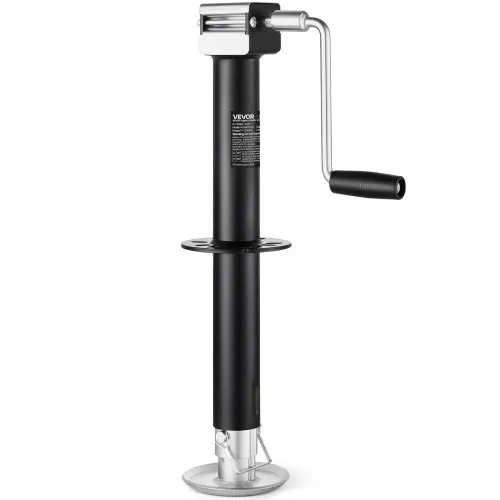
A lot of people use an A-frame trailer jack to move travel trailers, boat trailers, or horse trailers because these mounting systems attach directly to the frame's strongest part. They are great for tongue-heavy haulers because they distribute their weight more evenly. A frame jack for trailer lifts is great for medium-duty towing because it lifts steadily and makes hitching and leveling easy. Heavy-duty applications, such as commercial equipment trailers, may require reinforced housings and higher static load ratings to ensure the Trailer Jack stays stable even under prolonged pressure.
The lift's height is as important as its capacity. Trailers with tall couplers need more vertical travel to raise the tongue high enough to hitch up or stay stable on uneven ground. Shorter trailers do better with compact lift ranges that are fast and easy to use. A good Manual Trailer Jack should lift the trailer smoothly, with minimal cranking or wobbling. Leveling jacks for a travel trailer are a specialized option that keep the lift stable at campsites, preventing it from rocking or sinking on soft ground. If you match the trailer's capacity and lift height, it will stay safe, balanced, and easy to handle in any towing or storage situation.
Lift Height and Mechanical Advantage for Smooth, Controlled Operation
The height of the lift affects how well a Trailer Jack can place a trailer for hitching, detaching, or leveling. If a jack doesn't have enough range, users will have to strain or use extra blocks. If it is too tall, it may not be stable. Choosing the right lift height ensures the work goes smoothly, whether you raise the tongue to line up the hitch or lower it onto the stabilizers. Many designs of manual trailer jacks use finely threaded internal screws that lift things smoothly and in small steps, even when they are heavy.
A-frame models, such as the popular A-frame trailer jacks, have lift height ratios that work well for RVs, cargo trailers, and marine applications. Their shape gives them the best leverage, which makes it easier to crank them by hand. Smaller haulers might prefer a manual trailer tongue jack because it is easier for homeowners and do-it-yourselfers to move around and is better for light-duty use. Even small jacks have a good lift-to-effort ratio, which makes them comfortable to use every day.
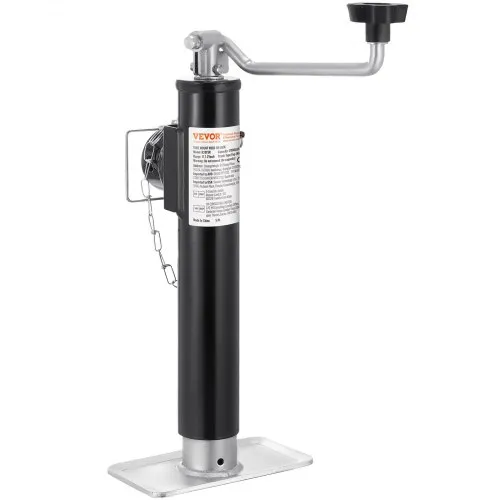
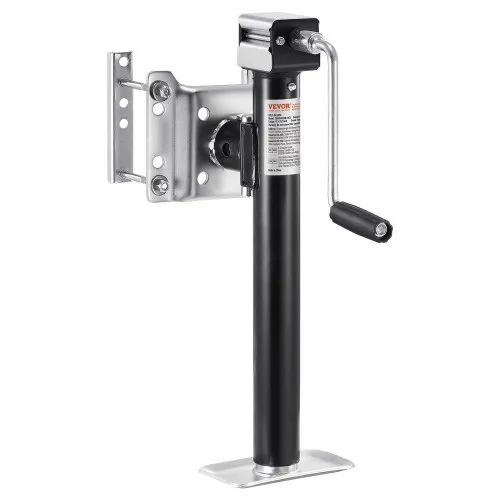
Most mid-range towing rigs have jacks that can be bolted on or turned to change the height of the ground. These designs let the Trailer Jack turn sideways after it lifts, which stops it from dragging while you're driving. Tall lift heights are good for larger rigs because they can accommodate raised couplers common on travel trailers and equipment haulers. These extended-lift jacks give you peace of mind when the trailer is parked, leveled, or being worked on, especially when they have strong weight ratings. Making sure the jack's lift height is right for real-world towing needs makes it much easier to use, safer, and more controllable.
Applying Capacity and Lift Height Choices to Real Trailer Tasks
When you use a Trailer Jack in real life, you can see how well it works. RV owners need a strong lift capacity to handle heavy tongue weights and reliable control when leveling at campsites. In these situations, an a-frame trailer jack keeps things stable by centering the load over the tongue's structural core. People who move boats or construction equipment often use reinforced jacks to lift heavy couplers high enough to hitch them up on launch ramps or job sites that aren't level.
People who own small landscaping trailers often choose a manual trailer tongue jack because it makes lifting quick and easy and doesn't get in the way when they move it around. Extended-lift jacks that keep moving up and down even under heavy loads or rough surfaces may be better for commercial haulers. In each case, the right lift height and weight capacity ensure that the Manual Trailer Jack works well even after repeated use.
Swivel jacks are great for cars that are often moved over gravel or soft ground because they fold up neatly for travel and drop down quickly for parking. For setting up a travel trailer, taller, high-capacity jacks are better at handling the demands. Leveling jacks for a travel trailer keep it stable while camping. By ensuring that the lift range, load capacity, and trailer type are all in line, operators can be confident that their Manual Trailer Jack will perform well and be strong in neighborhoods, marinas, campgrounds, and commercial work sites.
Jack Construction and Mounting Style
A Manual Trailer Jack's strong construction ensures it can withstand long-term forces, weather, and road vibration. Heavy-gauge steel tubes, rust-resistant coatings, and sealed gears keep performance high in marine, RV, and utility settings. When installing an a-frame trailer jack, a weld-on jack, or a bolt-on swivel model, ensure the mounting is compatible so the jack can lift safely and securely. These parts make sure that every Manual Trailer Jack stays safe, smooth, and reliable for years of towing.
Why Choose VEVOR Manual Trailer Jacks?
VEVOR's collection of manual trailer jacks offers strong lifting power, stable support, and long-lasting durability at prices that are easy to afford. Users can find the perfect fit for RVs, boats, travel trailers, and utility trailers, with options such as A frame trailer jacks, heavy-duty weld-on designs, and pipe-mount designs. Every manual trailer jack is designed to be easy to use, safe to operate, and to provide steady lifting power. Visit the product pages to compare capacities, lift heights, and features, and choose the ideal manual trailer jack for your towing needs.