

Lifting Ramps














Results for Lifting Ramps
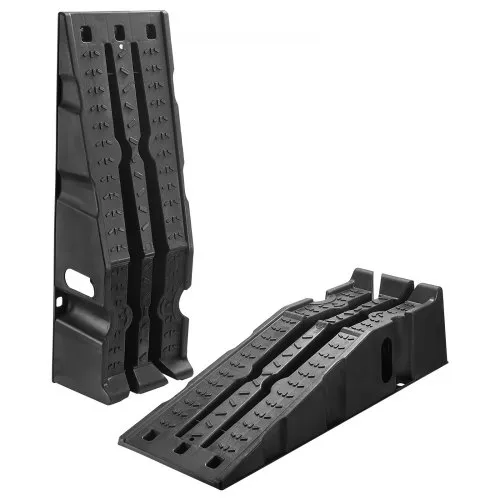
Car ramps are inclined blocks that you drive a vehicle onto to raise one end off the ground. Each ramp has a sloped face the tire climbs and a flat top that holds the wheel at a set height, so the front or rear of the car sits well above the floor. This gives you room to slide underneath and reach the oil pan, filter, drain plug, exhaust, or brakes. Ramps take the weight of the vehicle on a wide, stable base instead of a single lifting point, which makes them faster to set up and steadier to work on than a jack and stands for routine jobs. They let one person raise a car safely in a home garage or a busy shop.
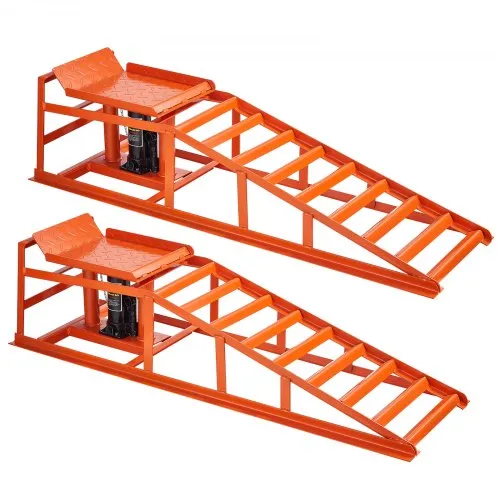
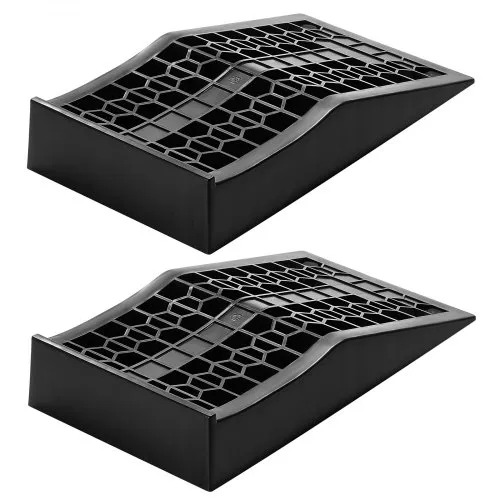
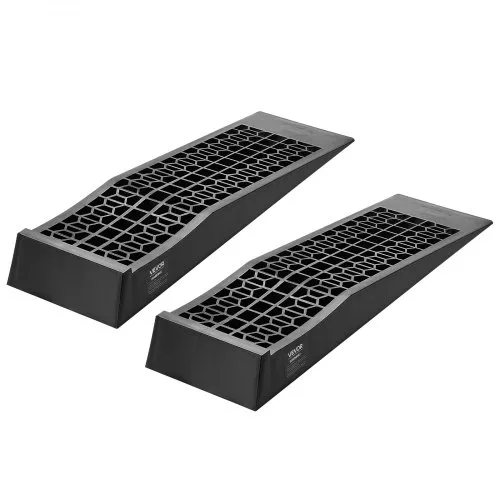
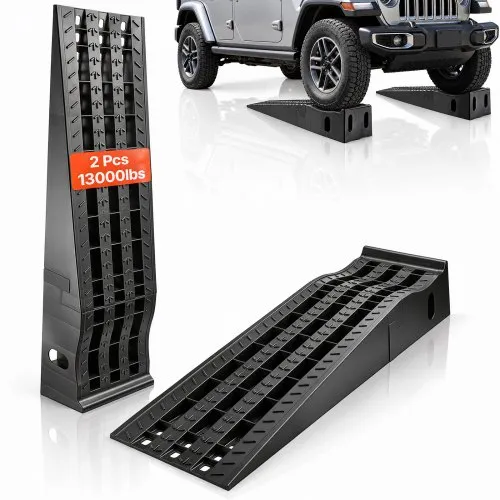
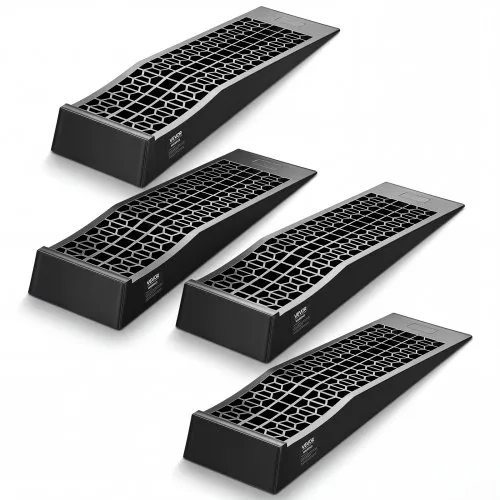
At VEVOR, car ramps split by how high they lift and the vehicle they suit. Low-profile ramps rise about 2.5 to 2.6 inches with a long, gentle slope, so sports cars and low bumpers clear the climb. High-profile ramps lift roughly 6 to 7 inches for more room under trucks and SUVs. Hydraulic car ramps raise a vehicle 10 inches or more without a separate jack, and single service ramps handle one wheel at a time in tight garages. Load ratings run from about 11,000 up to 20,000 pounds, in plastic or steel. Typical uses are oil changes, filter swaps, brake work, and under-car inspections for sedans, SUVs, and light trucks.
Four things decide what you need:
- Lift height: more height means more working room, but a tall ramp has a steeper climb a low car can scrape on.
- Load rating: match the ramp capacity to your vehicle weight with a margin, not right at the limit.
- Ground clearance: check your bumper and chassis height against the ramp slope so the car does not bottom out going up.
- Material: steel is strongest for daily shop use, while plastic is lighter and will not rust in a home garage.
Browse the full car ramps range to compare lift heights and capacities, or start with the profile that matches how low your vehicle sits.
Car Ramp Types at a Glance
At VEVOR, ramps are grouped by how high they lift and the vehicle they suit, so you can rule out the wrong profile before comparing single models.
| Type / Sub-type | Typical Lift Height | Load Range | Standout Trait | Selection Note |
|---|---|---|---|---|
| Low-profile ramp pair | 2.56 to 2.6 in | Up to 20,000 lbs | Shallow climb for low cars | Pick for sports cars and low bumpers |
| High-profile ramp pair | 6.3 to 6.7 in | 13,000 to 16,000 lbs | More clearance underneath | Choose for trucks and SUVs |
| Hydraulic ramp pair | 10 to 14.2 in | 11,000 lbs | Lifts without a separate jack | For the most under-car working room |
| Single service ramp | 5.5 in | 20,000 lbs | One-piece, one-wheel use | Handy for quick jobs and tight garages |
VEVOR Car Ramps for Oil Change and Vehicle Maintenance
Want to repair something under your car, but it is too dangerous? VEVOR car ramps are a good substitute for jacks and lifts. Car ramps enable drivers and mechanics to safely raise vehicles for activities such as oil changes and inspections. With high-quality auto car ramps, users can access them on a stable platform to perform routine maintenance without the need for complicated lifting machines.
Precision Engineering and Performance Advantages of VEVOR Car Ramps
Stability & Load Capacity: Stability and strength are essential for maintaining the vehicle. VEVOR car ramps are designed and engineered to ensure safety in lifting and servicing operations. Whether you are changing oil in a home garage or a workshop, the car ramps need to withstand the weight of the car without moving or bending. VEVOR ramps have a reinforced construction that supports sedans, SUVs, and light trucks. The angled incline is well constructed to enable the vehicle to ascend with ease, preventing slipping. The design makes them ideal car ramps for routine maintenance, such as inspections, brake changes, and, most importantly, oil changes. Anti-skid surfaces are also applied to the stability of auto car ramps. Such rough surfaces increase tire friction as the vehicle ascends, reducing unnecessary slipping. For mechanics who do regular oil services, a reliable car ramp ensures cars are safely raised during oil changes.
Lightweight Plastic Car Ramp: In addition to heavy-duty designs, VEVOR offers sturdier plastic car ramps that are both strong and portable. Such models suit well with drivers who do some occasional home maintenance. The lightness of the construction makes it easy to place the ramps beneath the vehicle before carrying out operations such as changing the oil in a car. The VEVOR plastic car ramps feature reinforced internal structures that keep them stable when carrying a load, despite their lightweight design. This implies that users can use them as working ramps for cars without compromising on safety.
Safe Incline Design: One of the most significant aspects of car ramp design for oil changes is the incline angle. VEVOR engineers pay much attention to the calculation of ramp slopes so that the entrance of the vehicle will be smooth and the lifting height will be high enough to access the undercarriage. The efficient design makes changing oil in car ramps much easier than with the old jacks. When the car is parked on the car ramp, the oil, filters, engine parts, and oil pans are readily accessible to the mechanics. For drivers who perform regular maintenance, auto car ramps make the process easier, as it would otherwise require the use of lifting machines. VEVOR ramps feature a consistent incline and a balanced platform, ensuring reliable vehicle service.
Anti-Slip Safety Systems: The design of VEVOR car ramps still emphasizes safety. Most of them have anti-slip base pads on the models to prevent the ramps from sliding on garage floors or concrete. This attribute is particularly handy when accessing cars with the ramps during DIY maintenance. When using the ramps to change a car’s oil, users can rest assured that the ramps will not slip into place. Also, textured tire tracks that help keep the car on its path even as it ascends. This extra traction guarantees that the car ramps used for oil changes provide an easy, safe lifting process at all times.
Matching a Car Ramp to the Job
From the side of the counter, the right ramp comes down to the vehicle and the task, so this table pairs each common situation with what we would check first.
| Situation | Ramp to Choose | What to Check | Why It Fits |
|---|---|---|---|
| Low car with a front spoiler | Low-profile pair, 2.6 in | Approach angle | A shallow climb clears a low bumper that a tall ramp would scrape |
| Oil change on a sedan | Standard pair, 20,000 lbs | Lift height for drain access | Enough room to reach the drain plug and filter without a pit |
| Truck or SUV service | High-profile pair, 6.3 to 6.7 in | Load rating against vehicle weight | A taller lift and wide track give working room under a heavier vehicle |
| Most under-car room | Hydraulic ramp, 10 to 14.2 in | Garage floor space | Lifts higher than fixed ramps so you can sit and work underneath |
| Occasional home use | Lightweight plastic ramp | Weight and storage | Easy to carry out and store, and it will not rust in a home garage |
Choosing the Right VEVOR Car Ramps: Materials, Space, and Practical Fit
Steel vs Plastic Car Ramps: Selecting the correct material is an important factor when purchasing car ramps for sale. Heavy-duty professional cars are known to prefer steel models due to their high strength. The car ramps in auto cars are the most durable and can be used daily. Plastic car ramps, on the other hand, are a perfect choice for homeowners who occasionally do some maintenance. They are not heavy, corrosion-free, and can be easily transported around the garage. Plastic ramps are convenient for drivers who primarily need to use car ramps for oil changes.
Space Efficiency and Vehicle Compatibility: Garage space and vehicle size are also important factors to consider when buying car ramps. Smaller cars and small storage spaces are suited to compact ramps. But larger SUVs or trucks might take longer to find the right incline with the help of the auto car ramp. Oil-changing ramps should be used by drivers who regularly use ramps based on the car’s height to ensure they have enough clearance underneath the car. This will ensure that the car ramp for changing oil can access oil filters and drain plugs with ease. VEVOR offers several ramp designs and sizes, making it easy for drivers to identify the capacity of each ramp based on their car type.
Best-Seller Car Ramp Comparison
These five ramps are the ones shoppers compare most, lined up so the profile, lift, and capacity differences are easy to read at a glance.
| Product | Profile / Type | Pieces | Load Capacity | Lift Height | Vehicle Fit | Best For |
|---|---|---|---|---|---|---|
| Single Service Ramp, 5.5 in | Low-profile plastic | 1 pc | 20,000 lbs | 5.5 in | Cars, light trucks | Only single ramp here; one-wheel and quick jobs |
| Hydraulic Car Ramps, 2 PCS | Hydraulic | 2 pcs | 11,000 lbs | 10-14.2 in | Trucks, auto repair | Only hydraulic lift; highest lift for full under-car access |
| Low Profile Ramps, 20,000 lbs | Low profile | 2 pcs | 20,000 lbs | 2.6 in | Low-chassis vehicles | Highest capacity low-profile pair; sports and low cars |
| Low Profile Ramps, 2.56 in | Low profile | 2 pcs | 20,000 lbs | 2.56 in | Low-chassis vehicles | Lowest climb here; tightest ground clearance |
| High Profile Ramps, 6.3 in | High profile | 2 pcs | 13,000 lbs | 6.3 in | Trucks, SUVs | Only high-profile pair; more room under a taller vehicle |
Upgrade Vehicle Maintenance with VEVOR Car Ramps
With consistent lifting support, routine maintenance becomes much easier. VEVOR car ramps are reliable for both DIY and professional car owners in need of car oil change ramps, heavy-duty vehicle ramps, and lightweight plastic car ramps for home garages. The VEVOR car ramps are designed to be safe, strong, and convenient, making tasks such as oil changes and vehicle inspections easier. With several VEVOR car ramp models on sale, customers can find the right one for changing oil in their cars and workspaces. Explore the full VEVOR collection today and upgrade your garage with professional-grade maintenance equipment.
FAQs
Where can I find durable and affordable yellow or red car ramps?
VEVOR sells car ramps directly, so you can compare builds and colorways in one place rather than guessing on a marketplace. Color options vary by model, and the budget-friendly picks are usually the plastic ramps. Browse the full car ramp range to see what each listing offers.
Which type of car ramp is best for heavy vehicles?
For heavy trucks and SUVs, match the load rating to the vehicle with a safe margin and pick a high-profile or high-capacity model. A 20,000 lb service ramp carries far more than most light trucks weigh, which leaves a comfortable safety buffer.
What are the main differences between yellow and red car ramps?
On VEVOR ramps, color is mainly cosmetic or marks a product line, not a safety grade. What actually changes how a ramp performs is the profile, the lift height, the load rating, and whether it is plastic or steel. Compare those specs on each listing rather than choosing by color alone.
How do I choose the right size of car ramps for my vehicle?
Start with your vehicle weight and ground clearance. Pick a load rating above your curb weight, then a lift height that gives working room without a climb your bumper will scrape. A high-profile pair suits taller trucks, while low cars need a shallow ramp.
What are the best car ramps for oil change in terms of safety and durability?
For oil changes, look for anti-slip base pads, textured tire tracks, and a capacity well above your car weight. A 20,000 lb low-profile pair gives a steady platform and enough clearance to reach the drain plug and filter, in plastic that will not rust.
How do I choose the right low profile car ramps for my vehicle?
Measure your front bumper and chassis clearance, then compare it to the ramp’s approach angle and lift height. Low-profile ramps rise about 2.56 to 2.6 inches with a long, gentle slope, which is what keeps a low spoiler from catching as the tire climbs. When in doubt, choose the shallower climb.
Are hydraulic car ramps suitable for home garage use?
Yes. Hydraulic ramps work in a home garage as long as you have a flat floor and enough space to roll the vehicle on. A hydraulic ramp pair lifts 10 inches or more without a separate jack, which gives far more under-car room than fixed ramps for bigger jobs.
How high should car ramps be?
It depends on the job. For a basic oil change, a low-profile ramp of about 2.5 to 6 inches gives enough room to reach the drain plug and filter. For deeper work where you need to sit under the vehicle, a hydraulic ramp that lifts 10 inches or more is easier on your back. Match the height to the clearance your vehicle allows going up.
