Stud Welder Dent Repair Kit


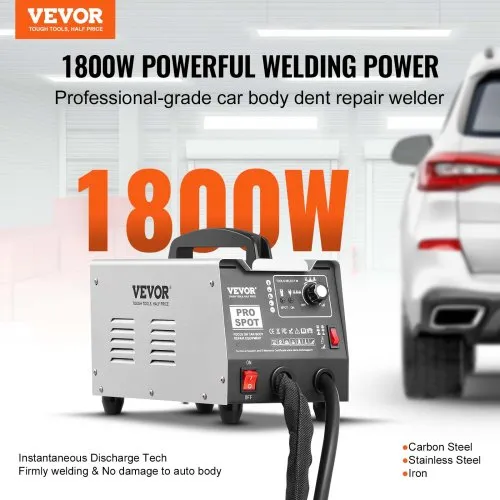


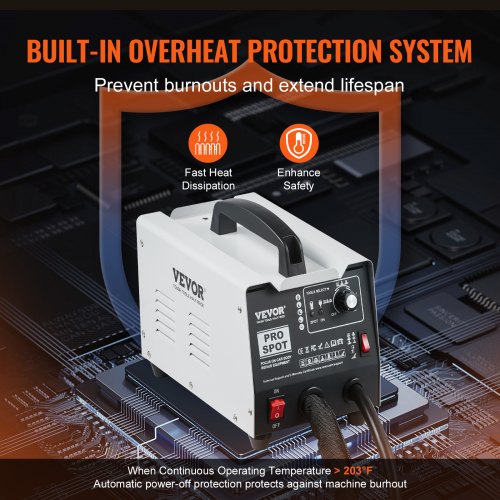
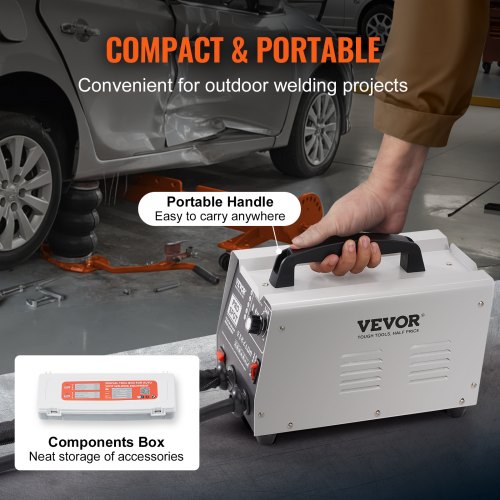

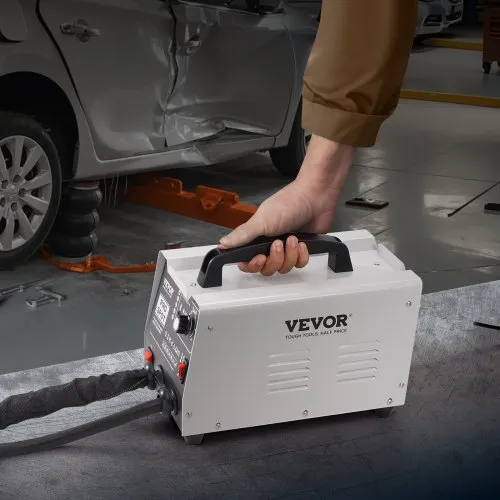


Results for Stud Welder Dent Repair Kit
Explore VEVOR's complete collection of stud welder dent repair kits, designed for body shops, restoration work, and serious do-it-yourself panel repair. Find machines that work with steel and aluminum, slide hammer assemblies, pull rings, washers, wiggle wires, and full accessory bundles to fix everything from small door dents to major quarter-panel damage. VEVOR has reasonable prices, reliable stock, and quick after-sales service for all orders, whether you are fixing hail damage in your own yard or pulling dents every day in a production bay.
VEVOR Stud Welder Dent Repair Kits for Paintless and Panel-Beating Bodywork
Want to clean up a dent without having to drill holes or take off the inner panel? Use a slide hammer to shape the metal back into shape, then the modern stud welder snaps the studs off neatly without reaching the backside or damaging the structure.
Choosing Stud Welder Dent Repair Kits by Welder Type and Panel Application
Most purchases here depend on panel material and machine output, so make sure you know what metal you are working with before you compare amperage numbers.
Steel Panel Work and Standard Capacitor Discharge Machines
Conventional stud welders are still the best way to fix most collisions on mild and high-strength steel. Capacitor discharge units store energy and release it in a millisecond burst, which fuses the pin to the panel without melting thin metal or warping the surrounding area.
Look for power settings that you can change. When it comes to thickness, 22-gauge outer skins need a low setting to keep them from blowing through. On the other hand, 18-gauge structural parts require more punch to achieve a strong pull. With six to ten separate levels, a machine gives you real power over a wide range of tasks.
In a busy shop, duty cycle is important. Heavy-duty models keep going through a full quarter panel without stopping, while entry-level units may need a break after twenty or thirty pulls. That difference shows up right away in throughput if you use a spot welder dent puller all day.
Also, check the incoming power. Standard 110V machines can plug into any garage outlet and are good for home use and mobile repair. 220V units, on the other hand, provide more stable power for production bays with heavy workloads.
Aluminum Panel Repair and Dedicated Systems
Aluminum does not behave like steel. It heats up faster, hardens faster, and cannot be soldered with regular steel pins. That is why an aluminum stud welder dent puller has special aluminum studs and a tuned discharge profile.
These days, modern cars make this impossible to avoid. Many trucks and high-end sedans have aluminum hoods, doors, and full body structures. Trying to do a steel-pin pull on them can cause galvanic contamination, which can make the paint bubble months later.
Do not mix up your metal tools. Use separate pull rods and studs, and a clean grinding disc designed specifically for aluminum, to keep steel bits from getting stuck in the softer surface. This small habit saves time and money in the long run.
Work in smaller increments than you would on steel. Since aluminum bends easily and doesn't spring back the same way, several light pulls over a large area are always better than one hard pull at the low point.
Auto Body Applications and Repair Scenarios
Most people don't know an auto body stud welder can fix more types of damage. Paint damage from stud pulling can appear as shallow door dings, parking-lot creases, hail dimples, rusted rocker sections, and large-radius quarter-panel dents. The real benefit of this method is access. To fix dents the old way, you have to use a hammer and dolly to get behind the panel, which means removing interior trim, glass, or even entire inner structures. By cutting down on work hours by a huge amount, a weld on dent puller does all of its work from the outside.
People skip the surface-prep step. Before you nail anything down, grind the damaged area down to bare, clean metal. Paint, primer, and body filler can stop a weld from working properly and cause studs to pop off under load. After pulling, use pliers or a twist tool to break the studs in half. Then, grind the loose ends smooth. After adding a thin layer of filler, the primer will hide the fix.
Slide Hammer Versus Lever Bar Pulling Methods
The pulling tool does the real work, while the machine tacks the pin in place. You move a weight along a shaft and let it hit a stop. This sends a sharp impact force straight out from the panel and powers the stud welder with slide hammer.
Slide hammers are great for making deep, focused dents where you need a lot of force in one place. We give up some control when we strike too hard. If we hit too high, we have to hammer the ball back down.
A dent pull lever bar kit does something different: it applies steady mechanical leverage across several studs simultaneously. Because of this, it is better for long lines and wide, shallow damage, where light, even pressure yields a smoother result. A lot of workers keep both. To restore the general shape, start with the lever bar. Then, use the slide hammer only on low spots that will not move.
Stud Welder Dent Repair Kit Contents and Practical Features
To avoid stopping the repair midway, it helps to know exactly what is in the box.
What Comes in a Complete Kit
A normal dent repair stud welder kit includes a case, a ground clamp and cable, a slide hammer assembly, wiggle wire, a stud remover tool, a variety of pull rings and washers, and the welding gun. Better sets also include pull hooks, a hook rod, and extra studs you can use.
Consumables run out first. Since you use the studs, rings, and wiggle wire only once, order an extra pack. A mid-size quarter panel fix can use up to 50 pins quickly.
Grinding discs, an angle grinder, body filler, sandpaper, and safety gear are usually not included. A Spot Stud Welder Kit handles the pulling, and the finishing supplies are items you would normally find in your shop.
Features Worth Paying For
Good machines respond to triggers and stay consistent, while annoying machines don't. A good stud spot welder always uses the same amount of energy, so the studs always stick together and do not come loose in the middle of the job.
In real life, cable length affects performance. If the lead is too short, you will have to keep moving the machine around a big car. Look for a gun cable at least 2 meters long and a ground cable at least as long.
A clear digital power display is better than a dial. You can fix things faster the second time around if you remember that 18-gauge steel needs setting six. Any weld on stud dent puller with repeatable settings pays for itself quickly.
Lastly, make sure that standard-diameter screws can fit in the collet. This kind of consumable forces you to buy from a single source and costs more over the tool's lifetime.
Why Choose VEVOR Stud Welder Dent Repair Kits?
VEVOR offers a full range of products, including steel-capable capacitor discharge units, aluminum-ready systems, slide hammer bundles, and lever bar sets, all at prices that leave money for paint and materials. Each kit includes the right consumables, clear instructions, and after-sale support if something goes missing. Body shops get the same high quality every time they order, and DIYers get a tool that is easy to learn. Browse the collection today and make that dent this weekend.
FAQs
Can one machine weld both steel and aluminum studs?
Some units can handle both stud types and power settings, but most can only handle steel studs. Before you buy, read the specs, and when working with aluminum panels, always use aluminum-specific studs and tools.
Do I need to remove paint before welding studs?
Yes. Rough up the fix area until it is just metal. Paint, primer, and filler can impede electrical contact, leading to weak tacks that come off when pulled and waste materials.
How do I remove the studs afterward?
Using tools or the stud remover that came with them, twist them sideways until they break at the base. Then grind the last bit of nub flush with the panel before applying filler.
What power outlet does a stud welder need?
Most consumer types operate on standard 110V household circuits, making them suitable for garages and for work on the go. For consistent operation, higher-output production machines usually need a 220V supply.
Will stud pulling damage the panel?
Not done right, no. For metal that doesn't stretch or burn through, use light, overlapping pulls instead of a single hard yank, and make sure the power matches the panel's thickness.