Cart Spreaders






Results for Cart Spreaders
Check out professional-grade torque multipliers made for trucks, trailers, RVs, and heavy machinery. VEVOR makes it easy to remove persistent lug nuts with high-ratio gear systems, large drive sizes, and durable parts. These tools reliably increase force, making them necessary for mechanics, drivers, and repair shops that need to tighten and loosen components quickly and easily in tough conditions.
VEVOR Lawn Spreaders for Large Yards, Gardens & Seasonal Coverage
Do you want to make your lawn treatments more consistent or cut down on the time it takes to spread seed, fertilizer, or ice melt? VEVOR lawn spreaders feature strong hoppers, adjustable spread patterns, and designs that work with both walk behind and tow behind lawn spreaders, making it easier to cover your lawn. These lawn spreaders help ensure the grass spreads evenly, the job gets done quickly, and lawn care is easier all year long, whether you're working on a small yard or a big open space.
Capacity & Coverage Area of Lawn Spreaders
The hopper size, distribution width, and intended use vary among lawn spreaders. Knowing these details will help you choose the right lawn spreader for the size of your yard and the tasks you need to do in the spring and fall.
Hopper Size, Spreading Width & Ground Coverage Efficiency
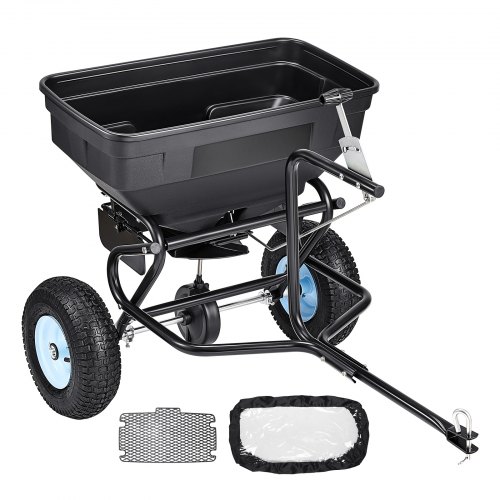
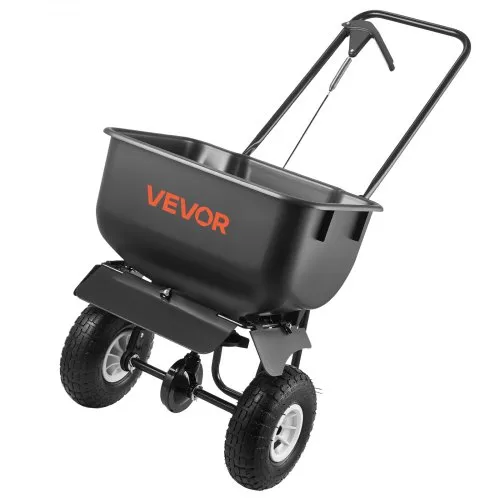
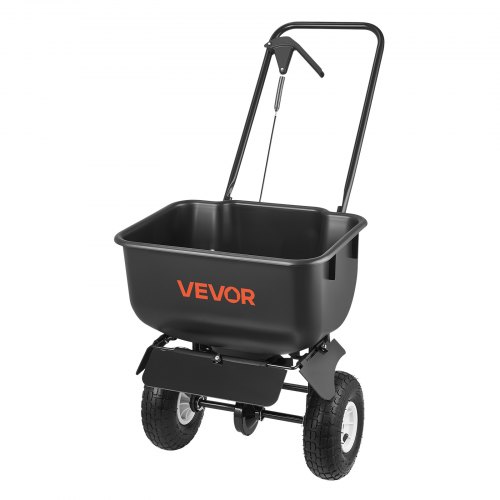
The size of a lawn spreader affects how well people can treat outdoor areas without having to stop and refill. Smaller walk behind spreaders can hold 15 to 50 pounds of material, which is great for suburban lawns or specific tasks like overseeding or spot fertilizing. Medium-capacity units weighing 60 to 80 pounds can cover more ground with fewer stops, making them good for small commercial properties or yards with multiple zones. A tow behind broadcast spreader often has hoppers weighing 100 to 130 pounds, allowing it to cover a large area without constant supervision.
To get the most out of your work, the spreading width is just as important. Walk-behind units usually spread material over an area of 9 to 12 feet, which is enough to keep residential lawns covered evenly. Broadcast systems built to last can reach widths of up to 12 feet behind an ATV, tractor, or lawn mower. Wider patterns reduce overlap and ensure fertilizer or seed falls evenly, making the lawn less patchy and healthier overall. Users can customize their equipment to fit their property by choosing the right hopper size and spreading width. High-capacity models are great for big yards, but smaller, more precise units that give you more control may be better for small spaces.
Distribution Style & Spread Pattern Control for Seasonal Tasks
The way lawn spreaders work affects how well they do. A walk behind broadcast spreader has a spinning impeller that spreads material in a wide arc. It is the best way to fertilise, overseed, or spread ice melt in the winter. Flow control adjustments help keep output steady, no matter how quickly people walk, because the spread radius increases as they walk faster.
Tow behind lawn spreaders work in the same way, but they are made for larger properties. Tow behind broadcast spreader systems usually have larger hoppers and stronger impeller mechanisms to handle heavy loads.
Drop spreaders don't cover as much ground, but they are more accurate for gardens or other places where you need to control where things go. They let out material right under the hopper, which stops it from accidentally getting into flower beds, walkways, or other delicate landscaping areas. You can fine-tune the spread pattern with flow regulators, adjustable gates, and a wide range of settings. Users can adjust the settings to achieve the best results for different materials, such as grass seed, granular fertilizer, pelletized lime, or ice melt. It reduces waste and over-application.
Real-World Applications for Residential, Commercial & Agricultural Use
Lawn spreaders are useful tools for more than just home gardening. People who live in homes use walk behind spreaders to overseed patchy lawns, fertilize year-round, or help reduce ice buildup in winter. These models are easy to handle because they are light, making them great for everyday yard work. Landscapers who work for businesses like the consistency that higher-capacity units provide. A walk behind broadcast spreader with tough tires and adjustable flow systems will work well on uneven or mixed terrain. Landscapers work on many properties every day, so they need to get their work done quickly and without problems.
When preparing parks, sports fields, or community spaces for wide coverage, larger broadcast fertilizer spreaders are especially helpful. Tow-behind units are best suited for farms, ranches, and other large areas. VEVOR lawn spreaders can be used for many different purposes, such as applying fertilizer to a home garden, maintaining a business site, or managing large rural properties. They are essential for outdoor care year-round because they are strong, adjustable, and available in different sizes.
How Efficient Coverage Improves Lawn Health & Reduces Wasted Material?
The even distribution of nutrients directly affects the quality of your lawn. Too much fertilizer can burn grass, and too little can cause nutrient deficiencies. Lawn spreaders help prevent these problems by delivering a steady, measured flow of material across the entire area they cover. By ensuring that the granules cover the entire spread radius, a broadcast fertiliser spreader minimizes the risk of streaks or patches that can arise with manual spreading. Additionally, waste is decreased via effective distribution. Material that falls uniformly requires less reapplication, saving time and money on supplies.
Additionally, the consistency promotes uniform development, which is crucial when applying pre-emergent treatments or overseeding cool-season grasses. In winter, walkways can be made safer without additional materials by strategically placing salt or ice melt. During storms, high capacity spreaders minimize downtime by rapidly covering driveways and walkways. By guaranteeing uniform application rates, lawn spreaders contribute to healthier soil, denser turf, and less care. The end effect is a lawn that is more resilient to seasonal stress, foot traffic, and weather variations. Both homeowners and property managers ultimately benefit from having adequate coverage in the long run.
Material Construction & Functional Features of Lawn Spreaders
Lawn spreaders' durability and functionality determine how well they perform over time, especially as weather and materials change.
Frame Strength, Hopper Material & Weather Resistance
Lawn spreaders need to withstand moisture, fertilizer corrosion, and exposure to the elements. The frames of VEVOR lawn spreaders are made of powder-coated steel to prevent rusting or bending, even when carrying heavy loads. The stronger frame helps keep the hopper stable, ensuring an even flow as it moves over uneven ground. The hopper's material is also very important. Polyethylene hoppers are light, don't rust, and don't break down when they come into contact with chemicals like fertilizer or ice melt. Their smooth insides prevent clumping and improve material flow, resulting in fewer interruptions during spreading.
Reinforced hoppers are stronger and more stable when carrying heavy loads, making them suitable for tougher jobs. All-terrain tires make them even more durable by giving them traction on grass, gravel, and dirt. Pneumatic tires absorb shock and maintain balance on uneven ground, making them good for both walk-behind and tow-behind use. VEVOR lawn spreaders are built to withstand weather exposure in all seasons, from heat to freezing conditions. These spreaders are reliable for a long time in tough lawn care situations because they have tough frames, hoppers that don't react with chemicals, and stable wheel systems.
Adjustable Settings, Tire Design & User-Friendly Features
Lawn spreaders feature several adjustable features that make them more accurate and easier to use. Users can control the flow rate settings to ensure the right amount of seed or fertilizer reaches the lawn. These units can handle both fine materials like grass seed and coarse ice melt pellets because they offer a range of settings. The design of tires significantly affects how easily they move. Larger pneumatic tires make it easier to move across bumpy yards, while solid rubber tires are better for light jobs because they don't need to be maintained. Most tow-behind models feature wide, sturdy wheels that follow tractors or ATVs evenly.
Ergonomic handles, hopper grates, and agitator mechanisms also make it easy for people to use. Hopper grates prevent large clumps from entering the spreading mechanism, and agitators keep the material moving freely throughout the application. Many models have slide gates or calibrated dials that make it easy to make changes while treating the lawn. All of these features work together to make VEVOR lawn spreaders useful for a wide range of outdoor tasks. The adjustable settings and easy-to-use design make it more productive, whether you're putting fertilizer on a small garden or spreading seed over several acres.
Why Choose VEVOR Lawn Spreaders?
VEVOR lawn spreaders are ideal for year-round lawn care because they cover a lot of ground, are built to last, and offer adjustable features. Users can easily handle fertilizer, seed, salt, and ice melt on any size property, with options such as walk-behind units and tow-behind broadcast systems. These spreaders are a smart buy because they have adjustable flow controls, reinforced frames, and hoppers that won't corrode. VEVOR's low prices and good customer service also make it a good choice. VEVOR offers reliable solutions that make garden work easier and improve coverage, whether you're taking care of a small lawn or managing acres of land.
FAQs
What size lawn spreaders do I need?
Choose based on the size of your property: for small yards, 15–50 lb hoppers work best, while for larger areas, 80–130 lb tow-behind models work best.
Is a walk behind spreader or tow behind better?
Walk-behind units are good for small- to medium-sized lawns. When used with tractors or ATVs, tow-behind models are best suited for large properties because they can cover more ground faster.
Can I spread fertilizer and seed with the same machine?
Yes. As long as the flow settings are correct, most lawn spreaders can handle a range of granular materials, such as seed, fertilizer, lime, and ice melt.
Are pneumatic tires better than solid tires?
Pneumatic tires make it easier to move over rough ground, while solid tires require no maintenance and are good for light-duty work.
How do I prevent clumping in the hopper?
Use hopper grates and agitators, don't store materials in wet places, and clean the hopper after each use.