Ever wondered what type of mechanism do socket wrenches use to make tightening and loosening bolts so effortless? The answer lies in their ratcheting mechanism. This system uses small gears that lock and release as you move the handle, allowing you to turn bolts without lifting the tool after each rotation.
Inside, a pawl controls the gear movement, while a square-drive connector keeps the socket secure. This clever design saves time, reduces strain, and makes your work faster and smoother—whether you’re fixing a car, building furniture, or doing home repairs.
Understanding the Mechanism Inside Socket Wrenches
If you’ve ever wondered how do socket wrenches work, the answer lies in their smart internal design. A socket wrench uses a ratchet mechanism made of gears, a pawl, and a drive connector that work together to tighten or loosen bolts with ease. This clever setup makes your work faster, smoother, and more efficient.
Let’s explore the main parts that make the socket wrench mechanism function so well.
How the Ratcheting Mechanism Works in a Socket Wrench
When you use a socket wrench, you’re relying on a special ratchet mechanism in socket wrenches. This feature allows you to turn a bolt or nut in one direction while freely moving the handle back and forth without removing it after each turn. It saves both time and effort, especially in tight spaces.
Inside the handle, the main gear connects to the socket. As you move the handle, the drive mechanism of the socket wrench turns the fastener. The ratchet ensures movement in only one direction, and by flipping the small switch, you can change to a reversible ratchet mechanism—perfect for loosening or tightening bolts as needed.
The Role of Interlocking Gears in Socket Wrenches
The key in every socket wrench system is the geared drive. These gears are designed so that they perfectly fit to transfer the motion to the socket with the handle. As you push or pull the handle, the gears are spinning smoothly so that there is good, steady, and controlled motion of the socket.
The toughness and dependability of your tool are due to this pawl and gear mechanism. The ratchet is used with the gears to ensure that the socket only rotates when you desire it to. This will work to give plenty of grip and stop you from slipping, even with hard-to-loosen bolts or nuts.
How the Pawl Helps the Ratchet Mechanism Work
Among all the components, the pawl and gear mechanism play a vital role. The pawl is a small locking piece that catches on the gear’s teeth. When you move the handle, the pawl lets the gear rotate in one direction but blocks it in the other. This one-way movement is what makes the ratchet mechanism in socket wrenches so effective.
By flipping the lever, you can reverse the motion easily, switching between tightening and loosening. The pawl helps you control your tool safely and ensures that your drive mechanism of the socket wrench operates smoothly every time you work.
Understanding the Unidirectional Use of Socket Wrenches
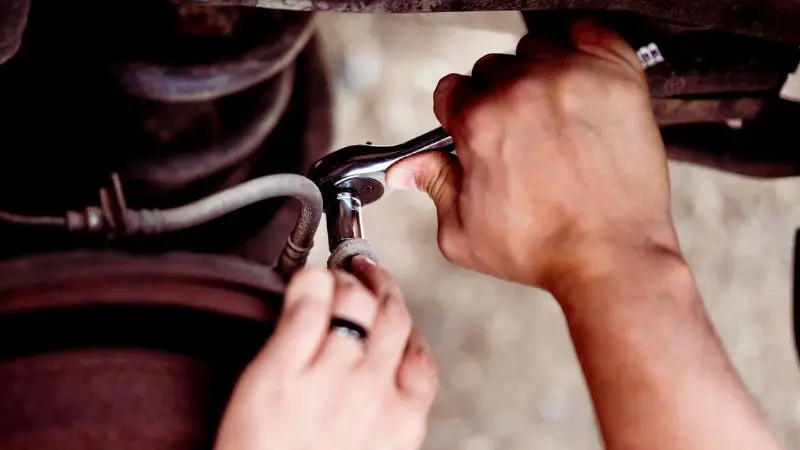
One is a socket wrench that is used to tighten and loosen bolts more easily and quickly. With the ratchet in socket wrenches, you can tighten a bolt in a different direction and pull the handle whichever way you want. This clever design implies that you start working, and only on every turn will you not have to take out the wrench.
We are going to see how the mechanism of a socket wrench is used to tighten or loosen an object.
How to Tighten and Loosen Bolts with a Socket Wrench
When you use a socket wrench, you can easily choose whether to tighten or loosen bolts. The reversible ratchet mechanism lets you switch directions in seconds using a small lever.
Here’s how it works:
- Switch the lever to an option to either tighten or loosen.
- Hold on tight to the socket on top of the bolt.
- Pull the handle back and forth, and the bolt turns in whatever direction you want it to turn.
This system will save time and avoid the tool being lifted or moved about over and over again. The pawl and gear system provides more control and grip by ensuring that the socket moves in a particular direction.
Continuous Operation for Faster Work
One of the biggest advantages of a socket wrench is its ability to keep working without interruption. The ratchet mechanism in socket wrenches allows continuous operation by keeping the socket attached to the bolt while you move the handle.
Here’s why this feature makes your work smoother:
- No need to remove the socket: The tool stays fixed while the pawl and gear mechanism controls motion.
- Unidirectional action: The wrench only turns the socket when you push the handle in the set direction.
- Perfect for tight spaces: You can use short, quick strokes even in areas where a full swing isn’t possible.
This efficient socket wrench mechanism helps you tighten or loosen bolts quickly with minimal effort. You’ll find it ideal for projects that demand speed, precision, and reliability.
Benefits of the Ratcheting Mechanism in Socket Wrenches
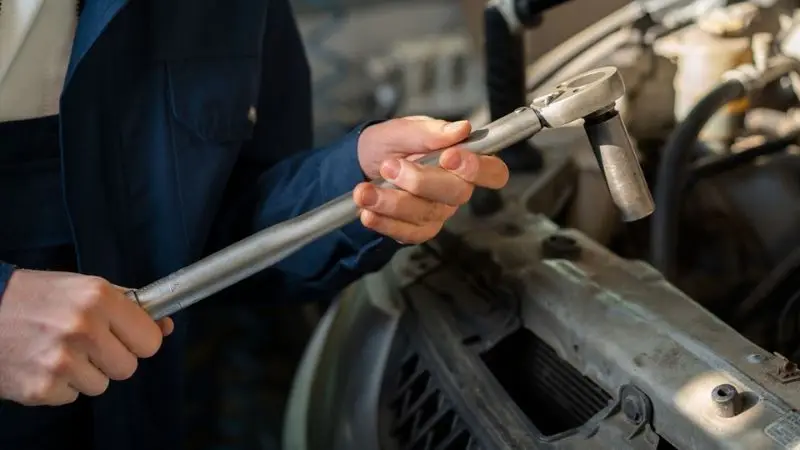
A socket wrench mechanism is designed to be fast, in control, and simple to operate. With its smart ratchet, you are able to complete work being done on a repair and assembly without wasting time lifting the tool after each rotation. The design is more comfortable to use and time-saving, and enables you to tackle any small to any big project with ease.
Let’s explore some of the major benefits of using a ratcheting socket wrench.
Speed and Efficiency of a Ratcheting Socket Wrench
One of the main advantages of the ratchet mechanism in socket wrenches is how quickly it helps you finish a task. Because the socket stays attached to the bolt, you can move the handle back and forth without lifting it. This smooth motion saves you time and reduces strain during long jobs.
- Tighten or loosen bolts in seconds.
- Keep your socket locked in place for steady motion.
- Work efficiently with fewer hand movements.
Professionals and DIY users prefer tools with a reliable drive mechanism in the socket wrench because every turn counts. The design makes it simple to handle repetitive fastening work without losing speed or precision.
Working in Tight or Confined Spaces
At times, there are bolts that the medium wrench cannot tighten. That is where a ratcheting socket wrench will come in handy. All it requires is a short movement of the handle to rotate the socket, and it fits in tight or tricky areas.
Here’s where it truly shines:
- Car repair: Easily fits in between engine parts.
- Furniture installation: Will go in the corners and space successfully.
Its compact pawl and gear mechanism means that it can work at maximum torque even when limited space is available. The ratchet allows you to hold on and work with a feeling of control without having to swing fully, hence faster and safer work is done.
Common Applications of Socket Wrenches
The socket wrench mechanism is versatile and widely used in different tasks. Mechanics, plumbers, and homeowners all rely on this tool for everyday projects. You can easily switch sockets to match different bolt sizes, and the reversible ratchet mechanism makes it simple to change direction as needed.
Common uses include:
- Car and bike repairs
- Furniture assembly
- Plumbing work
- Home improvement projects
The pawl and gear mechanism keeps the socket secure, preventing slips and ensuring accuracy. Whether you’re tightening a loose chair leg or working under a car hood, this tool gives you confidence and control with every turn.
Wrap Up
What type of mechanism do socket wrenches use? It’s more than just a handy tool — it’s a time-saver that makes tightening and loosening bolts simple and smooth. With its clever ratchet mechanism, pawl and gear system, and reversible drive mechanism, you can work faster and with less effort.
Whether you’re fixing a car, assembling furniture, or doing home repairs, the socket wrench mechanism gives you power, control, and comfort. It fits into tight spaces, keeps a strong grip, and helps you finish every job confidently. Once you try it, you’ll see why a socket wrench is a must-have in every toolkit.
FAQ
What do you do to turn around a socket wrench?
You turn the little lever of the wrench head. Since this switch allows tightening or loosening of bolts, it is a good habit before working to always check the lever.
Is it that a socket wrench can fit all sizes of bolts?
The various sockets can be used with different bolts. Each socket is firmly fitted on the square-drive connector.
What happens to catch hold of your socket wrench?
Cracks are to be checked in the pawl and gears. Use it to clean the tool and ensure that the socket fits in the bolt. An exhausted pawl may result in slipping.
Why does a socket wrench work better in close places?
You take the handle back and forth without raising the wrench. The ratcheting system helps work in smaller spaces. The gadget can assist in retrieving screws from engines, bikes, and furniture.