Working on your vehicle in your garage can sometimes get tiring. Raised halfway, and manual chores like pumping the jack manually can make things difficult to manage. This can make even the tiniest of tasks feel heavier than they should.
Situations like this are exactly why a pneumatic bottle jack is the preferred choice for professional mechanics and DIY enthusiasts. With air handling most of the weight and lighting, a pneumatic jack can lift faster and provide more control than a manual one. If you are looking to purchase a new pneumatic bottle jack with a pump, learning about what things to look for will come in handy.
But first, how does a Pneumatic Jack Work?
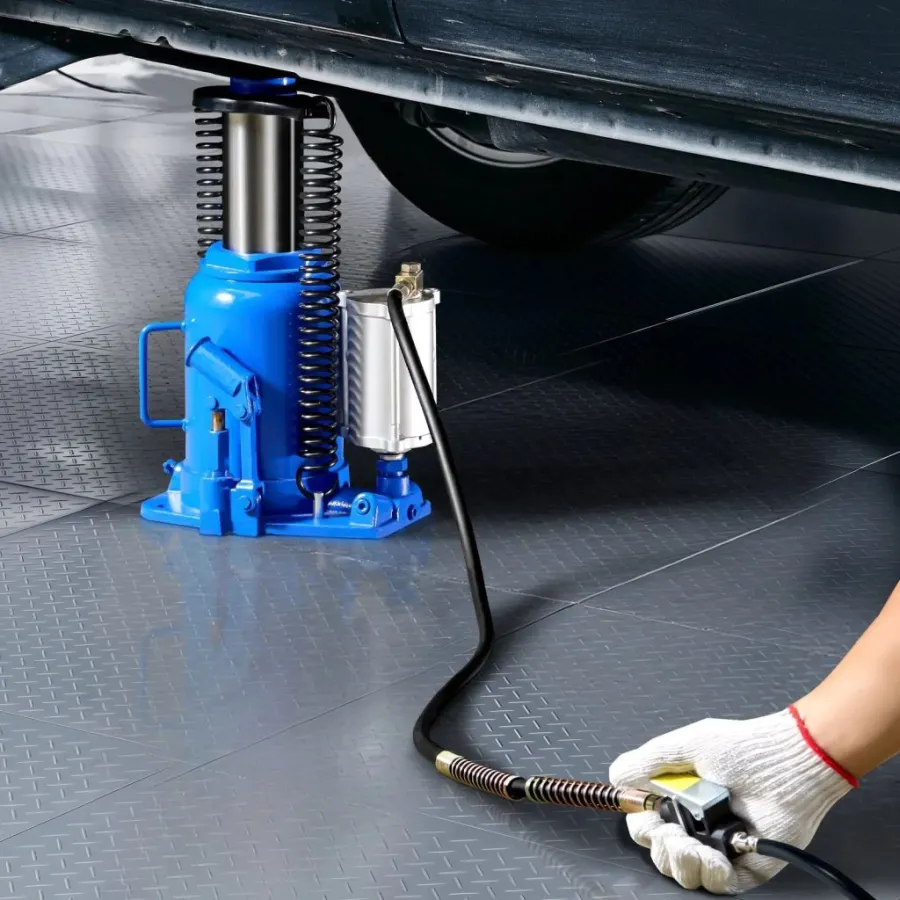
A pneumatic jack works using a simple principle- compressed air to lift weights. It is designed to lift heavy loads using compressed air in combination with hydraulic force. This hybrid approach to lifting weights helps deliver power while keeping operations smooth and controlled.
1. The core mechanism
At its core, the jack is operated by channeling power from compressed air into a chamber. The air pressure drives hydraulic fluid through a sealed system and pushes the piston upward. This requires less effort compared to a manual jack, and you get a stable and steady lift, which is predictable and controlled. This is especially helpful when you are working with heavy vehicles and equipment and need to handle them reliably.
2. Why air power changes the experience
Compressed Air helps remove the strain that comes with manual pumping. If you work at a busy workshop, it could mean faster turnaround between jobs, less fatigue on long workdays, and a more consistent lift. Even for DIY users, the convenience is noticeable with just a few uses.
3. Common environments where pneumatic jacks are useful
These jacks are used in auto repair shops for tire alignment tasks and fleet maintenance facilities. They may also be used in industrial sites, home garages, and construction sites where heavy equipment is involved. These jacks can also be used at places where speed, safety, and efficiency are a priority.
4. Enhanced Stability and Control
Air pressure offers smooth force delivery by reducing sudden jerks and uneven lifts. A majority of pneumatic jacks feature wide bases and reinforced frames that help maintain the balance under heavy loads. Therefore, before you buy a jack, understand its working mechanism so you can deduce which one to choose for your specific application.
Key Factors to Consider Before Buying a Pneumatic Bottle Jack
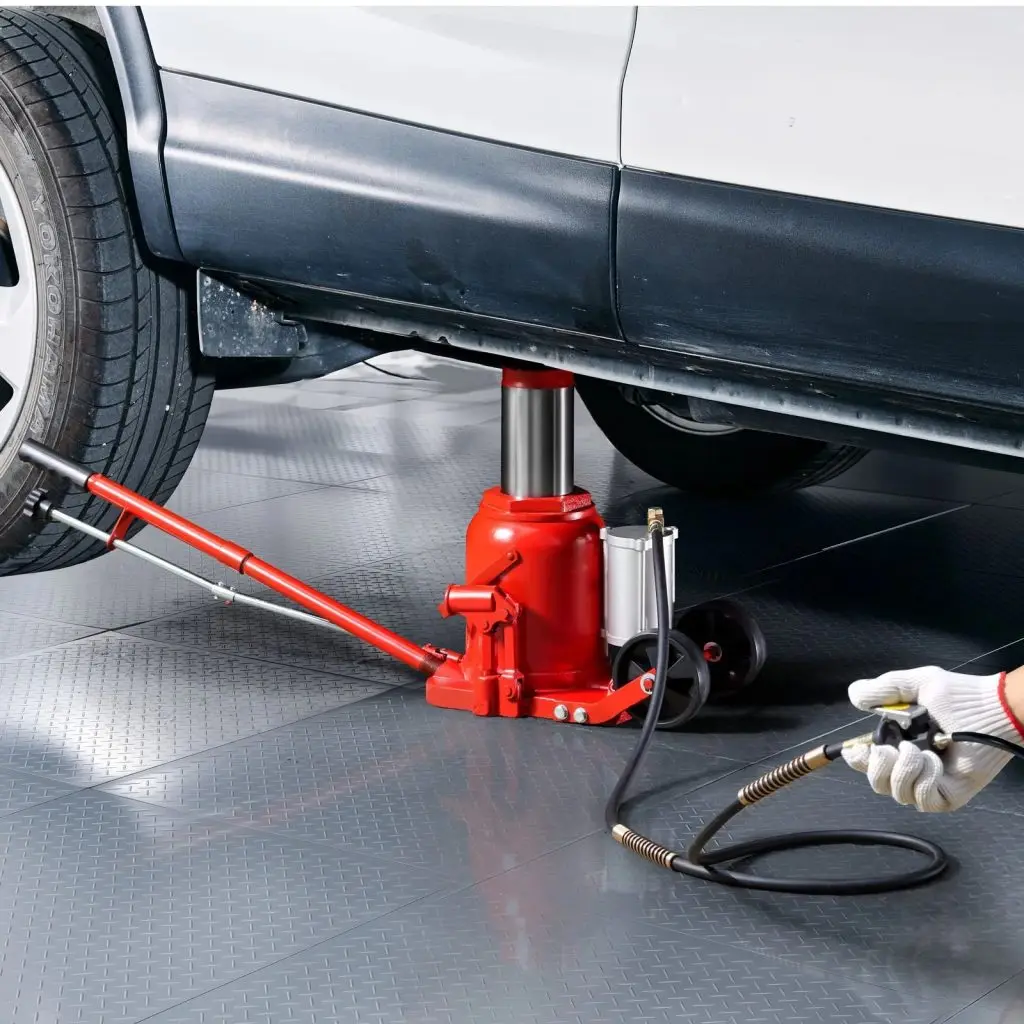
The selection of the correct pneumatic jack is not based on price alone but on features. There are a number of technical and practical aspects that have to be considered to ascertain if the tool is correct for the job. Here are a few features to consider in order to arrive at a conclusion:
1. Load capacity
Load capacity is the singlemost important specification that matters above anything else. Pneumatic jacks can lift anywhere from 12 tons to over 50 tons. So, based on your individual requirements, you can select a jack with a rating slightly higher than the maximum weight you expect you’d be dealing with. This will provide your jack with a weight margin to ensure safety and extend the jack’s lifespan by preventing constant operation at its limit.
2. Minimum height and maximum lift
Not all vehicles have the same amount of ground clearance. It varies per the vehicle model and type. Sports cars, sedans, trucks, and other vehicles all require a different lifting range. To ensure that you operate within the safe limits, you’ll need to check the minimum height to ensure the jack fits under the load, and the maximum height as well, to ensure sufficient clearance for repairs to happen. Even a slight mismatch here and there, can make an otherwise powerful jack useless.
3. Air pressure compatibility
A lot of pneumatic jacks operate within a set air pressure range. This can be around 120 to 150 PSI. Therefore, before you finalize on a model, confirm that your air compressor can deliver steady pressure within this range without fluctuations happening. Otherwise, an inconsistent air supply can affect lifting smoothness and jack efficiency.
4. Build quality and materials
The pneumatic bottle jack is a safety-critical item, and it is essential that it is safe for use. Therefore, if you want to ensure your pneumatic bottle jack is safe, you should look for thick and reinforced steel materials. The best pneumatic bottle jack should be precision-made and contain components such as hydraulics, which help to support the pressure of the air. Additionally, it should be able to withstand oil and air leaks, and this is possible if the jack is well-made.
5. Ease of use
Good designs are also indicated by the level of detail used. For instance, a good quality bottle jack will have valves that are labeled, air connectors that are easily accessible, and release mechanisms that are smooth for use. All these features help in the minimization of errors while at the same time giving the user more confidence when using the jack.
6. Brand reputation and reliability
There are a number of manufacturers of pneumatic bottle jacks available in the market. However, only a few of them offer quality products. Therefore, if you are looking to purchase quality-built bottle jacks, you may look for the products of Vevor, as they offer quality-built products at affordable prices. This makes the product very affordable and easily accessible in the market. Buying a branded product will also help you avoid confusion.
Manual vs Pneumatic Jacks: What’s the Difference?
The customer will also face a challenge in deciding whether to purchase a manual jack or a jack with other features, for instance, pumps. Here is a comparison of the two products to help you make an informed purchasing decision.
| Aspect | Manual Bottle Jacks | Pneumatic Jack with Pump |
| Basic Description | Simple mechanical jacks that are operated using hand-pumped power. No air supply is necessary. | Hybrid jacks, which employ compressed air power in lifting and a hand-pumped power source as a backup. |
| Best Use Cases | • Occasional lifting • Emergency roadside use • Lightweight applications | • Frequent lifting • Workshop and garage use • Professional and industrial settings |
| Lifting Speed | Lifting is slower, and the device depends entirely on the power of the hands. | Lifting is faster using air power. |
| Physical Effort | The device needs a lot of power, especially if it is used repeatedly. | The device needs little power, and the hand-pumped power is used only when necessary. |
| Air Supply Dependency | Not required. | Can operate with or without air, providing greater flexibility. |
| Work Environment Flexibility | Only suitable for lighter work and occasional usage. | Works well in a variety of environments, e.g., a busy workshop. |
| Productivity Impact | Suitable for low frequency, but inefficient if used on multiple lifts. | Lift time is dramatically reduced, improving workflow and reducing operator fatigue. |
| Cost (Initial) | Lower upfront cost. | Higher upfront cost than manual jacks. |
| Long-Term Value | Lower upfront cost but with little efficiency improvement. | Greater long-term value through reduced strain, increased job completion rate, and reduction of user error. |
| Ideal User Profile | Casual usage or emergency-only usage. | Frequent usage, professional usage, and high-volume lifting operations. |
Safety Considerations When Using a Pneumatic Bottle Jack
Safety should always be the number one priority in lifting the heavy objects using the jacks. Here are some pointers to keep in mind:
1. Proper setup and positioning
It is always important to ensure that the surface is flat and stable. This is in order to ensure the stability of the surface, regardless of the safety and rating of the jack. The lifting points should always be in alignment with the recommended areas of contact.
2. Use jack stands
The pneumatic bottle jack is designed for lifting, but not for holding. It is always important to have a jack stand while using the pneumatic bottle jack. While it is perfectly fine to hold for a short time, holding for long periods of time can actually impair the effectiveness of the pneumatic bottle jack. This is one major risk that can actually be avoided.
3. Avoid overloading
It is never advisable to overload the pneumatic bottle jack. This not only poses a risk to the user, but overloading the equipment can also damage the internal components of the equipment. If the need to use equipment with higher load capacity arises, then higher capacity equipment should be used, but not a lower capacity equipment.
4. Controlled lowering
While air-powered lifting is fast, make sure the lowering process is always controlled. This is especially important since controlled release of the load prevents sudden drops and protects both the equipment and the user.
Maintenance Tips to Extend the Pneumatic Jack’s Life
Proper maintenance of a pneumatic jack ensures it lasts for a long time. Below are some key maintenance tips that you can follow:
1. Inspect seals and connections
You need to regularly inspect the air fittings, the hydraulic seals, and the hoses that are connected. You need to carefully look at the connections and identify any imperfections, which will help you prevent bigger failures later.
2. Keep air lines clean and dry
You need to make sure that the air lines, which carry compressed air for the jack, are clean and dry. There should be no moisture in the lines, as this affects the other components of the pneumatic jack, leading to a reduction of its lifespan. You also need to clean the air compressor regularly.
3. Store properly
At times, your jack may not be in use. In this case, it is essential to store your jack properly. This includes keeping your jack clean and ensuring it is stored in an upright position. In addition, it is advisable to avoid storing your jack in a damp environment to prevent your jack’s components from rusting.
4. Follow manufacturer guidelines
It is essential to always refer to your jack’s maintenance manual for guidelines on the general care and maintenance steps to follow. This ensures you get quality products from reliable manufacturers including Vevor.
Choosing the Right Pneumatic Jack
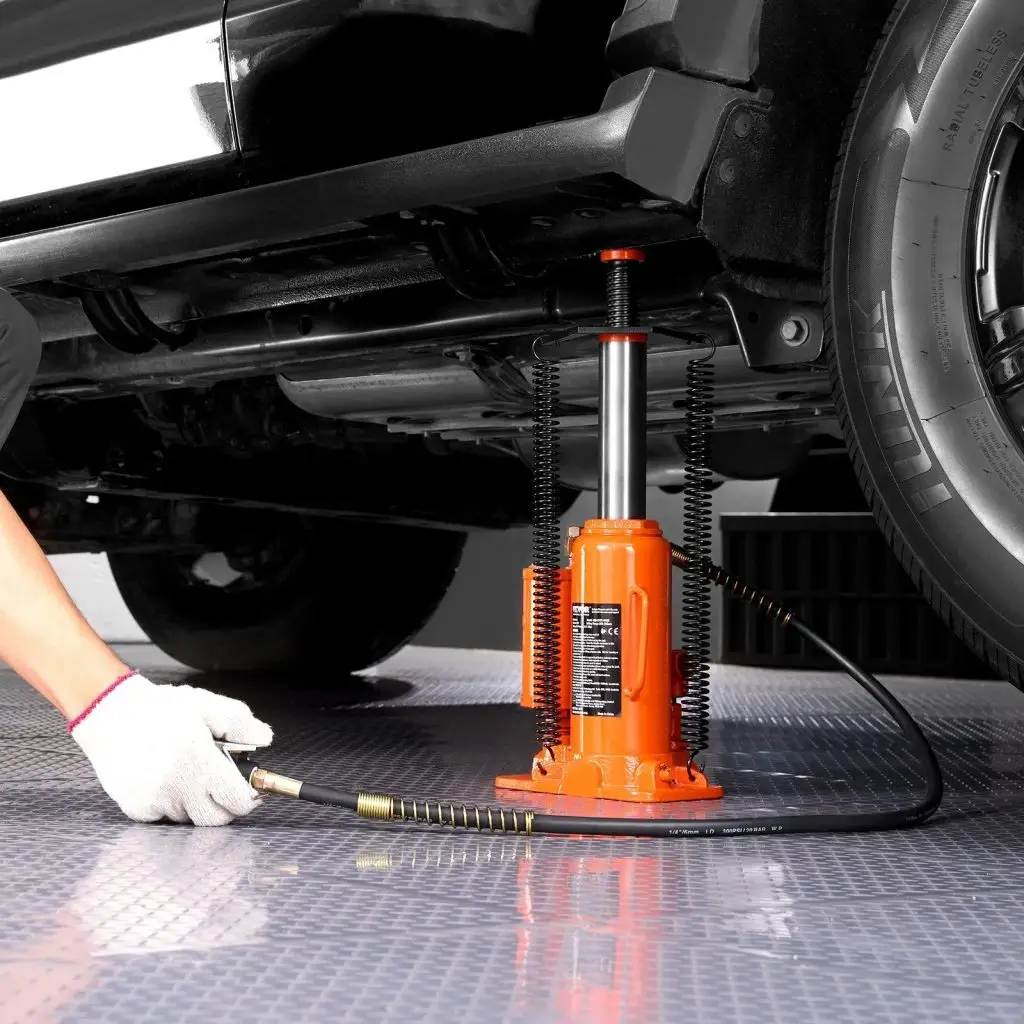
There are a plethora of options available for pneumatic bottle jacks in the market. However, choosing the right one will ensure your task is done right the very first time. Here are some things to consider when shopping out:
1. Identify your primary use
Before you purchase a pneumatic jack, you need to answer the following questions:
- How frequently do I need the jack?
- How much weight do I need to lift the most frequently?
- Do I always have access to compressed air?
These questions will help you determine the capacity and other requirements of the bottle jack you need.
2. Match specifications to real-world conditions
It is always best to avoid purchasing based on the ratings that you see online, at a website, or other online shopping sites. Although the workloads and constraints of the workspace can be helpful in defining the choice, as previously mentioned, individual load lifting requirements must be considered for the appropriate choice of the jack.
3. Think long-term
Buying a slightly higher capacity bottle jack can save the future expense of upgrading the jack. This consideration is more relevant for growing workshops and fleets. It also allows for a buffer for future operations under the capacity of the jack purchased.
4. Why quality matters more than features
A well-built pneumatic bottle jack with fewer features is always better than a feature-rich jack with poor build quality. Build quality, safety, and reliability should always be the top priority. This is the reason why many people prefer brands with a proven track record rather than focusing on marketing gimmicks.
FAQs
What is a pneumatic jack used for?
A pneumatic jack is used to lift heavy vehicles or equipment. It uses compressed air, which helps make lifting faster and easier than manual jacks.
Is a pneumatic jack with a pump worth it?
Yes. A pneumatic jack with a pump offers faster lifting power with hydraulic and manual backup. This feature makes it ideal for frequent or professional use.
What air pressure does a pneumatic bottle jack need?
Most models operate at 120-150 PSI. When deciding on the air pressure, always check the product specifications before connecting the jack to an air compressor.
Can I use a pneumatic jack at home?
Yes, as long as you have an air compressor and can follow safety guidelines responsibly, you can use one at home. Pneumatic bottle jacks work well in home garages, provided they are used responsibly and within guidelines.
How long does a pneumatic jack last?
With proper maintenance and correct usage, a high-quality pneumatic jack can last for many years.
The Final Word
For someone looking to lift heavy items at the end of the day, purchasing a pneumatic bottle jack is a great investment. By understanding the functionality of the product, one can make an informed decision regarding the purchase of the product.
Safety, maintenance, and quality are key aspects of a product that, if considered, can provide value for a long period of time. For both professional and home use, purchasing a reliable product like Vevor ensures that one invests in a product that offers efficiency, control, and peace of mind, rather than another product for the garage or workshop.